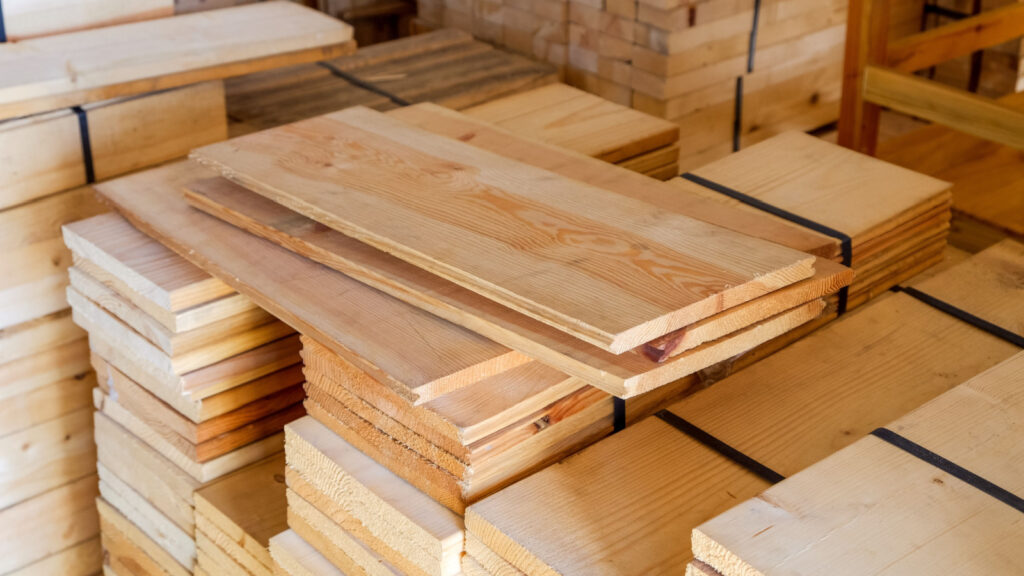
Ontario is making a major bet on domestic wood manufacturing as President Donald Trump’s tariffs continue to put pressure on Canada’s forestry industry. The provincial government has announced more than $3.6 million in funding for Atlas Engineered Products, supporting a manufacturing expansion in Clinton, Ontario, that is expected to increase production capacity by more than tenfold.
The investment comes as Canadian lumber producers face steep U.S. trade barriers and growing uncertainty about their traditional export markets. By expanding the production of prefabricated building components, Ontario hopes to create stronger domestic demand for Canadian wood while helping builders construct homes more efficiently.
For forestry workers, local manufacturers and communities dependent on the industry, the project represents more than a factory upgrade. It offers a potential path toward a more resilient future.
Ontario Commits More Than $3.6 Million to a Major Manufacturing Expansion
Ontario’s November 26, 2026, announcement centres on Atlas Engineered Products and its subsidiary, Clinton Building Components, in southwestern Ontario. The province is providing more than $3.6 million through its Forest Sector Investment and Innovation Program to support an expanded manufacturing operation. According to the government, the project involves a 45,000-square-foot facility equipped with advanced automated manufacturing technology. The operation will produce structural wood components used in residential and other construction projects, including roof trusses, floor trusses and prefabricated walls.
The most striking part of the announcement is the projected increase in production capacity. Ontario expects the modernization to raise capacity by more than tenfold, potentially allowing the business to supply a substantially larger construction market. That figure refers to manufacturing capacity, however, rather than a tenfold increase in the physical size of the factory. It is also a projected outcome, not proof that production has already reached that level. The investment reflects Ontario’s broader effort to move beyond selling lumber as a basic commodity and toward manufacturing higher-value products closer to home.
Robotic Manufacturing Is Already Becoming a Reality in Clinton
The Clinton expansion is not simply a proposal awaiting its first piece of machinery. Atlas announced on October 8, 2026, that it had completed commissioning of what it described as Canada’s first robotic roof-truss manufacturing line. At that point, employees were undertaking training and testing, including production runs intended to produce saleable trusses. The company described its automation facility as measuring 42,000 square feet, compared with the 45,000 square feet cited in Ontario’s subsequent announcement. The two disclosures therefore use somewhat different facility measurements.
Robotic production could transform how a traditional building-component manufacturer operates. Rather than relying as heavily on repetitive manual tasks, automated equipment can help standardize production, improve consistency and allow workers to concentrate on supervising machinery, managing quality and handling more specialized activities. Atlas has identified improved operating efficiency and greater manufacturing capacity as important objectives. Still, installing robotic equipment is only the beginning. The long-term benefits will depend on how effectively the company integrates the technology, trains its workforce and secures enough customer orders to use the additional capacity.
A Family-Founded Ontario Business Is Entering a New Industrial Era
Behind the technology investment is a business with roots stretching back nearly four decades. Clinton Building Components was founded in 1988 by Herve and Marg Poirier and developed its reputation supplying engineered building products to customers across southwestern Ontario. The company specializes in roof and floor trusses, floor systems and engineered joists. Its products serve residential, commercial and agricultural construction, where dependable structural components are essential to completing projects safely and efficiently.
Atlas expanded into the region in February 2018 when it acquired Clinton Roof Truss Ltd. for approximately $2.6 million. The business subsequently became part of Atlas’s wider network of engineered wood manufacturers. Despite its place within a larger corporate organization, Clinton describes itself as remaining family-run, with strong connections to the communities it serves. That history gives the current investment particular significance. A company originally established around local building needs is now embracing industrial automation on a much larger scale. The challenge is to preserve its established customer relationships and technical expertise while adapting to a production model designed for substantially higher volumes.
More Than 70 Jobs Are Expected to Benefit From the Investment
For people working in and around Clinton, employment is one of the announcement’s most immediate implications. Ontario estimates that the modernization will create 10 new jobs, protect 11 existing positions and support another 50 jobs. Together, those categories represent 71 positions affected by the project. The distinction is important: the province is not promising 71 entirely new factory jobs. Its figures combine direct job creation, employment protection and additional supported positions.
The wider employment effects could extend beyond workers operating equipment inside the facility. A larger manufacturing operation requires lumber deliveries, transportation services, equipment maintenance, production planning and other business activities. Local suppliers may benefit from steadier orders, while employees could gain opportunities to develop skills associated with advanced manufacturing. The announcement also arrives during a difficult period for forestry employment. Federal Job Bank analysis previously projected moderate employment declines in Ontario’s forestry and forest-products industries over 2025–2027, partly because of weaker demand and the continuing softwood lumber dispute with the United States. Against that backdrop, preserving established jobs while creating new manufacturing opportunities carries particular importance for smaller communities.
Ontario Lumber Producers Could Gain a Much Larger Domestic Customer
The expansion is designed to generate benefits well beyond Clinton Building Components itself. Ontario projects that the company’s annual lumber purchases will nearly triple, reaching approximately 3.5 million board feet by 2027. The government expects this increase to benefit more than a dozen Ontario lumber producers, along with businesses involved in harvesting, hauling and trucking. That could create additional domestic demand at a time when selling wood into the United States has become increasingly complicated.
The difference between the projected tenfold increase in manufacturing capacity and the nearly threefold increase in lumber purchases is worth understanding. The two figures measure different things and should not be treated as interchangeable. Capacity describes what a manufacturing operation could produce, while lumber purchases represent an expected volume of raw material demand. Both forecasts will depend on actual operating conditions and customer orders. Nevertheless, the purchasing target illustrates the larger economic argument behind the investment: turning Ontario lumber into finished structural components within the province can provide business opportunities to several companies rather than concentrating the benefits in a single facility.
Trump’s Lumber Tariffs Are Adding Pressure to an Already Difficult Trade Dispute
The investment comes amid a complicated and costly trade environment for Canadian forestry. Canadian softwood lumber has long faced U.S. anti-dumping and countervailing duties, which are separate from the additional tariffs imposed under the Trump administration’s national-security trade measures. In October 2025, the United States introduced a 10% Section 232 tariff on covered timber and softwood lumber imports. Where products are also subject to existing softwood lumber duties, the measures can apply together, creating a substantially greater cost burden.
The latest duty figures show why the industry’s concerns remain serious. Following an amendment announced on November 19, 2026, Global Affairs Canada reported combined anti-dumping and countervailing duty rates of 31.08% for Canfor, 25.48% for Resolute, 20.02% for West Fraser and 24.72% for the relevant all-others category. A shipment facing the 24.72% combined rate and the additional 10% Section 232 tariff would face a combined nominal rate of 34.72%. Actual treatment varies by producer and product. These costs can weaken Canadian suppliers’ competitiveness and complicate long-term investment decisions, particularly when exporters cannot easily pass additional charges to customers.
New U.S. Trade Measures Are Reaching Beyond Traditional Lumber
Canada’s forestry trade challenges now extend beyond conventional softwood lumber. In August 2026, the United States introduced additional 50% tariffs under Section 338 of the Tariff Act of 1930 on selected Canadian products, including certain wood, paper and higher-value manufactured wood products. Those measures were imposed amid broader disputes involving Canadian treatment of American exports. The Trump administration subsequently adjusted the products covered by the measures, including changes that took effect on October 30.
The result is an increasingly complicated trade environment. Different Canadian wood products can face different combinations of duties, depending on their classification and the rules governing each measure. Some Section 338 tariffs can apply even when a product qualifies for preferential treatment under the Canada–United States–Mexico Agreement. That does not mean every engineered wood product manufactured in Clinton automatically faces a 50% tariff; the applicable classification would need to be established. However, the broader uncertainty strengthens the case for developing reliable customers within Canada while exploring additional international markets. For Ontario manufacturers, diversification is becoming less about pursuing growth alone and more about reducing dependence on one increasingly unpredictable destination.
Prefabricated Wood Components Could Help Ontario Build Homes More Efficiently
The Clinton investment also connects forestry policy with Canada’s housing challenges. Roof trusses, floor systems and prefabricated wall components are often produced to predetermined engineering specifications before arriving at a construction site. That allows builders to use components manufactured in a controlled environment rather than assembling every structural element from individual pieces of lumber on location. Clinton Building Components already supplies custom-engineered products, and the expanded operation is intended to support larger-scale production.
Factory-based construction can offer practical advantages. The Canadian Home Builders’ Association identifies potential productivity improvements and reduced construction timelines when building components are manufactured off-site. Its industry guidance suggests panelized construction can reduce construction time by as much as 40% in some circumstances, although that figure is not a measured outcome for the Clinton expansion. Ontario has also promoted advanced wood construction through a provincial action plan introduced in June 2025. Faster component manufacturing alone will not solve housing affordability, since financing, land availability, approvals and other costs remain significant. But a stronger domestic supply of engineered building materials could help builders improve predictability and reduce some avoidable delays.
Ontario Is Using Forestry Investments to Reduce Reliance on U.S. Markets
The Clinton project fits into a larger provincial strategy aimed at protecting forestry businesses from trade disruptions while strengthening manufacturing at home. In April 2026, Ontario introduced its 10-year Roadmap to Protecting Ontario’s Forest Sector. The strategy is organized around three priorities: defending the industry against trade pressures, adapting through modernization and market diversification, and growing demand for Ontario-made forest products. Supporting companies that turn lumber into finished construction materials directly advances those objectives.
The economic stakes are substantial. Ontario estimates that forestry and forest products generated approximately $20.8 billion in business revenue in 2024 and supported more than 154,500 jobs when direct, indirect and induced employment are counted. The Clinton investment is one example of the province’s effort to sustain that economic activity through higher-value manufacturing. Its Forest Sector Investment and Innovation Program supports eligible projects focused on productivity, technology and market development. Separately, Atlas reported receiving $3.6 million in June 2026 under a federal funding agreement worth up to $4 million for its robotic manufacturing project. That federal contribution is distinct from the provincial funding announced in November.
The Expansion’s Long-Term Success Will Depend on Demand and Execution
The major question now is whether Clinton Building Components can turn its expanded manufacturing capacity into sustained commercial growth. Atlas’s financial results show both opportunities and challenges. During the second quarter of 2026, the company reported revenue growth of 19% compared with the same period in 2025. Its gross margin improved to 17%, up from 3% in the preceding quarter. However, management also acknowledged competitive market conditions in Ontario and British Columbia, illustrating that greater production capabilities do not eliminate pressure from the broader construction market.
Atlas has scheduled the release of its third-quarter financial results for November 30, 2026, providing another opportunity to assess its operational progress. Beyond quarterly results, the more meaningful tests will include production volumes, repeat customer orders, employment outcomes and purchases from Ontario lumber suppliers. The announced targets offer a potentially important response to an increasingly difficult trading environment, but they remain targets until demonstrated through actual operations. If the company can successfully translate automation into reliable demand for Canadian wood, the Clinton expansion could become a useful model for how Ontario’s forestry industry adapts to changing trade conditions without abandoning its manufacturing strengths.
