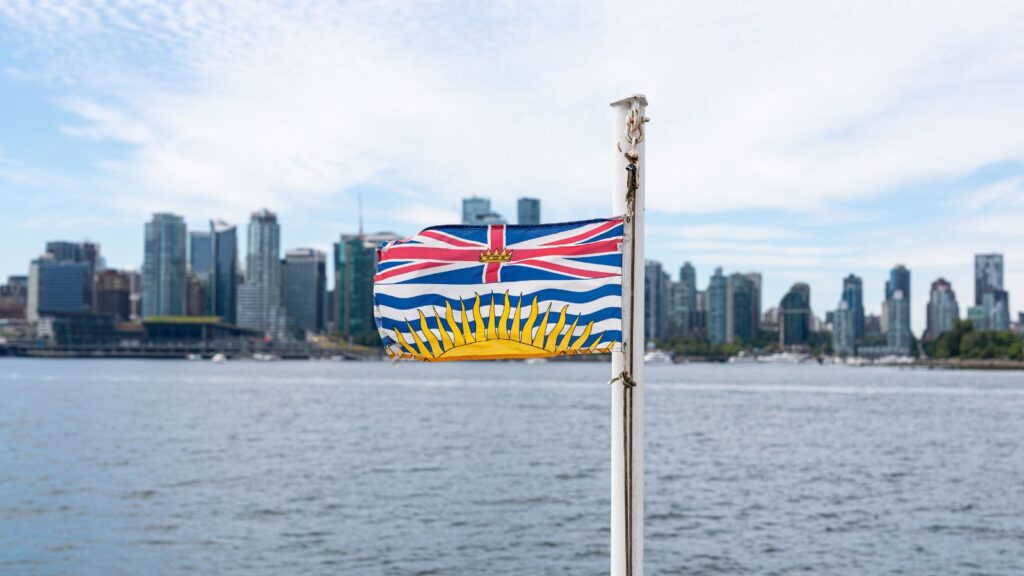
British Columbia’s new premier, Lorne Doerkson, is making Alberta the destination of his first trip outside the province since taking office, signalling a potentially significant shift in Western Canada’s energy politics. With plans to meet representatives from as many as 20 energy companies, Doerkson is looking to attract investment, strengthen ties with neighbouring provinces and advance discussions surrounding the proposed Pacific Link oil pipeline.
The Calgary visit also brings Doerkson together with Alberta Premier Danielle Smith and Saskatchewan Premier Scott Moe, creating an opportunity for three conservative-led provincial governments to explore common economic priorities. Their discussions come as Ottawa advances major energy infrastructure proposals and Western Canadian leaders seek new ways to reach international markets. However, questions surrounding environmental protection, Indigenous participation and project financing remain central to what happens next.
A First Out-of-Province Trip That Signals a New Direction
For a premier who has been in office for barely a week, the decision to travel to Calgary represents an important early political move. Doerkson’s cabinet was sworn in on November 20, 2026, with commitments to restoring investment confidence, encouraging responsible resource development and creating employment opportunities. His decision to make Alberta the destination of his first official trip outside British Columbia places energy development near the centre of his government’s economic agenda.
The visit coincides with Alberta’s United Conservative Party annual general meeting, scheduled for November 27–29 at Calgary’s BMO Centre. Doerkson was scheduled to address the convention’s opening ceremony alongside Saskatchewan Premier Scott Moe, with Alberta Premier Danielle Smith participating in the weekend’s events. For businesses considering major infrastructure investments, the gathering offers an early indication of how Western Canada’s political relationships might evolve. However, political goodwill alone cannot guarantee new projects. The real test will be whether discussions eventually produce credible investment commitments and practical agreements between governments.
Meetings With Up to 20 Energy Companies Could Open New Investment Opportunities
One of the most commercially significant parts of Doerkson’s visit is his plan to meet with executives representing approximately 15 to 20 energy companies. In an interview published by The Globe and Mail, the premier described his interest in pursuing opportunities that could benefit British Columbia, particularly through natural gas development and the proposed Pacific Link pipeline. The meetings represent an effort to connect the province’s political leadership directly with companies that could help finance or develop major energy infrastructure.
The distinction between investment discussions and actual commitments is important. No confirmed list of participating companies or new agreements had been publicly detailed in the reporting ahead of the visit. Energy developers must weigh construction costs, regulatory requirements, access to customers and long-term returns before committing substantial capital. For British Columbia, even preliminary discussions could be useful if they identify specific infrastructure needs or investment barriers. The value of the Calgary meetings will ultimately depend on whether corporate interest develops into concrete project proposals.
Three Western Premiers Have an Opportunity to Strengthen Regional Cooperation
The gathering brings together three provincial leaders whose governments share an interest in expanding economic development and reducing barriers to resource investment. Alberta’s Danielle Smith has consistently advocated greater access to international oil markets, while Saskatchewan’s Scott Moe has supported stronger Western Canadian economic cooperation. Doerkson’s arrival adds a new dimension because British Columbia controls much of the coastal geography needed for certain energy export projects.
The United Conservative Party’s official convention agenda includes a joint appearance by Smith, Moe and Doerkson at a gathering called the Team West Hospitality Suite. Although that event is political rather than a formal intergovernmental summit, it provides an opportunity to build relationships that could influence future negotiations. Cooperation could extend beyond pipelines to electricity transmission, transportation infrastructure and interprovincial trade. The challenge is translating shared ambitions into policies that account for each province’s economic needs, environmental responsibilities and existing commitments. Agreement on broad goals does not necessarily mean consensus on every individual project.
Pacific Link Emerges as a Central Issue in Pipeline Discussions
Pacific Link is one of the most significant infrastructure proposals shaping Western Canada’s energy debate. The project envisions a roughly 1,250-kilometre oil pipeline connecting Bruderheim, Alberta, with a deep-water port near Delta, British Columbia. According to the federal government’s 2026 budget, the proposed system would have the capacity to transport approximately one million barrels of Canadian crude oil daily, creating another route for producers seeking access to global markets.
The proposed corridor would largely follow existing rights-of-way associated with the Trans Mountain pipeline system, although the final alignment remains subject to further review and consultation. That distinction matters for communities along the route, where questions about land use, construction impacts and environmental protection have yet to be settled. For Alberta, Pacific Link represents an opportunity to expand export capacity. For British Columbia, it brings potential infrastructure investment alongside significant responsibilities as the province through which the pipeline would travel. Doerkson’s discussions could help determine how those competing considerations are addressed.
Federal Support Has Advanced Pacific Link, but Major Approvals Remain
Pacific Link received an important political boost on October 1, 2026, when Prime Minister Mark Carney announced that the federal government had listed it as a project of national interest under the Building Canada Act. The designation provides a coordinated federal review process intended to accelerate infrastructure development. Trans Mountain Corporation is expected to lead the project’s development, construction and eventual operation, with Pembina Pipeline Corporation and Alberta’s government participating in the proposed ownership structure.
The arrangement also includes an offer of at least 10% ownership for Indigenous participants, although specific agreements and investment decisions still require further work. Federal officials have identified September 1, 2027, as a target for finalizing project conditions. Those conditions are expected to address environmental safeguards, Indigenous rights, construction requirements and other regulatory obligations. Importantly, national-interest status does not mean that every construction issue has been resolved. The proposed pipeline still requires detailed engineering, consultation and commercial decisions before its full development can proceed.
Canada’s Push to Reach Global Oil Markets Gives the Talks Greater Importance
The economic argument behind additional pipeline capacity becomes clearer when examining Canada’s existing oil production. According to the Canada Energy Regulator, Canadian crude oil production averaged approximately 5.3 million barrels per day in 2025. Domestic refineries consume only part of that supply, leaving producers heavily dependent on export markets. Historically, the United States has purchased the overwhelming majority of Canada’s exported crude, creating concerns about market concentration and exposure to changing American trade policies.
The Trans Mountain expansion, which entered service in May 2024, demonstrated how new transportation infrastructure can change export patterns. The expanded system increased its capacity to approximately 890,000 barrels per day. Federal regulatory data show that the share of Canadian crude oil exports reaching destinations outside the United States increased from 2% in 2021 to 10% in 2025. Pacific Link supporters believe another major export route could extend that diversification. Nevertheless, additional capacity would still need sufficient demand, competitive shipping costs and long-term commercial commitments to justify construction.
British Columbia’s Growing LNG Industry Adds Another Dimension
Although oil transportation dominates much of the Pacific Link discussion, natural gas development is another major reason Doerkson wants stronger relationships with energy companies. British Columbia has become an important destination for liquefied natural gas investment, particularly as Canada seeks customers beyond North America. On November 13, the federal government announced $200 million for the Woodfibre LNG project near Squamish, funding intended to increase its planned annual production capacity from 2.1 million tonnes to between 2.5 million and 2.6 million tonnes.
Another major development came in September, when LNG Canada announced a final investment decision for the second phase of its Kitimat facility. The expansion is intended to add approximately 14 million tonnes of annual LNG production capacity, supported by additional natural gas transportation infrastructure. These developments demonstrate that British Columbia’s energy opportunities extend well beyond one proposed oil pipeline. They also help explain why the premier is courting industry executives who could support future gas production, processing facilities and export infrastructure.
Indigenous Participation Remains Essential to Any Pipeline Agreement
One of the largest challenges facing Pacific Link is establishing meaningful relationships with Indigenous communities whose lands, waters and rights could be affected. The federal government says it consulted more than 130 Indigenous communities during the process that led to the pipeline’s national-interest designation. Ottawa has also proposed offering Indigenous participants at least 10% ownership in the project, potentially creating opportunities for long-term revenue, employment and participation in infrastructure oversight.
However, economic participation cannot substitute for consultation or resolve every concern. Several First Nations have launched legal challenges seeking to overturn the federal designation, arguing that consultation was inadequate and that communities lacked sufficient information about the proposed route and environmental consequences. The St’át’imc Chiefs Council and other Indigenous governments have raised concerns about salmon, fishing rights and potential impacts on their territories. These disputes demonstrate why cooperation between provincial premiers is only one part of the equation. Indigenous governments have their own legal rights, priorities and decision-making responsibilities, which must be addressed throughout the project’s development.
Environmental Concerns Could Influence the Pipeline’s Future
Environmental protection remains a central issue as officials consider how Pacific Link could cross British Columbia. The federal government has promoted the proposed southern route as a way to avoid particularly sensitive ecosystems on the province’s North Coast. However, environmental organizations argue that following an established transportation corridor does not eliminate risks to wildlife, rivers or surrounding communities. Those concerns have become more prominent as additional mapping and ecological research have examined the proposed alignment.
A November 25 analysis released by the Wilderness Committee estimated that the preliminary route could intersect multiple protected areas and critical habitats, including areas associated with endangered species. Its mapping identified 76 salmon streams that could be crossed, although the project’s final route has not been established. Environmental scrutiny also extends to the proposed marine terminal near Roberts Bank, where increased tanker movements raise questions about spill response and effects on the Fraser River estuary. A thorough assessment will need to distinguish between risks that can be mitigated and those that may require changes to the project’s design.
Pipeline Development Could Bring Major Economic Benefits to Western Canada
The potential economic impact is one reason governments are devoting substantial attention to Pacific Link. Canada’s 2026 federal budget projects that the pipeline could support up to 140,000 jobs across the country and generate more than $20 billion in annual gross domestic product. These figures represent government estimates of possible economic activity, not employment or revenue already secured. Actual results would depend on construction schedules, operating conditions, investment levels and broader energy market developments.
For communities in British Columbia and Alberta, the more immediate benefits could include construction contracts, engineering work, equipment purchases and demand for local services. A major infrastructure project can create opportunities for businesses far beyond the companies directly responsible for building it. However, distributing those benefits fairly will be important. Municipalities could face additional infrastructure demands, while landowners and nearby communities may experience disruptions during construction. Public confidence will depend partly on whether economic agreements provide meaningful local benefits and adequately account for environmental and financial risks.
A New Premier Could Help Reset a Historically Difficult Relationship
British Columbia and Alberta have experienced serious disagreements over pipeline development for years. During the dispute surrounding the Trans Mountain expansion in 2018, Alberta’s then-premier Rachel Notley temporarily halted imports of British Columbia wine in response to policies proposed by John Horgan’s government. More recently, former B.C. premier David Eby challenged Alberta’s earlier West Coast pipeline ambitions, questioning the lack of a defined route, confirmed financing and a committed industry proponent.
In July 2026, Eby’s government signed a cooperation agreement with Ottawa that acknowledged a possible new pipeline while explicitly stating that British Columbia was not seeking the project. The agreement preserved the federal North Coast tanker ban and established principles for compensating B.C. for environmental risks and sharing potential economic benefits. Doerkson’s willingness to work more closely with Smith could change the political atmosphere, but those underlying concerns remain relevant. A successful reset would require more than agreement between premiers; it would need to demonstrate that British Columbia’s economic interests, environmental protections and communities are being respected.
What Happens Next Will Determine Whether Cooperation Produces Results
The next steps will reveal whether the political momentum generated in Calgary can develop into lasting economic cooperation. Under the Canada–British Columbia Cooperative Prosperity Agreement, December 1, 2026, is a target for advancing negotiations involving pipeline-related financial commitments, coastal protection and existing Trans Mountain revenue-sharing arrangements. Meanwhile, Pacific Link’s preliminary development schedule anticipates regulatory conditions in 2027, a final investment decision in 2028 and a possible start to pipeline operations in 2032. Those milestones remain subject to change.
For Doerkson, the immediate priority is turning conversations with industry executives and neighbouring premiers into identifiable opportunities for British Columbia. That could mean securing investment proposals, strengthening interprovincial coordination or establishing clearer expectations for project developers. However, progress will also depend on meaningful Indigenous consultation, environmental assessments and financial arrangements acceptable to participating governments and investors. The Calgary visit signals a willingness to move beyond years of provincial disagreements. Whether it becomes a turning point in Western Canada’s energy development will depend on the decisions and agreements that follow.
