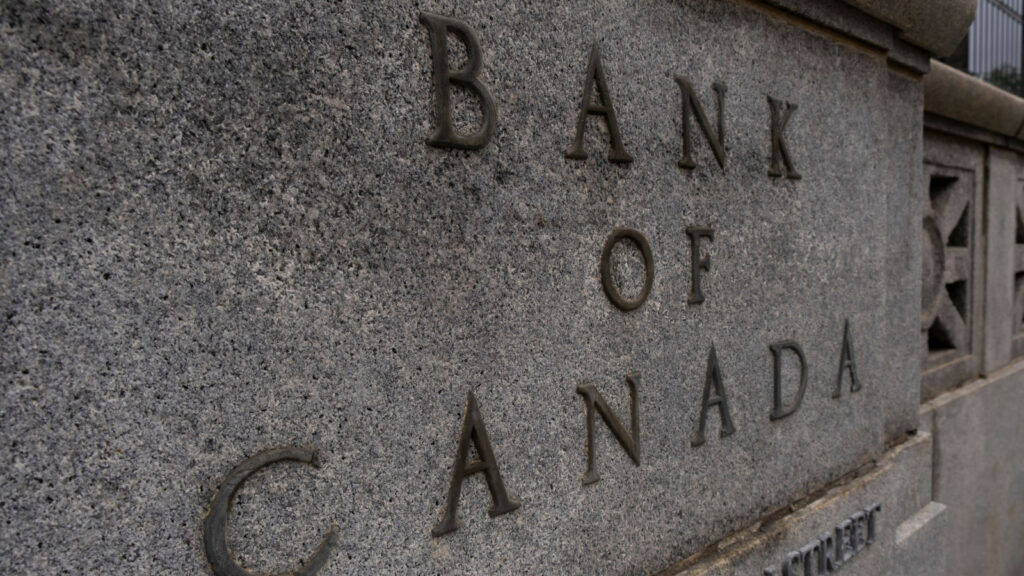
For Canadian households already juggling expensive groceries, fuel bills and mortgage payments, the prospect of another interest-rate increase adds a fresh layer of uncertainty. On October 20, 2026, financial markets were pricing in nearly an 85% chance that the Bank of Canada would raise its benchmark rate by a quarter of a percentage point at its October 28 meeting.
The pressure is coming from several directions. September inflation climbed to 3.1%, renewed trade friction with the United States clouded business plans, and consumers remained worried about future price increases. Yet employment also fell in September, complicating the case for higher borrowing costs. The question is not simply whether inflation is too high, but how to contain it without putting an already uneven recovery under greater strain.
The 85% Figure Is a Market Bet, Not a Bank Decision
Reuters reported on October 20 that traders were assigning nearly an 85% probability to a quarter-point increase, based on LSEG data. The Bank’s policy rate was still 2.25%, where it had been held at the September 2 announcement. An increase of 25 basis points would take that benchmark to 2.50%. It would not mean that every Canadian mortgage or loan suddenly carried a 2.50% interest rate; lenders set the rates charged to their customers.
That distinction matters when a market prediction becomes a household headline. The probability reflects expectations, not a commitment from the Bank’s Governing Council. It can change as economic information and financial conditions evolve before October 28. Nor does a likely increase at one meeting establish how many additional moves might follow. For families planning around a renewal or a floating-rate loan, the practical issue is exposure to a possible change—not treating a heavily favoured outcome as something that has already happened.
Fuel Prices Are Driving the Latest Inflation Increase
Statistics Canada reported that annual inflation rose to 3.1% in September from 3.0% in August. Gasoline was the main driver: prices were 27.8% higher than a year earlier. Fuel oil and other fuels rose 57.8%, with a particularly strong effect in Atlantic Canada, where heating oil is more widely used. The agency linked rising oil costs to ongoing Middle East uncertainty. For a household facing both a daily commute and an oil-heated home, the pressure can feel much greater than the national headline suggests.
There is an important counterweight in the same release. Excluding gasoline, inflation slowed to 2.2% from 2.4%. That does not erase the fuel shock, but it argues against describing every part of the economy as experiencing accelerating price growth. The Bank must judge whether expensive energy remains concentrated in a few categories or spreads more widely through transportation, production and service costs. Higher interest rates cannot produce more fuel; their purpose would be to restrain broader inflation if those pressures persist.
The Trade Dispute Can Raise Costs While Weakening Demand
The Bank’s October 19 business report describes a deterioration after Canada–U.S. trade talks broke down on August 21. Later responses pointed to weaker export expectations and investment plans alongside higher costs and inflation expectations. Roughly half of businesses in the broader quarterly findings planned to pass through some or all of their tariff- and war-related cost increases. That creates a difficult combination: companies can face softer demand while still feeling pressure to charge more.
Timing is essential to interpreting those results. About three-quarters of the main business interviews occurred before the breakdown, so the quarter’s overall improvement does not contradict the subsequent deterioration. The Bank also said later sentiment remained stronger than at the height of trade tensions in 2025. The evidence points to renewed strain, not a uniformly collapsing economy. For a supplier considering new equipment, uncertainty about orders and input costs can make postponement attractive—an understandable business decision that can also slow investment and hiring.
Consumers Worry That Inflation Will Stay Higher for Longer
The Bank’s October 19 consumer report, based mainly on August responses, showed that longer-term inflation expectations rose toward already elevated short-term expectations. Respondents continued to identify tariffs, trade tensions and energy prices as major concerns. People who responded after trade talks collapsed reported higher expectations at every horizon. These are households’ beliefs about future prices, not the central bank’s own forecast. They nevertheless help explain why a modest change in measured inflation can coincide with much greater public anxiety.
The concern for monetary policy is whether those expectations start influencing everyday decisions. The Bank explains that expected inflation can affect wage negotiations, business pricing, saving and spending. If firms build larger cost increases into contracts, or households lose confidence that inflation will settle near the 2% target, restoring stability can become harder. But higher expectations alone do not prove that a self-reinforcing inflation cycle has begun. They are one warning signal to weigh alongside actual prices, wages, demand and the ability of businesses to raise prices.
Slower Grocery Inflation Has Not Restored Earlier Prices
There was some relief in September’s food figures: grocery prices increased 1.7% from a year earlier, down from 2.8% in August. However, Statistics Canada also reported that grocery prices stood 33.0% above September 2020 levels. Slower inflation means prices are rising less quickly; it does not mean the earlier increases have disappeared. As a simple illustration, a basket that cost C$100 would cost C$133 after a 33% cumulative increase, assuming it exactly tracked that index.
That distinction helps explain why households can remain cautious despite better news in selected categories. In the Bank’s follow-up interviews, consumers described eating out less, searching for discounts and choosing cheaper alternatives. Nearly half believed the most serious effects of trade tensions on inflation or the economy were still ahead, and that group was more inclined to postpone major purchases. For these families, concern is not confined to the next rate announcement. It includes whether wages and available income can comfortably cover an already more expensive routine.
Variable-Rate Borrowers Face the Most Direct Exposure
A Bank of Canada increase can feed through to lenders’ prime rates and borrowing products linked to them. The Financial Consumer Agency of Canada explains that variable mortgage rates can move during the term. Borrowers with adjustable payments may see their payments rise when their rate increases. Those with fixed payments on a variable-rate mortgage can experience a different squeeze: more money goes toward interest and less toward reducing the balance, even if the monthly withdrawal initially stays unchanged.
A straightforward illustration shows the effect on revolving debt. If a lender passed through the full quarter-point increase to an interest-only credit line with a constant C$50,000 balance, annual interest would increase by approximately C$125, or C$10.42 a month. That calculation excludes fees, balance changes and daily-interest timing; it is not a mortgage-payment estimate. The actual effect on any borrower depends on the contract, outstanding debt and lender’s response. A modest rate move can therefore produce quite different outcomes across neighbouring households.
Fixed-Rate Mortgages Offer Protection Until Renewal
An existing fixed-rate mortgage does not automatically become more expensive because the Bank changes its benchmark. Its contracted interest rate remains fixed for the term. The exposure appears when borrowers renew, refinance or arrange a new loan. Someone with several years left on a fixed contract may face little immediate change, while a neighbour approaching renewal must consider current offers. The Financial Consumer Agency notes that a renewed rate can be higher or lower than the previous one.
New fixed-rate offers are also influenced by bond-market conditions, not just the overnight rate. Bank of Canada research explains that longer-term government bond yields affect mortgage borrowing costs and can remain elevated even when policy rates decline. The implication is that fixed mortgage pricing need not wait for October 28 to react to changing expectations. For a household comparing renewal options, the relevant figures are the actual offered rate, remaining balance, repayment period and fees—not the assumption that a quarter-point policy move translates into an identical change in every mortgage quote.
A Weaker Labour Market Makes the Decision Harder
Statistics Canada reported that employment fell by 68,000 in September, while the unemployment rate increased to 6.5%. Those figures provide a counterweight to the argument for tightening monetary policy. Higher borrowing costs can discourage spending and investment, adding pressure when employers are already cautious. A household facing uncertain work hours may find a larger interest bill harder to absorb than a household with stable earnings, even when their outstanding debts are similar.
September’s losses were split between full-time employment, down 35,000, and part-time work, down 33,000. Declines included educational services, health care and social assistance, and manufacturing. That spread cautions against attributing the entire employment drop to a single tariff measure. It also puts the rate debate into everyday terms: keeping prices stable matters, but so does keeping a paycheque. One monthly labour report is not a verdict on the whole economy. It is another reason for the Bank to weigh the costs of tightening as carefully as the costs of waiting.
Interest Rates Cannot Solve Every Source of Inflation
The Bank’s objective is to keep inflation near 2%, not to reverse every past price increase or eliminate individual price shocks. Its monetary-policy framework looks ahead, typically over six to eight quarters, because interest-rate changes take time to work through the economy. More expensive borrowing can cool demand, but it cannot remove a tariff, repair a refinery or resolve a geopolitical conflict. Those limits matter when the latest inflation increase is heavily concentrated in energy.
The strongest case for a hike would be evidence that those initial shocks are spreading and becoming persistent. The case for caution would be contained underlying price pressures alongside weakening demand and employment. Both risks are present in the available information, which is why a single inflation reading cannot settle the decision. Savers may benefit from higher rates on some new deposits, but indebted households can face higher costs much sooner than any broad improvement in inflation. The distribution of those effects is part of the economic trade-off, not an exception to it.
October 28 Will Test Whether the Pressure Is Becoming Persistent
The Bank will announce its next rate decision on October 28 alongside a new Monetary Policy Report containing growth and inflation projections. September’s CPI release is the last monthly inflation report before that meeting; October’s figures are scheduled for November 16. Policymakers will therefore have to combine the available price data with evidence on employment, business costs, household expectations and the evolving trade environment. On October 17, the Bank said it expected to revise its inflation forecast significantly higher because of persistent oil and petroleum-product costs.
For households, the difference between a temporary adjustment and a longer tightening cycle could be substantial. Yet the October 20 market odds establish neither outcome, and one increase would not guarantee another. The most useful signals will be whether the Bank sees inflation spreading, how it assesses weaker employment, and what conditions could alter its next decision. Until then, Canadian families face a familiar tension: they need inflation brought under control, but many have limited room for the higher borrowing costs that may accompany that effort.
