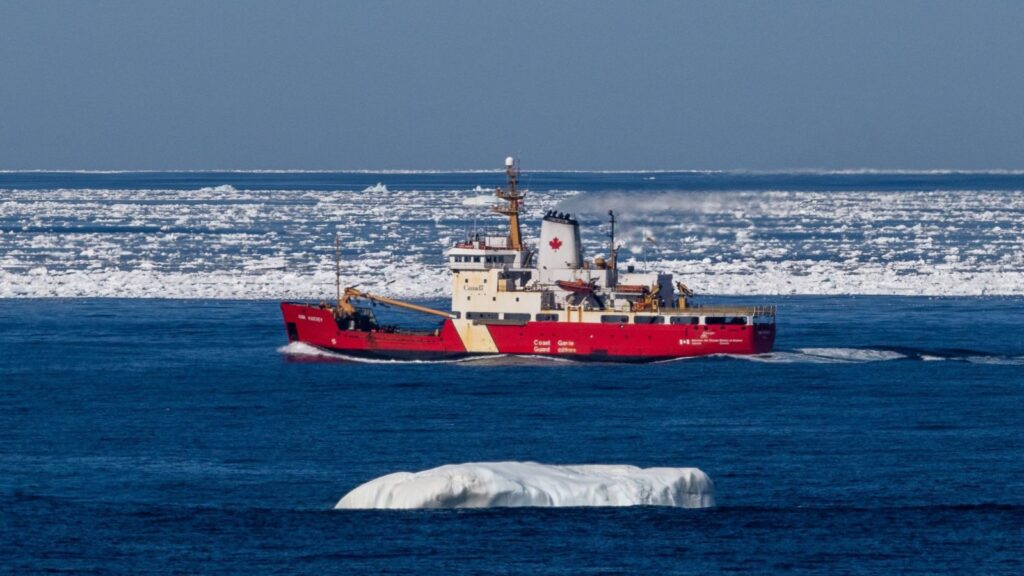
At a moment when Canada-U.S. trade relations are being tested by steep tariffs and retaliatory measures, another cross-border project is moving in the opposite direction. Canada, the United States and Finland are pressing ahead with an unusually practical form of Arctic cooperation: building more icebreakers, sharing shipbuilding expertise and expanding the industrial base needed to operate in increasingly busy northern waters.
The contrast was especially sharp in October 2026. Officials from the three countries met in Québec and Ottawa to advance the ICE Pact just as Ottawa was unveiling billions of dollars in support for industries hurt by U.S. tariffs. The two tracks reveal a relationship that is strained economically but still capable of producing long-term cooperation where geography, security and industrial capacity leave few easy alternatives.
The ICE Pact Is Surviving the Trade Chill
The latest ICE Pact meetings offered cooperation continuing beneath a colder political surface. Government representatives from Canada, Finland and the United States met in Québec City and Ottawa from October 19 to 21, 2026, focusing on production capacity, workforce development, supply-chain bottlenecks, research and future markets. Delegates also toured Davie Shipyard in Lévis, where work is underway on the Canadian Coast Guard’s Polar Max. An industry day brought together more than 75 companies from the three countries, turning diplomacy into contact among shipbuilders, equipment makers and suppliers.
That same week, the trade relationship looked far less cooperative. Canada and Ontario announced a C$8.7-billion package for tariff-hit steel, automotive and critical-mineral industries, while Ottawa said it had already provided more than C$25 billion in support for workers and businesses affected by U.S. tariffs. The contrast shows that Arctic capability has become important enough to preserve a separate, durable lane of cooperation.
From Diplomatic Promise to Ships in Production
ICE Pact began as a political commitment, but it has accumulated enough milestones to look institutional. Canada, Finland and the United States announced the initiative in July 2024, promising to share expertise, information and capabilities for Arctic and polar vessels. A memorandum followed in November 2024, establishing cooperation around information exchange, workforce development, allied engagement, and research and development. In November 2025, the three governments signed a joint statement of intent aimed at strengthening industrial cooperation across the icebreaker value chain.
By May 2026, national coordinators meeting in Helsinki were describing the work as a shift from planning to delivery. Five months later, the October meetings in Canada reported that all three partner countries had icebreakers under contract and in production. That matters because major ship programs often outlast the political moment that created them. Designs, yard upgrades, training and supplier contracts create commitments that are difficult to unwind casually.
Polar Max Shows How the Model Works
Canada’s Polar Max is the clearest physical example of how this collaboration works. Ottawa awarded Chantier Davie a C$3.25-billion construction contract in March 2025 for the future CCGS Arpatuuq, with delivery expected in 2030. The roughly 139-metre Polar Class 2 vessel is being built through a hybrid approach: construction began in Helsinki, while Canadian production is underway at Davie’s Lévis yard. Once the Finnish hull work is complete, assembly and outfitting will continue in Quebec, accelerating delivery while transferring Finnish icebreaker expertise to Canadian workers.
That knowledge transfer is already tied to a domestic supply chain. Ontario’s Algoma Steel committed 600 net tons of plate for Polar Max, with the first shipment prepared in early 2026. The vessel is intended to support year-round Arctic operations, including emergency response, northern resupply and scientific work. In practical terms, the ship is simultaneously a sovereignty asset, a training platform and an industrial-development project.
Canada Is Building an Icebreaking Fleet, Not Just a Flagship
Polar Max is only one part of a broader Canadian buildout. On the Pacific coast, Seaspan’s Vancouver Shipyards is constructing CCGS Imnaryuaq, a 158-metre Polar Class 2 icebreaker under a C$3.15-billion construction contract. Its keel was laid on October 14, 2026. The ceremony included an Inuit Nunangat commemorative coin beneath the keel, while the vessel’s name — chosen with Inuit organizations — refers to a significant cape on Banks Island. Delivery is expected in 2032.
Canada is also proceeding with six program icebreakers at Davie under a C$11.3-billion contract awarded August 2026. Those Polar Class 3 ships will work the St. Lawrence, Great Lakes and Atlantic Canada in winter and the Arctic in summer. Ottawa says they will replace aging heavy and medium icebreakers and help keep close to C$40 billion in maritime trade moving. Together, the projects pair high-Arctic endurance with the daily work of keeping commercial waterways open.
Washington Has Accelerated Its Own Icebreaker Rebuild
The United States has moved from talking about an icebreaker shortage to placing ships under contract. In February 2026, the U.S. Coast Guard said contracts covering 11 Arctic Security Cutters were complete. Davie Defense is responsible for up to five, with two to be built at Helsinki Shipyard and three in the United States. Other vessels are being produced through Rauma Marine Constructions in Finland and Bollinger Shipyards in the United States. The Coast Guard expects the first Arctic Security Cutter in 2028.
Basing plans are advancing rapidly. The first two cutters are slated for Kodiak, Alaska, with a third planned for Seward when infrastructure is ready. U.S. officials describe the ships as multi-mission assets for sovereignty, shipping lanes, energy and mineral resources, and Arctic contingencies. The program also aims to bring Finnish expertise into the American industrial base, allowing Washington to buy ships quickly while rebuilding domestic icebreaker knowledge.
Finland Is the Industrial Hinge
Finland’s role explains why the three-country partnership can move faster than North American countries might alone. Business Finland estimates Finnish companies have designed about 80% of the world’s icebreakers and roughly 60% have been built in Finnish shipyards. That expertise spans specialized hull construction, ice testing, propulsion, engineering, research, operations and lifecycle support. In a niche market where design mistakes can be costly, experienced engineers and yards have deep strategic value.
Canada and the United States are using that expertise as a useful shortcut to capacity. Polar Max combines work in Helsinki and Lévis, while the U.S. Coast Guard says four Arctic Security Cutters will be built in Finland and seven follow-on vessels in the United States. The logic is transitional: use Finnish production to deliver ships sooner, then move know-how into North American yards. That helps explain why ICE Pact emphasizes workforce development and supply chains alongside shipbuilding itself.
More Traffic in the Arctic Raises the Stakes
The case for more polar-capable ships is increasingly visible on the water. Arctic Council data show that 1,812 unique ships entered the Arctic Polar Code area in 2025, a 40% increase from 2013. The total distance sailed nearly doubled, rising from 6.1 million to 11.9 million nautical miles. September remains the busiest month, when sea ice is generally near its annual minimum; in September 2025 alone, 1,060 ships entered the Polar Code area.
The mix of traffic is changing. Fishing vessels remain the largest category, but crude-oil tanker numbers were up 396% from 2013 to 2025, bulk carriers increased 156%, and cruise ships rose 123%. Less sea ice can lengthen navigation seasons, but it does not turn the Arctic into ordinary water. Conditions remain hazardous and variable, distances are vast, and emergency infrastructure is sparse. More activity therefore increases the value of icebreakers for escorts, rescues and reliable government presence.
Icebreakers Are Working Infrastructure, Not Just Symbols
Strategic Arctic language can make icebreakers sound like floating flags, but daily missions are intensely practical. Canada’s CCGS Imnaryuaq is being designed for icebreaking, search and rescue, environmental response, northern resupply, maritime security and Arctic science. Canada’s six program icebreakers will maintain navigation routes, support vessel traffic and help commercial shipping through ice-covered waters. Existing Canadian heavy icebreakers already perform winter escorts in Atlantic Canada and the St. Lawrence and summer missions in the Arctic.
The U.S. Coast Guard makes a similar case from Alaska. Its Arctic Security Cutters are intended to protect northern approaches while supporting maritime commerce and crisis response. That mix matters because northern presence must solve ordinary problems as well as strategic ones. A community waiting for cargo, a scientific expedition, an environmental incident and a sovereignty patrol may all require the same capability: a crewed vessel that can safely remain on station in severe conditions.
Steel Sits at the Centre of Both Cooperation and Conflict
Few details capture the contradiction better than the steel going into Polar Max. In February 2026, Algoma Steel in Sault Ste. Marie began supplying 600 net tons of Canadian-made plate for the ship, tying an Arctic project in Quebec and Finland to workers in northern Ontario. Months later, steel was central to a harsher Canada-U.S. confrontation. U.S. Section 338 measures imposed 50% tariffs on Canadian goods, while Canada answered with 15%, 25% and 50% counter-tariffs covering C$27.6 billion in U.S. imports, including steel and aluminum products.
On October 21, Canada and Ontario announced a five-year Joint Steel Action Fund worth C$5.22 billion, within an C$8.7-billion package for industries facing U.S. tariff pressure. The policy is designed partly to create domestic demand for Canadian steel in infrastructure, defence and advanced manufacturing. Shipbuilding fits naturally into that strategy, even while Arctic programs still rely on structured cooperation with American and Finnish partners.
Why the Icebreaker Track Keeps Moving
The strongest reason this cooperation can persist is capacity. Canada needs modern ships for Arctic and southern winter operations. The United States needs to expand its polar fleet quickly. Finland has specialist icebreaker expertise both want to absorb. Those needs survive tariff deterioration. At the October 2026 ICE Pact meetings, the three governments agreed to continue collaborative work in 2027, with priorities spanning growth, workforce development, innovation, international outreach and fewer supply-chain bottlenecks.
The partnership is not immune to politics. Tariffs can raise costs, procurement rules can favour domestic suppliers, and a prolonged trade conflict can make cross-border planning harder. But programs already have contracts, yards, crews and production schedules behind them. That gives Arctic cooperation a different rhythm from trade diplomacy. Canada and the United States may be arguing over continental commerce, yet both are still investing in the ships needed to operate at the top of the continent.
