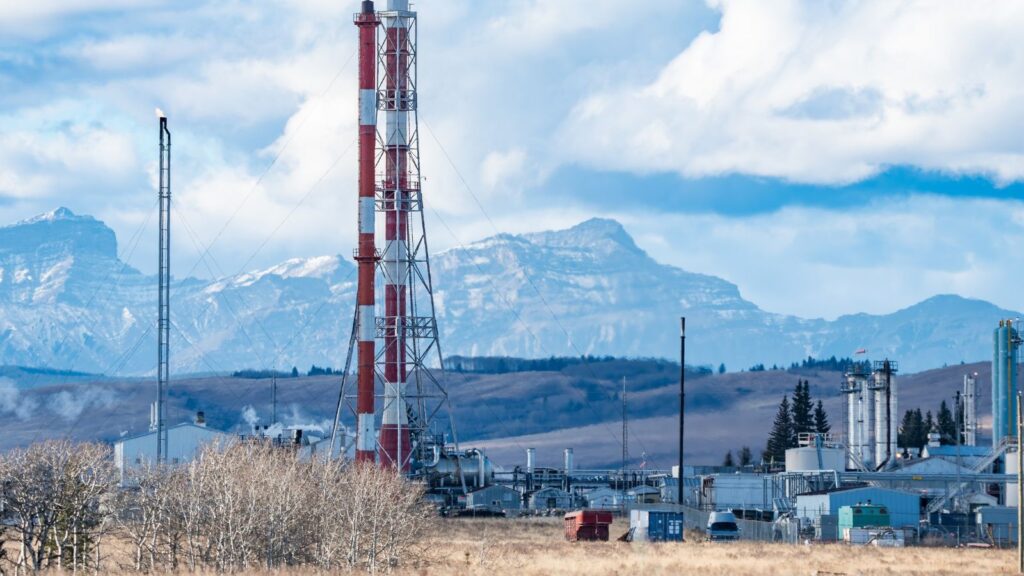
Oil can become cheaper even when the refineries buying it are working harder than they have in decades. That contradiction is now squeezing Canada’s energy industry. Canadian heavy crude has lost more than US$10 a barrel over six weeks, according to market assessments, while U.S. refineries have been running at their strongest average pace in 28 years.
The problem is not a sudden disappearance of global demand. It is a mismatch between where heavy oil is available, where refineries can process it, and what ships cost to move it. Alberta’s producers are caught in the middle, facing weaker prices even as international fuel markets remain under pressure. The consequences reach from the oil sands to provincial finances and potentially the next decisions about pipelines and export markets.
The US$10 Price Drop Has More Than One Meaning
The headline price decline refers to outright prices for heavy crude over roughly six weeks, not a single-day plunge. Reuters reported on October 12 that Canadian, Colombian and Ecuadorian grades had each fallen more than US$10 per barrel, citing Argus Media assessments. Argus put Western Canadian Select, Canada’s main heavy-oil benchmark, around US$74 a barrel on October 8 on its quoted basis. That was a sharp retreat even as international crude benchmarks remained elevated.
A second measure tells an important story. Calgary brokerage CalRock assessed Western Canadian Select for November delivery at Hardisty, Alberta, at US$25.55 below West Texas Intermediate on October 9. That discount was more than US$10 wider than at a comparable point in September’s trading cycle. The two figures describe different price measures and assessment bases; they should not be combined as though they were one transaction. Both, however, show Canadian heavy oil losing ground against other barrels.
U.S. Refineries Are Running Hard, but Cannot Take Everything
American refineries have processed crude at a pace in 2026. According to U.S. Energy Information Administration data reported by Reuters, average weekly capacity utilization reached approximately 93.5% so far this year, the highest comparable level in 28 years. For the week ending October 2, utilization was 92.7%, with crude processing rising by 223,000 barrels per day. The historic statistic describes the year’s average, not an all-time record for that particular week.
Strong diesel prices help explain why refiners are busy. Yet a refinery is not an unlimited buyer of every kind of crude. Heavy, sulfur-rich oil requires specialized equipment, including cokers that transform thick residual material into more useful feedstocks. Those units also have operating limits. Once the right plants have accepted the volumes they can handle, additional Canadian barrels must compete through price reductions or find customers elsewhere. High refinery activity and weak producer prices can therefore occur simultaneously.
Shipping Costs Have Turned Distant Buyers Into a Problem
The greatest obstacle lies offshore. Shipbrokers estimated that transporting oil from the U.S. Gulf Coast to Asia on a supertanker cost more than US$80 million last week, equivalent to US$40 per barrel. The comparable cost earlier in 2026 was about US$10 million to US$15 million per voyage. Reuters linked the squeeze to vessels tied up in transfers around the Gulf of Oman and disruptions associated with the Middle East conflict.
Europe is not an easy alternative. A Gulf Coast-to-Europe voyage cost an estimated US$46 million, or US$24.50 per barrel, compared with US$6.5 million, or US$4 per barrel, before the conflict. Those are transportation estimates, not a surcharge added to every Canadian barrel. Still, they change buying decisions. A shipment that looks attractive at the refinery gate may lose its advantage once freight, insurance and handling are considered. Cheap oil is far less useful if moving it destroys the savings.
A Global Shortage Can Coexist With an American Surplus
Heavy crude is accumulating in the Americas while Asian and European refiners search for suitable supplies. Brent crude remained above US$100 a barrel around October 12, reflecting geopolitical disruption and tight global fuel markets. Canadian heavy oil, meanwhile, was being discounted because it could not economically reach enough of the buyers that wanted it. The contradiction is geographic rather than evidence that the world suddenly needs less energy.
Heavy oil is appealing to sophisticated refineries capable of converting its heavier fractions into diesel and other fuels. But diesel demand does not automatically translate into unlimited demand for crude at every port. Processing configuration, marine freight and available storage all matter. When one part of the system reaches its limit, surplus barrels can build up even as another region pays more for fuel. It is a reminder that global commodity prices are shaped by infrastructure, not just headlines about supply.
Record Canadian Output Is Testing the Export Network
Canada is contributing more barrels to a system struggling to redistribute them. Statistics Canada reported that crude oil and equivalent production reached 27.8 million cubic metres in July, the highest monthly reading in its series beginning in 2016. Oil sands output accounted for 18.4 million cubic metres. More production is welcome for operators and workers, but only when buyers and transportation networks can absorb it without demanding deeper discounts.
The country’s export links remain concentrated. In July, Canada shipped 18.7 million cubic metres of crude to the United States and 2.8 million to destinations elsewhere, with the latter figure up 45% from a year earlier. The Canada Energy Regulator has warned that pipeline routes were built predominantly to serve American markets. When U.S. buyers reach their limits, redirecting oil is not as simple as changing an address on an invoice. Physical routes, terminal access and shipping economics constrain the choices.
Trans Mountain Offers Access, Not Unlimited Escape
The expanded Trans Mountain pipeline has changed Canada’s options. Since 2024, the system has provided nominal capacity of 890,000 barrels per day, carrying crude from Alberta toward British Columbia and marine export markets. The Canada Energy Regulator says the expansion helped ease pipeline congestion and improve Canadian pricing relative to international benchmarks. For a producer hoping to sell beyond the United States, that extra Pacific access is strategically important for exporters.
But unused space is becoming harder to find. S&P Global reported that Trans Mountain’s throughput reached a record 840,000 barrels per day, about 94% of capacity, during the second quarter of 2026. Its operator is pursuing optimization projects, including a potential 90,000-barrel-per-day addition expected in early 2027, subject to project requirements. More capacity could restore flexibility, but it cannot immediately solve the global tanker shortage. Access to the ocean matters most when ships and foreign customers are economically reachable.
Venezuelan Heavy Oil Is Competing for the Same Buyers
Canadian barrels are not alone in looking for refinery space. Venezuelan heavy crude shipments into the U.S. Gulf Coast have climbed as the country’s oil trade has reopened. S&P Global Commodities at Sea recorded 12.2 million barrels of Venezuelan heavy crude arriving in August, compared with 1.5 million in August 2025. U.S. government figures recorded imports from Venezuela of 624,000 barrels per day during the week ending October 2.
The competition matters because Venezuelan and Canadian heavy crudes often target refinery equipment designed to process dense, sulfur-rich feedstocks. The Bank of Canada warned in July that renewed Venezuelan competition could weigh on Western Canadian Select pricing. That does not mean the two supplies are interchangeable or that Venezuela alone caused the decline. Freight costs, maintenance and growing Canadian production are also involved. But when buyers have alternatives, Canadian producers can lose negotiating power precisely when their export routes are crowded.
U.S. Emergency Oil Releases Add to the Supply Squeeze
Washington’s effort to stabilize energy markets has created a source of crude supply. In late September, the U.S. Department of Energy said it had awarded more than 133 million barrels through Strategic Petroleum Reserve exchanges, under a 172-million-barrel program. An exchange of up to four million barrels was authorized on October 10 after hurricane-related disruptions in the Gulf region. These announcements demonstrate how authorities have tried to keep fuel supply chains functioning.
The numbers require a distinction: barrels awarded under an exchange are not necessarily delivered immediately, and not every reserve barrel competes directly with Canada’s heavy blend. Nonetheless, reserve releases add to the supply picture facing refiners and traders. They may help stabilize fuel markets while increasing pressure on particular crude grades. For Canadian exporters, the difficulty is cumulative. U.S. barrels arrive alongside stronger Venezuelan flows, robust oil sands output and shipping routes that have become costly to use.
The Discount Could Affect Alberta’s Public Finances
A wider heavy-oil discount is not a concern for investors alone. Alberta collects royalties linked to the value and profitability of its oil production, making the gap between Western Canadian Select and West Texas Intermediate relevant to public revenue. Its 2026 fiscal plan estimated that a US$1-per-barrel increase in the average light-heavy differential, sustained over the budget year, would reduce provincial revenue by C$670 million, assuming other conditions remained unchanged.
That estimate should not be multiplied by the latest market swing and presented as money already lost. The budget sensitivity describes an annual average, whereas the October discount is a shorter-lived market observation. Other variables, notably higher benchmark oil prices and the Canadian dollar’s exchange rate, can offset some of the pressure. Alberta’s first-quarter forecast expected a US$14.80 average differential for 2026–27, well narrower than the latest Hardisty assessment. If the gap stays wide, future royalty forecasts could become harder to meet.
Cheaper Heavy Crude Does Not Promise Cheaper Diesel
The oil price slump may be welcome news to drivers, truck fleets and households paying heating bills. Cheap feedstock in one region does not lower the price of finished fuel. U.S. Energy Information Administration figures showed average on-highway diesel at US$6.199 per gallon on October 5, even as Canadian heavy crude faced widening discounts. Diesel prices reflect refining capacity, product inventories, transport costs and fuel demand, not merely what an Alberta producer receives.
The distinction is important during a period of disrupted fuel supplies. U.S. distillate inventories, which include diesel and heating oil, stood near 105.1 million barrels in the week ending October 2, according to federal figures reported by Reuters. A refinery cannot transform a cheap barrel into truck fuel if the processing equipment is already heavily used. The benefits of inexpensive Canadian crude may instead accrue to buyers able to process it, while consumers continue facing expensive finished products.
What Could Bring Canadian Heavy Oil Prices Back Into Balance
Lower tanker rates offer the fastest relief. If moving a cargo to Asia or Europe becomes economical again, buyers could compete more aggressively for heavy crude stranded in the Americas. Refinery maintenance winding down and disruptions at facilities ending may help restore demand. But those improvements depend on shipping security, available vessels, fuel-market conditions and how much additional oil reaches the market from competing producers.
Canada’s longer-term answer involves routes and flexibility. Trans Mountain has outlined optimization opportunities that could lift system capacity toward 1.19 million barrels per day, although projects require approvals and investment decisions. The Canada Energy Regulator has emphasized that diversified export access can reduce exposure to single-market disruptions. For now, three figures deserve close attention: the Western Canadian Select discount, U.S. refinery utilization and the cost of shipping crude across oceans. Their combined movement will indicate whether the pressure is easing or merely shifting somewhere else.
