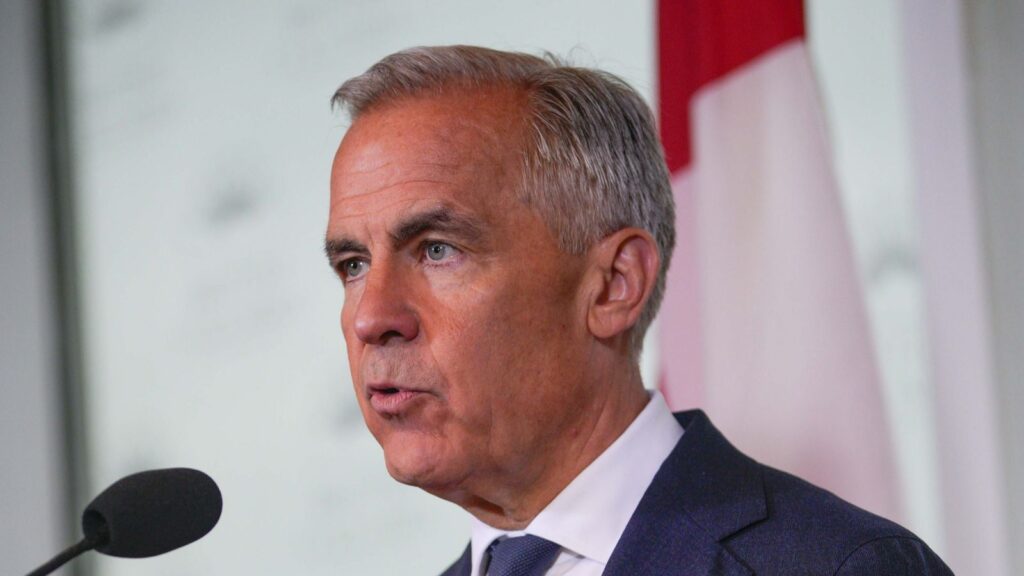
Canada’s economic map is being redrawn under pressure. Prime Minister Mark Carney’s trip to Türkiye comes as Ottawa looks for stronger commercial and strategic relationships beyond the United States, its overwhelmingly dominant trading partner and the source of increasingly disruptive tariff pressure.
The visit carries unusual weight. It is the first dedicated bilateral visit to Türkiye by a sitting Canadian prime minister, and discussions are expected to reach well beyond traditional diplomacy. Free trade negotiations, nuclear energy, liquefied natural gas, critical minerals and defence cooperation are all part of an expanding agenda between the two NATO allies. Yet the relationship remains relatively small in dollar terms, making this trip less about replacing the U.S. market than building alternatives. The real question is whether a warmer political relationship can now produce lasting contracts, investment and industrial partnerships.
A First Bilateral Visit With More Than Symbolic Weight
Carney left Ottawa on October 21 for a visit built around meetings in Ankara and Istanbul, including talks with Turkish President Recep Tayyip Erdoğan and engagement with business leaders. The Prime Minister’s Office has described it as the first bilateral visit to Türkiye by a Canadian prime minister, giving the trip significance beyond the individual agreements that might emerge. Ankara has signalled similar ambition. Türkiye’s presidential communications office said the two governments envisage elevating relations to a “Strategic Partnership” and indicated that agreements in several fields of cooperation are expected during the visit.
The timing reflects how quickly the relationship has accelerated. Carney and Erdoğan met on the sidelines of the NATO summit earlier in 2026, where trade, energy, critical minerals, aerospace and defence were among the subjects discussed. Canada and Türkiye then formally launched negotiations toward a free trade agreement in July. Those developments provide Carney with something more substantial than a ceremonial itinerary: there is already a policy framework waiting to be expanded. What was largely a secondary relationship in Canadian foreign policy is increasingly being treated as a potential economic and security partnership.
Washington’s Trade Shock Is Driving the Search for Alternatives
The United States remains impossible for Canada to replace economically, but recent trade disruptions have made diversification considerably more urgent. Statistics Canada reported that the U.S. accounted for 71.7% of Canadian merchandise exports in 2025, down from 75.9% a year earlier. At the same time, Canadian merchandise exports to countries other than the United States rose 17.2%. The shift does not mean Canadian businesses are abandoning the American market. It does show how tariffs and political uncertainty are changing decisions about where future growth should come from.
That calculation intensified after Canada-U.S. trade negotiations ran into new difficulties in 2026. Ottawa suspended negotiations in August after what the federal government described as last-minute American demands, while U.S. tariffs affected tens of billions of dollars in Canadian goods. Carney’s government has since made doubling exports to non-U.S. markets over the next decade an explicit objective. Türkiye alone cannot transform that picture: bilateral merchandise trade was only about C$4.3 billion in 2025, compared with the immense scale of Canada-U.S. commerce. Its importance lies in what it represents—a broader portfolio of markets that can gradually reduce Canada’s exposure to a single customer.
Free Trade Talks Give the Relationship a Commercial Backbone
The most concrete economic initiative already underway is the proposed Canada-Türkiye free trade agreement. Formal negotiations were launched in July 2026, followed by Canadian consultations and preparatory work on the scope of the agreement. Bilateral merchandise trade reached approximately C$4.3 billion in 2025, with Canada exporting about C$1.1 billion to Türkiye and importing roughly C$3.2 billion. Ottawa says overall trade between the countries has increased by nearly 50% during the past five years, providing a larger base from which negotiators can work.
The composition of that trade also shows why businesses on both sides see room to expand. Canadian exports to Türkiye include lentils, aircraft, steel scrap and optical instruments, while imports include pharmaceuticals, fishing vessels, rugs and textiles, and turbine-engine components. For a Saskatchewan pulse producer or a Canadian aerospace supplier, a trade agreement could matter through something as practical as a lower tariff or a more predictable customs process. For Turkish manufacturers, Canada offers access to a wealthy market and, potentially, deeper North American supply-chain relationships. Negotiations are still at an early stage, however, meaning Carney’s visit is more likely to accelerate the process than produce a completed trade pact.
CANDU Could Become the Biggest Energy Prize
Nuclear power may ultimately offer the largest single commercial opportunity in the relationship. In March 2026, Candu Energy, an AtkinsRéalis company, signed a memorandum of understanding with Türkiye Nuclear Energy Company, or TÜNAŞ, to examine potential deployment of Canadian CANDU reactor technology. The work covers possible sites, licensing requirements, business models, localization and workforce development. During Carney’s visit, nuclear cooperation is expected to remain prominent, including further work on whether CANDU technology could compete for Türkiye’s planned nuclear expansion, particularly a proposed project on the Black Sea.
The scale explains the attention. Türkiye currently has no operating commercial nuclear power reactors, but four units are under construction at the Akkuyu nuclear power plant, with total capacity of roughly 4,456 megawatts. The country’s longer-term strategy envisions three nuclear power plants with as many as 12 reactors. Canada is not alone in pursuing that opportunity: Türkiye has also held discussions with companies and governments from South Korea, China and elsewhere. A CANDU project would therefore require years of technical, financial and regulatory work before construction. Still, winning even part of Türkiye’s nuclear buildout could support Canadian engineering, uranium, nuclear services and supply-chain jobs for decades.
LNG and Critical Minerals Add a Broader Energy Dimension
The energy conversation is not limited to nuclear power. Canadian Natural Resources Minister Tim Hodgson and Turkish officials have already discussed liquefied natural gas, mining and critical-mineral processing, while reporting ahead of Carney’s meetings indicated that potential Turkish purchases of Canadian LNG and minerals could feature in the talks. That fits Türkiye’s interest in diversifying energy supplies and Canada’s push to create more routes to overseas customers. The opportunity is especially relevant because energy exports have traditionally reinforced Canada’s dependence on the U.S. market.
Canada’s LNG export capacity is also expanding. A final investment decision announced in September 2026 for the second phase of LNG Canada would increase the country’s ability to serve markets across the Pacific and, indirectly, strengthen Canada’s position as a global gas supplier. Türkiye, meanwhile, has developed substantial LNG import infrastructure as part of its effort to diversify away from dependence on pipeline suppliers. Critical minerals create another possible bridge, particularly as NATO countries place greater emphasis on secure sources of metals needed for batteries, aerospace systems, electronics and defence equipment. No major Canadian LNG supply contract with Türkiye had been announced before Carney’s arrival, however, so the immediate goal is better understood as creating commercial pathways rather than celebrating completed energy deals.
Defence Cooperation Returns After a Difficult Reset
Defence is potentially one of the most lucrative areas of cooperation, but also one of the most politically sensitive. Türkiye has developed a significant domestic defence industry, particularly in drones, missiles, armoured vehicles and naval vessels, while Canada has strengths in aerospace, sensors, electronics and advanced manufacturing. Discussions around Carney’s trip are expected to include opportunities in drones and naval cooperation. The commercial relationship has already rebounded: Canadian government data recorded approximately C$107.9 million in military goods and technology exports to Türkiye in 2024, making it one of Canada’s largest non-U.S. destinations for controlled military exports that year.
That recovery followed a serious dispute. A Canadian government review found credible evidence that Canadian-made imaging and targeting technology had been incorporated into Turkish drones used during the Nagorno-Karabakh conflict. Export permits were suspended, and the episode became a lasting source of friction. Canada changed its approach in January 2024, ending a policy of presumptive denial for military export permits to Türkiye and returning applications to case-by-case review. Ottawa still requires end-use assurances and evaluates exports under Canada’s risk framework. Any new defence partnership will therefore have to balance commercial opportunity with the lessons of the earlier dispute.
Why Türkiye Matters to Canada’s Middle-Power Strategy
Türkiye offers Canada something larger than a new export destination. With a population of roughly 86 million and an economy of about US$1.6 trillion in 2025, it is a G20 member positioned at the intersection of Europe, Asia, the Middle East and the Black Sea. It has been a NATO member since 1952 and fields the alliance’s second-largest army. Its control over the Turkish Straits gives Ankara additional strategic importance at a time when the war in Ukraine, Black Sea security and energy transportation remain central concerns for NATO governments.
That makes the country a useful, if sometimes complicated, partner for Ottawa. Canada and Türkiye share interests in NATO readiness, Ukraine, defence production, energy security and expanded trade, even when their foreign-policy positions do not align perfectly. Türkiye also has commercial reach throughout Central Asia, the Middle East, the Caucasus and parts of Africa. For a Canadian government trying to operate more actively as a middle power, relationships with countries that have their own regional influence can multiply Canada’s reach. The strategy is not based on finding another United States. It is based on developing enough meaningful partnerships that Canadian businesses and policymakers have more options when one major relationship becomes unpredictable.
The Real Test Is Turning Diplomatic Momentum Into Deals
The largest risk surrounding the visit is mistaking an ambitious agenda for completed business. Nuclear discussions remain exploratory. A Canadian LNG purchase agreement had not been announced before Carney’s meetings. Free trade negotiations are only beginning, and analysts have cautioned that major defence contracts may not materialize immediately. Even the existing trade relationship remains modest: Türkiye represented less than 0.3% of Canada’s total merchandise trade in 2025. In practical terms, success will be measured less by the number of announcements made during the visit than by what happens afterward—negotiating rounds, investment decisions, procurement opportunities and companies signing contracts.
There are political complications as well. Canadian-Turkish relations still carry the memory of the drone-sensor dispute, while human-rights organizations have criticized Ankara over pressure on political opponents, journalists, civil society groups and LGBTQ+ organizations. Those issues can create tension as Ottawa pursues what officials have described as a pragmatic approach to engagement. Yet diversification was never likely to involve only easy partners or instant breakthroughs. Carney’s Türkiye trip illustrates a more fundamental change in Canadian economic strategy: the United States will remain Canada’s biggest market, but Ottawa increasingly wants the ability to look elsewhere for the next energy project, defence partnership, investment commitment or export customer.
