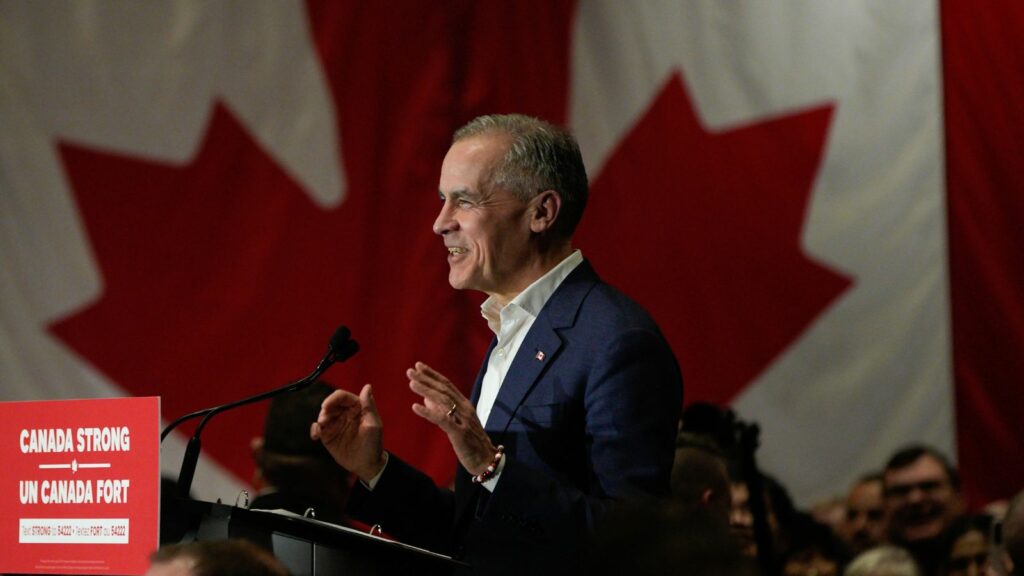
Canada’s long-running argument over when Ottawa should step into major strikes may soon move from emergency decisions to legislation. Prime Minister Mark Carney’s Liberal government is preparing an overhaul of federal labour law, with reporting indicating that the coming bill could make government intervention in serious disputes more structured — and potentially easier to trigger.
The details remain important: no bill has yet been published, and Ottawa has not formally confirmed exactly how its strike-intervention powers would change. But months of consultations have examined Section 107 of the Canada Labour Code, stronger mediation tools and ways to deal with disputes that threaten major supply chains. Unions are pushing in the opposite direction, arguing that Ottawa should restrict or repeal Section 107 rather than create another pathway for ending work stoppages.
The Coming Labour Bill Could Change Ottawa’s Role
The Liberal government is preparing legislation to overhaul federal labour laws during Parliament’s fall sitting. According to iPolitics, government, industry and union sources expect the legislation to arrive relatively early in the session. Jobs and Families Minister Patty Hajdu has also been consulting labour and industry representatives as the government moves from months of consultations toward legislation. Her office has said the goal is to protect worker rights, strengthen good-faith bargaining and improve the federal labour-relations framework.
The most consequential unresolved issue is how Ottawa would intervene when negotiations deteriorate into a major strike or lockout. One Liberal source told iPolitics that the legislation could lower the threshold for federal intervention. However, the mechanism remains unclear. Changes could involve Section 107, a new special-mediator process, or some combination of dispute-resolution measures. Until actual legislative text is tabled, claims about exactly how far the government intends to go remain preliminary rather than settled policy.
Section 107 Already Gives Ottawa Unusually Broad Powers
Section 107 is only a few lines long, but its language gives the federal labour minister significant discretion. The Canada Labour Code permits the minister to take steps considered necessary to maintain or secure “industrial peace” and to refer questions to the Canada Industrial Relations Board. Recent governments have interpreted that authority broadly enough to direct the board to resume operations, extend collective agreements and send unresolved bargaining issues into binding arbitration.
That interpretation transformed what had once been a relatively obscure section of labour law into one of the most controversial tools available to Ottawa. Federal briefing documents show Section 107 was used eight times during 2024 and once in 2025. Government records further indicate that, from 2023 through early 2026, nine of 10 referrals were used to end or temporarily pause a work stoppage, impose arbitration, or both. That recent history explains why any attempt to clarify or expand intervention powers is receiving close attention from organized labour.
Most Federal Bargaining Never Reaches This Point
The debate can make strikes appear more common than they actually are. The federal government’s September 2026 consultation report says approximately 95 per cent of collective agreements are reached without a work stoppage. Employers and unions participating in the review broadly agreed that negotiated settlements remain preferable to imposed outcomes. Their disagreement is largely about what should happen in the smaller number of disputes that become prolonged, economically disruptive or politically difficult.
The stakes can still be considerable because federally regulated industries include airlines, railways, ports, telecommunications, banks, postal and courier services and other operations connected to national commerce. Ottawa says the federally regulated private sector encompasses more than 22,000 employers and over one million employees. A disruption involving even a relatively small bargaining unit can therefore affect passengers, exporters, manufacturers and businesses far beyond the negotiating table. The government argues that this makes effective early dispute-resolution mechanisms particularly important.
A Special Mediator Could Become the Alternative
One possible model emerged from the Industrial Inquiry Commission created after labour turmoil at West Coast ports. Its final report recommended putting a formal special-mediator system into the Canada Labour Code. After ordinary conciliation had failed, a special mediator could become directly involved, examine the parties’ positions and eventually provide recommendations and an assessment of what might produce a settlement. The commission argued that better information could make government intervention more transparent and less arbitrary.
The commission’s recommendation would also temporarily restrict strikes and lockouts while the special mediator was active and for 10 days after the mediator issued a report. Importantly, the commission did not recommend automatically replacing collective bargaining with binding arbitration. Its stated goal was to preserve the right to strike while creating another step before more intrusive intervention. The government subsequently included the special-mediator concept in its consultations, while iPolitics reported that the coming bill could use either Section 107 or such a new mechanism to increase Ottawa’s ability to respond.
Unions Fear Intervention Changes the Bargaining Calculation
Canada’s labour movement has responded forcefully because unions argue that the possibility of government intervention can alter negotiations long before anyone actually walks off the job. If an employer believes Ottawa will eventually terminate a damaging strike and send unresolved issues to arbitration, labour groups contend that the employer may have less incentive to make concessions before a deadline. The federal consultation report itself recorded widespread union concern that repeated Section 107 interventions could weaken confidence in collective bargaining.
The Canadian Labour Congress has called for Section 107 to be repealed and warned that the government’s September report left open proposals that could increase intervention in strikes. CUPE has similarly argued that the provision gives ministers excessive discretion. Those organizations support measures such as stronger mediation, better protection against bad-faith bargaining and faster grievance processes, but oppose mechanisms they believe would reduce the practical value of strike action. Their position puts substantial pressure on a Liberal government that is presenting the broader reform package as strengthening worker protections.
The Constitutional Question Is Bigger Than Section 107
Any new law will operate against an important constitutional backdrop. In its landmark 2015 Saskatchewan Federation of Labour decision, the Supreme Court of Canada held that the right to strike is an essential component of meaningful collective bargaining protected by freedom of association under Section 2(d) of the Charter. The ruling does not mean every restriction on strikes is automatically unconstitutional, but governments must be able to justify interference and provide appropriately tailored alternatives where necessary.
That issue is already being tested. Unions have launched court challenges against federal Section 107 interventions involving railways and other federally regulated workplaces. Government briefing documents have acknowledged proceedings before the Federal Court and Federal Court of Appeal. The litigation matters because legislation that more clearly authorizes intervention could answer questions about Parliament’s statutory intention without automatically resolving the Charter issue. Courts could still be asked whether any new limits substantially interfere with meaningful collective bargaining and, if they do, whether those restrictions can be justified under the Charter.
Employers See Supply-Chain Reliability Very Differently
Business organizations approach the issue from the other side of the bargaining table. The Canadian Chamber of Commerce has argued that repeated transportation and infrastructure disruptions damage Canada’s reputation as a reliable trading economy. It has advocated additional dispute-resolution tools for federally regulated trade infrastructure and has previously supported giving government greater ability to move disputes toward binding arbitration when vital supply chains face serious disruption.
The government’s own consultations reveal similar divisions. Employers generally supported retaining Section 107 or creating a comparable intervention mechanism, particularly for disputes affecting ports, railways and other critical infrastructure. Some called for clearer thresholds defining when government action would be justified, arguing that predictable rules would be preferable to improvised political intervention. Labour groups, by contrast, generally wanted Section 107 repealed, narrowed or surrounded by stronger safeguards. That leaves Ottawa trying to reconcile two fundamentally different concerns: avoiding damaging national disruptions while preserving enough bargaining leverage for collective negotiations to remain meaningful.
Recent Strikes Show Why the Debate Has Intensified
Ottawa’s use of Section 107 accelerated during a turbulent period in federally regulated labour relations. Federal records list interventions involving CN and CPKC rail workers, West Coast ports, the ports of Montreal and Quebec, Canada Post and Air Canada. In several disputes, the government directed the Canada Industrial Relations Board toward resumed operations and binding arbitration. The West Coast Ports Industrial Inquiry Commission later observed that repeated expectations of government intervention could themselves affect how employers and unions bargain.
Yet intervention is not inevitable. In the summer of 2026, roughly 4,400 WestJet flight attendants went on strike during a busy travel period. Reuters reported that 922 flights were cancelled between August 1 and 5, affecting approximately 250,000 passengers. Despite that disruption, the parties reached a tentative agreement through bargaining without Ottawa invoking Section 107. The episode illustrates both sides of the argument: strikes can impose substantial costs on the public, but pressure generated by an actual work stoppage can also help produce a negotiated settlement.
The Fine Print Will Determine How Significant the Reform Is
The most important questions will become answerable only when the Liberals release the legislation. A major expansion of intervention power would look very different from legislation that simply establishes clearer guardrails around Section 107. The same is true of a special-mediator system: a mediator empowered only to assist negotiations would represent a substantially different model from one whose recommendations could ultimately trigger compulsory arbitration or prevent strike action for extended periods.
Several details therefore deserve close scrutiny, including what test would define the “national interest,” whether economic disruption alone could justify intervention, when mediation must be exhausted, whether ministers would have to explain their decisions publicly and how much independence the Canada Industrial Relations Board would retain. Ottawa’s own consultation found remarkable agreement that the bargaining system works in roughly 95 per cent of cases. The political and legal battle is now concentrated on the difficult remainder — the relatively rare disputes whose consequences extend far beyond workers and employers at the bargaining table.
