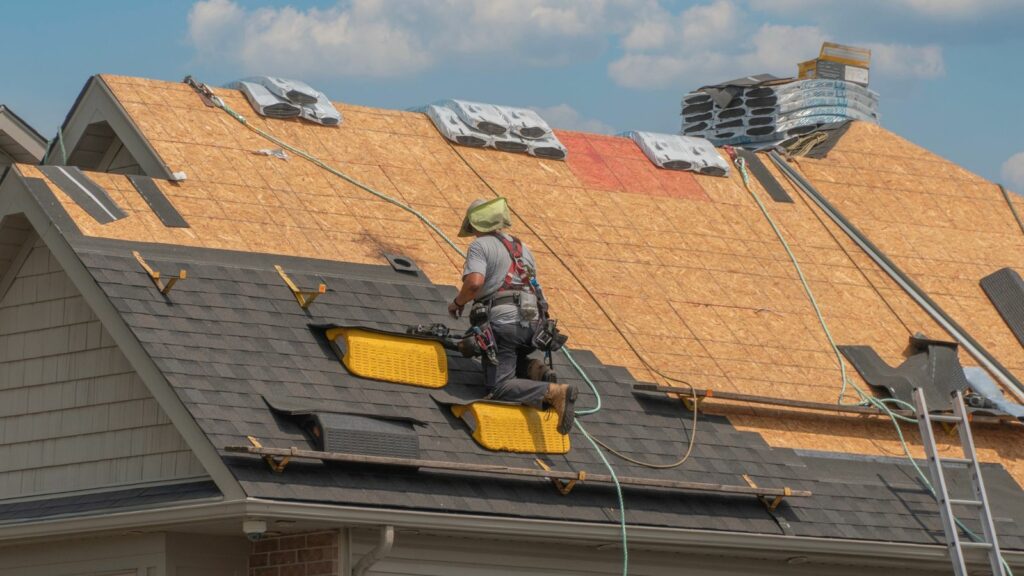
Canada’s homebuilding slowdown became much harder to ignore in July. Actual housing starts in centres with populations of 10,000 or more fell 19% from a year earlier, dropping to 18,834 units. Vancouver delivered the most dramatic number, with starts plunging 42%, while Toronto recorded a 10% decline. Montréal moved in the opposite direction, posting a modest increase.
The pullback comes at an awkward moment for Canadian housing. Thousands of homes are still being completed from projects launched during stronger construction cycles, yet fewer new developments are now entering the pipeline. With affordability remaining a major concern in many cities, the question is shifting from how many cranes are visible today to how many homes will actually be available several years from now.
Canada’s Construction Slowdown Is Becoming More Visible
The 19% year-over-year decline captures actual July construction starts in Canadian centres with at least 10,000 residents. CMHC counted 18,834 starts, down from 23,155 in July 2025. The year-to-date picture is less dramatic but is moving in the same direction: 131,851 homes had been started through July, roughly 4% fewer than during the same period last year. That distinction matters because a particularly weak month can exaggerate the apparent severity of a trend, especially when large apartment projects are involved.
Other measures nevertheless point toward cooling momentum. Canada’s seasonally adjusted annual rate of starts across all areas fell 5% from June to 229,074 units in July. CMHC’s six-month trend measure stood at 247,377 units, slipping 0.5%. The agency uses that smoother measure because the start of one large condo or rental tower can move monthly numbers considerably. Taken together, the figures suggest not a sudden halt in homebuilding, but a construction cycle steadily losing some of its earlier momentum.
Vancouver’s 42% Drop Is the Sharpest Warning Sign
Vancouver stands out even against a weakening national backdrop. Actual housing starts across the Vancouver census metropolitan area fell 42% from July 2025, with CMHC attributing the decrease to weakness in both multi-unit construction and single-detached homes. The decline follows a 35% year-over-year drop recorded in June, making the latest number harder to dismiss as merely one unusually quiet month.
The longer-term picture helps explain what is happening. Vancouver produced 27,185 housing starts in 2025, but CMHC’s summer baseline forecast calls for roughly 27,000 in 2026, followed by 25,100 in 2027 and 22,000 in 2028. Apartment construction is expected to account for most of that contraction. Developers have been facing weaker condominium demand, more unsold inventory and still-elevated construction costs. For someone walking through Metro Vancouver today, the number of cranes may still suggest an enormous building boom. Many of those cranes, however, represent projects sold, financed and started years ago. The more important question is what replaces them when those buildings are completed.
Toronto’s Condo Problem Continues to Weigh on New Supply
Toronto also moved backward in July, although its 10% year-over-year decline was far less dramatic than Vancouver’s. CMHC said the decrease was driven by lower multi-unit starts, an important detail in a region where apartment and condominium projects make up a large portion of new housing. The weakness fits a broader pattern that has been developing across the Greater Toronto Area rather than representing an isolated monthly setback.
Toronto recorded just 26,087 total housing starts in 2025, down sharply from 37,718 in 2024. CMHC currently expects about 26,400 starts in 2026 before a potential recovery to 28,600 in 2027 and 31,200 in 2028. The condominium market remains the key pressure point. Earlier CMHC research found that condominium apartment sales in Toronto had fallen dramatically between 2022 and early 2025, while inventories of unsold pre-construction units surged. That creates a straightforward financing problem for developers: if buyers are reluctant to commit before construction, projects become more difficult to finance and some launches get delayed. The result may be fewer ownership units entering construction even as the region continues grappling with long-term affordability.
Montréal Is Moving Against the National Trend
Montréal provided the clearest counterpoint to the weakness in Vancouver and Toronto. Actual housing starts increased 3% from a year earlier in July, with higher multi-unit construction driving the gain. That performance is especially notable because Montréal is coming off a remarkably strong construction year. Total starts jumped from 17,570 in 2024 to 27,777 in 2025, with apartment construction accounting for the overwhelming majority of the increase.
The city is not expected to maintain that record-setting pace indefinitely. CMHC forecasts approximately 24,600 Montréal starts in 2026, followed by 22,000 in 2027 and 20,500 in 2028. Even so, Montréal’s trajectory illustrates how different Canada’s regional housing cycles have become. Rental development was particularly powerful in 2025, when CMHC says rentals accounted for more than 80% of starts in the Montréal region. Lower land costs in suburban areas such as Laval and the North and South Shores helped support development. For households focused on the national 19% decline, Montréal is a reminder that there is no single Canadian housing market; financing conditions, land economics, population changes and available inventory can produce very different outcomes from one metropolitan area to another.
Completions Are Rising Even as Fewer New Projects Begin
One of the most important parts of July’s numbers is easy to overlook: Canada is still finishing a substantial number of homes. In centres with populations of at least 50,000, 373,091 units remained under construction in July, essentially unchanged from June. Builders completed 19,773 homes during the month, an 8.1% increase from June. Meanwhile, the number of permitted units that had not yet started construction rose 3% to 141,480.
That creates what can feel like a housing contradiction. New starts can fall at the same time that newly finished apartments continue appearing on the market because residential construction has a long pipeline. A tower completed this summer may have been approved, financed and started several years earlier. For renters and buyers, that backlog provides an important near-term cushion: additional homes can continue reaching the market even while current development conditions weaken. The concern comes later. If starts remain depressed for a prolonged period, the large inventory of projects currently under construction will eventually be completed without an equally large generation of new projects behind it. Today’s slowdown therefore matters most for the supply Canadians may need two or three years from now.
High Costs and Weak Demand Are Squeezing Builders From Both Sides
Canada’s development industry is being caught between the cost of producing housing and uncertainty over whether enough buyers will pay for it. CMHC says elevated construction costs, unsold inventories and softer demand are causing developers to delay projects and adjust what they build. Statistics Canada found residential building construction costs were still increasing in the second quarter of 2026. Although cost growth has moderated from the extraordinary increases experienced earlier in the decade, expensive land, materials, labour and financing can leave developers with little room to lower selling prices while keeping projects viable.
Demand has softened at the same time. The Bank of Canada expects residential investment to remain constrained by slow population growth, affordability challenges, cautious households and a large stock of unsold smaller condominiums in Toronto and Vancouver. That combination creates a difficult loop. Buyers may wait for prices to become more affordable, while developers may wait for stronger presales before beginning construction. The longer both sides wait, the fewer projects can move forward. CMHC’s national baseline now anticipates approximately 241,400 housing starts in 2026, below the 259,028 homes started in 2025.
Renters Could See Relief Before the Ownership Market Recovers
There is another side to the construction boom of the past several years: a large wave of rental apartments is now reaching completion. CMHC has found asking rents declining in Toronto and Vancouver amid rising supply and slower demand, while vacancies have increased in many newer buildings. Vancouver’s purpose-built rental vacancy rate reached 3.7% in 2025, while Toronto’s was 3.0%. In some buildings, landlords have responded with incentives ranging from discounted parking and move-in credits to periods of free rent.
That does not mean Canada’s rental affordability problem has disappeared. CMHC says lower-priced rental segments remain much tighter than expensive new buildings, and rents paid by many existing tenants have continued increasing. Still, the shift demonstrates why continued construction matters. A newly finished apartment does not have to be inexpensive on opening day to affect the broader market; additional vacancies create more competition for tenants and can trigger chains of households moving between units. The risk is that today’s rental relief could eventually weaken if developers interpret rising vacancies and slower rent growth as reasons to reduce the next generation of rental construction.
The Bigger Concern Is Canada’s Long-Term Supply Gap
The July decline looks even more striking when compared with the scale of construction CMHC believes would be necessary to materially restore housing affordability. Its updated housing-supply modelling estimates that Canada would need roughly 430,000 to 480,000 housing starts every year through 2035 under scenarios designed to return affordability closer to pre-pandemic levels. By comparison, CMHC’s current baseline forecast is for about 241,400 starts in 2026, 223,400 in 2027 and 211,900 in 2028. The difference shows how wide the gap remains between current market economics and Canada’s long-term housing ambitions.
More construction alone cannot instantly solve affordability. Housing takes years to approve and build, new units are often expensive, and deeply affordable housing frequently requires public support. But increasing the overall stock can still matter. Academic research examining vacancy chains has found that people moving into new market-rate homes can free older units for other households, spreading supply effects beyond the newest buildings. That is why July’s numbers deserve attention beyond one weak month. Canada currently has a substantial number of homes being finished, but if the pipeline behind them keeps shrinking, the country could enter its next period of stronger housing demand with fewer projects ready to meet it.
