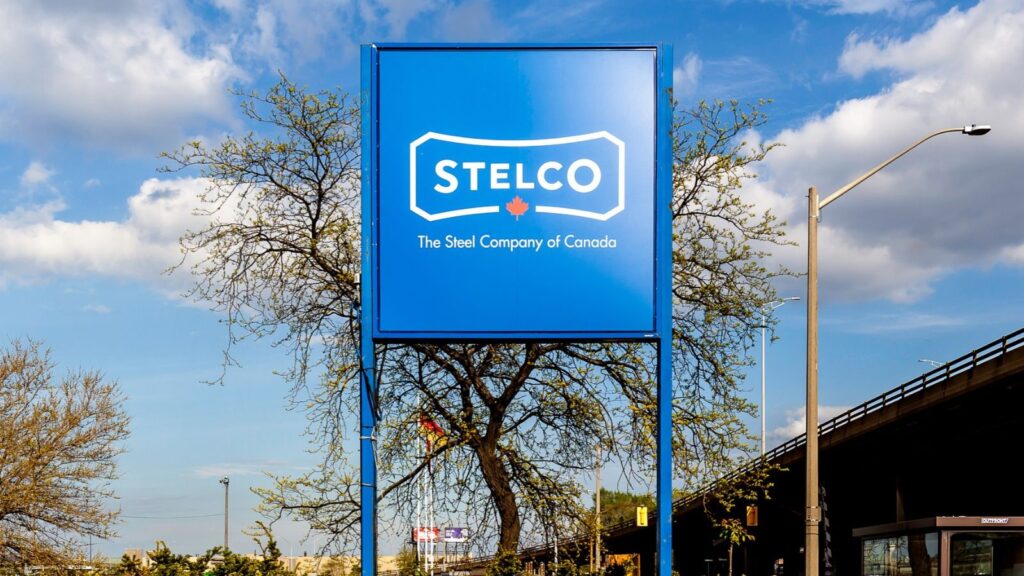
Canada’s fight to protect its steel industry has taken a dramatic turn. Industry Minister Mélanie Joly has warned American-owned Stelco that its Canadian assets could be forcibly sold if the company fails to honour employment commitments made when Cleveland-Cliffs acquired the steelmaker in 2024.
Speaking in Ottawa on October 14, 2026, Joly said financial penalties, court-ordered compliance and forced divestiture were among the government’s options as Stelco proceeded with layoffs affecting up to 500 workers in Ontario.
The dispute reaches beyond one company’s staffing decisions. It raises fundamental questions about foreign ownership, legally binding investment promises and whether American trade policies can justify reducing Canadian industrial operations.
For workers in Hamilton and Nanticoke, the consequences are already unfolding. The government is threatening enforcement, the company denies wrongdoing, and hundreds of families face uncertainty about their livelihoods.
Ottawa Raises the Stakes With a Forced-Sale Warning
Industry Minister Mélanie Joly escalated Ottawa’s confrontation with Stelco on October 14, warning that American parent company Cleveland-Cliffs could eventually be compelled to divest its Canadian operations. Speaking to reporters after an event in Ottawa, Joly said the federal government was reviewing the company’s response to allegations that it had violated legally binding employment commitments. The minister emphasized that several legal outcomes remained possible, including financial penalties and court orders requiring compliance. Her message was that commitments made to secure approval of a foreign takeover cannot simply disappear when business conditions become difficult.
Importantly, no forced sale has been ordered. Joly was describing potential consequences of a legal process, not announcing that the government had seized Stelco or begun transferring ownership. She also said she remained willing to meet company representatives and negotiate a solution that protects Canadian jobs. The distinction matters because a court would have to examine the relevant legal obligations before imposing a remedy. Nevertheless, publicly raising the prospect of divestiture represents a significant escalation in a dispute already attracting national attention.
Up to 500 Workers Are Facing Layoffs Across Two Ontario Facilities
The confrontation began intensifying after Stelco announced on September 28 that it would indefinitely idle cold-rolling and coated-steel operations at Hamilton Works. The company said prolonged trade disruption, weak market demand and competitive pressure from imported steel had made the operations financially unsustainable. Its restructuring plan affects as many as 500 employees across Hamilton Works and Lake Erie Works in Nanticoke. Steelmaking at Lake Erie Works is continuing, so the announcement does not represent a complete shutdown of Stelco’s Canadian production.
Layoff notices began reaching Hamilton employees in early October. Ron Wells, president of United Steelworkers Local 1005, said approximately 330 workers at Hamilton were expected to be affected over several weeks, with additional reductions at Lake Erie Works and among other employees. The first notices included instructions not to return for scheduled shifts, turning a broad corporate announcement into immediate financial uncertainty. Cleveland-Cliffs has described the layoffs as temporary, while union representatives remain concerned about when employees might return. For workers, an indefinite interruption can be difficult to distinguish from a permanent job loss when no reliable return date exists.
Cleveland-Cliffs Made Major Promises When It Bought Stelco
The roots of the confrontation extend to July 2024, when Cleveland-Cliffs announced an agreement to purchase Stelco at an enterprise value of approximately US$2.5 billion, equivalent to C$3.4 billion at the time. The transaction was completed on November 1, 2024, bringing roughly 1,800 additional unionized steelworkers into the American company’s workforce. Cleveland-Cliffs presented the acquisition as an opportunity to strengthen North American steel production, lower operating costs and preserve Stelco’s Canadian industrial identity.
The company’s original announcement projected approximately US$120 million in annual savings without reducing union jobs. It also outlined plans to maintain significant operations in Hamilton and Nanticoke, invest at least C$60 million over three years and preserve existing relationships with local suppliers. Those promises formed part of the positive economic case surrounding the acquisition. Ottawa subsequently approved the takeover under the Investment Canada Act, subject to more specific binding commitments. Less than two years later, hundreds of potential layoffs have brought the relationship between the company’s commercial strategy and its Canadian obligations under intense scrutiny.
The Five-Year Employment Commitments Are Central to the Dispute
When the federal government approved Cleveland-Cliffs’ acquisition in October 2024, then-industry minister François-Philippe Champagne announced a package of binding undertakings lasting five years. One of the most important required the company to maintain at least the same number of unionized employees as when the transaction was announced, along with the vast majority of non-unionized employees. The obligations also required Stelco’s head office to remain in Hamilton, with responsibility for day-to-day operations, while preserving its established corporate identity.
The commitments went beyond employment totals. Cleveland-Cliffs agreed to honour existing collective agreements, pension and employee benefit obligations, and undertake significant capital and research expenditures. It also accepted environmental conditions governing the emissions intensity of Canadian operations. Ottawa argues that the planned layoffs are inconsistent with those legally binding promises. Stelco disputes that interpretation, maintaining that the undertakings do not expressly prohibit individual layoffs. This distinction lies at the heart of the conflict: whether the company can temporarily reduce its workforce while still satisfying a commitment to maintain employment levels over a five-year period.
Stelco Says Tariffs and Weak Demand Make the Cuts Unavoidable
Stelco has firmly rejected Ottawa’s allegations. In an October 9 letter to Joly, company president Paul Simon argued that the government’s assertion of a breach was incorrect. The seven-page response attributed the company’s difficulties to American tariffs, declining demand and foreign competition in the Canadian steel market. According to figures presented in the letter, exports of cold-rolled and coated steel to the United States had fallen approximately 58% from pre-trade-war levels. Stelco maintained that continuing production at Hamilton under those circumstances would generate unsustainable losses.
Cleveland-Cliffs chief executive Lourenco Goncalves has also defended the decision. He said the Canadian market could not profitably support the available galvanized-steel capacity alongside competing domestic and imported products. Goncalves indicated that workers could be recalled if Canada and the United States reached a trade agreement that restored commercially viable sales. He characterized the layoffs as temporary and necessary to protect the remaining workforce. Those assurances offer some possibility of future employment, but they depend on economic and diplomatic developments that neither the affected workers nor the company can guarantee.
Trump’s Steel Tariffs Have Intensified the Economic Pressure
The broader trade conflict provides important context for Stelco’s financial difficulties. President Donald Trump increased U.S. Section 232 tariffs on many imported steel and aluminum products from 25% to 50%, effective June 4, 2025. Subsequent changes in 2026 maintained steep duties on primary steel while establishing different rates for certain derivative products. These measures made Canadian steel less competitive in the American market, even as producers continued confronting international competition and uncertain demand at home.
The Bank of Canada’s April 2026 assessment found that Canadian steel exports to the United States had fallen by approximately half after the trade restrictions. Production and employment also weakened, although domestic policy measures helped cushion the impact. Joly has nevertheless challenged Cleveland-Cliffs’ reliance on tariffs as a justification, noting Goncalves’ public support for American steel protectionism. The company’s chief executive has openly praised U.S. steel tariffs, creating an unusual political contradiction: its Canadian workforce is being reduced partly because of trade measures its American leadership supports. That contradiction does not independently establish a legal breach, but it has intensified Ottawa’s criticism.
A Forced Sale Would Require a Court Process
The federal government’s principal enforcement mechanism is the Investment Canada Act, which governs foreign investment and certain takeovers of Canadian businesses. Section 39 allows the minister to issue demands when a foreign investor is believed to have failed to comply with written undertakings. If the required legal conditions are satisfied and the investor fails to comply with such a demand, Section 40 permits the government to apply to a superior court for enforcement. A judge would then assess whether the statutory requirements had been met.
Available remedies include orders requiring compliance, financial penalties and, in serious circumstances, divestiture of control or disposal of Canadian business assets. The law therefore provides a genuine route to a forced sale, but it does not give the minister unrestricted authority to take possession of Stelco. Cleveland-Cliffs would have an opportunity to challenge the government’s interpretation and present evidence supporting its position. Any resulting order could also be subject to appeal. The process could become lengthy and expensive, especially if the central disagreement concerns how the original employment undertakings should be interpreted.
Steelworkers Say the Layoffs Threaten More Than Their Paycheques
For employees at Hamilton Works and Lake Erie Works, the legal confrontation is unfolding alongside immediate household concerns. United Steelworkers Locals 1005 and 8782 publicly condemned the layoffs on October 1 and urged Ottawa to enforce the commitments made during the takeover. Union representatives argue that workers were assured the acquisition would protect Canadian jobs, making the subsequent announcement particularly difficult to accept. Wells has suggested that employees feel caught between corporate decisions and the wider trade dispute.
The human consequences emerged in accounts from workers receiving layoff notices. Mike Watts, a Stelco employee with 21 years of service, described receiving his notice shortly after the Thanksgiving holiday. For experienced employees, a sudden interruption of income creates questions about mortgages, family expenses and the availability of comparable industrial jobs. The uncertainty extends into the local economy, where steel production supports contractors, maintenance businesses and suppliers. On October 14, the Hamilton Steelworkers Power Centre organized employment and training information sessions with employment-support organizations. Those services may help affected workers navigate the transition, but they cannot immediately replace stable steelmaking careers.
Political Leaders Are Proposing Different Ways to Save Stelco
The controversy has produced competing political proposals. Conservative Leader Pierre Poilievre called for immediate legal action against Cleveland-Cliffs as part of a five-point steel industry plan announced on October 9. He argued that Ottawa should pursue remedies capable of restoring production and employment, potentially including a sale to a Canadian owner. His proposals also included tougher action against steel dumping, changes to industrial taxation, expanded energy development and efforts to negotiate tariff-free access to the American market.
The New Democratic Party has advocated a more direct intervention. Federal NDP Leader Avi Lewis called on Prime Minister Mark Carney to nationalize Stelco, arguing that lengthy legal proceedings might not protect workers quickly enough. Ontario NDP Leader Marit Stiles similarly urged Premier Doug Ford and Ottawa to explore public ownership. These proposals differ substantially from a court-ordered divestiture. Nationalization would involve government ownership and potentially significant public spending, while a forced sale under investment law could transfer assets to another private buyer. The debate ultimately concerns not only who should own Stelco, but how any future owner could sustain Canadian production and employment.
Ottawa and Cleveland-Cliffs Now Face a High-Stakes Decision
As of October 14, the federal government was still reviewing Stelco’s written response and had not announced a completed enforcement action or court-ordered sale. Joly said she remained open to discussions, but insisted that changing business strategies and market conditions did not automatically release the company from binding commitments. Cleveland-Cliffs, meanwhile, has maintained that the cuts are necessary and that workers could return if trade conditions improve. Both sides face difficult choices: Ottawa must determine how aggressively to enforce the takeover agreement, while Stelco must decide whether it can propose an operating plan acceptable to the government.
The next developments will be whether Ottawa initiates formal legal proceedings, whether Cleveland-Cliffs offers a revised employment plan, and whether negotiations produce a commercially workable alternative to the shutdown. A forced sale would raise additional questions about valuation, potential buyers and the future of the two Ontario facilities. Even a legal victory would not immediately restore lost customers or reverse American tariffs. For the families waiting to see what happens, however, the immediate priority is simpler: knowing whether the jobs that sustained their communities will still be there in the months ahead.
