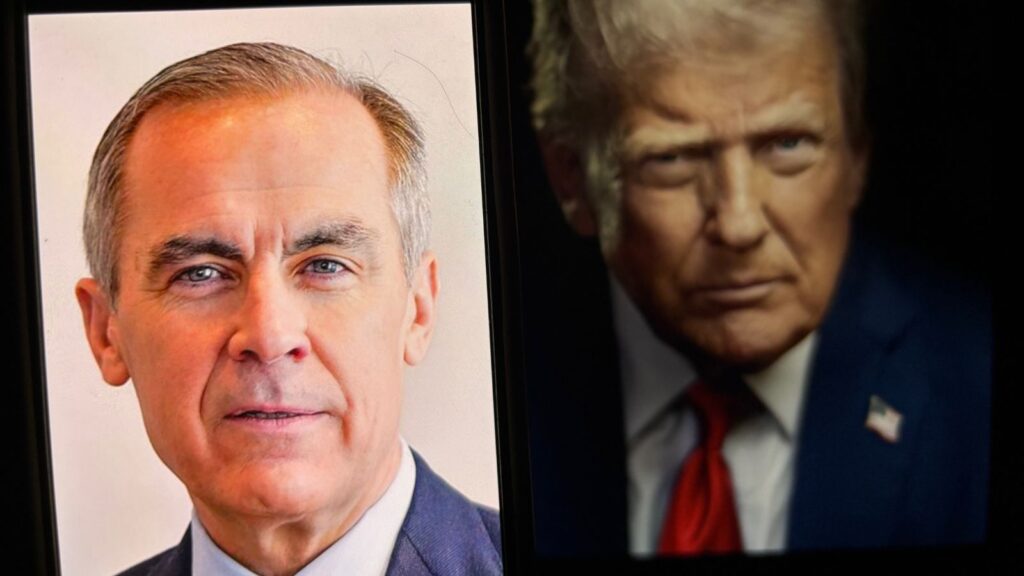
When diesel costs climb, fuel becomes more than an economic concern: it becomes a test of alliances. On Monday, October 12, Donald Trump defended his decision to facilitate Russian diesel sales, a day after Canadian Prime Minister Mark Carney warned that the arrangement could help bankroll Moscow’s war in Ukraine. Trump argues that easing fuel shortages protects American workers and consumers. Carney argues that rewarding Russian energy exports weakens the pressure needed to end the fighting.
The confrontation follows Trump’s October 9 announcement of a supply arrangement with Vladimir Putin and a U.S. sanctions licence allowing transactions involving Russian-origin diesel. It also coincides with a disputed proposal to stop attacks on energy infrastructure. Together, the developments expose a difficult question: can fuel-price relief and pressure for peace advance at the same time?
Trump’s Monday Defence Meets Carney’s Sunday Warning
Trump had an answer for his critics on October 12: he said allowing Russian diesel onto the market was the right choice for Americans. In a social media post, he invoked his “America First” agenda and pointed to European purchases of Russian energy. He claimed the European Union had paid Russia $250 billion for energy, without specifying the time span. But Europe’s past purchases do not establish this deal’s benefits.
Carney had delivered a different message a day earlier, after speaking with Ukrainian President Volodymyr Zelenskyy. His office said the U.S.-Russia agreement ran counter to efforts to secure peace and stability in Europe and would add revenue to Moscow. The contrast landed at a moment: soaring diesel prices have become a domestic political problem for Trump, while supporting Ukraine remains a central Canadian foreign-policy commitment. Both leaders frame their positions as protecting national interests, but they disagree about the consequences.
What Putin Promised, and What Has Actually Arrived
Trump’s October 9 announcement outlined more than 300,000 metric tonnes of diesel for American and global markets immediately, another 500,000 tonnes in November, one million shortly afterward and three million more within an unspecified period. Combined, those commitments exceed 4.8 million tonnes, but a promise is not the same as a verified delivery. Washington has not publicly explained all payment arrangements, shipment routes or the timing of the later volumes.
Russia’s own refining difficulties add uncertainty. Ukrainian drone strikes have damaged Russian oil facilities, and Moscow restricted diesel exports during the summer to protect domestic supplies. On October 12, Russian Deputy Prime Minister Alexander Novak said exports could eventually recover to three million to 3.5 million tonnes monthly. That was a projection, not evidence that capacity had already returned. For fuel buyers, the crucial question is how much product physically reaches the global market—and how quickly.
A Sanctions Licence Raises a Different Legal Question
On October 9, the U.S. Treasury’s Office of Foreign Assets Control issued General License 135. The temporary measure authorizes transactions connected to the sale, delivery, offloading and importation of Russian-origin diesel that would otherwise be prohibited under certain specified Russia sanctions regulations. The authorization runs until 12:01 a.m. Eastern time on April 7, 2027. It still excludes certain debits involving accounts of Russia’s central bank, National Wealth Fund and Finance Ministry.
That administrative permission is not the entire legal picture. The 2022 Ending Importation of Russian Oil Act separately bans covered Russian energy imports and sets congressional consultation, certification and waiting-period conditions for ending the ban. Senators therefore argue that a regulatory licence cannot simply sidestep legislation. The administration maintains that its action is lawful. Whether and how the two authorities fit together remains contested; reporting that the president has definitively broken the law would go beyond the present evidence.
Why Carney Sees Fuel Revenue as a Threat to Peace
Carney’s objection is grounded in money as much as symbolism. Canada’s October 11 readout said the arrangement would provide additional revenue to Russia, which continues its war against Ukraine. Ottawa has imposed more than 3,500 sanctions linked to Russia’s actions and says it will maintain them, strengthening restrictions where effective. From that viewpoint, making Russian exports easier risks steadily diluting pressure just as allies are trying to bring Moscow to negotiations.
Reuters estimated that an initial 300,000-tonne shipment could be worth around $400 million at market prices, although only a portion would flow directly into Russian government taxes. That distinction matters: export revenue is not identical to budget income, and the precise benefit depends on prices, buyers and taxes. Even so, commercial sales can support a country’s wider economy. For Carney, the concern is that short-term fuel relief may weaken the collective leverage built over years of coordinated international sanctions.
Canada Supports an Energy Truce—Not the Fuel Arrangement
One detail complicates any account of a straightforward Ottawa-Washington rupture. Carney spoke separately with Trump on October 11 and, according to a Canadian government readout, thanked him for efforts toward an energy ceasefire between Russia and Ukraine. He expressed support for stopping attacks on energy infrastructure and civilians, while urging Russia to honour such a commitment. That endorsement concerned an end to attacks, not the separate diesel deal.
In the same conversation, Carney also emphasized continued Canadian oil and diesel exports to the United States. Ottawa’s message was therefore not that American fuel needs should be ignored. Rather, it sought to distinguish purchasing energy from Russia from cooperating with an existing North American supplier. For Canadians following the exchange, that nuance matters: support for a diplomatic initiative and opposition to an economic concession can coexist. The unresolved issue is whether the promised energy truce is actually real and enforceable today.
Expensive Diesel Puts Trump Under Pressure
American diesel cost around US$6.28 a gallon in mid-October, compared with about $3.67 a year earlier, according to AAA’s national fuel-price tracker. AAA also recorded a high above $6.52 on September 22. Diesel powers freight trucks and much farm machinery; when the price rises, carriers and growers confront bigger operating bills even before those costs potentially reach consumers through food and goods prices. The November 3 U.S. midterms make the problem politically urgent for leaders across many communities.
Trump blames Ukrainian strikes on Russian refineries for part of the squeeze, but researchers and market analysts point primarily to wider Middle East disruptions, including restrictions around the Strait of Hormuz during the Iran war. A small addition to worldwide diesel supply could improve market sentiment without reversing structural shortages. The political appeal of a visible deal is clear. Whether it materially lowers what drivers pay next week is much less certain.
Republican and Democratic Senators Challenge the Deal
Carney is not the only leader questioning the diesel arrangement. On October 11, seven U.S. senators from both parties signed a statement opposing Russian diesel imports. Republicans Susan Collins, Lisa Murkowski, Thom Tillis and John Curtis joined Democrats Jeanne Shaheen, Richard Blumenthal and Ron Wyden. They said the administration had failed to consult Congress or explain how the plan satisfied the legal requirements governing Russian energy imports.
The backlash clearly cuts across party lines. Tillis questioned whether the action could be unlawful, while other Republicans defended Trump’s effort to lower fuel costs. Congress had also approved a separate sanctions law in September aimed at reducing Moscow’s energy earnings. No court judgment established the licence’s legality as of October 12, and the administration argues it has authority. Yet the dispute raises a practical question for allies: can sanctions function as credible pressure when Washington’s own elected officials disagree about their application?
Ukraine’s Refinery Strikes Become the New Flashpoint
Ukraine has targeted Russian refineries with drones, trying to weaken facilities that generate fuel and revenue for Moscow. The attacks have contributed to refinery outages and Russia’s summer restrictions on diesel exports. Trump has argued those strikes are making American diesel more expensive and has urged Kyiv to stop. His criticism also sharpened tensions with Zelenskyy as Washington presented its Russian supply arrangement as a route to cheaper fuel.
Zelenskyy offered a different explanation on October 12. Speaking to Fox News, he pointed to the disruption of shipping through the Strait of Hormuz as the main reason diesel prices were elevated. Ukraine says an energy ceasefire must work both ways: Moscow must stop attacking Ukrainian power and gas facilities if Kyiv is expected to stop striking Russian sites. For Ukrainians experiencing blackouts, reciprocity is not an abstract negotiating principle. It determines whether daily life can return to something resembling normal.
An Energy Ceasefire Is Announced, but Strikes Continue
Trump announced on October 11 that Russia and Ukraine had agreed to stop attacking each other’s energy infrastructure. However, Zelenskyy said Kyiv had not been given the details and Moscow did not clearly confirm an agreement. By October 12, Ukrainian officials were reporting fresh attacks on energy facilities, including a power plant in Kharkiv, gas production infrastructure and a civilian gas station. Zelenskyy said Ukraine had refrained from striking Russian energy sites since the announcement.
That gap between a declaration and events on the ground is central to the diplomatic dispute. People whose homes lose electricity or heat cannot rely on a ceasefire that has not been observed. At the Warsaw Security Forum, Zelenskyy expressed willingness to honour reciprocal restrictions and urged the United States to ensure Russian compliance. Kremlin spokesman Dmitry Peskov said contacts were continuing, without confirming a firm truce. The latest violence left Trump’s ceasefire claim unverified.
Could the Diesel Deal Buy Progress at the Negotiating Table?
An additional rationale emerged from Reuters reporting on October 12. People familiar with a Miami meeting said Trump’s envoys, Steve Witkoff and Jared Kushner, told Ukrainian officials that allowing Russian diesel exports might draw Vladimir Putin back into talks. The idea was to signal that Washington was prepared to offer something, hoping Moscow would respond. That account came from unnamed sources, not from a publicly agreed peace framework.
The challenge is measuring what Russia gives in return. Ukraine has insisted that any energy pause be reciprocal, while the Kremlin has offered no firm confirmation of Trump’s announced truce. Carney’s government says economic pressure should continue until a just, lasting peace is possible. Fuel markets, meanwhile, judge results through supply and prices rather than diplomatic intention. The approaching test is straightforward: do Russian shipments meaningfully reduce costs, and does Moscow take verifiable steps toward ending attacks? Neither outcome had been established.
