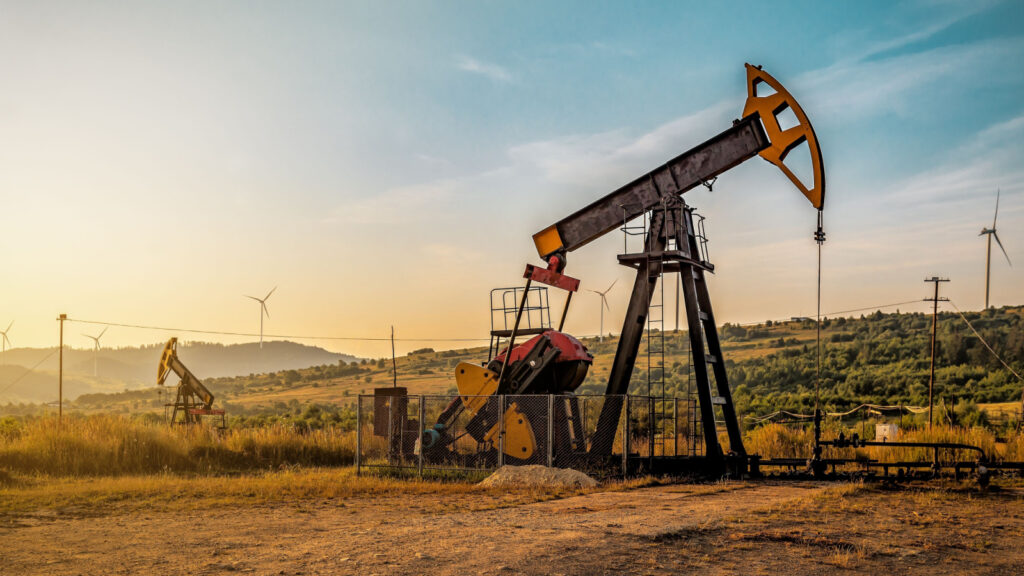
The United States is producing more crude oil than at any other point in its history, yet Washington is now putting federal money behind a different part of the petroleum system: refineries. On October 22, President Donald Trump’s administration announced plans for up to $150 million in Defense Production Act funding aimed at expanding petroleum production, storage and logistics at U.S. refineries.
The move comes with an important Canadian dimension. Canada supplied 63.4% of all crude oil imported by the United States in 2025, making it by far America’s largest foreign crude supplier. That relationship illustrates a basic reality of North American energy: producing more American oil does not automatically eliminate the need for Canadian barrels.
The $150 Million Plan Targets the Refining Bottleneck
The Department of Energy says the proposed funding will use Defense Production Act Title III authorities to support projects that increase petroleum production, storage and logistics capacity at refineries across the United States. The administration expects the projects collectively to add millions of gallons per day of refined-product output, potentially increasing supplies of gasoline, diesel, jet fuel and other petroleum products. The funding is not simply another program designed to encourage drilling. It focuses on what happens after crude oil reaches the refinery gate and on the infrastructure required to move and store the resulting fuels.
There is an important qualification. The government had not announced the winning refinery projects when the initiative was unveiled. DOE said the selection process remained underway, meaning the $150 million represents planned federal support rather than completed investments already producing additional fuel. The broader funding pool is also larger: the administration says $1 billion has been appropriated for energy-related projects considered important to national security. The refinery initiative would draw from that broader effort, with private industry expected to participate alongside federal funding.
America Is Producing Record Oil but Has Less Refining Capacity
At first glance, spending federal money on refineries may seem unusual for a country producing record amounts of crude. U.S. crude output averaged about 13.6 million barrels per day in 2025, up roughly 3% from 2024 and the highest annual level ever recorded. The United States also remained the world’s largest crude producer. Production growth has been driven heavily by efficiency improvements in shale regions, allowing operators to produce more even with fewer rigs and relatively modest changes in drilling activity.
Refining has moved differently. U.S. operable atmospheric distillation capacity stood at roughly 18.2 million barrels per calendar day on January 1, 2026, more than 250,000 barrels per day below the level a year earlier. Utilization was already high: refineries operated at an average 92% of capacity during 2025, and utilization averaged about 95% during the third quarter of 2026. That means there is less unused refinery space available when demand rises or facilities unexpectedly go offline. Producing an additional barrel of crude does little for motorists if the refining system lacks enough capacity to turn that barrel efficiently into finished fuel.
Canada Still Supplies Nearly Two-Thirds of U.S. Crude Imports
Canada’s role in this system is enormous. In 2025, the country accounted for 63.4% of U.S. crude oil imports. Canada exported approximately 4.3 million barrels of crude per day overall that year, with roughly 3.9 million barrels per day—or about 90%—going to the United States. U.S. Energy Information Administration data similarly show American imports of Canadian crude averaging around 3.9 million barrels per day in 2025.
Those numbers make the scale of the relationship easier to appreciate. Canada is not simply one supplier among many competing for American refinery business. Its volumes dwarf shipments from most other foreign sources and are embedded in a cross-border system built over decades. Pipelines connect western Canadian production directly with major U.S. refining centres, particularly in the Midwest and Gulf Coast. Even as U.S. domestic crude production has reached records, those Canadian flows have remained substantial. In other words, American energy abundance and Canadian crude dependence can exist simultaneously because the crude being produced domestically is not always a direct substitute for the oil American refineries are designed to process.
Canadian Heavy Oil Fits Refineries That U.S. Shale Cannot Fully Replace
The distinction comes down partly to crude quality. Much of the growth in U.S. oil production has involved relatively light, low-sulfur crude. Western Canada, by contrast, produces large volumes of heavier crude and diluted bitumen from Alberta’s oil sands. Oil is not a uniform commodity at the refinery level: density, sulfur content and other characteristics determine what processing equipment is required and what products can be economically produced from each barrel.
Many sophisticated U.S. refineries—particularly in the Midwest and Gulf Coast—have invested billions of dollars in equipment capable of processing heavy and sour crude. Cokers, hydrocrackers and other conversion units allow these facilities to transform lower-priced heavy barrels into gasoline, diesel and jet fuel. EIA has repeatedly noted that this configuration is one reason the United States continues importing heavy crude even while exporting domestically produced light crude. For some refiners, replacing Canadian heavy oil with light shale oil would not necessarily maximize the value of their existing equipment. That technical reality gives Canadian crude an advantage that cannot be erased simply by increasing U.S. drilling.
Pipelines Have Effectively Joined the Two Oil Industries
Geography reinforces that relationship. The Enbridge Mainline is the principal system carrying western Canadian crude toward Midwest refineries, with connections that can move barrels farther south toward the Gulf Coast. The Keystone system also supplies the Midwest and connects with infrastructure serving Gulf Coast markets. These pipelines allow Alberta crude to travel directly into some of America’s largest refining regions without depending on the same long-distance tanker routes required for many overseas suppliers.
For refinery operators, established infrastructure matters almost as much as the origin of the crude itself. A refinery needs reliable deliveries every day, not merely access to theoretical reserves hundreds or thousands of kilometres away. Canada provides both substantial production and pipeline connections already integrated into refinery supply chains. The arrangement also works in both directions in parts of North America. Western Canadian crude moves south and east through interconnected systems, while some U.S. light crude travels north to Canadian refineries. This is why treating Canadian and American oil markets as completely separate systems can be misleading: in several regions, the physical infrastructure was designed around cross-border flows.
Recent Refinery Closures Help Explain Washington’s Concern
The push for additional refining capacity follows several notable shutdowns. LyondellBasell ended refining operations at its Houston facility in 2025, removing roughly 264,000 barrels per day of capacity. Phillips 66 also ceased refining at its Los Angeles-area facility, which had nearly 139,000 barrels per day of capacity. Together, those two closures represented approximately 400,000 barrels per day of lost operable capacity before smaller increases elsewhere partially offset the decline.
The impact is particularly visible on the West Coast, where petroleum infrastructure is relatively isolated from the enormous Gulf Coast refining system. EIA has warned that refinery closures there can have an outsized effect on fuel availability because relatively little pipeline capacity connects Gulf Coast product markets directly with the West Coast. California experienced another capacity reduction in 2026 when refining operations ended at Valero’s Benicia facility. The national refining system remains enormous, but these closures demonstrate why policymakers are increasingly focused on preserving and expanding existing plants rather than assuming record crude production alone guarantees plentiful gasoline and diesel.
Fuel Prices Make Refining Capacity More Politically Important
The refinery announcement also arrived during a period of unusually expensive transportation fuels. For the week ending October 19, 2026, regular gasoline averaged about $4.28 per gallon nationally, while on-highway diesel averaged approximately $6.28. Gasoline was more than $1.26 per gallon above its level a year earlier, and diesel was roughly $2.66 higher. Regional differences were even larger, with West Coast fuel prices substantially above the national average.
Refining conditions have been part of that pressure. EIA reported elevated gasoline, diesel and jet-fuel refining margins during the third quarter of 2026 as global petroleum markets dealt with disruptions and tight supplies. Refineries were running at unusually high utilization rates, but inventories of some fuels remained tight. Additional refinery output could therefore help at the margin, particularly if investments remove bottlenecks at existing facilities relatively quickly. Still, refinery capacity is only one component of fuel prices. Crude oil costs, distribution expenses, taxes and global market conditions all influence what motorists ultimately pay, meaning even successful refinery investments cannot by themselves guarantee sharply cheaper gasoline.
The Defense Production Act Gives Washington Unusual Tools
The legal mechanism behind the initiative is significant. Trump issued a presidential determination declaring domestic petroleum production, refining and logistics capacity essential to national defense. The determination cited financing constraints, lengthy project timelines, permitting barriers, infrastructure bottlenecks and supply-chain limitations as reasons federal action was necessary. Under Section 303 of the Defense Production Act, the government can use mechanisms such as purchases, purchase commitments and financial support to encourage additional industrial capacity.
That makes the program different from a simple grant announcement, although the practical impact will depend heavily on which projects ultimately receive support. A relatively small investment can sometimes unlock more output at an existing refinery through debottlenecking, storage improvements or upgrades to specific processing units. Building an entirely new large refinery is a much bigger undertaking involving far greater capital and much longer timelines. The $150 million should therefore be viewed primarily as a tool for targeted improvements and project acceleration rather than enough money to recreate a large portion of America’s refining system from scratch.
Trans Mountain Is Giving Canada More Options Than It Had Before
Canada is still heavily dependent on American customers, but that dependence has begun to loosen. The Trans Mountain Expansion entered service in May 2024 and nearly tripled the system’s nameplate capacity to about 890,000 barrels per day. In 2025, Trans Mountain transported an average of approximately 761,000 barrels per day and reached 855,000 barrels per day in November. The expansion opened far more capacity between Alberta and the Pacific Coast, enabling additional tanker shipments to Asia and the U.S. West Coast.
That shift is beginning to appear in Canada’s export statistics. Destinations outside the United States received roughly 9% of Canadian crude exports in 2025, compared with approximately 2% in 2021. The U.S. nevertheless remained dominant, receiving about nine out of every 10 exported Canadian barrels. Trans Mountain therefore has not replaced the American market, but it has created a credible alternative outlet that did not previously exist at the same scale. Over time, additional competition for Canadian barrels could influence pricing and commercial negotiations between Canadian producers and U.S. refiners.
More American Refining Does Not Necessarily Mean Less Canadian Oil
The most important implication for Canada may be counterintuitive. Expanding U.S. refinery output could increase rather than decrease the amount of crude American refiners need. If federal funding helps existing Midwest or Gulf Coast facilities process additional barrels, those plants may continue seeking heavy Canadian crude because their equipment was built to handle it. The United States can therefore pursue greater domestic refining capacity while remaining a major importer of Canadian feedstock.
Much will depend on the projects DOE eventually chooses. Investments focused on refineries configured for lighter domestic crude could favour U.S. shale producers, while upgrades at complex heavy-oil refineries could strengthen demand for Canadian barrels. Storage and logistics projects may have different effects again. What is already clear is that “energy independence” does not necessarily mean ending cross-border energy trade. The United States produced a record 13.6 million barrels of crude per day in 2025 while simultaneously importing millions of Canadian barrels and exporting millions of its own. Canada’s 63.4% share of U.S. crude imports reflects an industrial relationship built around refinery design, geography and economics—not simply a shortage of American oil.
