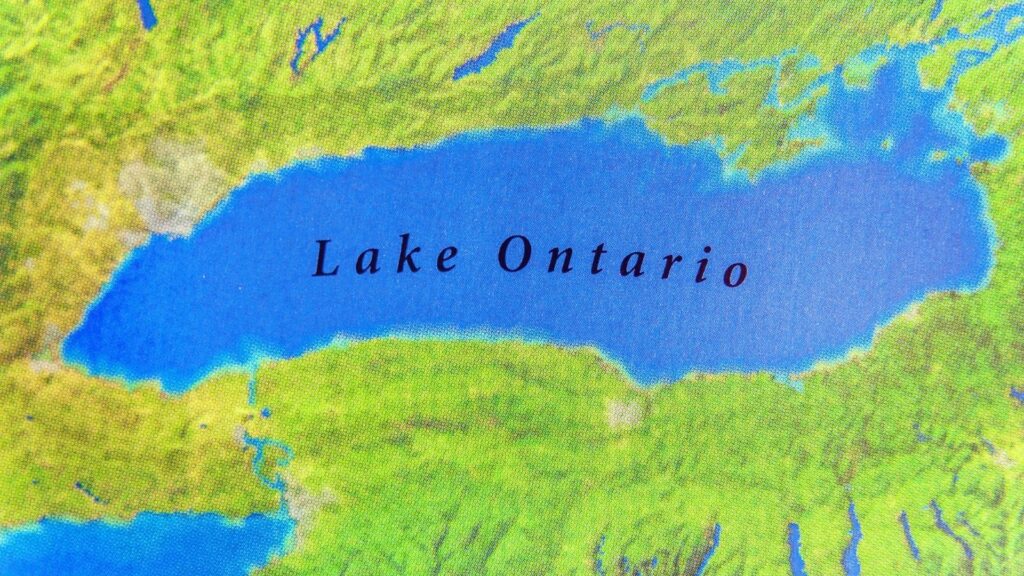
Donald Trump has again turned the Canada–U.S. trade fight into both an economic confrontation and a political spectacle. Speaking at the Republican midterm convention in Dallas, the U.S. president declared that Canada was “dying” to reach a deal with Washington while reviving his provocative decision to call Lake Ontario “Lake America.” The remarks landed only weeks after negotiations collapsed and just one day after Washington widened its response to Canadian retaliation.
Behind the rhetoric sits a much more complicated picture. Canada remains deeply dependent on access to the American market, and businesses exposed to tariffs are feeling genuine pressure. Yet Ottawa has suspended negotiations rather than accept Washington’s last offer, imposed billions of dollars in counter-tariffs, and accelerated an effort to sell more Canadian goods elsewhere. The question is no longer simply whether Canada wants a deal, but what price either government is prepared to accept to get one.
Trump Pairs a Trade Claim With the “Lake America” Jab
Trump’s newest comments came Wednesday night as he addressed Republicans gathered in Dallas for an unusual national convention designed to energize the party ahead of the U.S. midterm elections. Canada was hardly the central theme of the long speech, but Trump used the country as another example of his confrontational trade strategy. He said Canada very much wanted an agreement and described it as “dying to make a deal,” immediately connecting that assertion to his renaming of Lake Ontario for U.S. federal purposes.
The sequence mattered because Trump appeared to treat the lake’s name as part political joke, part bargaining taunt. He suggested that even if relations improved, “Lake America” would remain. For Canadian officials and businesses trying to determine whether Washington is preparing for renewed negotiations, that style of messaging creates an unusual problem: serious economic policy and political theatre frequently arrive in the same sentence. The underlying dispute involves tariffs, autos, steel, dairy and market access worth billions of dollars, while the public presentation increasingly includes maps, renamed landmarks and personal attacks.
Canada Was the Side That Walked Away From the Last Talks
Trump’s claim that Canada is desperate to return to the negotiating table does not fully match the most recent documented sequence of events. On August 21, Prime Minister Mark Carney announced that Canada was suspending negotiations and ordering its team back to Ottawa. Carney said last-minute changes proposed by Washington were unfair and uneconomic and raised questions about whether an agreement could provide Canadian businesses with lasting certainty.
Those talks had been aimed at finding relief from an increasingly complicated collection of U.S. trade measures, including pressure on Canadian steel, aluminum and automotive production. Canada had signalled that it was prepared to make concessions of its own if Washington substantially reduced tariffs on strategic industries. Instead, the negotiations collapsed and the United States proceeded with a 50 per cent tariff covering roughly C$27.6 billion of Canadian goods beginning August 22. That does not mean Ottawa has no interest in a future agreement. It does mean Canada demonstrated that it was prepared to endure additional tariffs rather than sign the deal then on offer.
Ottawa Has Already Put Its Retaliation Into Effect
Canada’s response is no longer theoretical. On September 8, Ottawa activated counter-tariffs covering approximately C$27.6 billion worth of U.S. imports, matching the value of the latest American measures. Depending on the product, Canadian rates are 15, 25 or 50 per cent. The targeted categories include steel, dairy products, appliances, agricultural equipment, pulp and paper, plastics and electronics.
That approach gives the trade fight a tangible presence far beyond speeches in Ottawa or Washington. An importer bringing U.S. equipment into Canada now has to calculate whether the tariff destroys the economics of an order. A Canadian manufacturer sourcing American steel or components may need to reconsider suppliers. Retailers can face the same question with consumer goods. Ottawa has simultaneously announced a C$7.5-billion package of new and expanded support for workers and businesses affected by U.S. tariffs, including additional financing for small and medium-sized companies. Such programs underline an uncomfortable reality: the Canadian government is preparing for prolonged disruption even while leaving open the possibility of eventually returning to negotiations.
Washington Has Escalated Beyond Ordinary Tariffs
The dispute took another step on September 8 when the Trump administration announced restrictions that go beyond simply charging a higher duty at the border. New U.S. measures are scheduled to prohibit imports of certain Canadian alcoholic beverages, dairy products and motorcycles beginning September 29. Washington says the measures respond to Canadian policies it regards as discriminatory against American exporters.
Trump has also directed the U.S. General Services Administration to start removing Canadian-origin products from important federal procurement schedules. Separately, he has threatened Canadian aircraft maker Bombardier with lost U.S. market access unless more production occurs in the United States. These moves are significant because tariffs at least leave exporters the option of paying the duty and trying to compete. An import prohibition removes that choice entirely. For affected businesses, the distinction is enormous. A Canadian company that has spent years building dealerships, distributors or retail relationships south of the border cannot quickly recreate that market somewhere else merely because a presidential proclamation changes the rules.
“Lake America” Is Official in Washington, but Not in Canada
The “Lake America” episode began before Trump’s latest Dallas comments. On August 27, he signed Executive Order 14422 directing the U.S. federal government to rename Lake Ontario “Lake America.” The order instructs American agencies and the U.S. Geographic Names Information System to use the new designation. Some digital mapping services subsequently began reflecting the U.S. designation for users located inside the United States.
The order cannot require Canada to change the lake’s name, however. Canada’s official geographical database continues to identify it as Lake Ontario, and the name has centuries of history behind it. Federal Canadian material traces use of “Ontario” to the 17th century, with the name appearing in records around 1641. Carney responded to Trump’s order by saying Canadians would continue to call it Lake Ontario. Geography itself adds to the oddity: the international lake is shared by Ontario and New York, with roughly half of its surface on the Canadian side. Washington can determine terminology used by its own federal institutions, but it cannot unilaterally dictate Canadian naming conventions.
Canada Still Needs the U.S. Market — but Dependence Is Declining
There is a serious economic argument underneath Trump’s boast. The United States remains by far Canada’s largest merchandise export market. Statistics Canada reported that 71.7 per cent of Canadian merchandise exports went to the U.S. in 2025. That share had nevertheless fallen from 75.9 per cent one year earlier, illustrating both the extraordinary depth of the relationship and the beginnings of a shift away from it.
More recent trade figures make that shift even clearer. In July 2026, Canadian merchandise exports to the United States dropped 6.6 per cent from June, while exports to countries outside the U.S. rose 7.4 per cent to a record C$25.6 billion. Non-U.S. destinations represented 33.7 per cent of Canadian exports that month. China, the Netherlands and Germany were among markets contributing to the increase. None of this makes the American market replaceable in the short term. Integrated factories, pipelines, railways and trucking networks were built around continental trade. But it complicates the idea of a Canada with nowhere else to turn.
Economic Pressure on Canada Is Real, Even Without a Deal
Ottawa’s willingness to resist U.S. demands should not be confused with immunity from economic pain. Statistics Canada reported that employment fell by about 42,000 positions in August, while the unemployment rate remained at 6.4 per cent. Quebec lost roughly 19,000 jobs and Ontario about 18,000. At the same time, manufacturing employment actually increased by approximately 22,000, demonstrating why it would be misleading to attribute the entire national decline directly to tariffs.
The more credible risk lies in what happens if trade barriers remain in place long enough to influence investment decisions. Export-oriented manufacturers can absorb temporary tariffs, draw down inventories or accept thinner margins for a limited period. Permanent uncertainty is harder. A company deciding where to place its next assembly line, mill expansion or component plant must think several years ahead. Canadian autos, steel, aluminum, forestry and other trade-exposed sectors therefore have a stake not merely in getting a deal, but in securing rules that will still make cross-border investment economically rational after the current political confrontation ends.
Carney Is Trying to Make Canada Less Vulnerable to the Next Shock
Carney’s response has increasingly focused on reducing the amount of leverage any single trading partner can exercise over Canada. The government says 27 nation-building initiatives have been referred to its Major Projects Office, representing roughly C$500 billion in potential private investment. The projects span ports, mines, energy infrastructure and trade corridors intended in part to make it easier for Canadian commodities and manufactured goods to reach non-U.S. customers.
The strategy is showing up in trade policy as well. Ottawa has repeatedly described diversification as its primary economic plan rather than an emergency substitute for American commerce. Carney’s government entered its September cabinet planning meetings pledging to accelerate major infrastructure, deepen international partnerships and reduce dependence on a single market. That goal will take years rather than months. Canadian industry has spent generations building highly efficient north-south supply chains because the United States was nearby, wealthy and relatively predictable. Building additional east-west infrastructure and overseas relationships is inherently more expensive, but the calculation changes when political unpredictability itself becomes a recurring business cost.
Trump’s Comments Also Serve a U.S. Midterm Political Message
The setting of Trump’s remarks is important. He was not speaking across a negotiating table or delivering a technical trade-policy announcement. He was addressing Republican activists and supporters at a convention designed to mobilize voters ahead of elections that will decide control of Congress. Trump explicitly urged supporters to behave as though his own name were on the ballot, underscoring how closely Republicans are tying their midterm strategy to his political brand.
In that environment, Canada offered a familiar example for Trump’s broader argument that aggressive pressure can force trading partners toward Washington. The “Lake America” line also fits a pattern of symbolic renaming that now includes his promotion of “New America” as a possible replacement for the name New Mexico. Yet there are political risks to prolonged confrontation. Canada and the United States have unusually integrated industrial networks, meaning tariffs aimed north can affect American suppliers, manufacturers and consumers as well. Some Republicans representing competitive states have consequently faced an awkward balance between supporting Trump’s trade agenda and protecting industries that depend on Canadian commerce.
A New Deal Is Possible, but the Gap Remains Substantial
Neither government has permanently closed the door on negotiations. Canada’s ambassador to Washington, Mark Wiseman, has said a future agreement must preserve a robust Canadian auto assembly and parts sector. That demand goes directly to one of the hardest issues in the dispute because Trump has repeatedly pushed manufacturers to move more production into the United States. Canadian steel and aluminum protections create another significant obstacle.
Former Canadian ambassador Kirsten Hillman, who spent years dealing with Washington and was deeply involved in North American trade diplomacy, has suggested formal negotiations may not restart quickly. She said it could be months before conditions are right for productive talks and argued that Washington will have to understand Canada’s red lines, particularly on autos and steel. That makes Trump’s “dying” description more useful as political rhetoric than as a precise description of the negotiating calendar. Canada has strong economic reasons to want predictable U.S. access, but Ottawa has also demonstrated that it is willing to wait rather than accept any agreement available. The next breakthrough will likely depend less on who wants a deal more than on whether the two sides can finally agree on what a tolerable deal looks like.
