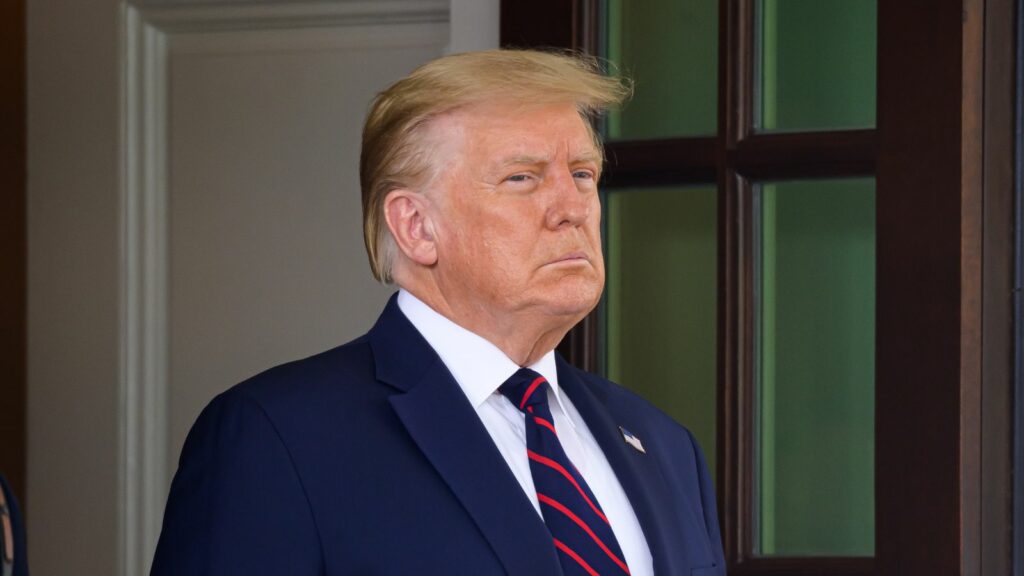
Donald Trump spent much of British Columbia’s snap election as David Eby’s chosen political foil. A day after voters rejected Eby’s bid for a fresh mandate, the U.S. president amplified the result himself, sharing a post about the B.C. Conservatives’ first provincial election victory since 1928. The symbolism was difficult to miss: Eby had launched the campaign warning that Trump’s tariffs and political style posed an “existential” threat, only to watch Lorne Doerkson’s Conservatives surge to a projected majority.
As of 1 p.m. Pacific time on October 25, preliminary Elections BC results had the Conservatives leading in 64 of 93 ridings with 48.06% of the vote, versus 27 seats and 37.37% for the NDP. Eby conceded, accepted responsibility and announced he would resign as NDP leader.
A Snap Election Built Around Trump Backfires
Eby called the election on September 22, roughly two years before the next scheduled provincial vote, arguing British Columbia needed a stronger mandate to withstand the economic pressure coming from Washington. He described the moment as existential, talked about creating a “firebreak” against Trump’s economic attacks and political style, and urged British Columbians to reject what he portrayed as MAGA-style politics. The timing also appeared tactically favourable: the NDP had emerged from the 2024 election with the narrowest possible majority, while the opposition Conservatives were in visible turmoil after months of internal conflict and the resignation of leader Kerry-Lynne Findlay just before the writ was dropped.
That calculation failed. Rather than facing a fractured opposition for a full campaign, Eby faced a Conservative Party that rapidly reunited under interim leader Lorne Doerkson. The result does not mean British Columbians voted to embrace Trump; Doerkson himself repeatedly criticized the U.S. president during the campaign. It does show that Eby’s effort to make Trump and the tariff fight a defining reason for an early election was not enough to overcome dissatisfaction closer to home. The province’s electorate ultimately handed the party that Eby hoped to catch off balance a commanding projected majority.
Doerkson Turned a Fractured Party Into a Governing Coalition
The scale of the Conservative turnaround is striking because the party looked unstable only days before the campaign began. Doerkson became interim leader on September 20 after Findlay resigned following caucus defections and internal disputes. He was not a household name across the province. A former community newspaper publisher, small-business operator and rodeo rider from Williams Lake, he had represented Cariboo-Chilcotin since 2020 and had joined the Conservatives after first being elected under the B.C. Liberal banner. His immediate task was less about launching a polished leadership brand than simply putting a scattered caucus back together.
He succeeded quickly enough to change the shape of the race. Several legislators who had left or been pushed out during the previous leadership returned, giving the party a more unified front as the campaign opened. Doerkson then ran on a message centred on economic growth, tax relief, resource development and public services. Preliminary results show him personally taking about 77% of the vote in Cariboo-Chilcotin, while his party leads in 64 ridings provincewide. That is a dramatic leap from 2024, when the Conservatives won 44 seats and finished only three seats short of government. Doerkson’s own campaign imagery leaned on his rodeo background: get thrown, get back up and keep riding. Politically, that became a fitting description of the party’s month.
Affordability, Health Care and the Economy Overtook the Tariff Message
The clearest evidence that Eby’s original framing did not dominate the campaign comes from voter issue polling. An Angus Reid Institute survey conducted October 1 to 3 found that 57% of respondents named cost of living and inflation among their most important voting issues, while 42% selected health care. The economy and jobs followed at 26%, and housing affordability, the deficit and public safety each drew 24%. By comparison, only 10% cited U.S. tariffs, Trump or the provincial alcohol ban as a top issue, down from 15% near the beginning of the campaign.
The NDP adapted to that reality. By early October, Eby was openly acknowledging that not everyone shared his level of concern about Trump, and the party shifted more attention toward household affordability and public services. But another problem was emerging: Conservative voters appeared more locked in. Angus Reid’s final pre-election survey, conducted October 15 to 19, put the Conservatives at 46% and the NDP at 43% among decided and leaning voters, effectively a statistical tie, yet 73% of Conservative supporters said they were very certain of their choice compared with 54% of NDP supporters. The final result was far more lopsided in seats than the late polling suggested, underlining the importance of where votes were distributed and which supporters ultimately showed up.
Trump Amplified the Result, but That Is Not the Same as Endorsing Doerkson
Trump’s intervention after the vote was brief but politically potent. On the morning of October 25, his Truth Social account shared a link highlighting that the Conservative Party had won in British Columbia for the first time in almost 100 years. The Canadian Press reported that the post was accompanied by material featuring Trump, Prime Minister Mark Carney, the B.C. legislature and a map highlighting the province. For a defeated NDP campaign that had deliberately put Trump near the centre of its opening message, the timing was unmistakably awkward.
Still, the post should not be read as proof of a political alliance between Trump and the incoming B.C. government. Trump did not use the post to endorse Doerkson’s platform, congratulate him by name or claim credit for the result. During the campaign, Doerkson called Trump a bully and argued that standing up to the United States required a stronger, more self-sufficient provincial economy rather than rhetoric alone. The B.C. Conservatives are also a provincial political party operating in a distinctly Canadian context. Trump’s post matters mainly because it reinforces the irony of the campaign: a president Eby tried to turn into a reason for renewing the NDP’s mandate ended up publicly highlighting the victory of Eby’s opponents.
Eby Keeps His Seat but Steps Down as NDP Leader
The defeat immediately ended Eby’s leadership of the provincial NDP. In his concession speech, he said he accepted full responsibility for the outcome and announced that it was time for new leadership. The decision closed a premiership that began in 2022 and came after more than nine years of NDP-led government in British Columbia, beginning with John Horgan’s rise to power in 2017. Eby also spoke about the toll public life had taken on his family, giving the concession a more personal note than the hard-edged campaign that preceded it.
His own riding told a different story from the province. Preliminary Elections BC results in Vancouver-Point Grey showed Eby leading Conservative Alex McMillan by 538 votes, 7,811 to 7,273, meaning he survived locally even as his government fell. That distinction matters: the election was a rejection of the NDP’s bid to continue governing, not an outright removal of Eby from the legislature. The party now faces the more complicated task of choosing a successor while preparing to serve as Official Opposition. For New Democrats, the post-mortem will likely focus not just on the snap-election decision, but on why a government that entered the campaign with incumbency, a one-seat majority and a divided opposition lost so much ground so quickly.
The Election Opens the Door to a Major Shift in Energy and Economic Policy
Doerkson’s victory is likely to matter most where campaign rhetoric turns into policy. The Conservative platform promised a more aggressive resource-development agenda, including doubling B.C.’s natural gas production by 2032 and tripling it by 2035, accelerating project approvals and promoting greater First Nations participation and ownership in major energy projects. The party also campaigned on repealing the Declaration on the Rights of Indigenous Peoples Act, reducing regulatory barriers and pursuing a larger role for natural gas and LNG as export industries. Those commitments point to a significantly different governing philosophy from the NDP, even where both parties supported some major projects.
The Conservatives also paired the growth agenda with household measures: raising the basic personal income-tax exemption from $13,216 to $32,000, which the party says would deliver roughly $1,000 in annual provincial tax relief to many workers; a pledge not to raise taxes; changes to auto insurance that would move B.C. toward a hybrid model; and promises to keep rural emergency departments open. None of those commitments are implemented simply because the election is over. Legislation, budgets, consultations and negotiations will determine what survives contact with government. But the result gives Doerkson a strong majority mandate to try, making B.C.’s future approach to energy, taxation, Indigenous policy and major-project approvals one of the most consequential outcomes of the vote.
A Party That Once Barely Registered Has Completed a 98-Year Comeback
Trump’s “almost 100 years” language is broadly accurate. The last Conservative provincial election victory came in 1928, when Simon Fraser Tolmie led the party to government. In the decades that followed, Social Credit and eventually the B.C. Liberals became the dominant vehicles for centre-right voters, while the provincial Conservatives spent long stretches as a marginal force rather than a realistic government-in-waiting. As recently as the 2020 provincial election, the party received less than 2% of the vote.
The transformation since then has been extraordinary. Under John Rustad, the Conservatives captured 44 seats in 2024 and came within three seats of forming government. Leadership turmoil threatened to undo those gains in 2026, but the party instead emerged from the snap election with a projected majority. As of the October 25 preliminary count, it held 48.06% of the popular vote and led in 64 ridings—17 more than the 47 required for a majority. That makes the result more than a routine change of government. It marks the re-establishment of the Conservative label as the dominant provincial force on B.C.’s right, something that had not happened through an election victory since the interwar era.
The Count Is Not Final, but the Transition Has Already Begun
There is still an important procedural caveat. Elections BC says the October 25 numbers are preliminary, with some vote-by-mail, assisted telephone and absentee ballots to be counted later. As of 1 p.m. Pacific time, 99.75% of ballot boxes had reported, preliminary turnout stood at 48.1%, and the Conservatives led in 64 ridings, the NDP in 27 and the Greens in two. Final count is scheduled to begin on November 6. A handful of close ridings could change hands, but the Conservatives’ provincewide lead is large enough that the overall majority projection is not resting on one or two knife-edge seats.
Doerkson is already preparing to govern. He named former senior B.C. public servant Kim Henderson to chair his transition team; she previously served as deputy minister to the premier, cabinet secretary and head of the provincial public service. Prime Minister Mark Carney also congratulated Doerkson and said he wanted to work with the incoming premier on housing, energy and a stronger economy. Those relationships will matter quickly. B.C. still faces the same U.S. trade pressure that Eby cited when he called the election, but the political responsibility for managing it is changing hands. The irony at the centre of the campaign remains: Trump helped justify the snap vote, Trump became less central as voters focused elsewhere, and Trump then amplified the result after Eby lost it.
