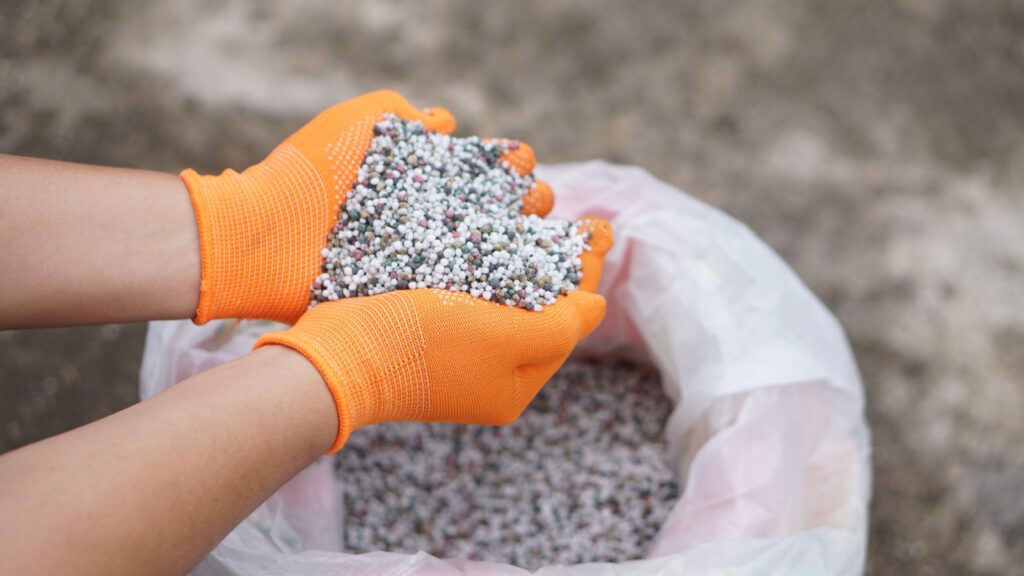
A fertilizer deal presented as a way to cut costs for American farmers has run into an immediate problem: the prospective supplier says it does not have much product left to offer. On September 21, President Donald Trump said the United States was working on a “massive” agreement to buy potash from Belarus at prices he said would be substantially lower than what American buyers pay Canada. Within hours, Belarusian leader Alexander Lukashenko said his country could not provide large new volumes because its available production had already been committed under contracts. The competing statements put a spotlight on a commodity that rarely attracts political attention but sits at the heart of North American agriculture. Canada remains the dominant foreign source of U.S. potash, while Belarus is a significant global producer facing very different logistical and geopolitical constraints.
A “Massive Deal” Was Announced Before the Supply Was Secured
Trump’s September 21 announcement was striking because of its scale and its direct comparison with Canada. He said Washington was working on a large Belarusian potash purchase and asserted that the price would be “substantially less” than the amount currently being paid to Canadian suppliers. The message framed the potential agreement primarily as a cost-saving measure for American farmers and ranchers. However, no public details were provided about the quantity of fertilizer involved, the proposed price per tonne, the delivery schedule, the buyer, or whether a binding contract had actually been signed. Reuters reported the negotiations as an agreement still being worked on rather than a completed purchase.
Lukashenko’s comments made the supply question considerably more complicated. According to a readout of his remarks, he said Belarus simply did not have the volumes necessary to make large additional deliveries to Western markets because “everything is contracted” for the year. That does not mean Belarus is completely absent from the U.S. market. Lukashenko had said earlier in September that potash sales to the United States were resuming after Washington eased sanctions. The distinction is important: some trade can occur without Belarus possessing enough uncommitted supply to become a large-scale replacement for Canadian shipments during 2026.
Canada’s Advantage Is Built Into the U.S. Supply Chain
Canada’s position in the U.S. fertilizer market is not simply the result of one favourable contract. American agriculture has developed around a deeply integrated potash supply chain in which Canadian mines, particularly those in Saskatchewan, sit relatively close to major farming regions. The U.S. Geological Survey estimated U.S. net import reliance for potash at 92 per cent of apparent consumption in 2025. Looking at import sources from 2021 through 2024, Canada accounted for 79 per cent, far ahead of Russia at 12 per cent and Israel at three per cent. That level of dependence makes a rapid change of suppliers significantly more complicated than switching vendors for an ordinary manufactured product.
Canada also has enormous production and export capacity. Natural Resources Canada says all 10 active Canadian potash mines are located in Saskatchewan. Canada produced an estimated 25 million tonnes of muriate of potash in 2024 and exported about 22.9 million tonnes, representing nearly 39 per cent of global exports. The United States received 53 per cent of Canada’s potash exports that year. In 2025, Canadian potash exports were worth roughly C$9 billion in total, including approximately C$4.2 billion shipped to the United States. Those numbers help explain why Canadian material is embedded so deeply in American fertilizer distribution.
Belarus Is a Major Producer — But It Is Not a Spare Warehouse
Belarus should not be dismissed as a minor fertilizer supplier. U.S. Geological Survey data identify the country as the world’s fourth-largest potash producer in 2024, accounting for roughly 10.7 per cent of world output. Belaruskali, the state-controlled producer at the centre of the industry, produced approximately 7.1 million tonnes of potash on a K₂O-equivalent basis that year. Belarus exported about 6.43 million tonnes, making potash one of the country’s most important internationally traded commodities. Those figures are large enough to make Belarus commercially relevant whenever global fertilizer supplies tighten.
What Belarus lacks, according to Lukashenko’s latest statement, is substantial uncommitted 2026 production. Existing customers already claim much of the output. China was the leading destination for Belarusian potash exports in 2024, receiving 29 per cent according to USGS data, while Belarus has increasingly directed trade toward Asian and Russian-linked routes since access through Lithuania was curtailed. Redirecting major volumes to the United States would therefore require more than simply loading previously unsold fertilizer onto ships. Existing contracts could have to expire, production would need to increase, or other customers would need to receive less. None of those changes has yet been publicly documented as part of Trump’s proposed deal.
Cheaper at the Source Does Not Necessarily Mean Cheaper on a U.S. Farm
The biggest practical obstacle may be geography. Saskatchewan potash can move by rail directly into the United States and toward farming regions in the Midwest. Belarus is landlocked. Before 2022, the country relied heavily on Lithuania’s Baltic port of Klaipėda to move potash onto world markets, but that route was shut as Western sanctions tightened. USGS reports that Belarus subsequently shifted exports toward Russian ports and increased rail shipments toward China. That means fertilizer destined for the United States may require a significantly longer and more complicated journey than Canadian product crossing the land border.
That distinction matters when comparing prices. A producer can theoretically offer a lower price at the mine while the buyer ultimately pays more after rail charges, port handling, ocean freight, insurance, transshipment and inland U.S. transportation are included. Fertilizer analyst Josh Linville told Reuters that Belarusian material faces high shipping costs and said that even reopening Lithuania’s Klaipėda route would not automatically make transatlantic shipments economical at prevailing potash values. Canadian analysts have made a similar point: Saskatchewan fertilizer can already be loaded onto trains destined for U.S. agricultural states. Until a Belarus deal includes a delivered price rather than only a headline price, the size of any real saving remains uncertain.
Sanctions Make the Transaction More Than a Fertilizer Purchase
The proposed trade also reflects a significant change in Washington’s relationship with Minsk. Belarusian potash producers had been heavily restricted by U.S. sanctions imposed earlier in the decade. In March 2026, Belarus released 250 prisoners as part of a U.S.-mediated agreement, and Washington agreed to lift remaining sanctions on major potash entities including Belaruskali, Belarusian Potash Company and Agrorozkvit. That created a legal opening for potash sales to American customers that would have been considerably more difficult only months earlier.
Europe has taken a different approach. European Union sanctions against Belarus have been extended until February 28, 2027, and EU restrictions continue to cover potash imports. Lithuania has also resisted U.S. pressure to reopen its territory as an export corridor for Belarusian fertilizer while those EU measures remain in force. Lithuanian officials argue that sanctions should continue because of domestic repression in Belarus and Minsk’s support for Russia during the war in Ukraine. The result is an unusual trade arrangement: Washington may permit Belarusian potash purchases, but some of the shortest European transit routes needed to make those shipments commercially attractive remain restricted.
Canadian Potash Is Already Exempt From the New U.S. Tariffs
One detail can easily become lost in the broader Canada-U.S. tariff dispute: Canadian potash itself is not currently subject to the latest 50 per cent Section 338 duties imposed on selected Canadian products. A July 2026 White House fact sheet explicitly said the new tariffs would not apply to energy, potash, goods covered by Section 232 measures and certain critical minerals. Canadian Press reporting on the proposed Belarus deal likewise described potash as remaining exempt from U.S. tariffs.
That makes Trump’s assertion that Belarus can supply potash for substantially less especially important to examine once actual terms become available. The proposed saving cannot simply be explained as Belarus avoiding a new 50 per cent tariff that Canadian potash currently pays, because Canadian potash does not face that particular levy. Differences could instead come from producer pricing, negotiated discounts, financing arrangements, freight assumptions or other commercial terms. None has been publicly specified. The broader Canada-U.S. trade conflict still provides the political backdrop, but the fertilizer economics need to stand on their own. A meaningful comparison ultimately requires the price of equivalent product delivered to the same U.S. destination at the same time.
Farmers Could Benefit From Competition, but Potash Is Not the Only Cost Problem
The economic appeal of another supplier is straightforward. More competition can potentially give fertilizer buyers additional bargaining power, particularly if Belarus is prepared to discount material to re-establish access to Western markets. Fertilizer remains a major expense for grain producers, and even relatively small changes in nutrient prices can affect crop budgets across thousands of acres. DTN’s U.S. retail fertilizer survey put the average tracked potash price at about US$494 per ton during the first full week of September 2026, roughly one per cent higher than a month earlier. The same survey showed six of the eight major fertilizers it follows declining modestly over the month.
The immediate pressure facing farmers, however, is broader than potash. StoneX fertilizer analyst Josh Linville told Reuters that the United States was not experiencing a shortage of potash and argued that nitrogen and phosphate supplies were more pressing concerns. Those markets have faced additional disruption from the conflict involving Iran and restrictions affecting Gulf fertilizer and raw-material flows. That means a Belarus potash deal might help individual buyers if it genuinely lowers delivered prices, but it would not automatically solve the full fertilizer-cost problem facing U.S. agriculture. Whether farmers benefit materially will depend on how much Belarus can ship, when it arrives and the final price after transportation.
Saskatchewan Has Billions of Dollars Riding on the Relationship
For Saskatchewan, the issue reaches far beyond a diplomatic disagreement. Provincial government data show potash sales climbed more than 18 per cent in 2025 to approximately C$9.3 billion. Natural Resources Canada separately calculated Canadian potash exports at roughly C$9 billion that year, with C$4.2 billion going to the United States. Saskatchewan’s potash mines therefore sit at the intersection of provincial investment, export revenue and a U.S. agricultural system that consumes enormous quantities of imported potassium fertilizer. Major producers have also continued investing in the province, reinforcing Canada’s role as a long-term source rather than a temporary supplier.
Markets reacted quickly to Trump’s announcement, with shares of Nutrien and several other fertilizer producers falling as investors considered the possibility of additional low-cost competition. But the physical market has yet to change as dramatically as the headlines suggest. Belarus says its available 2026 volumes are already committed, no large contract terms have been disclosed, and important questions about transportation remain unanswered. For the proposed shift to become commercially significant, buyers will need to see a signed contract, meaningful tonnage, a workable export route, a delivery timetable and a final landed price below competing Canadian supply. Until those pieces appear, the Belarus proposal is best understood as an active negotiation with potentially important consequences, rather than evidence that Canada’s dominant role in the U.S. potash market has already been replaced.
