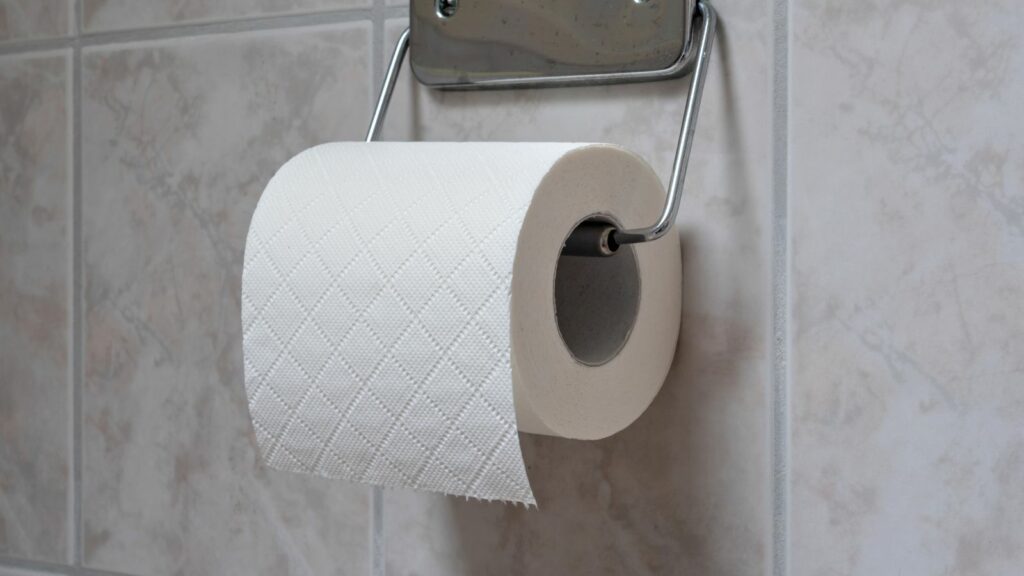
A tariff fight that began with arguments over cars, dairy and alcohol is now reaching one of the most ordinary products in an American shopping cart: toilet paper. New U.S. duties on selected Canadian goods include northern bleached softwood kraft pulp, a long-fibre material widely used to strengthen premium tissue. North Carolina State University researchers estimate that the 50% tariff could raise manufacturing costs for premium toilet tissue by roughly 11% to 20%, depending on the fibre blend.
That does not mean a package on the store shelf automatically becomes 11% more expensive. But it does show how deeply Canada and the United States remain tied through supply chains that consumers rarely see. A trade measure aimed at Canada can land first at a U.S. mill, then work its way toward a household budget.
The Tariff Has Reached the Bathroom Aisle
President Donald Trump’s latest Canada tariffs took effect on August 22 after a brief three-day suspension designed to give negotiators more time. The measures use Section 338 of the Tariff Act of 1930 and apply an additional 50% duty to a large group of Canadian products. The White House says the action answers what it describes as discriminatory Canadian treatment of U.S. alcohol, dairy and motor vehicles.
The surprise for households is how far the product list reaches beyond headline industries. NC State researchers say the covered goods include Canadian northern bleached softwood kraft pulp, or NBSK, a key input for premium tissue. The tariff does not need to land on a finished roll of toilet paper to affect the economics of making one in the United States. A levy on industrial fibre can quietly move from a customs entry to a bathroom staple.
Why Canadian Softwood Fibre Matters
Toilet paper is not made from one uniform fibre. Premium tissue typically blends shorter hardwood fibres, which help create softness and smoothness, with longer softwood fibres that add strength. Canadian NBSK is especially valuable because its long fibres reinforce the sheet without requiring manufacturers to sacrifice the feel associated with higher-end products. Domtar describes NBSK from its Canadian mills as reinforcement pulp used in tissue and paper towels.
NC State estimates that Canadian NBSK accounts for roughly 15% to 30% of the fibre blend in premium bath tissue. The share is much larger in premium kitchen towels, where it can reach 50% to 65%. That difference matters because tariffs hit products according to how much of the affected input they use. The dispute therefore exposes an unusual fact about household paper: softness, strength and absorbency are partly the result of a cross-border recipe built from fibres with different physical properties.
What the 11% Figure Actually Measures
The 11% figure in the headline is best understood as a manufacturing-cost estimate, not a forecast for the supermarket shelf. Ronalds Gonzalez, an associate professor of forest biomaterials at NC State, estimates that the 50% tariff on Canadian NBSK could increase manufacturing costs for premium toilet tissue by about 11% to 20%. The range reflects differences in fibre recipes and reliance on Canadian softwood pulp.
Retail pricing adds another layer. Tissue makers can absorb some of the cost, negotiate with suppliers, change fibre blends, reduce promotions or pass part of the increase to retailers and shoppers. Federal Reserve Bank of New York research on the 2025 tariff wave found that tariffs can lift prices not only on imported finished goods but also on domestically made products that rely on imported inputs. Toilet paper is therefore a useful example of how a border tax can influence a U.S.-made product.
Paper Towels Face an Even Bigger Cost Risk
Paper towels may be even more exposed than toilet paper. NC State’s analysis puts the potential increase in manufacturing costs for premium kitchen towels at roughly 31% to 38%, compared with 11% to 20% for premium bath tissue. The reason is straightforward: kitchen towels often require a much larger share of long softwood fibre to deliver the wet strength and absorbency expected from a premium product.
That creates a practical trade-off for manufacturers. U.S.-produced southern bleached softwood kraft pulp can replace Canadian NBSK, but NC State professor Hasan Jameel says the substitution can provide less softness. A company trying to avoid the tariff may be deciding whether to pay more, reformulate the sheet or accept a change in product feel. For consumers, the dispute could show up not only in price but potentially in the texture or performance of familiar household brands.
U.S. Production Is Huge — but Canada Still Matters
The United States has a large tissue industry, which makes the Canadian connection easy to overlook. The American Forest & Paper Association says U.S. tissue production was about 7.8 million tons in 2025, down 0.8% from the previous year. Domestic mills therefore supply most of the country’s tissue needs. Yet a strong domestic manufacturing base does not eliminate exposure to imported raw materials or finished products.
Trade data show how significant Canada remains. In 2024, the United States imported about $510 million worth of finished toilet paper from the world, and roughly $328 million came from Canada. Canada supplied about 112.8 million kilograms, far ahead of Mexico, the next-largest supplier by value. Those figures cover finished toilet paper, while the current tariff concern also involves pulp and tissue stock used by U.S. manufacturers. Together, they show why “made in America” can still depend on Canadian fibre.
Canada Is Hitting Back With Paper Tariffs of Its Own
Canada is preparing to answer the U.S. measures with tariffs that also reach the paper aisle. Ottawa says its counter-tariffs will take effect on September 8 and cover C$27.6 billion worth of U.S. imports, matching the value of the U.S. Section 338 measures dollar for dollar. Rates will range from 15% to 50% across targeted products including steel, dairy, appliances, agricultural equipment, electronics, pulp and paper.
The list is specific. U.S. toilet or facial tissue stock is slated for a 50% tariff, while finished toilet paper and facial tissues are listed at 25%. That symmetry shows how quickly an integrated supply chain can become tax points on both sides of the border. Canadian retailers importing U.S. paper products could face higher landed costs while U.S. manufacturers deal with more expensive Canadian fibre, widening the trade war’s reach from factories to store shelves.
Canada Has Real Leverage in the Pulp Market
The exposure exists because Canada is not a marginal supplier of forest products. Natural Resources Canada says the country was the world’s leading exporter of northern bleached softwood kraft pulp by value in 2024. Forest products generated C$37.2 billion in Canadian exports that year, with 76% going to the United States. A federal overview says the U.S. absorbed about 44% of Canadian NBSK exports, worth roughly C$2 billion.
Those numbers help explain why paper products have become strategically relevant even though they attract less attention than autos or energy. Canadian mills sell into a North American manufacturing system built around geography, contracts and fibre characteristics. Changing that system is possible, but not frictionless. For pulp-producing communities, reduced U.S. demand can hurt mill economics. For American tissue makers, losing a familiar source can mean higher costs, reformulation or a search for substitute fibre from farther away.
Manufacturers Can Pay, Pass It On or Change Suppliers
Manufacturers facing a new tariff generally have three choices: absorb the cost, pass it along or change the supply chain. In practice, companies often combine them. New York Fed research on small businesses found that about 80% of goods and retail firms facing higher imported-input prices in 2025 passed at least some costs to customers, while about 60% also absorbed some internally. Large tissue producers may have more bargaining power, but the same economics applies.
Switching suppliers is not costless. NC State researchers note that replacing Canadian NBSK with southern U.S. softwood pulp can change softness, while importing alternative fibre can add logistics complexity. Natural Resources Canada reported a U.S. NBSK list price of US$1,570 per metric ton in July 2026. A 50% tariff on a meaningful share of the fibre recipe creates a real production decision, not merely an accounting adjustment.
A Small Household Staple Reveals a Much Bigger Trade Problem
Toilet paper is a small line in most household budgets, but that is why this episode matters. It shows how tariffs aimed at negotiating leverage can spread into products with little obvious connection to the original political dispute. New York Fed research on the 2025 tariff wave found that about 26% of tariff increases passed through to consumer prices, with part of the effect arriving indirectly through imported inputs used by domestic producers.
That does not provide a precise forecast for toilet paper, and outcomes may differ across brands, package sizes and retail channels. Near-term signals include whether tissue producers announce price changes, trim promotions or alter product specifications as contracts roll over. The mechanism is clear: Canadian pulp enters an American factory, a tariff raises the cost of that input, and the pressure must be absorbed somewhere. The trade war has reached even the economics of a household staple.
