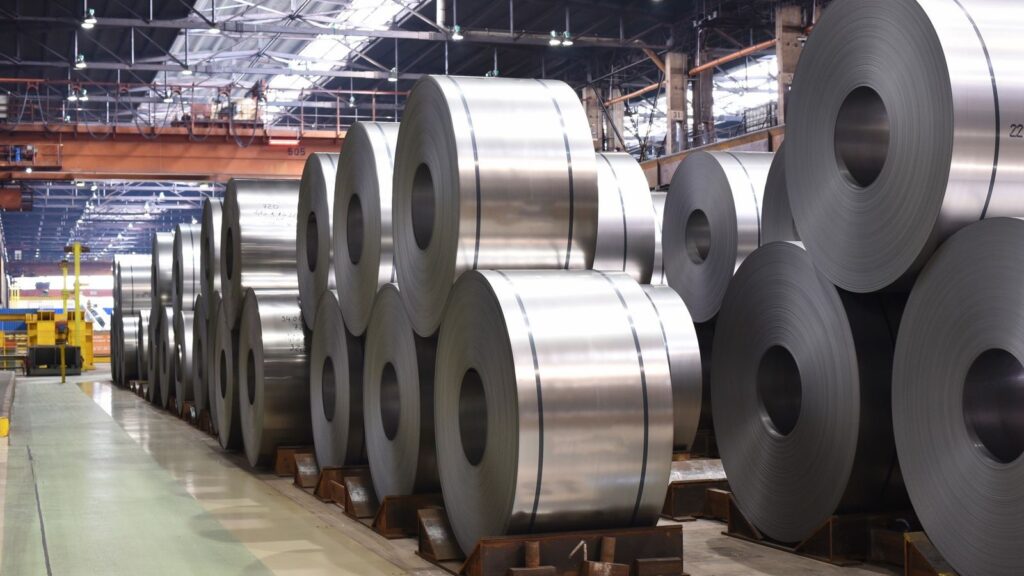
One of Canada’s largest steelmakers has delivered its strongest financial performance under American ownership, but the good news comes with a painful contradiction for Ontario workers. Cleveland-Cliffs reported on October 19 that Stelco had its best quarter since being acquired nearly two years ago, even as the company moves ahead with shutdowns of galvanizing operations and layoffs affecting up to 500 Canadian employees.
The American steel giant is blaming Ottawa for failing to adequately protect Canada’s galvanized steel market from foreign competition. Meanwhile, Prime Minister Mark Carney’s government is threatening legal action over employment commitments made during the 2024 takeover.
The dispute highlights a troubling reality of the Canada–U.S. trade war: a multinational steel producer can celebrate improving profitability while Canadian workers face unemployment, and both sides can disagree sharply about who is responsible.
Stelco Delivers Its Strongest Quarter Since the American Takeover
Cleveland-Cliffs announced on October 19 that Stelco’s third-quarter performance was its strongest since the American company acquired the Canadian steelmaker in November 2024. Chief executive Lourenco Goncalves credited improving conditions in Canada’s hot-rolled steel market, which helped Stelco become a positive contributor to the parent company’s adjusted earnings before interest, taxes, depreciation and amortization, commonly known as EBITDA. It was an important reversal for a business that had struggled with weak demand and worsening trade conditions after the takeover.
The announcement carries particular significance because Cleveland-Cliffs paid approximately C$3.4 billion to acquire Stelco, expecting the Canadian operations to strengthen its North American steel business. Goncalves acknowledged during the earnings call that Stelco had instead become a financial burden for more than a year. The latest quarter suggests that part of the operation has recovered. However, the company did not provide a separate dollar figure for Stelco’s quarterly EBITDA contribution, meaning the precise size of the Canadian recovery remains unclear.
Cleveland-Cliffs Reports a US$165 Million Profit as Steel Prices Improve
The broader financial results were considerably stronger than the previous quarter. Cleveland-Cliffs reported US$5.6 billion in third-quarter revenue and US$165 million in net income, reversing a US$134 million loss recorded during the second quarter of 2026. Adjusted EBITDA climbed to US$612 million, more than double the US$286 million generated in the preceding quarter. The company also shipped approximately 4.2 million net tons of steel products, benefiting from higher selling prices, stronger volumes and improving production costs.
Goncalves described the overall performance as Cleveland-Cliffs’ strongest quarter in three years, a different benchmark from Stelco’s two-year comparison. The company also projected approximately US$715 million in adjusted EBITDA for the fourth quarter and said its 2027 results could exceed US$4 billion under current contract and pricing assumptions. Those projections reflect management’s expectations rather than guaranteed profits. For Canadian employees facing layoffs, however, the contrast remains difficult to ignore: the company’s improving financial outlook has not translated into security for every part of its Ontario workforce.
Hamilton’s Galvanizing Lines Face an Indefinite Shutdown
Despite Stelco’s improving performance, Cleveland-Cliffs has decided to indefinitely idle its galvanizing lines at Hamilton Works. The company says the Canadian market cannot support the existing level of galvanized steel production at acceptable prices. The decision affects operations that have been central to Hamilton’s industrial economy for generations. Stelco’s Hamilton facilities specialize in processing and coating steel produced through the company’s broader manufacturing system, including its Lake Erie Works operation near Nanticoke.
The distinction between shutting down particular production lines and closing an entire steel plant is important. Cleveland-Cliffs has not announced the permanent closure of all Stelco operations in Ontario. Instead, it plans to concentrate on hot-rolled products, which management believes can be sold more profitably. Goncalves maintains that total Stelco production tonnage can be sustained through that shift, while approximately 2,000 Canadian jobs remain in place. Whether those expectations hold will depend on demand, production schedules and the company’s ability to maintain its remaining operations.
Canada’s Hot-Rolled Steel Market Recovers While Galvanized Steel Struggles
The apparent contradiction in Stelco’s performance comes down partly to the difference between two steel markets. Hot-rolled steel is produced by rolling steel at high temperatures and is widely used in manufacturing, machinery and other industrial applications. Galvanized steel receives a protective zinc coating to resist corrosion, making it valuable for automotive components, agricultural equipment and construction materials. Stelco’s Hamilton Works has historically been an important producer of these higher-value coated products.
Goncalves told investors that Canada’s hot-rolled steel market improved significantly during the year, partly because of federal import restrictions. During the earnings call, he said Canadian hot-rolled prices had achieved an improvement of roughly US$400 per ton over four months, a pace he compared favourably with the earlier American recovery. The galvanized business, however, continued to suffer from insufficient orders and competition from imports, according to the company. Management said this business represented less than 20% of Stelco’s output, but its weakness was serious enough to justify idling production lines and reducing employment.
Cleveland-Cliffs Blames Ottawa for Failing to Protect Canadian Steel
Goncalves directed much of his criticism toward the Canadian government, arguing that Ottawa had not introduced sufficiently restrictive import quotas for galvanized steel. During the October 19 earnings call, he said Cleveland-Cliffs had repeatedly explained its concerns to federal officials and advocated a stronger North American approach to steel trade. According to the company, imported galvanized products continue to enter Canada in quantities that domestic producers cannot profitably compete against, leaving Stelco without enough business to keep its Hamilton coating operations running.
The CEO also argued that stronger restrictions could make it possible to restart the affected lines and recall workers. His criticism extended to Canada’s broader trade strategy under Carney, which he portrayed as too welcoming toward foreign products. However, the suggestion that imported galvanized steel is being dumped is the company’s characterization of the market, not proof that every imported shipment violates trade laws. The disagreement is ultimately about how aggressively Canada should restrict foreign steel, which products deserve additional protection and whether those measures would restore enough demand to make the idled operations viable.
Ottawa Has Already Introduced Major Steel Import Restrictions
Canada has not remained inactive in response to foreign steel competition. In December 2025, the federal government substantially tightened tariff-rate quotas on steel imports from countries outside the Canada–United States–Mexico Agreement. Imports from countries without a Canadian free-trade agreement were restricted to 20% of their 2024 volumes before additional tariffs applied. The corresponding threshold for countries with free-trade agreements was reduced to 75%. Steel imported above those thresholds generally faces a 50% surtax, subject to the applicable rules and exemptions.
Ottawa also introduced a 25% tariff on designated steel derivative products and extended important protective measures during 2026. Goncalves himself acknowledged that the restrictions helped revive Canada’s hot-rolled steel market. His objection is that the measures have not adequately addressed galvanized products. That distinction complicates the political dispute. The federal government can point to substantial action already taken, while Cleveland-Cliffs argues the remaining market problems threaten Canadian employment. Further restrictions could help some domestic producers, but policymakers must also consider manufacturers that rely on imported steel for their own production.
Trump’s 50% Steel Tariffs Have Divided the North American Industry
The dispute cannot be separated from American trade policy. The United States increased tariffs on imported steel to 50% in June 2025, making it substantially more difficult for Canadian producers to compete in their largest traditional export market. Reuters reported in October 2026 that Canadian steel shipments to the United States had fallen approximately 60% following the higher tariffs. Manufacturers that previously relied on selling products across the border have faced pressure to find customers domestically or in other international markets.
Cleveland-Cliffs presents a revealing example of how the same trade environment can affect operations differently. Its American business has benefited from restrictions on imported steel, which management says have supported prices and domestic supply chains. Its Canadian business, however, has struggled with lost access to American customers and continued competition from imported products at home. The United Steelworkers have criticized Goncalves for supporting American steel tariffs while attributing Canadian layoffs to the resulting trade pressures. The company’s position is that the layoffs reflect market conditions, but the union argues that management’s own support for protectionist American policies cannot be separated from the consequences.
Up to 500 Canadian Steelworkers Face Layoffs Despite Improving Profits
For workers in Hamilton and Nanticoke, the dispute is much more immediate than arguments over tariffs and quarterly earnings. Stelco announced plans affecting up to 500 employees, with layoffs beginning in stages during October. United Steelworkers Local 1005 president Ron Wells said approximately 90 workers were expected to receive notices during the first phase, with roughly 330 Hamilton employees potentially affected over several weeks. Additional reductions were expected at Lake Erie Works and among other affected workers.
The numbers represent families trying to manage mortgages, household expenses and uncertain employment prospects. Some employees received instructions not to return for their next scheduled shifts, according to union representatives. Wells explained that the phased shutdown would allow equipment to be prepared for an eventual restart if orders returned. Cleveland-Cliffs has characterized the layoffs as temporary, but the indefinite idling of production means workers do not have a confirmed date for returning. A strong corporate earnings report provides little comfort when a household’s regular paycheque has already stopped.
Ottawa Says Cleveland-Cliffs Made Binding Promises to Protect Jobs
The federal government’s response centres on commitments made when Cleveland-Cliffs acquired Stelco in 2024. Ottawa approved the transaction under the Investment Canada Act after receiving a package of legally binding undertakings. Those commitments included maintaining Stelco’s Hamilton headquarters, honouring existing collective agreements and preserving employment levels for unionized workers and the vast majority of non-union employees. The obligations were intended to remain in place for five years, extending well beyond the company’s latest restructuring announcement.
Industry Minister Mélanie Joly has argued that Cleveland-Cliffs cannot simply disregard those commitments because market conditions have changed. In an October 5 letter, she demanded an explanation of how the company intended to comply with its obligations and warned that legal action could follow. Stelco pushed back, arguing that the undertakings did not explicitly prohibit layoffs and disputing Ottawa’s allegation of non-compliance. That disagreement makes the precise wording and legal interpretation of the acquisition commitments especially important. The company’s assertion of temporary layoffs does not automatically settle whether it has fulfilled its employment obligations.
Ottawa Considers Legal Action and Even a Forced Sale of Stelco
The disagreement has escalated beyond warnings. On October 16, Joly said the federal government was examining available options under the Investment Canada Act, including measures that could lead to a change in Stelco’s ownership. Section 40 allows a court, under specified conditions, to order compliance with investment commitments, impose financial penalties or require a foreign investor to divest Canadian assets. Joly has discussed nationalization as a possibility, although no takeover has been completed or formally ordered.
For workers, the most immediate questions concern whether the idled operations can restart and whether the promised recalls will actually happen. Cleveland-Cliffs insists stronger protections against galvanized steel imports would help restore production, while Ottawa maintains that the company’s existing employment commitments must be respected. Both positions now face a practical test. Stelco’s strongest quarter under American ownership demonstrates that parts of the business can recover. Whether that recovery can extend to Hamilton’s affected production lines—and the employees whose livelihoods depend on them—remains unresolved.
