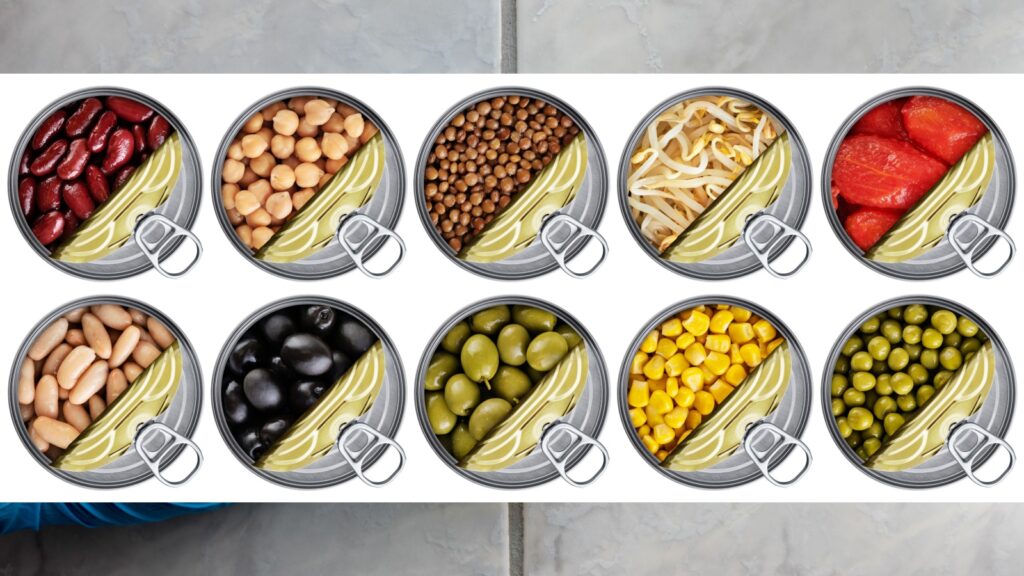
A grocery-store staple has become another pressure point in Canada’s increasingly complicated trade landscape. The Canadian International Trade Tribunal has concluded that sharply rising imports of canned vegetables are a principal cause of serious injury to domestic processors, with U.S. shipments playing an especially important role. Imports climbed 28% in 2025, according to the tribunal’s findings reported after its safeguard investigation.
The recommended response is much stronger than Canada’s existing provisional measure. The tribunal has proposed a three-year tariff-rate quota that would permit roughly 30 million pounds of covered canned vegetables to enter duty-free before surtaxes of between 40% and 50% apply. Ottawa has not yet adopted that recommendation, leaving the final balance between protecting Canadian processing capacity and keeping basic foods affordable in the government’s hands.
The Tribunal Found More Than Ordinary Competitive Pressure
The Canadian International Trade Tribunal’s conclusion carries more weight than a finding that domestic companies simply faced tougher competition. Under safeguard rules, imports must be increasing under circumstances serious enough to cause, or threaten to cause, significant injury to the domestic industry. The tribunal concluded that canned-vegetable imports met that standard, describing them as a principal cause of serious injury to Canadian producers. That distinction matters because safeguard measures are intended as temporary emergency protection rather than routine barriers against foreign competitors.
The investigation originated after the federal government directed the tribunal in March 2026 to examine imports of specified canned and frozen vegetables. The mandate was broad: determine whether rising imports were inflicting serious injury and, if so, recommend an appropriate three-year remedy while accounting for food affordability and security. The tribunal submitted its report on September 9. That moved the dispute from an investigative phase into a political one, because the final decision on whether to implement the recommended protection belongs to the federal government.
A 28% Import Surge Changed the Market Quickly
The speed of the increase was central to the case. Total Canadian imports of the canned vegetables examined by the tribunal rose 28% in 2025 compared with the previous year. For processors accustomed to planning production around Canadian growing seasons, long-term contracts and relatively predictable supermarket demand, a jump of that size can alter the economics of a plant surprisingly quickly. Additional imported cases on store shelves do not merely compete for new demand; they can displace products that domestic processors expected to sell.
The tribunal also examined where that growth came from. U.S. shipments accounted for a substantial portion of the increase, and the growth rate of imports from the United States was found to be appreciably greater than the overall growth rate of imports from all sources. That was important legally as well as commercially. The tribunal ultimately found that U.S. imports contributed importantly to the serious injury suffered by the Canadian industry, making the United States much more than a peripheral supplier in the case.
The U.S. Finding Clears an Important CUSMA Hurdle
Canada cannot automatically include American products in every global safeguard simply because imports are causing problems. CUSMA contains additional protections for trade among Canada, the United States and Mexico. Under Chapter 10, imports from another CUSMA country normally have to be excluded from a global safeguard unless they account for a substantial share of total imports and contribute importantly to the serious injury or threat identified by the investigating authority.
That makes the tribunal’s language concerning U.S. imports especially consequential. CUSMA directs authorities to consider factors including a partner’s import share, its level of imports and how quickly those imports are changing. The agreement says imports normally should not be considered to “contribute importantly” when their growth is appreciably lower than the growth of imports overall. In this case, the tribunal found the opposite pattern: U.S. canned-vegetable imports grew faster than total imports during the relevant surge. That finding provides a trade-law basis for recommending that U.S. goods be included in the final safeguard rather than automatically exempted.
The Proposed Remedy Would Allow 30 Million Pounds Before Heavy Surtaxes
Rather than recommending an immediate 50% charge on every covered can entering Canada, the tribunal proposed a tariff-rate quota. The reported plan would allow approximately 30 million pounds of canned vegetables to enter Canada duty-free each year before higher surtaxes become applicable. That amount is roughly equivalent to the import volume recorded in 2024, effectively giving the market room for a pre-surge level of foreign supply before imposing substantially stronger protection on additional shipments.
Once imports exceed that quota, the proposed surtaxes would range from 40% to 50% during the three-year safeguard period. A tariff-rate quota differs from a hard import cap because shipments can continue after the threshold has been reached; they simply become much more expensive. For an importer deciding whether to bring in another truckload of canned beans or corn after the quota fills, a 40% to 50% surtax could significantly alter the economics. The structure is designed to restrain the surge without completely shutting foreign products out of Canada.
Canada Already Has a 10% Measure, but It Is Very Different
The proposed final safeguard should not be confused with the provisional measure that Ottawa introduced earlier in the year. On June 19, Finance Minister François-Philippe Champagne announced a temporary 10% surtax on specified canned-vegetable imports. It was designed as an emergency step while the tribunal completed its investigation and can remain in effect for a maximum of 200 days unless replaced earlier by a final safeguard measure.
There is another major difference: the provisional surtax excluded goods originating in the United States, Mexico, Chile, Israel and designated developing countries because of Canada’s international trade obligations. That meant the temporary measure did not directly hit the American imports that later became central to the tribunal’s serious-injury determination. With the tribunal now finding that U.S. imports contributed importantly to the injury, the legal and factual picture has changed. Champagne has said the government will review the report while the current 10% safeguard remains in place until its permitted period ends or a final measure replaces it.
Metal Cans Became Part of the Trade-War Squeeze
The dispute illustrates how tariffs in one industry can produce unexpected pressure elsewhere. Canadian food processors told the tribunal that costs were being affected by steep U.S. tariffs on steel and aluminum. Metal packaging is a significant input for canned vegetables, and Canadian processors obtain the vast majority of their empty cans from the United States. When the cost structure of North American metal production shifts, a Canadian processor can therefore feel the consequences before a single pea, bean or kernel of corn reaches a filling line.
That creates an unusual competitive problem. A domestic processor may be buying Canadian vegetables and employing Canadian workers while still depending on U.S.-made packaging whose price reflects broader steel and aluminum trade measures. Meanwhile, a finished can of vegetables can arrive from abroad after much of its processing cost has already been incurred elsewhere. Canada’s own trade environment has also become tougher: Ottawa increased counter-tariffs on selected U.S. steel and aluminum products to as much as 50% effective September 8, 2026. The vegetable case therefore sits inside a much larger reshaping of cross-border manufacturing costs.
Nortera Became the Clearest Example of the Industry’s Financial Strain
Nortera Foods featured prominently in the tribunal’s assessment. The company was identified as Canada’s largest canned-food processor by a significant margin, and the tribunal found that increased canned-vegetable imports contributed to lost or reduced sales and significant erosion of Nortera’s gross margins. The company also warned about the possibility of plant closures if market conditions continued to deteriorate, giving the inquiry a tangible employment and investment dimension beyond import statistics.
Nortera’s scale helps explain why its experience matters. The company describes itself as a North American leader in frozen and canned vegetables, operating plants in Canada and the United States and processing more than 400,000 tonnes annually. Its business is closely connected with hundreds of agricultural partners and thousands of permanent and seasonal employees. In 2025, Nortera announced a $28-million investment to raise capacity at its Saint-Denis-sur-Richelieu, Quebec, plant from six million to 10.6 million case equivalents. When a processor making investments of that scale reports margin erosion from imports, concerns extend into farming communities, transportation networks and local manufacturing jobs.
The Measure Covers Familiar Pantry Staples, Not Every Vegetable Product
The scope is broad enough to be noticeable in grocery and food-service supply chains but still carefully defined. Covered canned products include corn, peas, green beans, wax beans, peas-and-carrots mixes, mixed vegetables, white beans, black beans, red beans, pinto beans and chickpeas. The rules cover different cuts and preparations, including products that are whole, sliced or diced, as well as conventional and organic goods sold in retail, food-service, industrial or bulk formats.
There are also important exclusions. Under the existing safeguard order, fresh, dried and frozen vegetables are not subject to the canned-vegetable surtax. Ready-to-eat meals in which vegetables are combined with items such as meat, pasta, grains or sauces and are not the primary component are excluded as well. Purées, powders, juices, spreads, dips and pastes fall outside the measure. The Canada Border Services Agency has also clarified that vegetables packaged in glass jars are not covered by the current order; the safeguard applies to the specified products packaged in metal cans.
Food Affordability Was Built Into the Tribunal’s Mandate
Protecting processing plants was only one side of the government’s instructions. From the beginning, the tribunal was explicitly required to consider what any remedy could mean for food affordability and food security. That is an important constraint when the products involved include beans, corn and peas—shelf-stable foods that can be stored for long periods and sold at relatively accessible prices. A measure strong enough to help processors but so restrictive that it sharply reduces supply would create a different problem for households, retailers and institutional food buyers.
The recommended tariff-rate quota appears designed partly around that tension. Allowing approximately 30 million pounds of imports at the lower rate provides continued access to foreign supply before the much larger surtax is triggered. The safeguard would therefore target import volumes above the benchmark rather than taxing every shipment at 40% or 50% from the first pound. No structure can guarantee that prices will remain unchanged: importers facing additional costs may attempt to pass some of them downstream. But the tribunal was required to weigh that risk against the longer-term implications of losing domestic processing capacity.
Ottawa Now Has to Decide How Much Protection Is Appropriate
The tribunal’s September 9 report is a recommendation, not an automatic tariff change. Finance Minister François-Philippe Champagne has said the federal government will study the findings and determine what action is appropriate under international trade rules. Until that decision is made, the existing provisional 10% measure remains the operative safeguard, subject to its 200-day limit or replacement by a final measure. That distinction is important because the headline-grabbing 40% to 50% surtax has been recommended, but has not yet become the general rate charged on affected imports.
The stakes also reach far beyond one category of canned food. Agriculture and Agri-Food Canada says food and beverage processing generated $173.4 billion in manufactured-goods sales in 2024, represented 20.3% of Canadian manufacturing sales and employed about 318,400 people. The sector also purchases more than half of Canadian agricultural production. Ottawa’s decision will therefore be watched as a test of how aggressively Canada intends to protect domestic processing capacity when global trade disruption collides with the equally important objective of keeping everyday food affordable.
