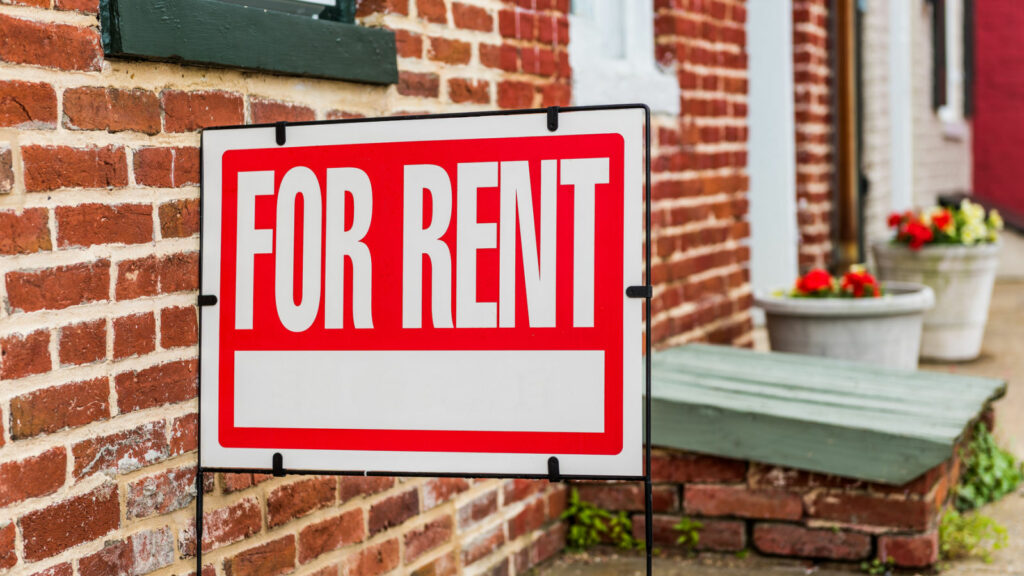
Canada’s rental market entered the final stretch of summer with an unfamiliar problem for landlords: rents were no longer getting their usual seasonal lift. Average asking rent across the country fell to $2,035 in August, down 4.8% from a year earlier and reaching the lowest level for an August since 2022. The decline marked the 23rd consecutive month in which asking rents were lower than a year earlier.
For renters hunting for a new home, that creates more breathing room in several expensive markets. But the shift is unfolding as Canada faces slower population growth, a softer labour market and an escalating trade conflict with the United States. Those forces could weaken housing demand while simultaneously making new homes more expensive to build, creating an unusually complicated outlook.
The Summer Rent Recovery Has Stalled
August interrupted what had started to look like a modest stabilization in Canada’s rental market. Asking rents slipped 0.1% from July after rising for four consecutive months through the spring and early summer. The monthly move was small, but its timing matters. Summer normally brings stronger rental demand as students relocate, workers change cities and families try to settle before the school year. Instead, national rents lost momentum just as that seasonal pressure should have been strongest.
The longer-term decline is much clearer. Average asking rents are now 7% below where they were two years ago. August’s 4.8% annual drop was also steeper than the 4% decline recorded in July and represented the largest year-over-year decrease since rents fell 5.3% in March. For someone comparing listings today with the bidding-war atmosphere of several years ago, the market can feel noticeably different. More listings are lingering, incentives are appearing, and renters in some cities have regained a measure of negotiating power.
Condos and Secondary Rentals Are Taking the Biggest Hit
Not every landlord is experiencing the downturn equally. Purpose-built rental apartments remained the strongest segment in August, with average asking rents falling 3.3% from a year earlier to $2,038. Three-bedroom purpose-built units were even more resilient, declining just 1.4% to an average of $2,734. That suggests family-sized apartments in professionally operated rental buildings continue to face firmer demand than many smaller or investor-owned properties.
Condominiums tell a very different story. Condo asking rents fell 7.7% annually to $2,050, with studio condos dropping 9.3%. Houses, townhouses and other secondary-market rentals declined even more, falling 8.3% to an average of $2,014. CMHC has separately reported unusually strong competition from investor-owned condos in major cities, particularly where newly completed units could not easily find buyers and were instead offered for rent. For a landlord with a small downtown condo competing against dozens of similar units, that added supply can mean lowering the price, offering a free month or watching the unit sit empty.
Canada’s Biggest Provinces Are Leading the Decline
The national average conceals a striking geographic divide. British Columbia recorded a 4.6% annual drop in apartment and condo asking rents, bringing its provincial average to $2,353. Alberta was down 4.3% to $1,670, while Ontario fell 3.5% to $2,248. Those three provinces contain many of Canada’s largest rental markets, so their declines carry substantial weight in the national figure.
Nova Scotia moved in the opposite direction. Average apartment and condo rents there climbed 3.1% from a year earlier to $2,356, leaving the province slightly more expensive than British Columbia for a fourth consecutive month. The rental report attributes part of that unusually high average to new construction delivering larger and more expensive units. Manitoba also remained marginally positive, with asking rents up 0.2% to $1,617. The divergence is a useful reminder that a 4.8% national decline does not mean every renter will find a cheaper apartment. Local supply, population trends and the type of housing being completed still matter enormously.
Toronto Is Stabilizing While Calgary Remains Under Pressure
Canada’s six largest rental markets were also moving in different directions during August. Ottawa posted the strongest monthly increase, rising 1.1% to $2,168. Vancouver gained 1% to $2,704, Montreal rose 0.8% to $1,955 and Edmonton increased 0.7% to $1,520. Toronto and Calgary were the exceptions, slipping 0.3% and 0.2% respectively, leaving average asking rents at $2,570 in Toronto and $1,825 in Calgary.
Year-over-year comparisons tell another story. Calgary had the largest annual decline among those six markets at 4.5%, while Vancouver and Edmonton were both down 4.1%. Montreal fell only 1.1%, Toronto 1.4% and Ottawa 1.6%. Toronto also showed how averages can obscure what is happening inside individual unit sizes: two-bedroom asking rents were up 0.3% annually and three-bedroom rents rose 3.5%. Renters chasing small investor condos may therefore find far more bargaining power than families searching for larger units in the same city.
Slower Population Growth Is Changing the Demand Equation
One of the biggest forces behind Canada’s extraordinary rent increases earlier in the decade was rapid population growth. That engine has slowed sharply. Statistics Canada estimated the country’s population at about 41.42 million on April 1, down roughly 55,000 during the first quarter of 2026. The estimate was preliminary, but it marked a dramatic departure from the population surges that had previously intensified competition for apartments.
The number of non-permanent residents was estimated to have fallen by nearly 118,000 during the quarter to about 2.56 million, while Canada welcomed 83,149 permanent immigrants, 20.2% fewer than during the same period in 2025. Those changes matter quickly in rental markets because international students, temporary workers and recent immigrants are disproportionately likely to rent when they first arrive. CMHC has identified slower population growth as one reason asking rents are easing in major cities. Fewer households competing for each available unit can turn an apartment that once attracted multiple immediate applications into one that requires weeks of marketing or a landlord incentive to fill.
New Apartments Are Finally Giving Renters More Choice
Supply is contributing to the shift as well. CMHC reported earlier this year that rental apartment completions were running ahead of the comparable 2025 period and that vacancy was especially high in buildings completed after 2020. Some newly built projects were taking months to fill. Landlords in competitive markets have increasingly responded with incentives including discounted parking, gift cards, move-in credits, cash bonuses and, in some cases, several months of free rent.
The broader construction pipeline is becoming more complicated. In centres with at least 50,000 residents, 19,773 homes were completed in July, an 8.1% increase from June, while more than 373,000 remained under construction. Yet actual housing starts in centres of at least 10,000 people were 19% lower than a year earlier, and the national seasonally adjusted annual rate of starts fell 5% from June. CMHC expects rental construction to gradually retreat from its historic 2025 peak. That creates a potential timing problem: renters are benefiting from projects completed after years of construction, even as weaker economics threaten the next generation of supply.
The Trade War Creates Risks on Both Sides of the Rental Market
The escalating Canada-U.S. trade fight introduces a new variable because it can simultaneously reduce demand and increase the cost of creating supply. Urbanation president Shaun Hildebrand warned that weaker employment and consumer confidence could weigh on rental demand, while higher construction costs could threaten future supply. The concern has become more relevant as the bilateral dispute intensified again in late August and early September, with new U.S. trade restrictions followed by Canadian retaliatory measures.
There is already evidence of both pressures. Canada lost about 42,000 jobs in August, although the unemployment rate remained at 6.4%; that monthly decline cannot simply be attributed to tariffs, but it adds to the uncertainty facing households considering a move. Meanwhile, Statistics Canada reported residential building construction costs across its 15-market composite were 2.3% higher than a year earlier in the second quarter. The agency specifically identified retaliatory tariffs and supply-chain disruptions as sources of pressure, with metal fabrication and structural-steel costs among the fastest-rising components. A prolonged trade conflict could therefore cool rents today while making tomorrow’s apartments harder to finance and build.
Falling Asking Rents Do Not Mean Canada Suddenly Has Cheap Housing
The most important distinction for renters is between an asking rent and the rent already being paid by an existing tenant. Asking rents measure the price advertised when a unit becomes available, making them highly responsive to short-term shifts in supply and demand. CMHC found that while asking rents have been falling in several major cities, average rents paid on occupied apartments have continued to increase, largely because rents can jump when units turn over.
Affordability also remains difficult at the lower end of the market. CMHC has found that vacancies and turnover remain particularly constrained among cheaper units in places such as Toronto and Vancouver, even as newer and more expensive apartments become easier to find. Its summer outlook expects Canadian rental conditions to continue easing in 2026 as supply increases and population growth slows, but it also stresses that rents remain high relative to incomes. August’s 4.8% decline is therefore meaningful relief, especially for households signing a new lease. It is not evidence that Canada’s housing shortage has disappeared. The next phase will depend on whether weaker demand and new completions keep pushing rents down without causing construction to retreat so far that shortages return later.
