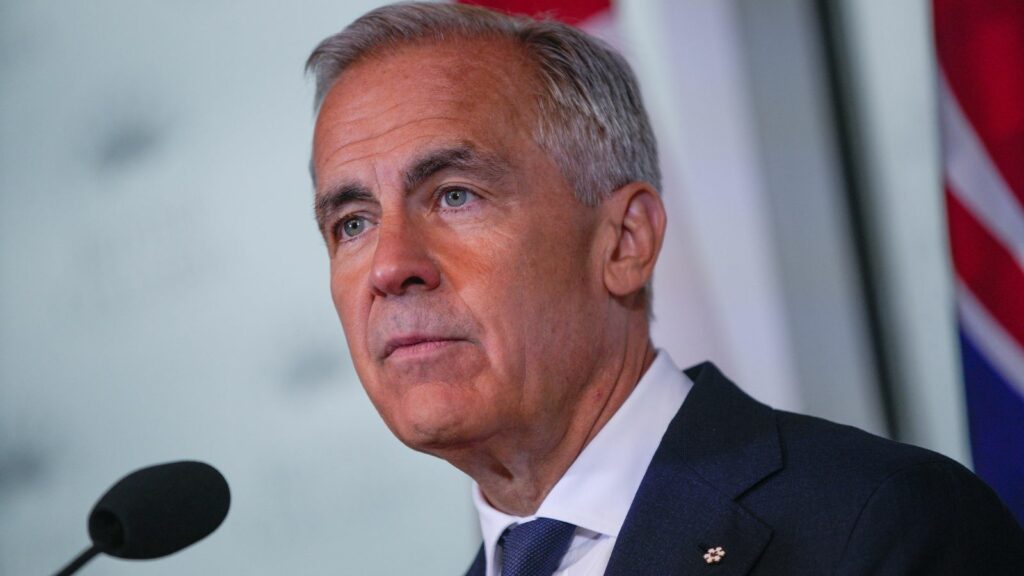
Canada’s push to build economic relationships beyond the United States is taking Prime Minister Mark Carney to Türkiye for a trip no Canadian prime minister has made before. Carney will travel to Ankara and Istanbul from October 21 to 23, marking the first bilateral visit to Türkiye by a Canadian prime minister.
The trip puts trade at the centre of a relationship that also touches energy, mining, defence, aerospace and security. It comes as Ottawa attempts to reduce the risks created by its heavy reliance on the U.S. market. Carney has already met Turkish President Recep Tayyip Erdoğan this year, but the October visit moves the relationship from summit diplomacy toward a more focused economic partnership, with meetings planned both at the presidential level and with Turkish business leaders and investors.
A Historic Visit With a Business-First Agenda
Carney’s visit carries historical significance, but Ottawa’s announcement makes clear that ceremony is not the main objective. In Ankara, the prime minister is scheduled to meet Erdoğan and discuss energy and mining, climate, defence and security, along with broader people-to-people ties. The Istanbul portion will shift toward commerce, with Carney meeting Turkish business leaders and investors and promoting Canada as a destination for capital and a supplier in strategically important industries.
The distinction matters because Carney has already been to Türkiye as prime minister. He travelled to Ankara for the NATO summit in July 2026 and met Erdoğan on the sidelines. The October trip is different: it is a dedicated bilateral visit, something the Canadian government says no previous Canadian prime minister has undertaken. Diplomatic relations stretch back decades, with Türkiye opening an embassy in Ottawa in 1944 and Canada appointing its first ambassador to Türkiye in 1947.
Türkiye Fits Carney’s Push to Reduce Trade Concentration
Canada is not abandoning the U.S. market, which remains overwhelmingly its largest trading relationship. The numbers nevertheless explain Ottawa’s urgency. Statistics Canada reported that 71.7% of Canadian merchandise exports went to the United States in 2025, down from 75.9% one year earlier. Merchandise exports to non-U.S. destinations, meanwhile, rose 17.2%. That shift has given Ottawa evidence that diversification is possible even if replacing the scale of U.S. commerce is unrealistic.
Carney has turned diversification into an explicit economic objective, saying Canada is on course to double exports to non-U.S. markets over the next decade. The strategy has gained importance amid renewed trade friction with Washington. In August, the federal government said the United States intended to impose a 50% tariff on roughly $28 billion of Canadian goods, prompting matching Canadian measures. Türkiye therefore represents something larger than one prospective trade deal: another attempt to give Canadian businesses more places to sell when access to Washington becomes less predictable.
Canada-Türkiye Trade Has Already Been Growing Quickly
The existing commercial relationship is still modest beside Canada-U.S. trade, but it has developed enough to give both governments something substantial to build on. Two-way merchandise trade between Canada and Türkiye reached more than $4.3 billion in 2025. Canadian exports accounted for about $1.1 billion, while imports from Türkiye totalled roughly $3.2 billion. Ottawa says the value of bilateral trade has increased by almost 50% over the past five years.
The composition also shows why Canadian officials see room for expansion. Canada’s leading exports to Türkiye in 2025 included $287 million in agri-food products, $273 million in aircraft and other transportation equipment and $151 million in industrial machinery. Investment is another piece of the relationship. The stock of Canadian direct investment in Türkiye stood at $3.3 billion in 2025, while Turkish direct investment in Canada reached $233 million. Carney’s Istanbul meetings will be aimed partly at turning those existing connections into larger, longer-term commitments.
A Free Trade Agreement Is Already Moving Forward
Carney will not arrive in Türkiye merely to propose closer trade relations; negotiations are already underway. Canadian and Turkish trade ministers agreed in June to begin exploratory discussions toward a free trade agreement. The process moved quickly. On July 7, during the NATO summit in Ankara, Carney and Erdoğan formally announced negotiations toward what Ottawa describes as a comprehensive and modern bilateral agreement.
Canada then opened public consultations from July 31 through September 14, inviting businesses, industry associations, provinces, territories and members of the public to comment on the potential agreement. Global Affairs Canada currently lists the negotiations as active. Details such as tariff schedules, market-access commitments and regulatory provisions have yet to be negotiated publicly, meaning the October visit could become important for establishing political momentum and priorities. For Canadian exporters, a successful deal could eventually improve predictability in a market where agriculture, machinery, aerospace, energy and technology are already identified as areas of commercial opportunity.
Energy Could Become One of the Biggest Commercial Prizes
Energy has quietly become one of the most concrete parts of the emerging relationship. Canadian Energy and Natural Resources Minister Tim Hodgson met his Turkish counterpart in February, with discussions covering nuclear power, critical-mineral mining and processing, and liquefied natural gas. Those are sectors where Canada has substantial resources and expertise and where Türkiye is seeking additional suppliers, technologies and energy-security options.
Nuclear power offers an especially tangible example. In March, AtkinsRéalis subsidiary Candu Energy signed a memorandum of understanding with the Türkiye Nuclear Energy Company to explore deploying Canadian CANDU technology as Türkiye considers adding three reactors to its nuclear program. Canada retains ownership of CANDU intellectual property through Atomic Energy of Canada Limited, while AtkinsRéalis is its exclusive licensee. Ottawa estimates Canada’s nuclear sector includes more than 250 companies and supports approximately 90,000 direct and indirect jobs. A major Turkish project could therefore ripple through engineering, manufacturing, uranium and specialized Canadian supply chains rather than benefiting a single company alone.
Defence Ties Have Shifted From Dispute Toward Re-Engagement
Defence cooperation adds opportunity but also historical baggage. Canada introduced restrictions on military exports to Türkiye in 2020 and later suspended relevant permits after allegations that Canadian-made sensors fitted to Turkish drones had been used by Azerbaijan during fighting in Nagorno-Karabakh. In January 2024, Ottawa removed its presumptive denial policy, allowing military export and brokering applications involving Türkiye to again be evaluated case by case under Canada’s export-control and Arms Trade Treaty framework.
Relations have since broadened considerably. At the July NATO summit, Türkiye joined Albania, Belgium, Greece, Latvia, Luxembourg, Romania and Ukraine in backing Canada’s proposed Defence, Security and Resilience Bank. The institution is intended to provide lower-cost, long-term financing for defence, security and supply-chain projects, with operations potentially beginning as early as 2027. That creates a new institutional connection between the two countries, but Canada’s existing export-control rules mean closer defence ties will still be accompanied by scrutiny over technology transfers and end-use assurances.
Aerospace and Advanced Technology Add Industrial Weight
Aerospace is another sector where the visit could move from diplomatic language to commercial contracts. Ottawa has specifically identified aerospace and advanced technologies among Carney’s priorities in Istanbul, and the industry is already visible in trade data. Aircraft and other transportation equipment represented approximately $273 million of Canadian exports to Türkiye in 2025, making it one of Canada’s largest export categories in the bilateral relationship.
The June Canada-Türkiye economic partnership statement also singled out aerospace as an area for deeper collaboration, linking possible projects with technological development, defence and security cooperation. For Canada, that fits a broader effort to keep high-value aerospace manufacturing and intellectual property connected to international supply chains. Ottawa has been investing in domestic aerospace capacity at the same time, including support announced in 2026 for modernization at Pratt & Whitney Canada’s manufacturing operations in Quebec. Türkiye, meanwhile, offers Canada a NATO partner where civilian aviation, defence technologies and advanced manufacturing increasingly overlap, creating potential opportunities for suppliers well beyond aircraft sales alone.
Prairie Agriculture Is Already Part of the Story
For some Canadian producers, Türkiye is not a hypothetical future market. Agri-food products were Canada’s largest merchandise export category to the country in 2025, worth approximately $287 million. Durum wheat provides a particularly useful example of how an expanding relationship can reach businesses and farms far from Ottawa. Agriculture and Agri-Food Canada reported Canadian durum exports of a record 5.85 million tonnes during the 2025-26 crop year, with shipments to Türkiye increasing by roughly 167,000 tonnes.
Transportation links could make broader trade easier. Canadian and Turkish ministers welcomed an expansion of the bilateral Air Transport Agreement in June, saying improved air connectivity could create additional opportunities for travellers, exporters and businesses. The relationship also reaches beyond cargo. Canada says more than 76,000 members of the Turkish diaspora live in the country, concentrated in cities including Toronto, Montreal, Vancouver, Ottawa, Hamilton, Calgary and Edmonton. Those family, education and business connections give the government-to-government push an existing human foundation.
Economic Opportunity Does Not Erase Political Friction
The warmer relationship comes with difficult issues that are unlikely to disappear simply because trade is expanding. Canada’s past military-export dispute demonstrated how quickly strategic cooperation with Türkiye can become politically contentious. Ottawa’s current system continues to require individual assessments for controlled exports, and special end-use assurances apply when Turkish government or military agencies are the final users of certain goods.
Human-rights concerns form another part of the backdrop. Amnesty International reported a major crackdown on LGBTI organizations and activists in Türkiye in September 2026, saying that by September 22 at least 116 people had been arrested across 15 provinces and 83 placed in pretrial detention. The organization described the campaign as part of an escalating rights crisis. Those concerns do not prevent Canada from pursuing legitimate diplomatic and economic engagement, but they complicate the relationship. Carney’s challenge will be to advance Canadian commercial and security interests while recognizing that closer ties with Ankara will continue to attract scrutiny from civil-society groups and Canadians concerned about rights and military exports.
The Real Test Will Come After Carney Returns Home
A prime ministerial visit can create headlines without necessarily creating lasting commerce. The more meaningful measures of Carney’s trip will emerge afterward: whether free-trade negotiations accelerate, whether energy projects advance toward contracts, whether Turkish capital moves into Canadian projects and whether Canadian companies gain measurable new opportunities in aerospace, mining, technology, agriculture and defence-related industries. The existing $4.3-billion trading relationship gives both governments a base, but it remains far below the scale of Canada’s largest international partnerships.
That is also why Türkiye should be viewed as part of a portfolio rather than a substitute for the United States. Washington will remain central to Canadian prosperity for the foreseeable future. Diversification is instead about reducing the economic consequences when one relationship faces tariffs, political conflict or sudden policy changes. Carney’s October visit provides an early test of that strategy. If Ottawa can turn political access in Ankara and business meetings in Istanbul into durable commercial agreements, Canada will have added another meaningful route to markets beyond its southern neighbour.
