
For many Canadian parents, walking into a modern school can feel familiar and surprisingly foreign at the same time. Desks, backpacks, gym class and morning announcements remain, but much of what happens around them has changed. Technology has reshaped lessons and homework, student well-being receives far more formal attention, and subjects such as coding, climate change and digital citizenship have joined the educational conversation. Schools have also become more diverse, connected and complicated places to manage.
Education remains a provincial and territorial responsibility, so experiences differ considerably across Canada. Still, several broad shifts are visible across the country. These 19 ways school life in Canada has changed since parents were kids show how expectations around learning, safety, communication, inclusion and preparation for adulthood have evolved.
Classrooms Became Digital Workspaces

A generation ago, classroom technology might have meant an overhead projector, a television on a rolling cart or a scheduled trip to the computer lab. Today, digital tools can be part of an ordinary lesson. Students may research online, submit assignments electronically, collaborate in shared documents or use learning-management systems alongside textbooks and handwritten work. Statistics Canada reported that 99.2% of Canadians aged 15 to 24 used the internet in 2022, illustrating just how universal digital connectivity has become among young people.
That does not mean every student has the same access or that screens have replaced traditional teaching. Connectivity, devices and reliable home internet remain uneven, and Canadian research highlighted those differences when schools moved online during the pandemic. Still, digital literacy is now treated as an educational skill rather than a specialized hobby. For parents who remember waiting for a turn at one classroom computer, the change can be striking: technology has moved from the edge of school life toward its everyday infrastructure.
Personal Phones Became a School Policy Issue

Few parents spent their own school days wondering whether a smartphone should be face down on a desk, locked in a backpack or left at home. Modern schools have had to answer exactly those questions. Personal devices can provide calculators, cameras and instant access to information, but they can also bring messaging, games, social media and notifications into lessons. The debate has become significant enough that governments are writing formal rules rather than leaving every decision to an individual teacher.
Ontario tightened restrictions on personal mobile devices beginning in September 2024, including rules limiting cellphone use during instructional time. British Columbia also required school districts to establish restrictions on personal digital devices. The details vary with age, educational needs and local policy, but the broader shift is unmistakable. Classroom management now includes a category of distraction that barely existed for earlier generations, and students are learning that having a powerful computer in a pocket does not automatically mean it belongs in every learning situation.
Parent-School Communication Moved Online

The crumpled permission slip discovered at the bottom of a backpack has not disappeared completely, but it has competition. Schools and boards increasingly use email, parent portals, learning-management systems and online student-information services to distribute assignments, announcements, grades and administrative information. Ontario’s provincially supported virtual learning environment, for example, can be used in face-to-face as well as online learning and includes tools for communication, assessment and documenting learning.
Other jurisdictions offer similar digital services. Alberta’s myPass allows students to access academic records and assessment information electronically and can provide authorized access to parents or guardians. This changes the rhythm of family involvement. Instead of waiting for a report card or scheduled parent-teacher meeting, families may receive information much closer to real time. The convenience can be substantial, although the steady stream of notifications can also make school feel permanently switched on. Communication that once travelled mostly on paper can now follow families onto phones and laptops throughout the week.
Cyberbullying Entered the School-Safety Conversation

Bullying did not begin with social media, but digital communication changed where it can happen and how long it can follow a student. A hurtful exchange no longer necessarily ends when the school bus reaches its stop. Messages, screenshots, group chats and social platforms can carry conflicts beyond school property and into evenings or weekends. Statistics Canada reported that one in four Canadian youth aged 12 to 17 experienced cyberbullying in the year before its 2019 survey.
That reality has pushed digital citizenship into education. Students increasingly encounter discussions about privacy, respectful online behaviour, credibility, consent and the consequences of posting or forwarding material. The problem is particularly complicated because the boundary between school and private life can become blurry when an online conflict affects students in the classroom the next morning. Parents who remember schoolyard rumours may recognize the underlying social dynamics, but the speed, permanence and audience of digital communication are different. Schools are consequently dealing with behaviour that can begin far beyond the physical school grounds.
Mental Health Became a More Visible School Priority

Earlier generations certainly experienced anxiety, depression, family problems and other emotional difficulties, but those experiences were often discussed less openly at school. Modern education systems increasingly treat student well-being as connected to attendance, relationships and academic success. The Public Health Agency of Canada supports school-health initiatives through the Pan-Canadian Joint Consortium for School Health, reflecting a broader movement toward health-promoting school environments rather than viewing emotional health as entirely separate from education.
Recent data help explain the attention. Statistics Canada reported that slightly more than 40% of Canadians aged 15 to 24 described their mental health as excellent or very good early in the pandemic, compared with 62% in 2018. Canadian research has also found substantial unmet demand for mental-health support among adolescents. As a result, school counsellors, mental-health literacy, wellness resources and referral systems occupy a more visible place in many communities. The level of support still differs greatly among schools, but conversations that were once easy to avoid have become harder to ignore.
Inclusion and Accessibility Became More Structured

Canadian classrooms have long included students with different abilities and learning needs, but approaches to supporting them have become more formalized. Modern schools may use individualized education plans, accommodations, assistive technology, differentiated instruction and specialized services. Provincial terminology and procedures differ, yet inclusion has become an explicit educational objective rather than simply a matter of individual teachers improvising support.
That matters because disability and learning differences affect a significant share of young Canadians. Statistics Canada reported in 2025 that among youth aged 15 to 24, mental-health-related disabilities were particularly common, while learning disabilities also represented a substantial category. Canadian education ministries consequently maintain detailed rules and resources for special education and accessibility. In Ontario, for example, school boards have statutory responsibilities to provide programs and services for students formally identified as exceptional. Compared with the era when many children were separated from mainstream classrooms or struggled without formal accommodations, there is now far greater institutional recognition that students may require different routes to participate meaningfully in the same education system.
Indigenous Perspectives Became More Visible in Curriculum
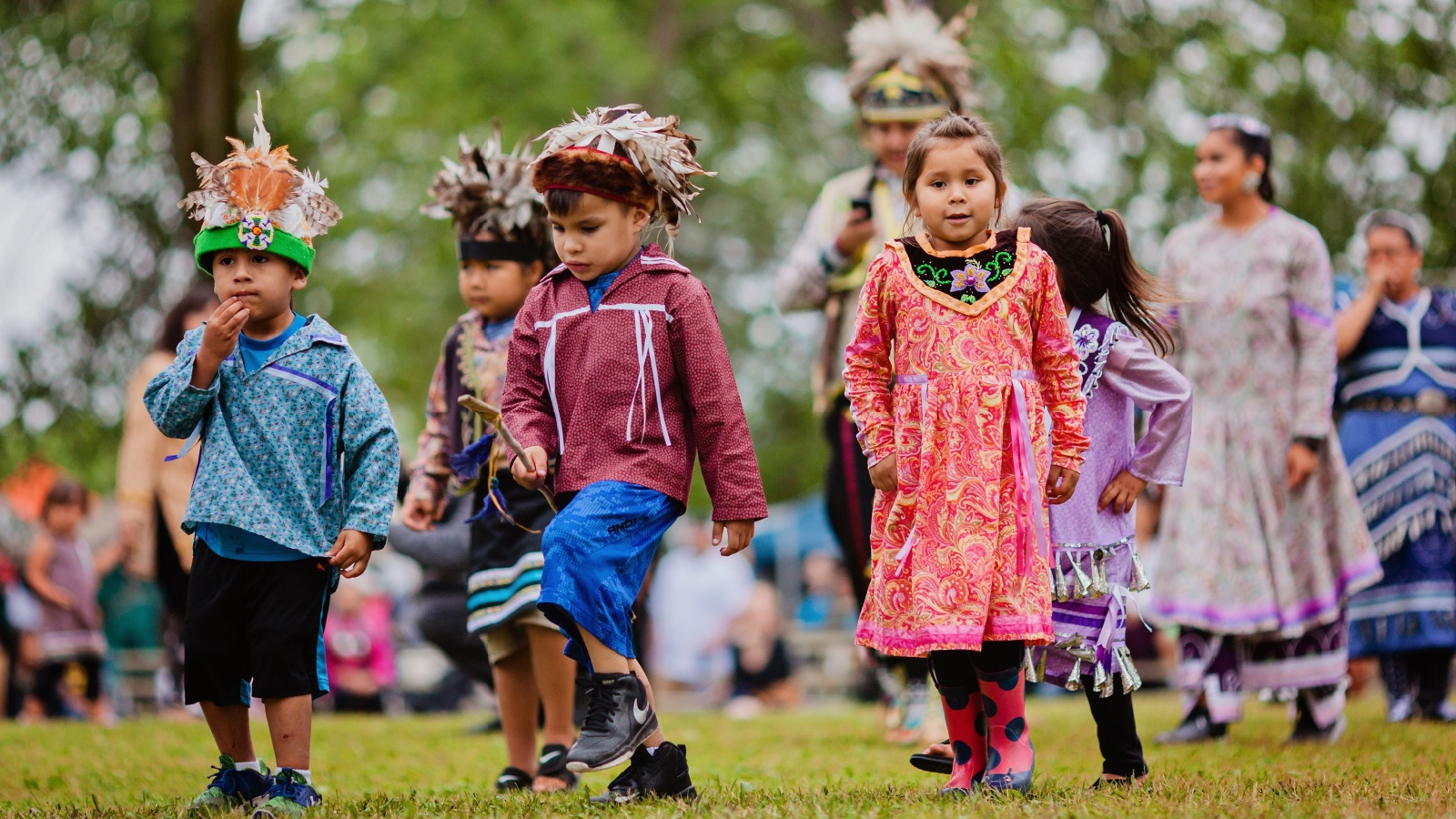
For generations, Canadian schools often taught Indigenous history incompletely, inaccurately or from a predominantly colonial perspective. The national conversation changed substantially after the Truth and Reconciliation Commission released its final report and 94 Calls to Action in 2015. Education features prominently in reconciliation because schools played a central role in the residential-school system and because curriculum affects what future generations understand about First Nations, Inuit and Métis peoples.
Implementation differs by jurisdiction, but the shift can be seen clearly in places such as British Columbia. The province says Indigenous knowledge and perspectives are woven throughout its redesigned curriculum, rather than being confined to a single unit. Residential-school history is also incorporated into age-appropriate learning. The change involves more than adding historical dates: curricula increasingly address Indigenous cultures, worldviews, experiences and relationships with the land. Parents whose own textbooks devoted little space to these subjects may therefore find that their children encounter a substantially broader account of Canadian history and contemporary society.
Gender and Sexual Diversity Became Explicitly Addressed

School policies around sexual orientation, gender identity and gender expression have changed substantially during many parents’ lifetimes. Topics that were rarely acknowledged officially are now addressed through anti-discrimination rules, anti-bullying policies, health education and inclusion initiatives in a number of provinces. The specific curriculum, terminology and parental-notification rules vary, sometimes substantially, because education remains under provincial and territorial jurisdiction.
British Columbia required school districts and independent schools to include references to sexual orientation and gender identity in anti-bullying policies beginning in 2016. Ontario’s education system also includes gender identity and gender expression within safe-and-inclusive-school policies, and age-specific curriculum addresses related concepts. These policies continue to generate public debate over curriculum, parental roles and how schools should respond to individual students. Whatever position families take in those debates, the historical change is clear: subjects once largely absent from official school policy are now explicitly considered by governments, administrators and educators as part of managing contemporary school communities.
Classrooms Became More Linguistically Diverse

The sound of a Canadian classroom has changed alongside the country itself. Students may arrive speaking English, French, Indigenous languages and a wide range of immigrant languages at home. The 2021 Census found that more than 3.1 million Canadian households—21% of households—were multilingual. Statistics Canada also counted more than nine million people whose mother tongue was neither English nor French.
Schools experience those demographic changes directly. Some students enter classrooms already comfortable in several languages, while others need English- or French-language learning support before they can fully demonstrate what they know academically. Schools may also communicate with families through translation, settlement services or multilingual resources. Canadian data have shown that immigrant students can perform strongly academically, complicating simplistic assumptions that a different home language necessarily means weaker educational outcomes. For parents who remember classrooms where linguistic diversity was less visible, today’s environment may feel considerably more international. A single class can bring together family histories and languages connected to communities around the world.
Full-Day Kindergarten Became Much More Common

Kindergarten once meant a short introduction to school for many Canadian children, often lasting only half a day. That arrangement has changed in much of the country. The Council of Ministers of Education, Canada reports that eight provinces and territories offer full-day kindergarten to all five-year-olds, while kindergarten itself is available in every jurisdiction. About 97% of children of eligible age attend.
Ontario provides one of the clearest examples of the transition. The province began introducing full-day kindergarten in 2010 and completed provincewide availability during the 2014–15 school year. That transformed kindergarten from a brief daily session into a much larger part of a young child’s routine. A full school day creates more time for play-based learning, early literacy, numeracy, social development and classroom routines, although program structures differ across Canada. For parents who remember heading home before lunch after kindergarten, seeing four- and five-year-olds carrying lunch bags and spending an entire day at school can make the generational difference especially tangible.
French Immersion Became a Major Educational Pathway

French immersion existed when many current parents were children, but participation has expanded across generations and the program now occupies a major place in Canadian public education. Statistics Canada reported that in 2021, outside Quebec, nearly 700,000 school-aged children whose mother tongue was not French were attending or had previously attended French immersion. That represented roughly one in six children in the relevant population.
The program’s prominence has changed family decisions about schooling. In communities where immersion is offered, parents may weigh transportation, available spaces, language opportunities and whether a child will thrive while learning subjects in a second language. Demand can also create practical challenges for school systems, including finding enough qualified French-language teachers. Immersion is not available equally everywhere, and participation patterns differ by province and community. Even so, bilingual education is considerably more visible than it was for earlier generations. What once might have seemed like a specialized program has become a familiar option in many Canadian school districts.
Standardized Assessment Became More Data-Driven

Report cards and teacher-made tests are still central to school, but large-scale assessment now produces far more system-level data than many parents encountered as children. Ontario’s Education Quality and Accountability Office was established in 1996, creating a permanent provincial agency devoted to standardized assessment and reporting. At the national level, the Council of Ministers of Education, Canada introduced the Pan-Canadian Assessment Program in 2007 to generate comparable information about student achievement across jurisdictions.
The mechanics have changed too. PCAP 2023 involved approximately 31,500 Grade 8 students at more than 1,400 schools across the provinces, and the assessment was administered online. Ontario has also moved provincial assessments onto computer-based platforms. These tests remain debated: supporters see comparable data as useful for identifying trends and weaknesses, while critics question how much standardized testing can capture about individual students or schools. Either way, today’s education systems produce achievement datasets that can be examined provincially, nationally and internationally in ways that were far less common several decades ago.
School Food Programs Became a Bigger Public Policy Issue

The school lunch may still come from home, but governments are increasingly treating access to food at school as an educational and social-policy issue. Canada launched a National School Food Program backed by a federal commitment of $1 billion over five years. The federal government says the program is intended to help provide meals to as many as 400,000 additional children each year, working through agreements with provinces and territories.
By the 2025–26 school year, the federal government reported that more than 10,000 schools—roughly 80% of provincially and territorially operated schools—were offering school food through the broader national effort. Provinces have made their own investments as well. British Columbia’s Feeding Futures initiative, for example, represented a $214-million commitment over three years, and provincial reporting showed school-food availability expanding substantially. Breakfast clubs and lunch programs are not entirely new, but their scale and government involvement have changed. A meal at school is increasingly discussed alongside attendance, concentration and equitable access to learning.
Safety Drills Expanded Beyond the Fire Alarm

For many parents, the defining school emergency drill was straightforward: the alarm rang, everyone lined up and classes walked outside. Fire preparedness remains essential, but modern emergency planning often includes additional scenarios such as lockdowns, hold-and-secure procedures, severe weather and other threats. Schools now develop formal plans that can involve police, emergency officials, staff training and communication protocols for families.
Ontario offers a clear example. Its schools are required to conduct at least two lockdown drills each school year, and provincial guidance calls for cooperation with police partners. British Columbia also maintains emergency-management guidance for schools and districts covering preparation and response responsibilities. These practices can feel unsettling because they ask children and staff to rehearse situations previous generations may never have considered. Schools generally try to make drills age appropriate, but their existence illustrates how the definition of school safety has widened. Preparedness is no longer centred almost exclusively on getting everyone out of a burning building; it can also involve knowing when staying securely inside is safer.
Coding Joined the Core Curriculum

Typing class once represented the technological frontier in many schools. Today, some students encounter algorithms, coding and computational thinking before reaching high school. Ontario’s revised elementary mathematics curriculum introduced coding expectations beginning in Grade 1, integrating programming concepts into mathematical learning rather than treating coding solely as an extracurricular activity for technically inclined students.
British Columbia similarly incorporates computational thinking and digital literacy into its Applied Design, Skills and Technologies curriculum. At higher grades, students can work with algorithms, digital systems and increasingly complex technology applications. Ontario also built coding expectations into its modernized Grade 9 mathematics program. The purpose is not necessarily to turn every student into a software developer. Coding can be used to teach logical sequencing, problem solving, pattern recognition and experimentation. For a parent whose first encounter with programming happened in university—or never happened at all—the sight of an elementary student debugging a simple sequence shows how dramatically assumptions about basic literacy have expanded.
Climate Change Became Part of Classroom Learning

Environmental lessons once often centred on recycling, pollution or protecting wildlife. Those topics remain relevant, but climate change and sustainability now appear much more explicitly in Canadian educational policy and curriculum. The Council of Ministers of Education, Canada has documented efforts across jurisdictions to integrate sustainable-development concepts into education policy, curriculum and teacher preparation.
Provincial courses demonstrate how concrete that shift can be. British Columbia’s science curriculum includes learning about human effects on Earth and climate, while senior environmental science explicitly addresses the role of human activity in global climate change. Students may encounter climate-related material through science, geography, social studies, energy discussions and projects about local environments. The subject can involve both scientific understanding and debates about policy, economics and community choices. For many parents, climate change was either absent from school or presented as an emerging environmental concern. Today’s students are more likely to encounter it as an established field of study connected to decisions their generation will face.
Career Education and Skilled Trades Became More Formalized

The old model of career guidance could amount to a meeting with a counsellor near graduation and a stack of university brochures. Modern systems increasingly introduce career exploration earlier and give technical or work-based learning a more deliberate role. British Columbia, for example, has a K–12 Career Education curriculum and offers programs that connect secondary students with workplace training, apprenticeships and post-secondary opportunities.
Ontario has moved in a similar direction on technical education. Students who entered Grade 9 in September 2024 or later must earn a Grade 9 or 10 technological-education credit as part of their graduation requirements. Across the country, provinces also operate apprenticeship, cooperative education, dual-credit and skilled-trades initiatives. The emphasis reflects a broader effort to present multiple routes into adulthood rather than treating one academic pathway as the default definition of success. A teenager may now explore construction, health care, technology or manufacturing through structured school programming long before submitting a first full-time job application.
Online Learning Became Part of the System

Before 2020, online courses existed in Canada, but most families could move through elementary and secondary school without relying heavily on them. COVID-19 changed that relationship almost overnight. Statistics Canada estimated that pandemic-related school closures disrupted in-person learning for approximately 5.7 million elementary and secondary students, pushing households and educators into large-scale remote learning.
The emergency period ended, but some of the infrastructure remained. Ontario’s current secondary-school framework generally requires students in cohorts that entered Grade 9 in 2020–21 or later to earn two online-learning credits, although families can opt out and exemptions exist. Provincial virtual learning environments also support a mix of online, remote and face-to-face education. Experiences vary widely across Canada, and most students continue to attend physical schools. Still, families now know that a classroom does not always require everyone to occupy the same room. Learning platforms, video meetings and digital assignment systems have become familiar tools rather than technologies associated only with distance education.
Artificial Intelligence Became the New Classroom Question

The newest generational divide may be artificial intelligence. Students can now access tools capable of generating text, summarizing material, explaining equations, creating images and assisting with computer code in seconds. That forces schools to confront questions few parents—or even recent graduates—faced: When is AI legitimate assistance? When does it replace a student’s own work? How should sources be checked, privacy protected and mistakes identified?
Education authorities are beginning to formalize answers. British Columbia published K–12 guidance on digital literacy and artificial intelligence in 2024, emphasizing ethical, responsible, safe and human-centred use. In June 2026, Canada’s provincial and territorial education ministers formally discussed AI’s opportunities and the need for ethical, responsible and inclusive approaches. The technology is developing faster than school policy can easily follow, so expectations will continue to evolve. Still, one change has already occurred: understanding how to question, verify and responsibly use machine-generated information is becoming part of what digital literacy means for Canadian students.
16 Costco Canada Habits That Could Be Costing Shoppers More Than They Save

The Executive Membership can feel like an obvious upgrade because the 2% annual reward sounds straightforward. For households that spend heavily at Costco Canada, the extra fee may be easy to justify. But the habit becomes costly when shoppers upgrade first and calculate later. A Gold Star Membership costs less, while Executive costs more and only pays off if eligible annual spending is high enough to offset the difference.
16 Costco Canada Habits That Could Be Costing Shoppers More Than They Save
