
Moving somewhere cheaper can look like one of the simplest ways to get ahead financially. A lower home price or monthly rent can create breathing room, especially after years of elevated housing costs across much of Canada. But housing is only one line in a household budget, and relocating can quietly change transportation, utilities, taxes, insurance, employment prospects and access to everyday services.
The important question is not simply whether a town or province costs less to live in. It is whether the household will actually have more money, time and flexibility left over after the move. These 21 things Canadians should know before moving somewhere “cheaper” show why affordability needs to be measured as a complete package rather than by a real-estate listing alone.
The Home Price Is Only the First Number

A cheaper house can dramatically reduce the size of a mortgage, but that does not automatically produce an equally dramatic reduction in monthly housing expenses. Canadian mortgage affordability calculations recognize several costs beyond principal and interest, including property taxes and heating. Condominium fees can also enter the calculation. For homeowners, utilities, maintenance and insurance become part of the real carrying cost whether they appear prominently in the listing or not.
That distinction matters when comparing very different communities. A larger detached home in a cheaper market might require more energy, more maintenance and higher insurance than a smaller property in an expensive city. A household may still come out far ahead, but the comparison needs to include the entire monthly bill. Before treating a lower asking price as a guaranteed saving, prospective movers should obtain realistic estimates for taxes, heating, insurance, utilities and routine upkeep for the specific property under consideration.
A Cheaper Rental Market May Look Different to a Newcomer

Average rents can make an unfamiliar city appear surprisingly affordable, but averages do not necessarily represent what a newly arriving tenant will pay. Statistics Canada has documented a growing difference between the shelter costs of recent renters and long-established tenants. In 2021, renters who had remained in their dwelling for at least five years paid about 19% less, after adjusting for comparable dwellings and neighbourhoods, than renters who had moved in within the previous year.
Rental supply is also changing. CMHC reported that Canada’s purpose-built rental vacancy rate increased to 3.1% in 2025 from 2.2% in 2024, providing somewhat more choice nationally, but conditions still vary significantly between markets. Someone comparing their long-held apartment with advertised units in another city should therefore compare current listings with current listings—not the destination’s broad average rent. A move that appears to cut rent by hundreds of dollars can look less impressive once the actual available units, deposits, utility arrangements and moving expenses are examined.
Property Taxes Can Change the Affordability Equation

Property tax receives far less attention than house prices, yet it is a recurring expense that continues long after the excitement of buying has faded. CMHC includes property taxes when measuring homeowner shelter costs, alongside mortgage payments, utilities and other housing expenses. That is an important reminder that the purchase price tells only part of the story. Municipal tax structures, assessed values and local service requirements can produce substantially different annual bills from one community to another.
This can become particularly noticeable when a household uses the same budget to buy a much larger property after moving. Even if the mortgage shrinks, the new owner may be paying tax on more land or a larger house. Prospective buyers should therefore request the property’s actual recent tax bill rather than rely on a percentage found online. They should also ask whether assessments or municipal rates are changing. A few hundred dollars of unexpected monthly-equivalent property tax can absorb a meaningful share of the savings that prompted the relocation in the first place.
Buying Somewhere Cheaper Still Comes With Closing Costs

A lower purchase price reduces many transaction costs, but buying a home is rarely as simple as providing the down payment and starting the mortgage. CMHC advises buyers to plan for closing costs such as legal expenses and land-transfer fees that can amount to roughly 1.5% to 4% of a home’s purchase price. The exact mix varies depending on the province, municipality and transaction, but even the low end can represent thousands of dollars.
That matters especially when relocation is being used as a financial reset. The household may simultaneously face movers, temporary accommodation, utility connections, new furnishings, travel expenses and costs associated with selling the previous home. In some cases, a buyer moving to a cheaper market also upgrades to a larger property, preserving a surprisingly large transaction bill. Before declaring the move affordable, it helps to build a separate relocation fund rather than draining the emergency fund or down payment. The first year in a cheaper city can otherwise become one of the household’s most expensive years.
Electricity Costs Are Not the Same Across Canada

A kilowatt-hour does not carry the same household cost everywhere in the country. A 2026 Canada Energy Regulator comparison of residential electricity prices found that Quebec and Manitoba had the lowest average prices among provinces and territories in its comparison, while the Northwest Territories and Nunavut had the highest. Rate structures also differ, meaning the final bill can depend on consumption levels, fixed charges and the way electricity is generated and delivered locally.
Housing type adds another layer. Moving from an apartment to a detached house may increase the amount of space being heated, cooled and illuminated. Electric baseboard heating in one region can produce a very different household budget from natural gas, heat-pump or hydroelectric-based arrangements elsewhere. Instead of asking a seller or landlord whether utilities are “reasonable,” prospective movers should request 12 months of actual bills when possible. Those statements can reveal winter peaks, fixed charges and consumption patterns that an online cost-of-living comparison may completely miss.
The Bigger Bargain House May Need More Work

Cheaper housing markets often make it possible to buy significantly more space, but additional square footage also means more surfaces, systems and equipment to maintain. Roofs, furnaces, windows, foundations, plumbing and electrical systems eventually require attention regardless of the original purchase price. Canadian homebuying guidance specifically recommends budgeting for maintenance and unexpected repairs rather than assuming the mortgage represents the full cost of ownership.
Energy performance deserves particular attention as well. Natural Resources Canada has long emphasized that windows, doors, insulation and other parts of a building envelope affect heat loss and energy consumption. An inexpensive older house with drafty windows and aging mechanical systems may therefore carry operating costs that are much higher than its asking price suggests. A professional inspection, utility history and information on the age of major components can be more valuable than cosmetic upgrades. Fresh paint is inexpensive; replacing a roof, heating system or several inefficient windows after the first Canadian winter is not.
Insurance Can Change Dramatically With Location

A home’s market value is only one factor insurers consider. Location, rebuilding costs, the age of the property and exposure to hazards can all affect premiums and available coverage. The Financial Consumer Agency of Canada notes that flood coverage may require additional insurance and that households in very high-risk areas may face higher premiums, different deductibles or, in some circumstances, difficulty obtaining coverage. Similar considerations can apply to other hazards.
The broader insurance trend is worth noticing. Statistics Canada reported that homeowners’ home and mortgage insurance premiums increased 45% between December 2019 and December 2025. Severe weather has also generated enormous insured losses, including a record $8.5 billion in Canadian severe-weather damage in 2024 according to Insurance Bureau of Canada data. A low-priced home beside a river, forest or other higher-risk area can therefore deserve extra scrutiny. Obtaining an insurance quote before removing financing or inspection conditions can prevent an unpleasant discovery after a buyer has already committed.
Cheap Housing Can Come With Expensive Car Dependence

Transportation is one of the easiest costs to underestimate when leaving a large urban centre. Statistics Canada reported that 80.9% of Canadian commuters primarily travelled to work by car, truck or van in May 2025. In communities where transit coverage is limited and destinations are spread out, a household that previously owned one vehicle—or no vehicle at all—may discover that daily life is much easier with another one.
The financial consequences extend beyond gasoline. Financing or depreciation, insurance, maintenance, winter tires, registration and repairs all become part of the relocation budget. A household saving $700 a month on housing would still be better off if transportation increased by only $200, but the calculation looks very different if another financed vehicle becomes necessary. Before moving, it is useful to map actual trips: work, school, groceries, medical appointments and children’s activities. Distance to downtown is less important than the distance to the places a household repeatedly needs.
Fuel and Auto Insurance Vary by Region Too

Even households that already own a vehicle should not assume its operating cost will remain unchanged after a move. Statistics Canada tracks gasoline prices across selected Canadian cities because prices differ geographically and over time. Auto insurance also varies widely by province, reflecting different insurance systems, claims patterns, regulations and local risk. Statistics Canada’s recent examination of insurance costs found substantial regional variation in premiums.
Nationally, passenger vehicle insurance premiums rose 23.9% between December 2019 and December 2025, showing why an old insurance estimate can quickly become unreliable. The simplest precaution is also one of the most useful: obtain a quote using the exact postal code of the proposed home. A family moving from a dense neighbourhood may save on parking but drive farther; another may pay less for insurance but spend more on fuel. Comparing the total annual cost rather than one favourable component keeps the “cheaper” destination from benefiting from selective math.
A Longer Commute Has a Cost Even When Gas Is Affordable

Commuting costs are not limited to what appears on a credit-card statement. Statistics Canada reported 1.4 million Canadian workers with long commutes across transportation modes in May 2023, as on-site work and traffic increased after pandemic-era lows. For someone moving farther from an employment centre, an extra 25 or 30 minutes each way can accumulate into hundreds of hours over a working year.
Those hours can alter household routines in ways that are easy to overlook during a weekend house-hunting trip. Earlier daycare drop-offs, later dinners, more winter driving and less flexibility for errands all carry practical consequences. They can also encourage spending on convenience, from prepared food to extra child care. Hybrid work can reduce the burden, but only when the arrangement is stable. Before relocating to a commuter town, it is worth testing the drive during the actual morning or evening peak. A peaceful highway at 1 p.m. on Saturday does not reveal what Tuesday morning in February will feel like.
Lower Housing Costs May Come With a Different Job Market

A household’s financial future depends on income as much as expenses. Rural and small-town labour markets can be strong in particular industries, but they can also behave differently from large diversified metropolitan economies. Statistics Canada’s rural employment dashboard showed that unadjusted employment in rural and small-town Canada was 5.9% lower in April 2026 than a year earlier, while the unemployment rate rose from 6.2% to 6.9%. Individual industries moved very differently within that total.
The lesson is not that smaller communities lack good careers. Many have major employers in health care, construction, manufacturing, agriculture, energy, government or tourism. The issue is concentration. When only a handful of local employers hire a particular occupation, losing one job can create a much harder search than it would in a larger labour market. Before moving, workers should search not merely for one acceptable vacancy but for several realistic alternative employers. A lower mortgage provides resilience only if income remains reasonably resilient too.
Remote Work Should Be Confirmed Before the Moving Truck Arrives

Remote employment has made relocation possible for thousands of households, but “remote” is not always a permanent employment category. Statistics Canada has been measuring remote-work opportunities in rural labour markets and found that, in the second quarter of 2025, the median estimated share of service-producing businesses in rural labour areas expecting to offer remote arrangements was 27.6%. That was close to, but slightly below, the 28.4% estimate for urban labour markets.
A worker who plans to keep a metropolitan salary while living hundreds of kilometres away should clarify the arrangement in writing when possible. Employers may have requirements involving office attendance, equipment, security, employment law or payroll administration. The Canada Revenue Agency also has specific rules for determining an employee’s province of employment for payroll purposes. None of this means a cross-provincial remote move is necessarily difficult. It does mean that a verbal “work from anywhere” understanding deserves more scrutiny before a household sells a home, changes schools and commits to a new mortgage.
Grocery Savings Should Never Be Assumed

Housing can become cheaper while food becomes more expensive. The difference is particularly important in remote and northern communities, where transportation and logistics have an unusually large influence on retail prices. Nutrition North Canada reported in 2026 that participants in its consultations consistently identified high transportation and freight expenses as a primary driver of food prices in northern and remote communities, alongside fuel, supply-chain constraints and limited competition.
Even outside remote regions, food remains a significant and changing household expense. Statistics Canada’s Food Price Data Hub showed grocery prices in June 2026 were 3.9% higher than a year earlier nationally. A family considering a smaller or more isolated community should therefore investigate the actual grocery landscape rather than assuming food will cost less because commercial rents or houses do. Checking the number of supermarkets, discount chains and warehouse stores within practical driving distance can reveal whether a cheap house comes with a long weekly grocery trip or fewer opportunities to comparison-shop.
Cheap Child Care Is Not the Same as Available Child Care

Canada’s child-care affordability reforms have sharply reduced fees for many families, but lower regulated prices can make availability more important than ever. Federal figures reported that, as of early 2025, eight provinces and territories were providing regulated child care for an average of $10 a day or less, while other jurisdictions had reduced fees substantially. Hundreds of thousands of children were benefiting from the system.
Finding a space remains another matter. Statistics Canada reported that among parents using child care, the proportion who experienced difficulty finding it increased from 46% in 2023 to 50% in 2025. That can complicate a relocation into a community with limited centres or long wait lists. Parents should contact providers before moving rather than after arriving, asking about infant spaces, school-age care, operating hours and expected wait times. A beautiful inexpensive house loses some of its financial advantage if one parent must reduce working hours for months because affordable care cannot actually be secured.
Health-Care Access Needs a Local Check, Not a Rural Stereotype

It would be inaccurate to assume that moving to a smaller community automatically means losing access to primary care. Statistics Canada reported that 84.2% of Canadians in rural communities had a regular health-care provider in its recent national reporting, compared with 82.5% of people in population centres. That national figure is a useful corrective to the assumption that every rural health system performs the same way.
The problem is that national averages can conceal major differences between communities and specialties. CIHI identifies the geographic distribution of physicians as an important health-system issue, while Statistics Canada reported that 27.8% of Canadians aged 45 or older who used specialist care in 2024 experienced difficulty accessing it. Someone managing a chronic illness may therefore care less about the provincial average than about the nearest family clinic, emergency department, specialist, pharmacy or diagnostic facility. Checking those distances before signing a lease or purchase agreement can be as important as checking grocery stores or schools.
High-Speed Internet Still Is Not Universal Everywhere

Remote work, streaming, online education and telehealth have made broadband part of the basic infrastructure of modern household life. Canada’s coverage has improved substantially: the CRTC’s 2026 telecommunications reporting indicated that more than 96% of Canadians had access to Internet meeting the country’s universal-service objective of at least 50 Mbps download, 10 Mbps upload and unlimited data.
That still leaves gaps, particularly in some rural areas, territories and First Nations communities. Canada’s policy target is 100% household access to this level of service by 2031. A house listing that says “high-speed Internet available” should therefore prompt a more specific question: which provider, which technology, at what speed and at what monthly price? Checking the actual serviceable address matters, not just the postal code. For a remote worker, discovering after closing that the preferred provider cannot connect the property can turn an otherwise inexpensive relocation into a costly technical problem.
Distance From a Major Airport Can Become a Real Expense
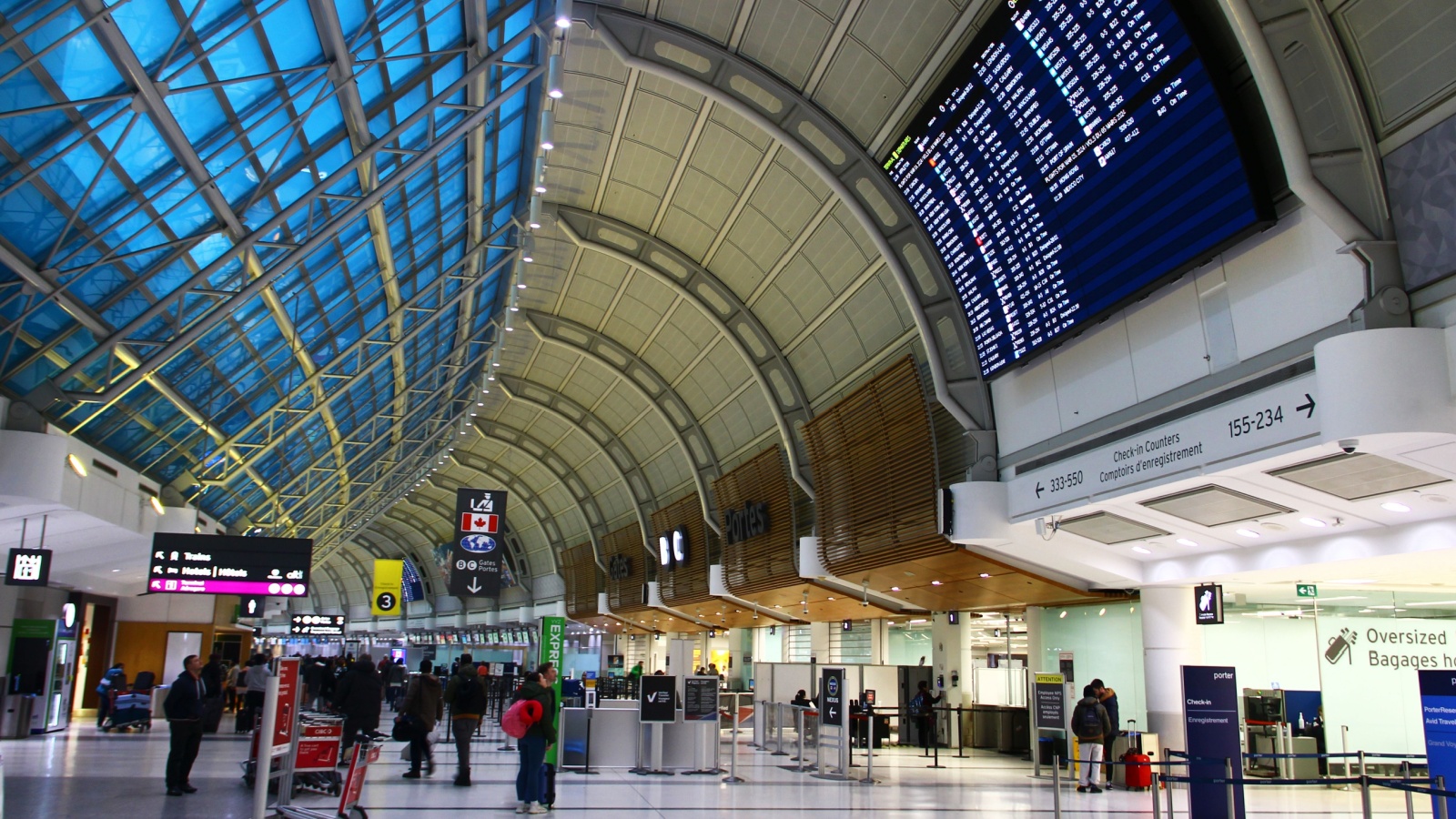
A quiet community several hours from a major airport may seem perfectly manageable until family visits, business travel or medical trips become frequent. Regional transportation can involve additional driving, parking, hotels or connecting flights, particularly in northern and remote regions. Transport Canada has explicitly noted that passenger travel in the North is constrained by seasonal road networks and the high cost of air travel.
Some remote communities depend on aviation for far more than vacations. Transport Canada has described northern air networks as essential for moving people, medical supplies and other goods. Most Canadians moving to a less expensive town will not face conditions that extreme, but the broader principle still applies: geographic isolation has a price. Prospective movers who regularly travel should compare door-to-door costs rather than airfare alone. A cheap home two or three hours from the nearest major airport may still be a great trade-off, but it should be an intentional one rather than a surprise discovered before the first holiday trip.
Septic Systems and Private Services Shift Responsibilities to the Owner

Some inexpensive properties outside larger urban systems come with infrastructure that city residents rarely have to think about. Instead of municipal sewer service, a rural home may rely on a private septic system. Health Canada notes that management of private wastewater systems commonly places responsibility for operation and maintenance on individual homeowners.
That responsibility should be treated like any other major home system. Buyers need to understand the system’s age, maintenance history and condition, along with local inspection or pumping requirements. The same general principle applies whenever a property relies on private infrastructure rather than a municipal service: the apparently lower monthly bill may be accompanied by occasional larger owner-funded expenses. A rural property can still be an excellent value, especially for buyers comfortable with the responsibilities. The mistake is assuming that the absence of a familiar city utility bill means the underlying service is free. Someone ultimately pays to maintain the infrastructure.
Provincial Taxes Can Alter the Savings

Crossing a provincial boundary can change more than the scenery. Canada has federal income tax, but provinces and territories also impose their own income-tax rates and brackets. The CRA publishes separate 2026 provincial and territorial schedules because the amount owing can differ depending on where a taxpayer lives. A salary that remains exactly the same after relocation can therefore produce a different after-tax result.
Taxes on purchases vary as well. Canada has a 5% federal GST, while provinces apply different combinations of GST, HST or provincial sales taxes to taxable goods and services. Basic groceries are zero-rated nationally, but many other purchases are not. These differences should not be exaggerated—housing can easily dwarf modest tax changes—but they belong in a serious relocation comparison. A household moving provinces should run its actual income through current tax calculations and review the sales-tax treatment of regular spending rather than relying on a vague reputation that one province is universally “cheaper.”
Think About How Easy the Home Will Be to Sell

The decision to move somewhere cheaper often focuses entirely on getting into the new market. Exit conditions deserve attention too. CMHC has noted that housing-market liquidity can be financially important because the ability to sell a property gives a household another option when finances change. Local resale conditions can differ in the number of active buyers, listings, transaction volumes and time required to complete a sale.
That does not mean inexpensive towns automatically have weak resale markets. Some smaller communities experience intense demand, while some expensive urban markets can become slow. The practical lesson is to research the specific location. CMHC’s housing data tools and local real-estate statistics can help reveal recent sales and listings. Buyers should also examine risks capable of affecting resale. CMHC-supported research on catastrophic flooding, for example, found lower sale prices and longer selling times after major flood events in the communities studied. Affordability is more valuable when the property remains reasonably flexible if life changes.
Build a Replacement Budget, Not Just a Housing Budget

The strongest relocation calculation replaces the household’s entire current budget with a realistic version of life in the destination. Statistics Canada’s 2023 Survey of Household Spending found that Canadian households spent an average of $76,750 on goods and services that year, 14.3% more than in 2021. Shelter is a major component, but transportation, food, utilities, health-related expenses, recreation and countless smaller categories collectively determine whether a household actually feels better off.
Statistics Canada has even developed a Housing and Transportation Cost Index precisely because housing affordability and transportation expenses are closely connected. Before moving, a household can perform a similar exercise at a personal level: obtain an insurance quote, estimate commuting kilometres, inspect tax bills, price utilities, check child-care availability and look at local employment alternatives. When practical, renting first can also reveal the real rhythm of a community before a major purchase. The cheapest house is not necessarily the best bargain. The better bargain is the place where the entire household budget—and daily life—works.
16 Costco Canada Habits That Could Be Costing Shoppers More Than They Save

The Executive Membership can feel like an obvious upgrade because the 2% annual reward sounds straightforward. For households that spend heavily at Costco Canada, the extra fee may be easy to justify. But the habit becomes costly when shoppers upgrade first and calculate later. A Gold Star Membership costs less, while Executive costs more and only pays off if eligible annual spending is high enough to offset the difference.
16 Costco Canada Habits That Could Be Costing Shoppers More Than They Save
