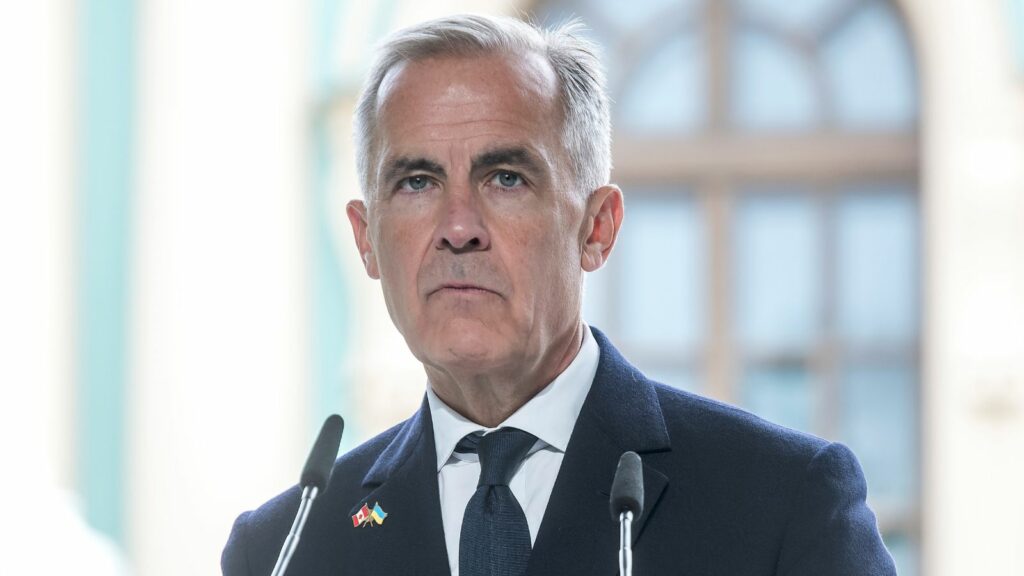
Three federal byelections held on August 31 produced an unusually clean result for Prime Minister Mark Carney’s Liberals: three victories in three provinces, with the party clearing 50% of the vote in every race. The biggest surprise came in Chicoutimi–Le Fjord, where Liberal Daniel Gobeil captured 51.3% and the Conservatives fell to 12.5% in a riding they had controlled since Richard Martel’s 2018 byelection victory.
The other two contests were Liberal holds in Beaches–East York and North Vancouver–Capilano. Coming just days after Canada-U.S. trade negotiations broke down, Carney quickly framed the outcome as support for his government’s direction. Byelections are local contests rather than national referendums, but the size of the Quebec swing gives the result significance well beyond a single seat.
Chicoutimi–Le Fjord Delivers the Night’s Biggest Shock
Chicoutimi–Le Fjord was the race that transformed a good Liberal night into a politically significant one. In the April 2025 general election, Conservative Richard Martel won with 34.1% of the vote, while the Bloc Québécois took 31.2% and the Liberals 31.1%. Barely 16 months later, that three-way balance disappeared. Preliminary Elections Canada results from all 212 polls show Gobeil winning 16,235 votes, or 51.3%. Bloc candidate Caroline Dubé finished second with 10,401 votes and 32.9%, while Conservative Régis Gaudreault received 3,962 votes and 12.5%. Compared with the 2025 election, the Liberal share increased by roughly 20 percentage points while Conservative support dropped by more than 21 points. Turnout was 42.2%, with 31,627 valid votes recorded. Even allowing for the different dynamics of a byelection, the magnitude of the shift makes the result difficult to dismiss as a narrow organizational defeat. The Conservatives did not simply lose a close contest; they fell from first place to a distant third.
The riding’s recent history makes that reversal considerably more striking. Martel originally captured Chicoutimi–Le Fjord for the Conservatives in a June 2018 byelection with 52.8% of the vote, defeating Liberal Lina Boivin by more than 5,500 votes. He subsequently kept the seat through later federal elections, including the remarkably tight 2025 contest in which fewer than 1,600 votes separated the Conservative, Bloc and Liberal candidates. Gobeil brought a distinctly regional profile to the Liberal campaign: he is a dairy farmer and former head of Quebec’s provincial dairy producers’ association. That background carried particular relevance in the Saguenay region, where dairy farming, forestry and aluminum have been prominent in discussions about the consequences of the Canada-U.S. tariff fight. The Bloc remained competitive at nearly 33%, but Conservative support collapsed. Bloc Leader Yves-François Blanchet seized on the outcome to argue that the meaningful federal contest in Quebec was increasingly between his party and the Liberals. For Pierre Poilievre’s Conservatives, the result presents a difficult strategic question. A party seeking a national majority has limited room to surrender competitive Quebec territory, particularly a riding it had successfully defended for eight years.
North Vancouver–Capilano Shows the Liberal Base Is Still Holding
North Vancouver–Capilano delivered a very different kind of Liberal victory: not an upset, but evidence that a high-performing Liberal seat remained firmly in the party’s column despite a significant change of candidate. Braeden Caley, a longtime Liberal political strategist who most recently served as Carney’s deputy chief of staff, received 23,805 votes, or 58.6%. Conservative Stephen Curran finished with 29.2%, Green candidate Shelley Luce captured 8.7%, and New Democrat Stephen Tweedale received 3.1%. Turnout reached 45.6%. The comparison with the 2025 general election is particularly revealing because the Liberal share barely moved. Former cabinet minister Jonathan Wilkinson won 59.8% that year, while Curran received 33.7%. The Liberals therefore slipped only 1.2 percentage points despite replacing a prominent incumbent, while the Conservatives fell 4.5 points. The largest movement belonged to the Greens, whose share increased from 1.7% in the 2025 election to 8.7% in the byelection. In a contest without the drama of Chicoutimi–Le Fjord, maintaining almost 59% was itself the important result.
That continuity mattered because the vacancy represented more than a routine change of personnel. Wilkinson, who had won the riding four times, left Parliament after being appointed Canada’s ambassador to the European Union. Caley then stepped away from a senior position inside the Prime Minister’s Office to run for the seat. Voters were effectively being asked to replace a recognizable former cabinet minister with a candidate whose political experience had largely taken place behind the scenes. The result indicates that Wilkinson’s personal incumbency was not the only reason for the Liberals’ commanding position in the riding. It also gives Carney an MP with unusually close knowledge of his political operation at a time when the government is managing a difficult confrontation with Washington and emphasizing the need for Canada to expand economic relationships beyond the United States. Carney pointed to the fact that Liberal candidates received more than 50% in every byelection as evidence of support for the government’s plan. That interpretation should still be treated cautiously because North Vancouver–Capilano was already a strong Liberal riding. Its significance is less about creating a new political advantage than demonstrating that an existing one survived a major change in representation.
Beaches–East York Gives Liberals a Win but the NDP a Reason for Optimism
Beaches–East York provided the Liberals with their third victory, but it also supplied the clearest warning against interpreting the night as a uniform movement toward one party. Liberal Tanveer Shahnawaz, who had managed former MP Nate Erskine-Smith’s constituency office, won 18,361 votes and 55.7%. New Democrat Shannon Devine finished second with 8,512 votes and 25.8%, while Conservative Jim Syrbos took 5,116 votes and 15.5%. Turnout was 40.39%. The Liberals comfortably retained the east Toronto riding, although their share declined from the 67.7% Erskine-Smith received in the April 2025 general election. The NDP moved sharply in the opposite direction. Devine, who was also the party’s candidate in 2025, climbed from 6.9% to 25.8%, an increase of 18.9 percentage points. Meanwhile, Conservative support fell from 23.5% in 2025 to 15.5%. Those movements offer an important qualification to the headline result. All three seats went Liberal, but voters in the three ridings were clearly not shifting in identical ways.
For the New Democrats, the Toronto result offered an encouraging sign after a disastrous 2025 federal election that cost the party official party status in the House of Commons. New leader Avi Lewis highlighted the improved performance after the results came in, presenting it as evidence that the party’s previous collapse did not have to become permanent. The gap remained substantial: Shahnawaz finished almost 30 percentage points ahead of Devine. Still, a jump from 6.9% to 25.8% demonstrates that the competition for progressive urban voters remains relevant even during a period of Liberal strength. For Carney, the broader picture remains highly favourable. The Liberals successfully defended their Toronto and British Columbia seats while taking Chicoutimi–Le Fjord from the Conservatives, producing a net partisan gain. The timing also gives the prime minister a useful political argument after Canada-U.S. trade talks broke down on August 21. Carney said the results across three very different ridings showed Canadians backing the government’s broader direction. Three byelections cannot establish a national mandate by themselves, but they can reveal vulnerabilities and momentum. On this night, Liberal support proved resilient in two strongholds and expanded dramatically in Quebec, while the Conservatives were left confronting a 12.5% result in a riding they had controlled since 2018.
