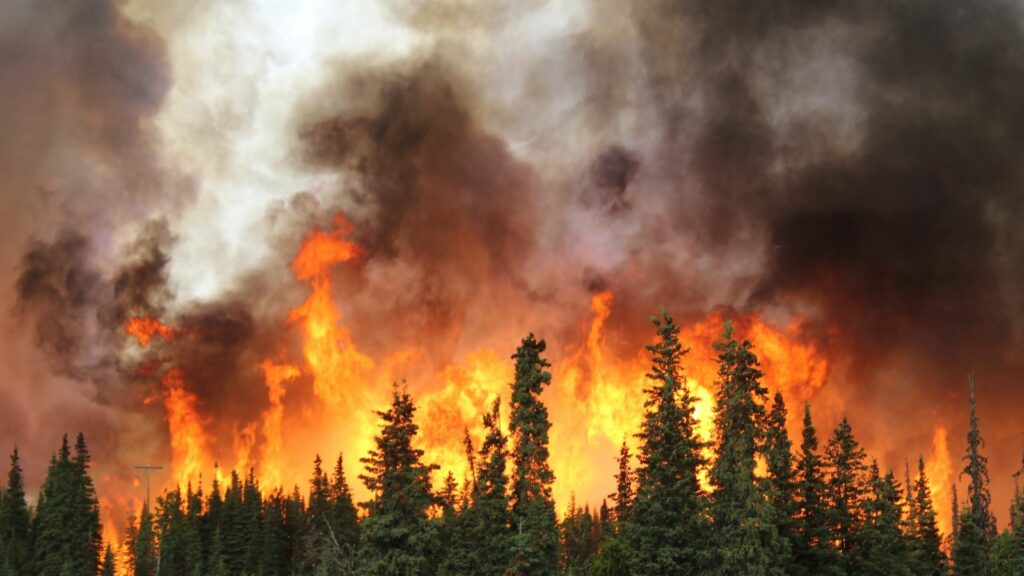
Toronto woke Wednesday to a skyline blurred by smoke and an air-quality warning that quickly became impossible to ignore. By mid-morning on July 15, IQAir’s live ranking placed the city first among the major global cities it tracks, while Environment and Climate Change Canada measured Toronto’s Air Quality Health Index at 10+, the “very high risk” category.
The episode was driven by wildfire smoke moving south from northwestern Ontario and arrived during a punishing stretch of heat and humidity. Together, the smoke and heat created a difficult public-health problem: staying indoors reduced exposure to fine particles, but homes without effective cooling could become dangerously hot. The ranking was temporary, but the health warning was not. Officials said poor conditions could continue into Friday morning.
A Morning When Toronto Topped a Global Pollution Ranking
The most dramatic number came from IQAir, whose live major-city table placed Toronto at No. 1 during the Wednesday morning commute. The city’s U.S.-style AQI reading was in the low 180s, a level categorized as “unhealthy.” Toronto sat ahead of cities including Kinshasa, Delhi, Dubai and Jerusalem at that moment. Because the table refreshes at least hourly, the order can change quickly as pollution concentrations shift around the world. The ranking therefore captured a severe snapshot rather than a permanent judgment about Toronto’s usual air.
Canada’s official health measure told an equally serious story. At 10 a.m., Toronto’s AQHI was 10+, or “very high risk,” and an orange air-quality warning was in effect. The forecast kept the index at 10+ through Wednesday night before easing only gradually on Thursday. For commuters, construction crews and families planning outdoor activities, that meant the smoky sky was not merely an unpleasant backdrop. Officials advised limiting time outside, reducing or rescheduling strenuous activity and paying attention to symptoms such as coughing, throat irritation, headaches or difficulty breathing.
How Smoke Travelled Hundreds of Kilometres South
The smoke did not come from a fire on Toronto’s doorstep. Environment Canada traced the plume to wildfires burning in northwestern Ontario, where hot, dry conditions had produced widespread fire activity. Ontario’s forest-fire service reported 160 active wildland fires across the province, including 83 in the Northwest Region, as crews dealt with new starts and fires already burning. Those numbers can change throughout the day, but they illustrate the scale of the source region feeding smoke into the atmosphere.
Winds then carried that pollution south toward the Great Lakes and southern Ontario. FireSmoke.ca’s BlueSky model projected elevated ground-level concentrations of PM2.5 across parts of the region, although the service cautions that smoke forecasts are estimates and may not perfectly match local timing. That distinction matters because smoke can travel in layers: a plume may create a hazy sky without heavily affecting breathing conditions at ground level, then mix downward as winds and temperatures change. In Toronto on Wednesday, enough smoke reached the surface to sharply raise the health-risk index and reduce visibility across the city.
What “World’s Worst” Actually Measures
The phrase “world’s worst” is powerful, but it needs context. IQAir’s live ranking compares roughly 120 major cities, not every city and community on Earth. It uses a median of readings from monitoring stations and sensors within each city, then orders those cities using a U.S.-based AQI scale. A score from 151 to 200 is labelled “unhealthy,” while values above 200 enter the “very unhealthy” range. Toronto’s morning reading placed it at the top of that specific real-time comparison.
Canada’s AQHI answers a related but different question. Rather than ranking places by the highest concentration of a single pollutant, it estimates short-term health risk from a mixture of ground-level ozone, nitrogen dioxide and fine particulate matter. The scale runs from 1 to 10+, with higher values indicating greater risk and stronger advice to change outdoor plans. In practice, both systems pointed in the same direction Wednesday: the air was seriously polluted. Still, the AQHI is the more relevant tool for deciding whether to exercise, send children outside or modify work and recreation in Canada.
PM2.5 Is the Main Health Threat
Wildfire smoke contains gases, water vapour and a complex mixture of pollutants, but Health Canada identifies fine particulate matter, or PM2.5, as the main health risk. These particles are so small they are invisible individually and can travel deep into the lungs. Smoke can cause immediate irritation to the eyes, nose, throat and sinuses, along with headaches, coughing and increased mucus. More serious symptoms can include wheezing, chest pain, severe coughing, shortness of breath, asthma attacks and heart palpitations.
The concern is supported by research from previous Canadian smoke events. A 2025 study in the Canadian Medical Association Journal found a substantial increase in asthma-related emergency-department visits across Ontario after the first heavy smoke episode of June 2023. Researchers did not find equally strong evidence for every health outcome, a useful reminder not to overstate what one event proves. Even so, public-health agencies consistently link wildfire smoke exposure with worsening respiratory disease and possible cardiovascular effects. The risk rises as concentrations increase, and heavy smoke can affect healthy people as well as those with existing conditions.
The Risk Is Not Shared Equally
During very heavy smoke, everyone can experience health effects, but some residents face greater danger. Health Canada identifies older adults, infants, young children, pregnant people, those with heart or lung conditions and people involved in strenuous outdoor exercise as higher-risk groups. Outdoor workers are especially exposed because avoiding the plume may not be practical. A delivery driver, road worker or landscaper can spend hours breathing faster than someone seated indoors, increasing the amount of polluted air drawn into the lungs.
Housing and income also shape exposure. People without air conditioning may have to choose between opening windows during extreme heat and keeping smoke outside. Those experiencing housing insecurity may not have access to a sealed, filtered indoor space at all. Toronto Public Health advises residents to check on relatives, friends and neighbours who may be more vulnerable, particularly when smoke and heat occur together. The city’s guidance also stresses listening to the body: symptoms should prompt a reduction or stop in strenuous activity, while chest pain, severe breathing difficulty or other signs of a medical emergency require immediate care.
Extreme Heat Complicates the Safest Advice
Toronto’s smoke episode arrived in the middle of a heat warning. Environment Canada forecast a high near 33 C on Wednesday, with humidex values in the 38-to-42 range. Ordinarily, closing windows and doors helps keep wildfire particles outside. During a heat event, however, a sealed home can become dangerously warm, especially overnight or in an upper-floor apartment. That is why federal guidance says staying cool should take priority when heat and poor air quality happen at the same time.
The safest option is a cool indoor space with filtered air, but not every household can create one. Air conditioning set to recirculate, a ventilation system using the best filter it can safely handle, or a certified portable air cleaner can reduce indoor particle levels. Residents without reliable cooling or filtration can use public spaces. Toronto said more than 500 cooling locations were available during the heat warning, including extended hours at several civic centres and a 24-hour cooling site at 136 Spadina Road. The combined emergency turned libraries, community centres and civic buildings into important health infrastructure.
How Toronto Is Responding
Toronto Public Health now uses a dedicated Wildfire Smoke Response Strategy, reviewed annually and activated when smoke warnings are issued. The plan links worsening AQHI levels to stronger public guidance, coordination among city divisions and monitoring for pressure on the health system. It also incorporates a Cleaner Air Spaces Network for residents who cannot maintain safe conditions at home. Participating civic buildings use MERV-13 filtration and include Toronto City Hall, Metro Hall and civic centres in several parts of the city.
For individuals, the recommendations are practical rather than dramatic. Monitor the AQHI, postpone strenuous outdoor activity when risk is high, keep indoor air as clean as possible and avoid adding pollution through smoking, candles or indoor grilling. A properly fitted N95 or equivalent respirator can reduce exposure to smoke particles outdoors, although it does not filter all gases and can add heat stress for some people. The guidance is therefore not simply “wear a mask” or “stay inside.” It requires balancing air quality, temperature, health conditions, housing and the length of time a person must spend outdoors.
Relief May Come, but Smoke Is Becoming a Summer Reality
Environment Canada said conditions in Toronto might improve Friday morning, while the official AQHI forecast showed very high risk through Wednesday night and high risk continuing Thursday. The timing remained dependent on wind direction, the amount of smoke produced upstream and how much of the plume mixed down to street level. A shift in weather could clear the city relatively quickly, but it could also redirect smoke into another community. That uncertainty is why officials urged residents to keep checking updated forecasts rather than relying on how the sky looked earlier in the day.
The broader trend is harder to dismiss. Health Canada says the country’s changing climate is creating conditions for more frequent wildfires and longer fire seasons, while Natural Resources Canada notes that warmer temperatures and reduced moisture are altering historic fire patterns. Importantly, federal officials said Canada’s overall 2026 seasonal wildfire activity was still below the five-year average in early July. A severe smoke day in Toronto does not automatically mean the entire national season is record-breaking. It does show how fires far from Canada’s largest city can rapidly become an urban health emergency hundreds of kilometres away.
