
For many Canadian parents, lowering expectations does not mean wanting less for their children. It increasingly means separating what matters from what once felt automatic. Rising housing, food, transportation and activity costs have made the traditional picture of childhood—multiple sports, annual vacations, frequent restaurant meals, new school gear and an early launch into independent adulthood—harder to finance all at once.
Statistics Canada has found households with children especially likely to report being affected by rising prices. Against that backdrop, families are making quieter compromises rather than dramatic cutbacks. These 18 ways Canadian parents are lowering expectations show how the definition of a “normal” childhood and a successful start in adulthood is being rewritten around affordability, practicality and financial resilience.
One Extracurricular at a Time

The packed childhood calendar is becoming harder to treat as the default. Hockey, dance, gymnastics, music lessons, martial arts and competitive clubs can each bring registration fees, equipment, travel and fundraising obligations. An Ipsos study conducted for Global News found Canadian parents were spending an average of roughly $1,160 annually on extracurricular activities in 2018, with nearly one-third saying they had gone into debt to pay for them. That pressure existed before the latest period of higher household costs.
The quieter adjustment is not necessarily eliminating activities. It is choosing more carefully. A child who once might have played a winter sport while taking music lessons and participating in a spring league may now be asked to pick the activity that matters most. Municipal recreation programs can replace private instruction, and recreational leagues can substitute for travel teams. Parents can still encourage talent and commitment without accepting the assumption that a well-rounded childhood requires several expensive commitments running simultaneously.
Vacations Shrink Before They Disappear

The family vacation has not vanished, but expectations surrounding it are becoming more flexible. TD reported in 2026 that 35% of Canadians planned to spend less during the summer, while 44% said fuel costs were influencing travel decisions. Among Canadians planning to travel, 61% said they were actively trying to reduce travel costs. Earlier BMO research similarly found many Canadians changing vacation plans because of inflation and other financial pressures.
For parents, that can turn a week involving flights, hotels and attractions into a road trip, campground stay or visit with relatives. A family that once expected one substantial trip every summer may alternate bigger vacations with lower-cost years. Even the number of nights away can become negotiable. The important shift is psychological: creating memorable summers no longer has to mean going far away. A nearby beach, provincial park or weekend in another Canadian city can satisfy the desire for a break without requiring months of financial recovery afterward.
Birthday Parties Come Back Home

Children’s birthdays are another place where elaborate expectations can quietly soften. There is no comprehensive Canadian national data set measuring how much parents are specifically cutting birthday-party budgets, but related evidence shows why scaling back makes sense. Interac reported in late 2025 that 34% of Canadian parents surveyed had reduced holiday hosting because of cost pressures, while Statistics Canada treats paid birthday-party planning and similar services as part of household recreation and leisure spending.
The same financial logic can apply when a child turns seven, ten or thirteen. Instead of renting a trampoline park, entertainment venue or party room for a large class, parents may invite a smaller group home, reserve a public park or organize games themselves. Homemade cupcakes can replace a professionally decorated cake, and elaborate loot bags can disappear entirely. The celebration remains important; the production around it becomes optional. For many families, the new expectation is that children should feel celebrated without every birthday becoming a major household expense.
Restaurant Meals Become the Treat Again

Eating out has increasingly returned to its older role as an occasional treat rather than routine family convenience. Restaurants Canada reported in 2025 that roughly three-quarters of Canadians were eating out less because of the high cost of living. Statistics Canada, meanwhile, estimated that households spent an average of $3,351 on food purchased from restaurants in 2023, part of an average household food bill exceeding $12,000.
For parents, the change can show up in ordinary moments. Friday-night takeout becomes every second Friday. A restaurant meal after a hockey tournament is replaced with sandwiches packed from home. Families may skip appetizers, order water or reserve dining out for birthdays rather than using it to rescue an exhausting weekday. None of those decisions sounds dramatic by itself, which is exactly why the adjustment can be easy to miss. The expectation being lowered is not that families should enjoy themselves, but that convenience and celebration need to be purchased outside the home several times a month.
Second-Hand Stops Feeling Second-Best

Children grow too quickly for the economics of buying everything new to make much sense. That reality is becoming easier for families to embrace openly. Angus Reid Institute and DIG360 reported in 2025 that 77% of Canadians had purchased something pre-owned during the previous year. TD also found in 2026 that some consumers coping with higher costs were deliberately choosing lower-priced alternatives, including second-hand goods.
For parents, the resale economy is especially practical. Skates can fit for one season. Winter jackets may barely show wear before becoming too small. Bicycles, sports equipment, desks, toys and even formal clothing can have years of usable life left after the first child outgrows them. Hand-me-downs between siblings also regain value when replacement costs climb. The subtle change is cultural: “brand new” is less likely to be treated as evidence that a parent is providing properly. A well-maintained used item that saves $100 or $300 can increasingly look like responsible household management instead of a compromise requiring an apology.
Devices Have to Last Another Year

Technology has added an expensive category to the traditional back-to-school budget. The Retail Council of Canada estimated that Canadian families could spend roughly $600 to $750 per child during the 2026 back-to-school season when electronics were included. Separate Leger research in 2025 found 60% of parents felt school-supply costs had increased. With laptops, tablets, headphones and phones competing against shoes and classroom supplies, replacing functioning electronics becomes harder to justify.
That can change family expectations around upgrades. A child may inherit an older sibling’s tablet rather than receive a new one. A cracked but usable laptop can get a replacement battery or case instead of being replaced outright. Parents may also resist the social pressure surrounding the newest phone model, especially when the existing device still handles messaging, homework and basic apps. The lesson becomes one adults increasingly apply to themselves as well: functional is good enough. Technology remains central to school and social life, but “new” and “necessary” are no longer automatically treated as the same thing.
Child Care Is Chosen by What Actually Works
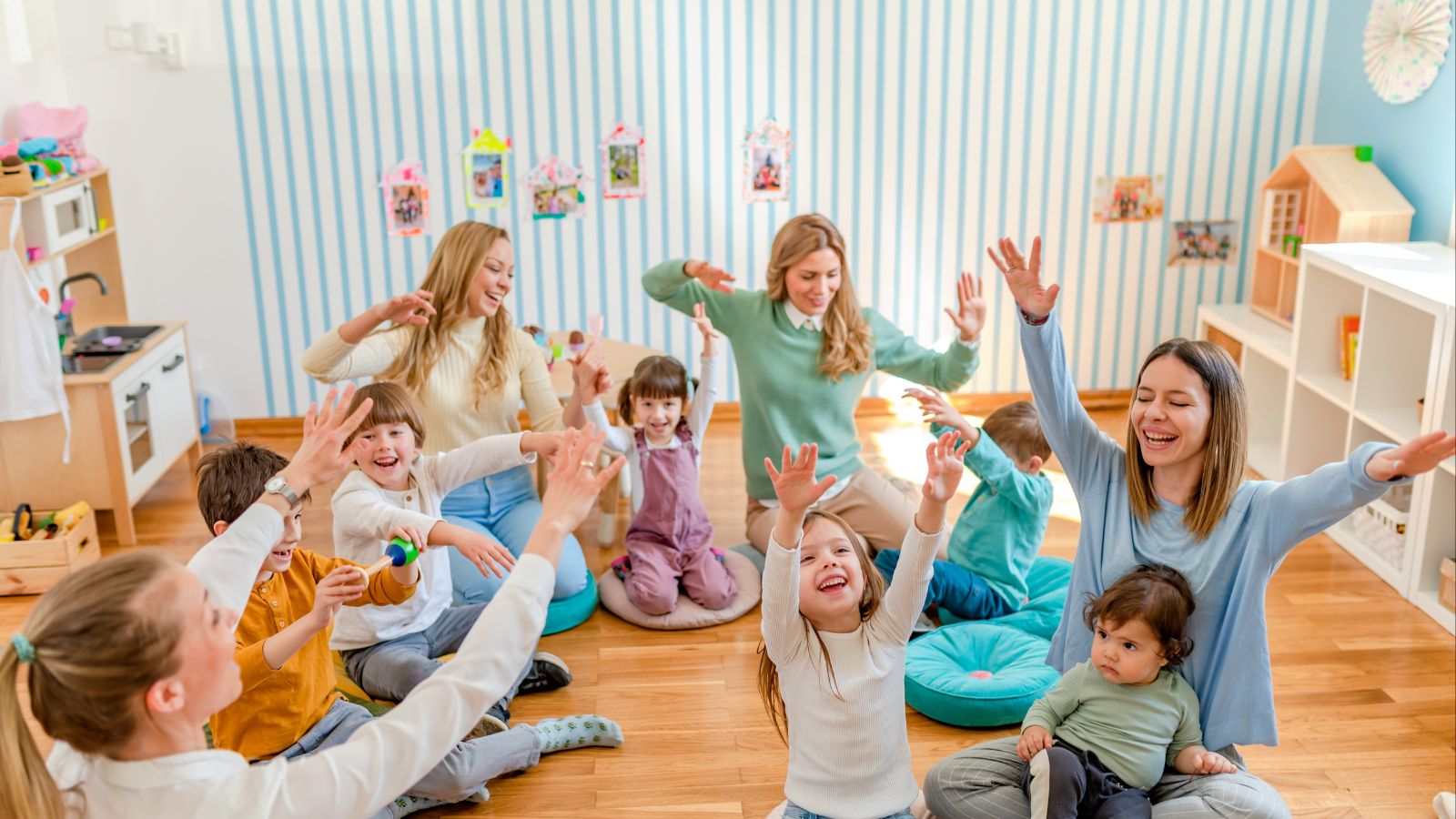
Parents may have strong ideas about the perfect child-care arrangement, but affordability and availability often narrow the choices. Statistics Canada reported that among parents using care for children aged 6 to 12 in 2025, affordable cost was cited by 42% as a reason for choosing the main arrangement. Convenient hours were another important consideration. Meanwhile, federal fee-reduction agreements have substantially reduced regulated child-care costs in many provinces and territories, although access and fees still differ by location.
That reality can mean accepting the available centre rather than waiting for the ideal one, choosing care near work instead of near home, or relying on a combination of school programs and relatives. Families may prioritize dependable hours over enrichment features that once seemed essential. Lower expectations in this case are often about perfection, not safety or quality. Parents still want trustworthy care, but the belief that every preference—location, philosophy, schedule, program style and price—can be satisfied at once is increasingly difficult to maintain in communities where spaces remain competitive.
Summer Camp Becomes a Patchwork
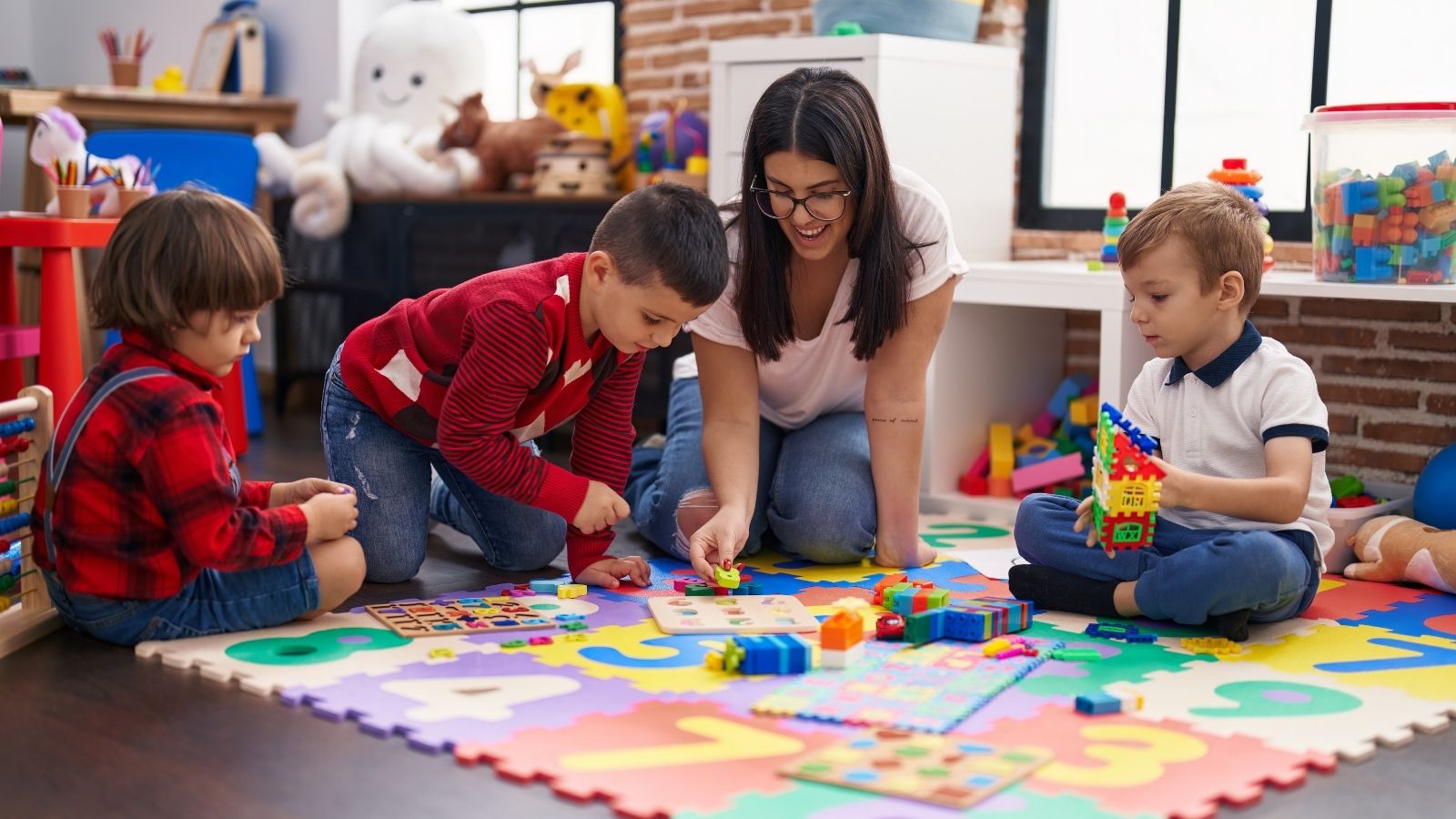
A full summer of organized programs can create a second child-care bill just when school expenses temporarily disappear. Canadian camp costs vary enormously, but even relatively modest day programs can cost hundreds of dollars per week, while specialized or overnight programs can climb far higher. Registration itself can also be competitive; Canadian financial institutions have highlighted parents planning months ahead and rushing to secure spaces when municipal and popular programs open.
The result is often a patchwork summer rather than ten carefully programmed weeks. Children might attend one municipal camp, spend a week with grandparents, join a specialty program for a favourite interest and have several unstructured weeks at home. Parents may stagger vacation days to cover the remaining gaps. The quieter expectation being abandoned is that every summer week needs to be professionally organized. That can reduce costs substantially, although it also demands more logistical creativity from working families. For children, boredom and neighbourhood play may simply become part of summer again rather than a problem requiring another registration fee.
RESP Goals Become “Contribute What’s Possible”

Saving enough to pay every dollar of a child’s post-secondary education has become a difficult benchmark for many households. Statistics Canada reported in 2026 that 71% of parents or guardians were saving in some form for their children’s post-secondary studies in 2025. A separate Financial Consumer Agency of Canada study using 2024 data found 43% of parents and caregivers responsible for household finances reported having a Registered Education Savings Plan. The measures are different, but together they show that education planning extends beyond RESPs alone.
For some families, the goal is consequently becoming partial assistance rather than a fully funded degree and residence experience. Parents may aim to cover first-year tuition, contribute a fixed amount each year or provide free housing while a child studies locally. Savings can be combined with grants, scholarships, employment income and student borrowing. This is a meaningful change in expectation: responsible parenting no longer necessarily means presenting an 18-year-old with enough money to complete university debt-free. Sometimes it means providing the strongest financial starting point the household can realistically afford.
Living at Home Through College Feels Normal

Moving into residence was once treated as an almost automatic symbol of the university experience. Housing costs have made that assumption easier to question. Statistics Canada reported in August 2026 that among Canadians aged 20 to 34 who were attending school in 2021, 47.5% lived with their parents in an intergenerational household. For students in expensive metropolitan areas, remaining in the family home can remove one of the largest costs associated with post-secondary education.
That changes what parents and students may consider a successful transition. A young adult can attend lectures, work part time and build independence while still sleeping in the same bedroom used during high school. Families may establish new rules around rent, chores, guests and transportation instead of insisting that adulthood requires a separate address. The trade-off can be less privacy and a longer commute, but the savings can be substantial. Increasingly, staying home during college looks less like delayed adulthood and more like a practical family strategy for reducing the cost of education.
Moving Out at 18 Is No Longer the Finish Line

The expectation that children leave home shortly after high school has weakened considerably. Vanier Institute analysis of census data found that 45.8% of Canadians aged 20 to 29 lived with at least one parent in 2021, compared with 32.1% in 1991. Statistics Canada has also shown that millennials in their late twenties and thirties were substantially more likely to live with parents than baby boomers had been at comparable ages.
That means parents increasingly plan for a longer period of financial and physical overlap with adult children. The basement bedroom may not become a home office at 19. Grocery bills may continue to include another adult. Parents who once pictured an empty nest soon after graduation may instead host a child through university, a first job and several years of saving. Expectations still evolve: adult children might contribute rent, groceries or household work. But leaving home is becoming a financial milestone reached when income and housing costs align, rather than a birthday-based deadline that determines whether someone is progressing properly.
A Car at 16 Is No Longer Automatic

Getting a licence can still symbolize freedom, but receiving a dedicated vehicle is a much more expensive proposition. CAA emphasizes that the true cost of car ownership extends well beyond the purchase price to depreciation, insurance, fuel, maintenance, licensing and other expenses. Its insurance guidance also notes that young principal drivers can face significant insurance costs. For a household already operating one or two vehicles, adding another car for a teenager can therefore create a lasting monthly obligation.
Many families can separate the milestone of learning to drive from the expectation of owning a car. A teenager might borrow the family vehicle on certain nights, use public transit for school and save toward a future purchase. Parents may contribute to driving lessons without providing a vehicle, or offer matching savings rather than paying the entire price. That model still supports independence, but it changes its timing. The new message is often that mobility matters, while private ownership is something a young person may need to grow into financially.
Holiday Magic Gets a Firm Ceiling

December can expose the gap between emotional expectations and household finances faster than almost any other season. Interac reported in 2025 that 66% of Canadian parents said rising costs were making holiday spending harder, while 52% worried about overspending. Forty-five per cent planned to spend less than $500 on gifts, and 34% said they had scaled back hosting because of cost. Those figures suggest budgeting is becoming part of the holiday tradition itself.
That does not necessarily make the season less meaningful. It can mean fewer gifts per child, a Secret Santa among relatives or a deliberate limit on expensive electronics. A family might keep the annual light tour and cookie baking while dropping a costly event or large gathering. Grandparents may also help with major gifts that parents once expected to provide themselves. What changes is the definition of abundance. Instead of measuring a successful Christmas by the volume beneath the tree, more households have reason to protect traditions that create memories while placing a harder ceiling on purchases.
Back-to-School Means Reuse, Not a Full Reset

September once carried a strong expectation of starting fresh: new backpack, new lunch bag, new clothes and a complete set of classroom supplies. That ritual is becoming more selective. Leger research in 2025 found 60% of Canadian parents believed school-supply costs had increased, while 34% planned to reuse supplies from previous years or older children. Price was also the leading factor for many parents deciding where to shop.
The change is visible in ordinary household decisions. A backpack with another year of life stays in service. Half-used notebooks become homework books. Binders are emptied and relabelled instead of replaced, while winter clothing may wait until children actually outgrow what they own. Parents still purchase what schools require, but the cosmetic “reset” can disappear. With the Retail Council of Canada estimating 2026 back-to-school spending at roughly $600 to $750 per child when electronics are included, extending the life of existing items can free money for footwear, technology or fees that cannot easily be avoided.
The Starter Home Dream Gets Downsized

Housing has forced one of the largest revisions to the traditional parenting script. CMHC has reported that Canadian homeownership affordability deteriorated sharply in the early 2020s, reaching its weakest point since the 1990s in 2022 before improving only partially. Even as conditions eased in some markets, mortgage payments, income growth and economic uncertainty continued to keep many prospective buyers cautious.
For parents, the shift affects both their own housing ambitions and what they expect their children eventually to achieve. A detached starter home with a yard may become a condo, townhouse or long-term rental. Buying farther from downtown may be accepted as the only workable route, while some families decide stability matters more than ownership itself. Parents who once assumed they would help a child with a modest down payment may confront prices requiring much larger assistance. The definition of “getting established” therefore becomes broader: secure housing and manageable monthly costs can count as success even when the deed is not in the young adult’s name.
A Bigger Household Replaces a Bigger House
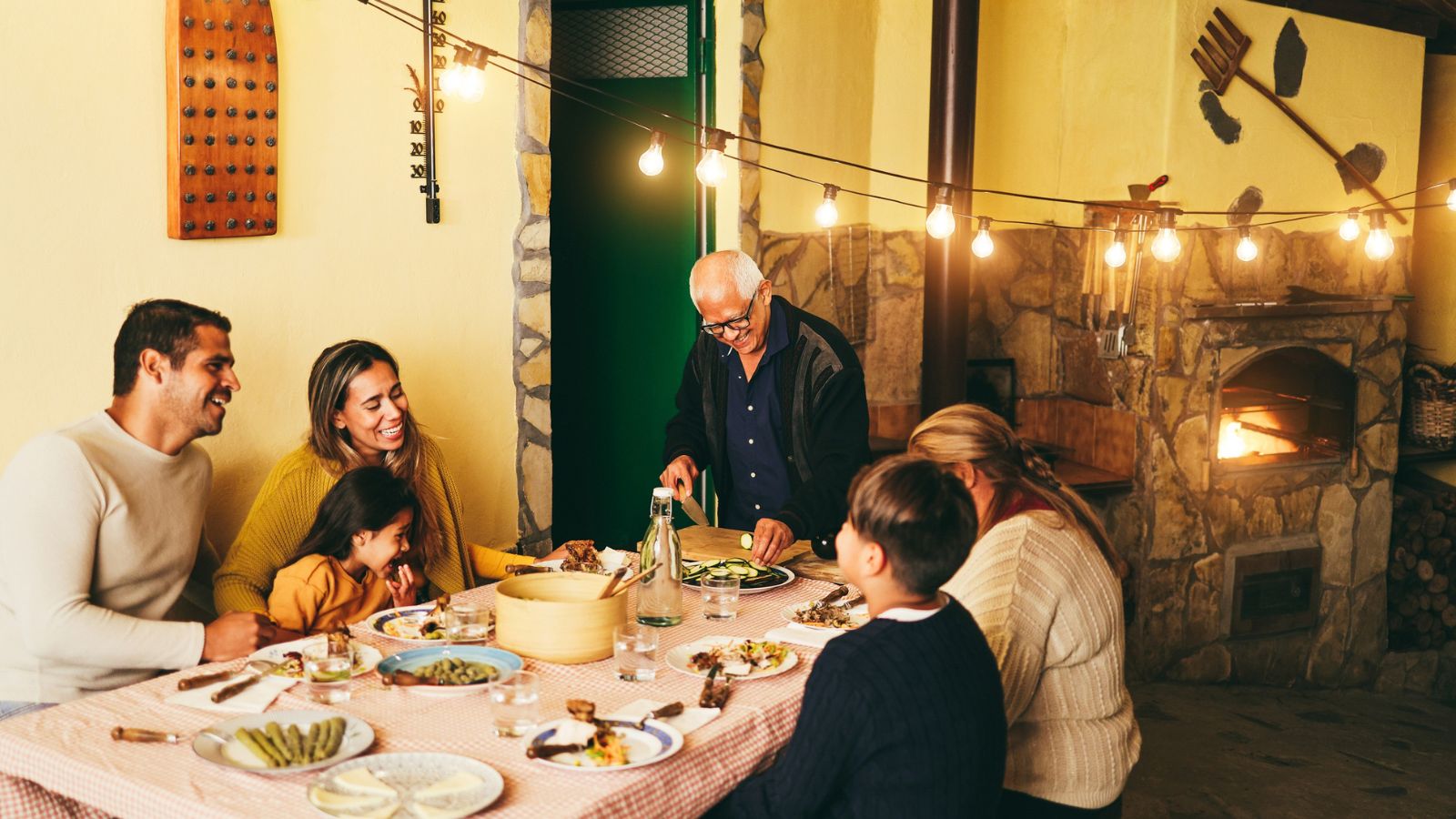
When housing is expensive, families can stretch the home they already have by sharing it for longer. Statistics Canada has identified multigenerational living as one strategy households use to deal with affordability pressures and rising costs. In the 2021 Census, multigenerational households were particularly prevalent in Ontario and British Columbia, provinces that also contain some of the country’s most expensive major rental markets.
The arrangement can challenge older expectations about privacy. Grandparents may occupy one floor while parents and children use another. Adult children may remain after graduation, and bedrooms that might once have been converted into guest rooms stay permanently occupied. Yet the household can gain something in return: grandparents may help with child care, adult children can contribute financially, and housing costs are shared among more people. Instead of measuring prosperity by how much private space each person has, families may increasingly measure it by stability and mutual support. A crowded but financially manageable home can be preferable to several households struggling separately.
Even the Ideal Family Size Gets Reconsidered

Few decisions are more personal than how many children to have, and affordability is never the only factor. Still, the economic environment forms part of the calculation. Statistics Canada reported that the national total fertility rate reached about 1.25 children per woman in 2024, a historically low level. Researchers caution that fertility rates reflect many influences, including delayed partnerships, education, career decisions, housing conditions, personal preferences and access to child care—not simply the price of raising children.
Yet the household math is difficult to ignore. Statistics Canada has estimated that raising a child from birth through age 17 can cost a middle-income two-parent family with two children roughly $293,000 under its methodology. A couple that once imagined three children may decide that two allows more financial stability, or postpone another child while housing and employment remain uncertain. That is not proof that cost determines family size. It does show why expectations about the “ideal” family can collide with what a household believes it can sustainably support.
The Launch Becomes a Shared Financial Project

The final expectation being recalibrated may be the broadest: parents do not necessarily assume they can finance every step into adulthood themselves. Financial Consumer Agency of Canada research found that among parents and caregivers without RESPs, families expected to rely on several approaches to education costs, including other savings, employment or pension income and, for some, co-signing student loans. Statistics Canada’s education-planning research similarly examines combinations of parental savings, free room and board, loans and other forms of help.
That creates a more collaborative model of launching a young adult. Parents might provide housing and groceries while the student handles books and transportation. Another family may contribute a fixed tuition amount while expecting scholarships, summer earnings or borrowing to cover the balance. Later, parents might help with a first apartment deposit rather than buying furniture or contributing to a home purchase. The expectation is no longer that a successful parent removes every financial obstacle. Increasingly, success can mean helping enough to make progress possible without destabilizing the parents’ own retirement or financial security.
16 Costco Canada Habits That Could Be Costing Shoppers More Than They Save

The Executive Membership can feel like an obvious upgrade because the 2% annual reward sounds straightforward. For households that spend heavily at Costco Canada, the extra fee may be easy to justify. But the habit becomes costly when shoppers upgrade first and calculate later. A Gold Star Membership costs less, while Executive costs more and only pays off if eligible annual spending is high enough to offset the difference.
16 Costco Canada Habits That Could Be Costing Shoppers More Than They Save
