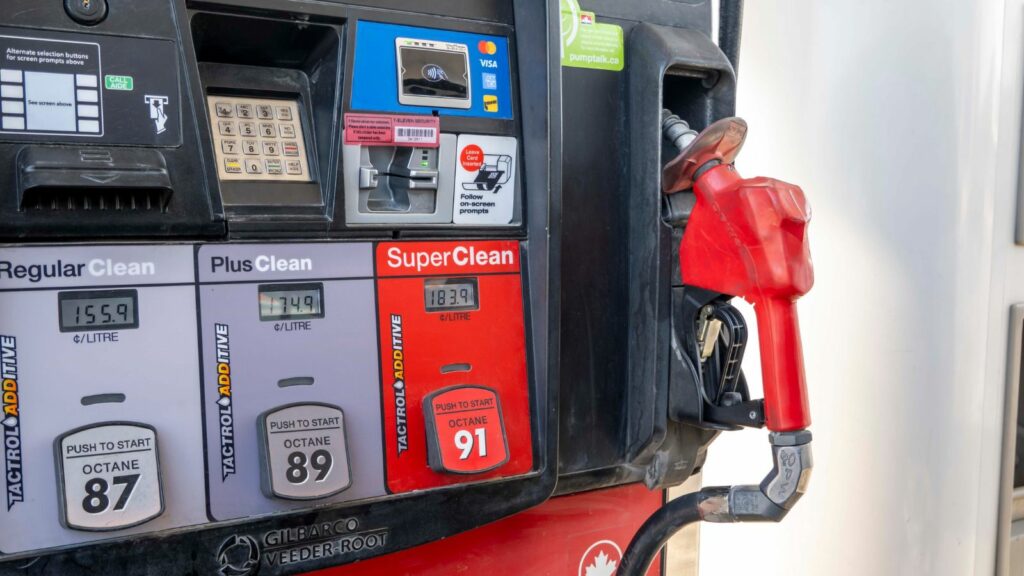
Canada’s inflation picture heated up again in July, but the source of the pressure matters almost as much as the headline number. Statistics Canada reported that the Consumer Price Index rose 3.0% from a year earlier, up from 2.8% in June, while prices increased 0.5% from the previous month. Gasoline was the dominant force, climbing 25.7% year over year as renewed geopolitical tensions pushed energy costs higher.
For households, the result is a familiar squeeze: filling the tank became much more expensive even as some other parts of the cost-of-living picture improved. Grocery inflation slowed, shelter inflation remained subdued and the Bank of Canada’s preferred core measures stayed close to 2%. That makes July’s report less a story of runaway inflation than one of a sharp energy shock testing an otherwise calmer price environment.
Headline Inflation Returns to the Top of the Bank’s Range
The 3.0% annual increase marked a clear acceleration from June’s 2.8% reading, although it remained below May’s 3.2% rate. Economists surveyed by Reuters had expected inflation of 2.9% and a 0.4% monthly increase, so July came in slightly hotter on both measures. The 3% reading also places headline inflation at the upper edge of the Bank of Canada’s 1% to 3% inflation-control range, whose midpoint is 2% over time nationally.
That distinction matters because a 3% annual inflation rate does not mean prices jumped 3% in July alone. Statistics Canada measured a 0.5% increase from June to July, while the larger figure compares prices with July 2025. For a household budget, the annual number captures how much more expensive the overall consumer basket has become over 12 months. The monthly number offers a more immediate view of whether price pressures are accelerating or easing.
Gasoline Is Doing Most of the Heavy Lifting
Gasoline prices were 25.7% higher than a year earlier in July, accelerating from a 20.5% annual increase in June. Transportation prices overall rose 7.8%, making the fuel shock one of the clearest reasons the national CPI moved back to 3%. The rise has been tied to renewed disruption in global oil and refined-product markets as conflict in the Middle East affected shipping routes and refinery economics this summer.
That makes the inflation experience especially uneven. A commuter who drives long distances every day may feel July’s price shock far more sharply than someone who rarely buys gasoline. Higher fuel costs can also spread beyond the pump because trucking, delivery, aviation and other businesses consume energy. The Bank of Canada has noted that some businesses have introduced fuel surcharges, although it has also said the wider spillover from the oil shock has so far remained relatively contained overall.
Core Inflation Tells a Much Calmer Story
Strip gasoline out of the CPI and the picture changes dramatically. Statistics Canada said inflation excluding gasoline was 2.2% in July, the third consecutive month at that level. The Bank of Canada’s two closely watched core measures were also near target: CPI-trim was 1.9%, while CPI-median was 2.0%. Those readings suggest that the sharp rise in headline inflation is not being matched by similarly broad price pressure across the economy.
CPI-trim removes components experiencing the most extreme price movements, while CPI-median tracks the price change at the middle of the distribution. Policymakers use these measures to look past volatile categories such as energy and identify persistent inflation. That is why July’s 3% headline reading may look more alarming than the underlying data. If gasoline were the beginning of a wider wave of price increases, core measures would be more likely to move decisively higher as well today.
Grocery Inflation Eases, but Food Still Feels Expensive
There was some relief in supermarket aisles. Prices for food purchased from stores rose 3.1% from a year earlier in July, down from 3.9% in June. The slowdown helped offset some of the pressure from gasoline and travel. Still, grocery inflation remained slightly above the overall 3% CPI rate, extending a frustrating pattern for households: July was the 18th consecutive month in which grocery prices increased faster than headline inflation.
The improvement was also uneven across food categories. Statistics Canada reported that fresh fruit prices were 6.1% higher than a year earlier in July, up from a 1.7% increase in June. That helps explain why a national average can feel disconnected from the checkout experience. A family buying large quantities of produce, meat and other frequently purchased staples may notice price increases more often than someone whose spending is concentrated in categories where inflation has cooled.
World Cup Travel Adds Another Burst of Inflation
Travel became another upward pressure in July. Prices for travel tours rose 15.2% from a year earlier, accelerating from 6.8% in June. Air transportation prices increased 12.0%. Statistics Canada linked the increase partly to more expensive flights and hotel stays in U.S. cities that hosted FIFA World Cup matches, adding a major-event demand surge to elevated energy costs.
The timing shows how temporary events can distort a monthly inflation report. A Canadian who stayed home in July may have experienced little direct impact from higher U.S.-bound travel prices, while a family attending a match could have faced much higher airfare and accommodation bills. Jet fuel costs also rose with the broader energy shock. Travel is a smaller share of the typical household budget than shelter or food, but a sudden double-digit increase can still lift the national CPI when demand spikes among Canadian travellers.
Shelter Inflation Continues to Cool
An important development was happening away from gas stations and airports. Shelter costs rose just 1.3% from a year earlier in July, down from 1.5% in June. Shelter includes expenses such as rent and mortgage interest costs, and it carries the largest weight in the CPI basket. A relatively soft reading therefore provides a meaningful counterweight to the surge in energy prices.
The trend is notable because shelter was one of Canada’s biggest inflation drivers during the earlier cost-of-living surge. Mortgage interest costs climbed rapidly as rates rose, while rents accelerated in many markets. By 2026, those pressures had moderated. The Bank of Canada’s July outlook said shelter inflation was expected to ease further in the near term, reflecting a sluggish housing market and weaker rent growth. That cooling helps explain why headline inflation can sit at 3% without signaling the same broad price pressure seen earlier today.
Why 3% Inflation Will Not Feel Like 3% to Everyone
The CPI is designed to represent the spending pattern of the average Canadian consumer, but no household buys the exact national basket. Statistics Canada says roughly 29% of the basket is shelter, about 16% is food and another 16% is transportation. Those weights determine how strongly a price change affects national inflation, but an individual household’s budget can look very different.
Consider two households with the same income. One has long daily commutes and buys gasoline frequently; the other works from home and relies mostly on transit. The first household is much more exposed to a 25.7% gasoline increase. Statistics Canada provides a personal inflation calculator for this reason. The national CPI remains the key benchmark for policy and indexed payments, but it is an average. Personal inflation depends on what a household buys, how much it spends on each category and where those prices are currently moving nationally.
The Bank of Canada Has Reasons to Stay Patient
The July report lands ahead of the Bank of Canada’s September 2 rate decision. The central bank has held its policy rate at 2.25% since October 2025, including in July. A headline CPI reading at 3% commands attention, but the composition of inflation gives policymakers room to distinguish between a temporary energy shock and persistent economy-wide price pressure.
That is where the core measures become crucial. With CPI-trim at 1.9%, CPI-median at 2.0% and inflation excluding gasoline at 2.2%, the data still point to contained underlying inflation. Economists cited by Reuters expect the Bank to remain on hold rather than react to gasoline-driven volatility. The calculus could change if energy costs begin feeding more broadly into wages, services and goods, but July’s report does not yet show generalized inflation. For borrowers, that reduces the immediate risk of a rate hike solely because headline CPI touched 3%.
The Next Inflation Reports Will Show Whether This Is Temporary
The question is whether July represents a temporary fuel-driven spike or the start of a broader inflation rebound. In its July Monetary Policy Report, the Bank of Canada projected inflation would ease to about 2.5% over the second half of 2026 as oil prices and gasoline refinery margins declined. It also expected inflation to return to 2% in early 2027, while warning that the outlook was sensitive to developments in the Middle East.
July has shown why that caveat matters. Renewed energy-market disruption pushed gasoline inflation higher again, challenging the assumption of decline. The next checkpoint will be Statistics Canada’s August CPI release on September 14. If gasoline cools while core inflation remains near 2%, the 3% July reading may look temporary. If fuel costs stay elevated and begin lifting more goods and services, the inflation debate—and the Bank of Canada’s interest-rate outlook—could change quickly again.
