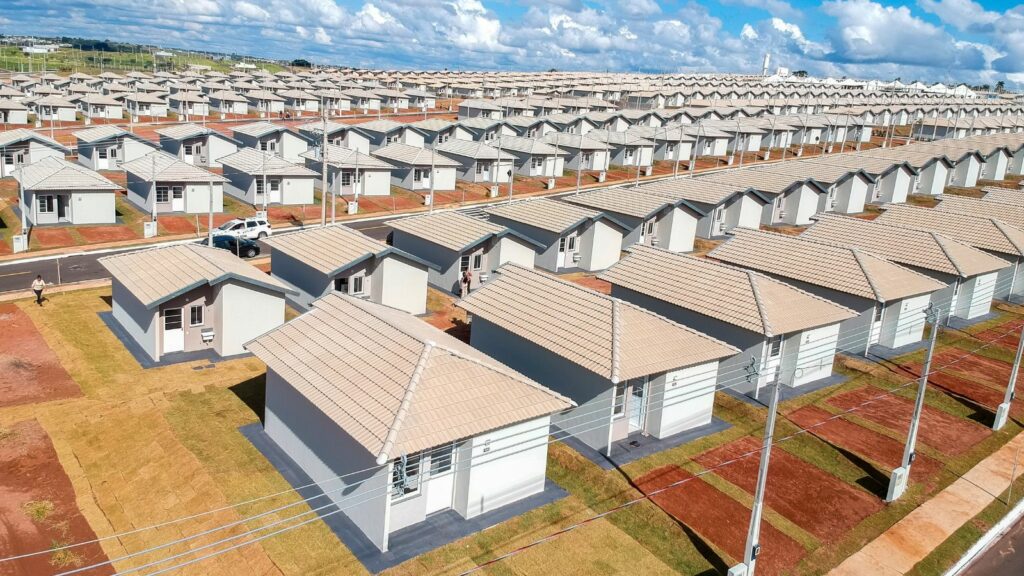
More families in Dartmouth are getting access to below-market rental housing as governments pour another substantial round of public financing into Nova Scotia’s strained housing system. Ottawa, the Province of Nova Scotia and Halifax Regional Municipality have committed a combined $37.32 million toward 91 rental homes in Phases 2 and 3 of YWCA Halifax’s Mount Hope Village. The latest phase adds townhouses designed primarily for families led by women and gender-diverse people, with rents on some units well below prevailing Halifax levels.
The announcement comes at a complicated moment for Canadian housing policy. Halifax’s rental market has begun loosening after years of extreme pressure, yet rents remain high. Meanwhile, billions of dollars in federal housing commitments are drawing increasing scrutiny over how much new supply and lasting affordability taxpayers actually receive.
The $37 Million Headline Includes Three Levels of Government
The 91 homes are backed by $26.6 million from the federal government through CMHC’s Affordable Housing Fund, $8.45 million from Nova Scotia’s Department of Growth and Development and $2.27 million from Halifax Regional Municipality. Together, those commitments total $37.32 million. That distinction matters because Ottawa and Nova Scotia alone account for roughly $35.05 million; the municipal contribution pushes the package beyond the $37-million mark.
Phase 3 represents the larger portion of the expansion. It received $17 million from CMHC, $5.28 million from Nova Scotia and $1.4 million from HRM. The earlier Phase 2 received $9.6 million federally, $3.17 million provincially and $851,250 municipally. On simple arithmetic, the combined public commitment works out to roughly $410,000 for each of the 91 homes. That figure should not, however, be confused with a $410,000 cash subsidy per unit because the programs involved can use loans and other financing structures alongside direct contributions.
The Expansion Adds 91 Homes, but Not All Are Priced the Same Way
Phase 3 is now complete with 57 additional homes, including 40 classified as affordable. Phase 2, completed in September 2025, delivered another 34 homes, including 24 affordable units. Taken together, the two phases therefore account for 91 rentals, of which 64 are affordable under the project’s current structure. Mount Hope Village now contains 123 homes when the earlier phase is included.
That mix illustrates an increasingly common strategy in government-supported housing: combine below-market and market rentals inside the same broader development rather than separating affordable housing into a completely different site. Halifax Mayor Andy Fillmore described Mount Hope as a community combining affordable and market housing. For families moving into the development, the result is less institutional than many older social-housing models. These are two- and three-bedroom townhouses within a mixed-income neighbourhood, giving households space that can be particularly difficult to find at affordable rents in Halifax’s conventional apartment market.
Some Rents Are Hundreds Below Halifax’s Broader Market
The most tangible measure of the project is not the construction budget but what residents will pay every month. Nova Scotia says affordable two-bedroom homes in Phase 3 rent for $1,075 per month. Affordable three-bedroom options are offered at $1,250 or $1,445, while some three-bedroom units are rented at a market rate of $2,250. The structure means families at different income levels can occupy the same development while publicly supported units remain substantially cheaper.
For comparison, CMHC reported that the average two-bedroom purpose-built apartment in the Halifax market reached $1,826 per month in 2025, up 6.7% from the previous year. Its summer 2026 outlook projects that figure reaching approximately $1,919 this year. A $1,075 two-bedroom Mount Hope rental is therefore more than $800 below that projected metropolitan average. The comparison is not perfectly like-for-like because location, building type, utilities and unit characteristics differ, but it demonstrates why the affordable inventory has value beyond simply increasing Halifax’s overall housing count.
The Project Targets Families Facing More Than a Basic Supply Problem
Mount Hope Village is specifically designed around families led by women and gender-diverse people, including households facing housing insecurity. Provincial rules for the project state that leases must be held by a woman or gender-diverse individual, although other members of the household can be listed as occupants. YWCA Halifax expects the 57 homes in Phase 3 alone to provide housing for roughly 200 people.
The housing also comes with access to supports that would not typically accompany an ordinary private-market lease. The province says YWCA Halifax provides assistance with maintaining tenancies, connections to mental-health and healthcare services, and employment-skills support. That model builds on the first Mount Hope homes opened in 2024. At that stage, units were directed toward groups that included urban Indigenous families in core housing need and families moving from hotels or shelters. For households living through that kind of instability, receiving keys to a permanent townhouse can represent a much larger change than simply securing a cheaper monthly rent.
Non-Profit Ownership Is Central to the Government Strategy
Another important feature is who ultimately controls the housing. YWCA Halifax is acquiring and operating the homes as non-profit housing rather than providing a temporary rent discount inside a conventional investor-owned rental project. Federal officials argue that this can preserve affordable units for future households instead of allowing them to revert quickly to full market pricing after a limited subsidy period.
The financing mechanisms are designed around that goal. CMHC’s Affordable Housing Fund has provided capital through combinations of low-interest loans, forgivable loans and contributions. Nova Scotia’s Affordable Housing Development Program similarly offers forgivable loans for qualifying affordable-housing construction or conversions. This explains why the $37.32-million headline requires context: public financing can involve assets and loans with long repayment periods as well as money that is permanently spent. The federal Affordable Housing Fund itself had committed $15.83 billion by March 2026, supporting more than 61,700 new units and repairs to more than 174,700 existing homes nationally.
Halifax’s Rental Market Is Improving, but Affordability Is Still Lagging
The timing of the opening is notable because Halifax is no longer experiencing quite the same rental squeeze seen during the most intense post-pandemic years. CMHC measured the purpose-built apartment vacancy rate at 2.7% in 2025, up from 2.1% in 2024 and just 1% in 2023. Its summer 2026 forecast puts Halifax around 3% this year as new construction and slower population growth give renters somewhat more choice.
That improvement has not translated into cheap housing. Halifax’s average two-bedroom purpose-built rent climbed from $1,707 in 2024 to $1,826 in 2025, and CMHC expects further increases. The agency estimates Halifax’s balanced vacancy range at roughly 3% to 4.5%, meaning the region has only recently approached the lower boundary of a more balanced rental market. Supply conditions may therefore look healthier on paper while low- and moderate-income families continue finding the available inventory unaffordable. Mount Hope addresses that second problem: not simply whether a rental exists, but whether the household can realistically carry the rent.
Ottawa Is Also Paying Halifax to Change How Housing Gets Approved
The Mount Hope money sits alongside another major federal housing stream flowing into Halifax. The municipality was approved for $79.309 million through Ottawa’s Housing Accelerator Fund, which rewards local governments for policy changes intended to accelerate construction. Halifax’s commitments have included streamlining development approvals, supporting greater “gentle density,” expanding affordable-housing incentives and making it easier to increase housing supply in established neighbourhoods.
Earlier in 2026, Halifax received its third Housing Accelerator Fund instalment of nearly $19.8 million after meeting required milestones. The original agreement targeted 15,467 permitted housing units between October 2023 and October 2026, including an affordable-housing component. Mount Hope itself also sits within one of Nova Scotia’s designated special planning areas. The province says its 16 special planning locations collectively represent potential capacity for more than 60,000 homes. Governments are therefore attacking the shortage from two directions at once: directly financing affordable units while trying to reform the planning system that determines how quickly private and non-profit supply can be built.
Dartmouth Has Become a Test Bed for Much Bigger Housing Commitments
The $37-million Mount Hope package is substantial, but it is small beside what governments are planning elsewhere in Dartmouth. In December 2025, Ottawa and Nova Scotia announced a partnership of up to $300 million aimed at unlocking 1,430 additional affordable homes across the province. That agreement includes up to $120 million in federal financing and as much as $180 million in provincial capital and operating funding.
A major component is Shannon Park in Dartmouth, where governments are pursuing hundreds of mixed-market, public, supportive and below-market homes. The federal portion is planned to accommodate roughly 630 units, with at least 40% intended to be below market, while Nova Scotia has planned another 300 homes on provincially controlled land. Halifax has also committed to helping accelerate approvals and potentially provide development-fee or tax relief. Taken together, Mount Hope and Shannon Park show Dartmouth increasingly functioning as a proving ground for Ottawa’s strategy of combining public land, non-profit partners, government financing and faster municipal approvals.
The Spending Debate Is About Results, Not Simply the Size of Cheques
Large announcements inevitably raise the question of whether governments are buying enough housing with public money. The Parliamentary Budget Officer added fuel to that debate in late 2025 when it examined Ottawa’s broader housing plans. It estimated that Build Canada Homes would generate about 26,000 additional units over five years, equivalent to roughly a 2.1% increase in housing completions compared with its baseline forecast. Around 13,000 were expected to be affordable to low-income households.
At the same time, the PBO projected that planned federal housing-program spending would decline 56%, from $9.8 billion in 2025-26 to $4.3 billion in 2028-29 as older programs expire and Budget 2025 reductions take effect. Importantly, Mount Hope’s $26.6-million federal commitment comes through the Affordable Housing Fund rather than Build Canada Homes, even though the federal announcement places it within Ottawa’s broader new housing strategy. The distinction matters because judging federal housing policy requires tracking multiple programs, different financing tools and the homes ultimately delivered—not just adding together headline funding announcements.
Mount Hope Will Be Judged by Whether Affordability Lasts
Governments can point to a concrete outcome in Dartmouth: Phase 3 is completed, families can occupy the homes, and below-market rents are attached to a significant share of the development. That separates Mount Hope from housing announcements involving projects that remain years from construction. An earlier municipal funding presentation also anticipated additional Mount Hope affordable-housing phases in 2027, showing that the development may continue growing beyond the 123 homes now in the village.
The longer-term test is more demanding. Policymakers will need to show that affordable rents remain meaningfully below local market levels, that the homes continue serving the households they were designed for and that public financing produces durable community assets. Halifax also needs enough conventional rental construction to stop affordable programs from carrying the entire burden. With billions committed nationally and hundreds of millions more planned in Nova Scotia, the housing debate is moving beyond whether governments should spend. Increasingly, the question is how many genuinely affordable homes each dollar produces—and how long those homes remain affordable.
