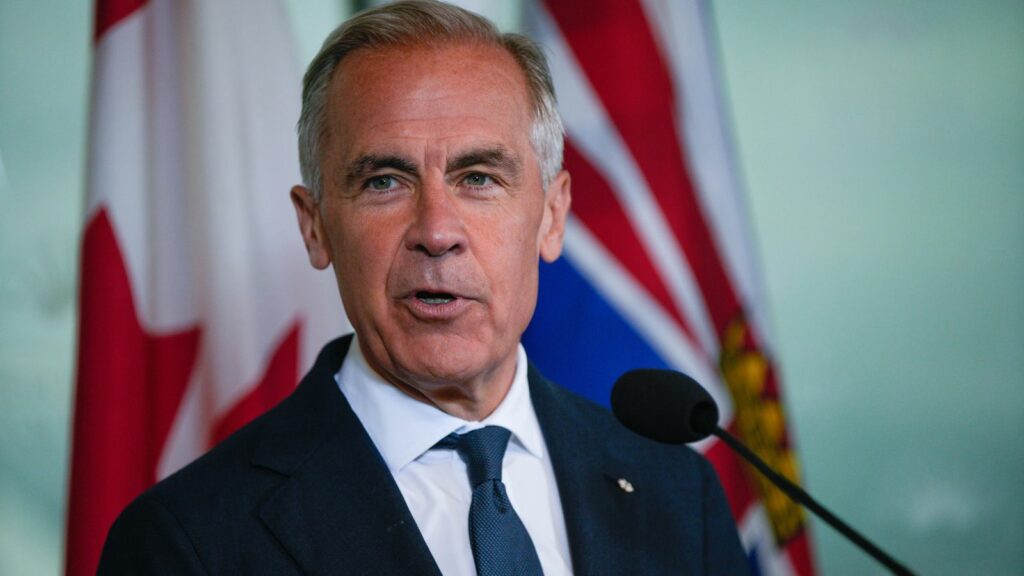
Canada’s long-running argument over how quickly major projects should be approved has moved from political promises into regulatory machinery. The federal government has changed the rules governing several large energy projects, removing pipelines, certain power lines and other facilities from the project list that triggers assessments under the Impact Assessment Act.
That does not mean major pipelines can simply bypass federal scrutiny. Instead, Ottawa is consolidating responsibility around the Canada Energy Regulator, which already evaluates environmental, economic, safety and Indigenous-rights issues for federally regulated energy infrastructure. For the Carney government, the objective is fewer overlapping processes and greater certainty. For critics, the test is whether faster reviews can still provide the independence, participation and environmental examination expected for projects that can reshape communities and landscapes for decades.
Ottawa Has Changed Which Federal Process Applies
The regulatory change is contained in amendments to the Physical Activities Regulations, commonly called the federal Project List. The regulations were registered on September 3, 2026, and subsequently published in the Canada Gazette. They remove international and interprovincial pipelines, international and designated interprovincial electrical transmission lines, certain offshore renewable projects and several other federally regulated energy activities from the list of projects automatically captured by the Impact Assessment Act.
The change reaches somewhat further than pipelines and transmission corridors. It also removes certain oil and gas facilities associated with federal works, qualifying in-situ oil sands facilities and fossil-fuel-fired generating facilities from the Project List. Those categories are not all treated identically after their removal. Federally regulated pipelines and power lines generally move into the Canada Energy Regulator process, while other projects may remain subject to provincial assessments and separate federal environmental laws. The practical theme is consolidation rather than deregulation: Ottawa wants fewer situations in which multiple federal assessment structures examine much of the same project.
The Layer Being Removed Was an Integrated Review Panel
Under the system created in 2019, particularly large federally regulated pipelines and transmission projects could trigger an integrated assessment involving both the Impact Assessment Agency of Canada and the Canada Energy Regulator. The threshold included designated pipelines and certain electrical transmission lines requiring at least 75 kilometres of new right of way. In theory, the integrated panel allowed the requirements of both statutes to be addressed through a combined process.
In practice, an important fact complicates the idea that Ottawa has just dismantled a frequently used layer of bureaucracy: according to the federal government’s regulatory analysis, no integrated review-panel assessment for a pipeline or electrical transmission-line project has actually been conducted since the regime came into force. The Canada Energy Regulator, meanwhile, has continued processing pipeline applications under its own legislation. Ottawa therefore argues that removing the unused integrated structure makes the legal framework better reflect how energy regulation already works while eliminating the possibility of overlapping federal procedures when the next major proposal arrives.
Major Projects Still Face a Federal Energy Regulator
The Canada Energy Regulator is not simply an engineering-permit office. Under the Canadian Energy Regulator Act, its pipeline reviews can consider environmental effects, cumulative effects, safety, health, social and economic consequences, climate commitments and the effects a project may have on the constitutionally protected rights of Indigenous Peoples. Indigenous knowledge provided during a proceeding must also be considered alongside scientific information and data.
Large pipeline applications can carry a legislated review period of up to 450 days after the regulator determines that an application is complete. For qualifying pipelines, the CER prepares a report and recommendation rather than making the ultimate political decision itself. The Governor in Council — effectively federal Cabinet — retains the final public-interest decision for major pipeline certificates and qualifying international transmission lines. Public participation also remains available through CER proceedings, including written evidence, information requests, hearings and oral Indigenous knowledge sessions where appropriate. The new system therefore removes an assessment pathway, but it does not remove the regulator or Cabinet from major decisions.
Ottawa Is Trying to Replace Sequential Reviews With One Main Track
The change fits a much larger Carney-government effort to shorten the distance between a project proposal and a final federal decision. Ottawa’s major-project reform proposals envision federal departments conducting assessments and permit reviews more concurrently rather than moving through long sequences one after another. The government has proposed a goal of completing its review and decision-making work within one year once proponents have supplied the necessary information.
That broader overhaul is still developing. Consultations launched in May and ran until July 22, bringing submissions from provinces, Indigenous Peoples, industry, environmental organizations, academics, think tanks and members of the public. The government says legislation implementing additional changes is expected in the fall. That makes the new Project List amendments significant beyond their immediate effect: Ottawa could implement this particular measure through regulations without waiting for another bill. It is an early demonstration of what the government’s emerging “single regulator” philosophy looks like when translated into actual rules.
A New Pipeline Debate Makes the Timing Particularly Important
The regulatory shift arrives as Canada is once again seriously discussing new westward oil-export infrastructure. In July, the federal government and Alberta announced that Alberta’s proposed West Coast Oil Pipeline concept would be referred to the Major Projects Office for development and consideration. Ottawa has increasingly framed such infrastructure around national economic resilience, export diversification and reducing vulnerability to disruptions in Canada’s traditional trade relationship with the United States.
No regulatory reform can settle the much bigger questions surrounding such a pipeline. A route, commercial structure, Indigenous partnerships, environmental impacts, terminal arrangements and financing would all have to be worked through before an actual project could proceed. But the rules determining who conducts the federal assessment are no longer an abstract concern. Should a major interprovincial pipeline application materialize, the CER would now occupy the central federal assessment role rather than participating in the integrated Impact Assessment Act panel structure envisioned in 2019. That could become one of the first major tests of the government’s streamlined model.
Power Lines May Be Just as Important as Pipelines
Pipeline politics attracts more attention, but Canada’s need for transmission infrastructure makes the changes affecting power lines equally consequential. Natural Resources Canada estimates electricity demand could roughly double by 2050 as transportation, industry, buildings and other parts of the economy become more electrified. Moving that additional power will require not only new generation but stronger transmission systems and, potentially, more connections between provincial grids.
Ottawa has already referred a national Transmission InterConnect Investment Strategy to the Major Projects Office to identify priority interties and other high-value transmission infrastructure. Major projects such as British Columbia’s North Coast Transmission Line illustrate the scale involved: federal and provincial governments have committed billions of dollars toward its initial phases, while several First Nations represented through the K’uul Power consortium have options to acquire significant equity. Faster assessment alone cannot manufacture transformers, transmission towers or skilled crews. But if regulatory uncertainty becomes one less obstacle, Ottawa hopes investment decisions can happen earlier and large electricity projects can move more predictably from planning into construction.
Environmental Scrutiny Is Where the Argument Becomes Sharpest
The government insists that eliminating the Impact Assessment Act layer does not mean eliminating environmental assessment. CER reviews can examine effects involving air, water, soil, wildlife, species at risk, cumulative environmental changes and climate commitments. Ottawa’s regulatory analysis concludes that projects removed from the Project List will remain covered by other federal or provincial regulatory systems and predicts no incremental environmental impact resulting specifically from the regulatory amendments.
Not everyone who participated in consultations accepts that reassurance. The government’s own summary records concerns from members of the public about losing an independent assessment structure, compressing timelines and reducing opportunities to participate. Some participants worried that important cumulative or long-term effects could receive less scrutiny when the sectoral regulator becomes the main federal decision-making institution. That is the core policy trade-off the government now has to demonstrate it can manage. Faster decisions have obvious economic value, but speed becomes politically durable only when communities believe difficult environmental questions were genuinely examined rather than administratively cleared away.
Indigenous Consultation Could Determine Whether Faster Really Means Faster
Indigenous rights remain one of the most consequential parts of Canadian major-project development. The CER must consider adverse effects on rights recognized and affirmed under section 35 of the Constitution Act, and the government says Crown consultation obligations continue under the streamlined structure. CER proceedings can incorporate Indigenous knowledge, participant funding and additional Crown consultation, while treaty-based environmental assessment processes are not overridden by the regulatory amendments.
Yet Indigenous participants raised significant concerns during the government’s consultations. The Canada Gazette records worries that eliminating independent review panels could weaken transparency, impartiality or opportunities to introduce Indigenous studies and knowledge. Some also raised questions about how a faster federal system would interact with co-management regimes and modern treaties. Ottawa maintains that existing treaty rights and co-management arrangements remain intact. Economically, that matters as much as legally: attempting to gain months through regulatory streamlining could produce little practical advantage if consultation is rushed and disputes subsequently create years of conflict. Durable Indigenous partnerships, including equity participation in some projects, increasingly form part of Canada’s infrastructure model.
The Direct Paperwork Savings Are Smaller Than the Political Message
Canada’s energy economy makes the regulatory debate appear enormous. Federal energy data show capital expenditures across the sector reached roughly $89 billion in 2025, including about $42 billion in oil and gas extraction and $34 billion in electrical power generation and distribution. Canada also had hundreds of planned or under-construction major energy projects representing hundreds of billions of dollars in potential capital investment.
Interestingly, the government’s own analysis suggests the immediate administrative savings generated by these particular amendments are comparatively modest. Under the federal one-for-one regulatory calculation, Ottawa estimated annualized administrative savings of roughly $14,867 in 2012 dollars, with three proponents a year collectively avoiding about 846 hours of Impact Assessment Act-related documentation. That does not mean the reform is irrelevant. It shows that its bigger value proposition is less about saving filing costs than eliminating uncertainty over duplicated processes, responsibilities and schedules. For investors considering multibillion-dollar infrastructure, knowing which regulator controls the pathway can matter considerably more than the cost of producing another binder of paperwork.
The Supreme Court Decision Helped Set the Stage
Canada’s impact-assessment system was already being rewritten before the latest amendments. In October 2023, the Supreme Court of Canada concluded that significant portions of the federal designated-project scheme were unconstitutional because they extended beyond areas of federal legislative authority. The federal government subsequently amended the Impact Assessment Act in 2024, narrowing its focus on adverse effects falling within federal jurisdiction and placing greater emphasis on cooperation with provincial processes.
The latest Project List changes build on that shift. Ottawa says projects that have limited effects within federal jurisdiction, or whose effects are already adequately addressed through another federal or provincial regime, should not automatically be pulled into a separate Impact Assessment Act process. That is a different regulatory philosophy from treating federal impact assessment as the central umbrella for major developments. Whether it produces better results will depend heavily on coordination: environmental protections, provincial approvals, fisheries and species requirements, Indigenous consultation and CER regulation do not disappear simply because one statute is removed from the pathway. The challenge becomes making those remaining pieces operate as one system.
The Bigger Test Comes With Projects That People Actually Fight Over
The government is not finished restructuring major-project approvals. Its consultation package proposes coordinated federal permits, a more unified Crown consultation process and reviews designed to culminate in decisions within substantially shorter timelines. The Major Projects Office is meanwhile handling a growing roster of mines, energy facilities, transmission projects, ports and broader infrastructure strategies intended to increase trade capacity and economic resilience.
The political appeal is easy to understand. Canada has enormous energy resources, substantial investment needs and a growing electricity system, while proponents have spent years complaining that regulatory unpredictability can discourage capital long before construction begins. But regulatory reform will ultimately be judged on difficult projects, not administrative diagrams. A pipeline crossing contested territory, a new interprovincial transmission corridor or an energy facility near a sensitive ecosystem will test whether a single-regulator model can deliver decisions that are both faster and defensible. If it can, the Carney government’s changes could mark a durable shift in Canadian project development. If it cannot, today’s removed review layer may simply move tomorrow’s disputes somewhere else.
