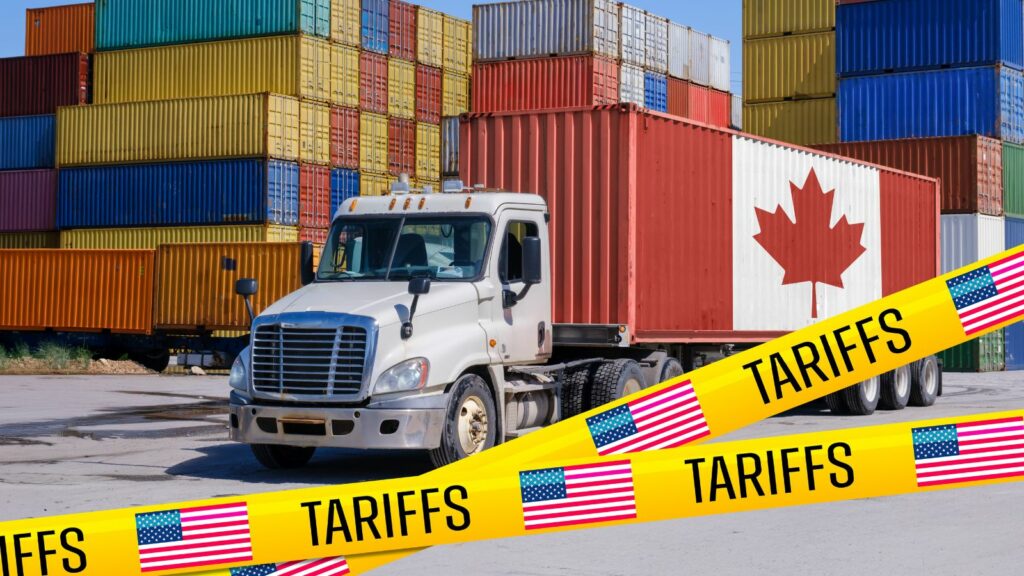
For a Manitoba manufacturer accustomed to selling into an integrated North American economy, the latest trade fight is turning diversification from a long-term ambition into an immediate business strategy. Ottawa is providing $1 million to Brandon-based Atom-Jet Industries as the company expands production at home and looks for more customers outside the United States.
The federal contribution, announced September 11 through the Regional Tariff Response Initiative, comes as Canadian manufacturers contend with a fresh round of U.S. tariffs and growing uncertainty over cross-border supply chains. Atom-Jet plans to expand its facility, move additional manufacturing processes in-house and build direct sales in Canada and Australia. The project is relatively small beside Ottawa’s multibillion-dollar tariff response, but it illustrates how the trade conflict is beginning to reshape investment decisions on factory floors far from the border.
Ottawa Is Putting $1 Million Behind Atom-Jet’s Expansion
Prairies Economic Development Canada is providing Atom-Jet Industries with $1 million through the Regional Tariff Response Initiative, the federal program designed to help businesses affected by tariffs adjust operations, improve productivity and diversify their markets. Ginette Lavack, parliamentary secretary to the minister of Indigenous services and MP for St. Boniface–St. Vital, announced the funding in Brandon on behalf of PrairiesCan Minister Eleanor Olszewski. The government explicitly linked the investment to the pressures created by changing U.S. trade policy.
For Atom-Jet, the money is intended for something more concrete than simply absorbing higher trade costs. Owner and president Barry LaRocque told the Brandon Sun that the funding would support equipment, advanced technology and expansion. That distinction matters. Rather than compensating the company indefinitely for a more difficult trading environment, the project is designed to alter how Atom-Jet operates. The intended outcome is a manufacturer with greater internal capacity, lower exposure to outside suppliers and more options when deciding where its products should be sold.
The Brandon Company Already Operates Well Beyond One Product Line
Atom-Jet is deeply rooted in western Manitoba manufacturing. Its agricultural business produces equipment and systems used for seeding, fertilizer application and other farm operations, including openers, fertilizer knives and tillage-related products. Its broader operations also include machining and advanced manufacturing as well as specialized brazing work. The company says its machining experience spans more than 55 years and serves industries ranging from agriculture and food production to mining, oil and gas and industrial maintenance.
That mix helps explain why the tariff issue reaches beyond a simple question of whether one farm implement faces a duty at the border. Atom-Jet operates inside a network of industrial customers, suppliers and original-equipment manufacturers that stretches across North America and overseas. Its own corporate materials identify Canada, the United States and Australia among the markets served by the wider Atom-Jet Group. When trade barriers disrupt one part of that network, the pressure can appear through weaker orders, higher input costs, changing supplier economics or customers reconsidering where components are sourced. Diversifying therefore involves both where Atom-Jet sells and how much of the production process it controls itself.
A 4,000-Square-Foot Expansion Will Bring More Work Under One Roof
A central piece of the federally supported project is a 4,000-square-foot expansion of Atom-Jet’s Brandon facility. The added space will allow the company to bring powder coating and sandblasting operations in-house. PrairiesCan says the shift is expected to reduce production costs and lead times while increasing overall manufacturing capacity. For a producer trying to remain competitive while trade rules are changing quickly, controlling more stages of production can provide something almost as valuable as lower costs: predictability.
The logic is straightforward. When finishing work is outsourced, a manufacturer depends on another company’s schedule, transportation arrangements and pricing. Moving that work inside the factory can shorten the chain between fabrication and a finished product. It does not eliminate every supply risk, and the federal announcement does not claim that Atom-Jet will become completely self-sufficient. Instead, it gives the company greater control over specific processes that affect production time and cost. In an environment where tariffs can rapidly change the economics of cross-border sourcing, that operational flexibility becomes part of the company’s trade defence.
Canada and Australia Are Becoming More Important to the Sales Strategy
The second half of Atom-Jet’s strategy focuses on customers rather than production. The company plans to increase direct-to-customer sales in Canada and Australia, reducing its reliance on both the U.S. market and original-equipment-manufacturer customers. Australia is not an entirely new frontier for Atom-Jet. Its agricultural division already identifies Australian customers and sales support, making the current push an expansion of an established presence rather than an attempt to enter an unfamiliar country from scratch.
Direct sales can also change the economics of a manufacturer’s business. Selling through an OEM can provide volume, but it concentrates risk when a major customer cuts orders or reorganizes its supply chain. A broader base of end customers can reduce that dependence. Canada offers the advantage of the domestic market, while Australia provides exposure to another large agricultural economy with farming conditions suited to specialized seeding and cultivation equipment. Neither market can instantly replace the scale and proximity of the United States, but together they give Atom-Jet additional places to pursue revenue if American demand becomes more expensive or unpredictable.
Eight New Brandon Jobs Are Expected From the Project
PrairiesCan expects the Atom-Jet project to create eight new jobs in Brandon. In national terms, that is a modest number. At the community level, however, skilled manufacturing positions can have an impact that extends beyond the people hired directly. Industrial operations purchase materials, transportation, maintenance and professional services locally, while specialized manufacturing skills can be difficult to replace once they disappear from a regional labour market.
The investment also arrives when manufacturing remains an important employer in Manitoba. Federal figures based on the December 2025 Labour Force Survey put manufacturing employment in the province at approximately 67,700 people, representing roughly 9% of Manitoba’s workforce. That helps explain why Ottawa’s tariff response in the province has focused heavily on manufacturers rather than only large exporters. A trade shock does not need to close a major factory to produce economic damage. Delayed investment, smaller production runs or the gradual relocation of contracts can also weaken an industrial base. The Atom-Jet expansion represents the opposite approach: adding capacity in Brandon while the company looks for ways to reduce external trade risks.
Manitoba’s U.S. Exposure Makes Diversification Especially Difficult
The challenge facing Atom-Jet reflects a much larger structural issue for Manitoba. Provincial data show Manitoba exported approximately $12.9 billion worth of goods to the United States in 2025, equivalent to about 66% of the province’s domestic merchandise exports. The proportion has moved from year to year, but the U.S. remains by far Manitoba’s most important international customer. Machinery, agricultural products, processed foods, transportation equipment and other manufactured goods have all developed around decades of relatively open north-south commerce.
That dependence cannot simply be switched off because tariffs rise. Geography, established distribution networks and integrated production systems continue to make the U.S. commercially attractive even during a trade dispute. Manitoba’s own trade strategy still describes the American market as important while simultaneously seeking opportunities elsewhere. That is why Atom-Jet’s approach is better understood as reducing concentration rather than abandoning the United States. Additional Canadian and Australian customers provide insurance against disruption, but an efficient manufacturer will still have strong incentives to participate in the enormous U.S. market when the economics make sense. The practical objective is to avoid having too many revenues depend on one political relationship.
The Latest Tariff Escalation Has Raised the Stakes
The timing of Ottawa’s announcement is significant. The federal government says the United States imposed a 50% tariff on $27.6 billion worth of Canadian goods effective August 22, 2026. Canada responded by announcing matching countermeasures, with tariffs of 15%, 25% and 50% applied to selected U.S. products beginning September 8. Ottawa says the retaliatory measures cover the same $27.6 billion in trade and include sectors such as steel, agricultural equipment, appliances, dairy, pulp and paper and electronics.
That escalation creates complications even for businesses that are not directly paying a 50% duty on every product they sell. Manufacturing supply chains often cross the border repeatedly, and companies can be affected through customers, suppliers or tariff-sensitive materials. Ottawa’s Regional Tariff Response Initiative therefore allows firms to demonstrate different forms of trade-related harm, including revenue exposure, higher input costs and supply disruptions. For a company such as Atom-Jet, the uncertainty itself becomes part of the business calculation. Capital investments that shorten supply chains or open alternative markets can become easier to justify when management cannot assume that yesterday’s tariff rules will remain in place tomorrow.
Atom-Jet Is One Piece of a Much Larger Federal Tariff Program
The $1 million contribution comes from a program that has expanded sharply as Canada’s trade dispute with the United States has intensified. On August 25, Ottawa announced another $1.5 billion for the Regional Tariff Response Initiative, bringing the federal government’s stated national investment in the program to $3.45 billion. That increase forms part of a broader $7.5-billion package of measures for workers and businesses facing U.S. tariffs.
Under the enhanced Prairie program, eligible companies can seek support for both immediate liquidity pressures and longer-term business changes. Non-repayable assistance can reach a combined $3 million, including up to $2 million for eligible liquidity needs and as much as $1 million for qualifying pivot projects. Larger transformative projects can also receive repayable support. Eligibility is aimed at businesses that were viable before the tariffs and can demonstrate trade-related impacts. The structure reflects Ottawa’s attempt to solve two problems at once: keeping firms financially stable through the immediate disruption while encouraging investments that could make them less vulnerable to the next trade shock.
Manitoba Manufacturers Are Already Receiving Millions for Similar Moves
Atom-Jet is far from the only Manitoba manufacturer being pushed toward more domestic production and market diversification. On September 3, PrairiesCan announced $15.9 million for 15 projects led by 11 Winnipeg organizations through tariff-response and productivity programs. Recipients included manufacturers investing in new equipment, automation, additional production capacity and supply-chain changes.
The projects show a recurring pattern. Fort Garry Fire Trucks received tariff-response funding to bring additional fire-truck components in-house. Smartrend Manufacturing Group received support aimed partly at expanding into new markets, while City Sheet Metal was funded for equipment upgrades intended to increase production and grow Western Canadian sales. Other companies received money for manufacturing lines, digital systems and automation. Ottawa is effectively encouraging a collection of firms to do versions of what Atom-Jet is attempting in Brandon: control more production domestically, improve productivity and find customers beyond established U.S.-linked channels. Whether every investment succeeds commercially will depend on the companies and markets involved, but the direction of federal industrial policy is becoming increasingly clear as the tariff confrontation continues.
The Bigger Test Is Whether Diversification Lasts After the Trade Fight
For Atom-Jet, success will not be measured simply by completing a 4,000-square-foot expansion or purchasing new equipment. The more important questions will be whether bringing finishing work in-house lowers costs as expected, whether Canadian and Australian sales grow and whether the company can maintain U.S. business without being overly dependent on it. Eight expected new jobs provide an early local benchmark, but durable revenue growth would be the stronger measure of whether the strategy worked.
The project also captures a broader change taking place across Canadian manufacturing. For decades, efficiency often meant designing supply chains around the assumption that the Canada-U.S. border would remain predictable. The latest tariff escalation is forcing businesses to place a higher value on resilience, domestic capacity and market diversity. Those choices can require upfront spending and may not always produce the cheapest possible supply chain. Ottawa is betting that the additional resilience is worth subsidizing. Atom-Jet’s Brandon expansion offers a small but tangible test of that proposition: whether $1 million in public support can help a Prairie manufacturer turn a trade disruption into a reason to produce more at home and sell to a wider world.
