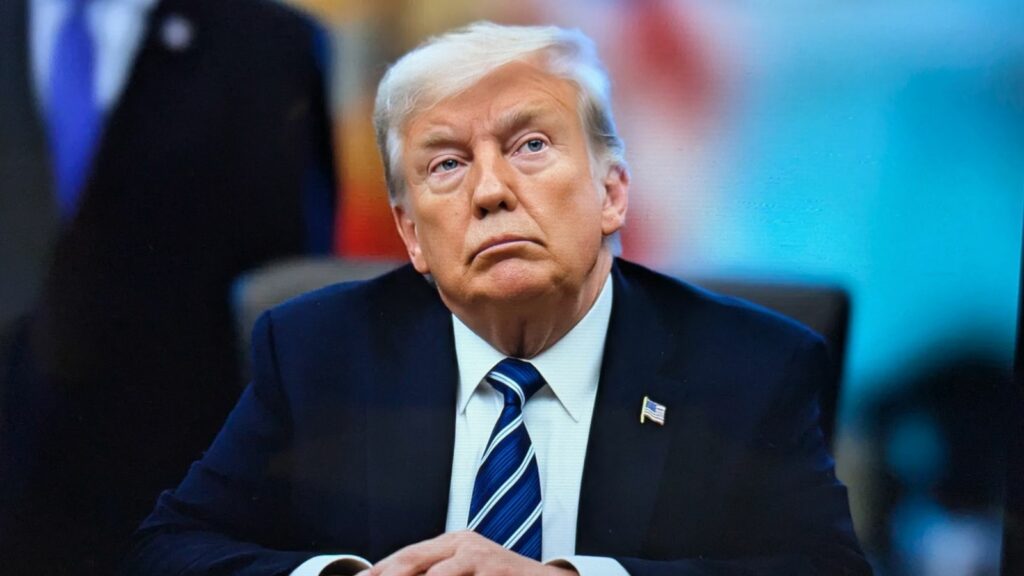
Two major American tariff policies are moving in opposite directions, creating a striking contrast for Canada’s struggling steel industry. President Donald Trump has waived a newly authorized 500% tariff on Russian goods, citing American national interests, even as Canadian steel producers continue facing 50% duties when exporting covered products to the United States.
The decision, announced October 16, also suspends additional sanctions targeting Russia and proposed penalties on countries purchasing Russian energy. It comes while Canadian manufacturers are dealing with lost export orders, layoffs and uncertainty over their access to the American market.
The policies arise from different laws and pursue different objectives. Still, their simultaneous application raises questions about Washington’s trade priorities, particularly as Canada attempts to protect an industry that has supplied American manufacturers for generations.
Trump Suspends a 500% Tariff Before It Takes Effect
On October 16, Trump signed an executive order implementing the Lindsey O. Graham Sanctioning Russia and Iran Act of 2026, which became law on September 18. The legislation authorized sweeping economic measures against Russia, including an additional tariff of up to 500% on goods entering the United States from the Russian Federation. The executive order established that rate but simultaneously waived its application, preventing the new charge from taking effect.
The distinction matters because Russia has not been paying a newly imposed 500% tariff that Washington subsequently eliminated. Rather, Trump used authority provided by Congress to suspend the additional duty before it became operational. A 500% tariff would represent a charge equivalent to five times the customs value of an imported product, before other applicable duties. Such a measure could make many Russian imports commercially impractical. Instead, the new tariff remains inactive under the presidential waiver, while Canada’s existing steel duties continue to be collected.
The Waiver Also Protects Major Buyers of Russian Energy
The legislation went considerably further than imposing tariffs directly on Russian merchandise. It authorized additional duties of up to 100% on goods imported from certain countries purchasing Russian crude oil or natural gas. Trump’s order specifically identified the five largest importers making qualifying new purchases beginning October 18, alongside the five largest countries facilitating Russian oil sanctions evasion.
Those provisions were intended to increase economic pressure on Moscow by discouraging other countries from financing its energy industry. China and India, both important purchasers of Russian oil, had expressed concerns about the potential consequences. Under the waiver, the additional duties will not take effect for now, giving affected trading partners relief from a potentially costly new trade restriction.
The policy does not mean every country buying Russian energy had automatically faced a 100% tariff. Eligibility depended on conditions established in the law and executive order. Nevertheless, suspending the measures removes an immediate threat to major international energy-trading relationships, even as American tariff pressure remains substantial in other sectors.
Existing Sanctions Against Russia Have Not Disappeared
The October decision does not remove every American sanction against Russia. The executive order specifically preserves measures imposed through earlier presidential authorities addressing harmful activities by the Russian government. Those restrictions remain separate from the newly enacted Graham Act, meaning the waiver should not be confused with a complete normalization of economic relations between Washington and Moscow.
Trump justified his action by invoking the national-interest provision in Section 115 of the legislation. The law permits presidential waivers after Congress receives a written certification and an explanation supporting the determination. The White House said those documents had been submitted, although the publicly released order did not provide a detailed account of the administration’s reasoning.
The waiver also has no fixed expiration date. It will remain in place until the president or designated senior officials determine that further action is appropriate. Washington therefore retains the ability to reconsider the additional sanctions. For businesses, the immediate effect is relief from threatened new penalties, but longer-term certainty remains limited.
Energy Prices Are Part of the Wider Political Debate
The Russia decision follows another controversial development in American energy policy. Earlier in October, Trump announced an arrangement intended to allow additional Russian diesel supplies into international markets, with an initial volume exceeding 300,000 metric tonnes. The administration presented the move as an effort to ease elevated fuel costs, which have become politically sensitive ahead of November’s American midterm elections.
The agreement drew criticism from both Republicans and Democrats. A group of 12 senators, including six Republicans, urged Trump to reverse the diesel arrangement, arguing that additional Russian energy revenue could help finance Moscow’s war in Ukraine. Ukrainian President Volodymyr Zelenskyy also condemned the subsequent sanctions waiver, warning that reducing pressure on Russia could encourage further aggression.
American officials have not publicly established that the 500% tariff waiver was solely motivated by fuel prices. However, the timing illustrates the difficult balance between economic pressure on Russia and concerns about energy costs. For Canadian steelworkers, the contrast is notable: Washington has exercised flexibility over Russian-related trade penalties while maintaining tariffs affecting Canadian industry.
Canadian Steel Continues to Face 50% U.S. Tariffs
While the Russia-related measures have been suspended, the principal American tariff on Canadian steel remains in force. Washington initially introduced a 25% Section 232 tariff in March 2025 before increasing the rate to 50% that June. The administration subsequently revised its metals tariff framework in April 2026, continuing the 50% rate on covered steel and other products while modifying the treatment of derivatives and particular exemptions.
The legal justification differs from the Russia sanctions law. Section 232 allows trade restrictions when imports are determined to threaten American national security. Washington has argued that strengthening domestic metals production is necessary to protect strategically important manufacturing and industrial capacity.
For a Canadian company exporting US$100,000 worth of steel subject to the full 50% rate, the additional duty represents US$50,000 before other applicable charges. Actual treatment depends on the product’s tariff classification and available exceptions. Most Canadian steel exports face that substantial barrier, although not every steel-containing product is taxed identically. The Russia waiver does not change these rules or automatically create relief for Canadian exporters.
Canadian Steel Exports Have Already Suffered Major Losses
The financial consequences of American tariffs are already visible in Canadian trade statistics. According to the Canadian Steel Producers Association, shipments to the United States fell approximately 60% during 2025. Before the tariff disruption, roughly 90% of Canada’s steel exports went to the American market, demonstrating just how dependent the industry had become on cross-border customers.
Natural Resources Canada reports that Canadian iron and steel exports to the United States were worth approximately C$14.4 billion in 2025. That figure covers a broader category of iron and steel products, but it illustrates the economic importance of the relationship. Steel produced in Canada supports manufacturing, construction, energy infrastructure and equipment production across North America.
For producers operating blast furnaces, electric arc furnaces and rolling mills, lost export orders cannot always be replaced quickly. Facilities have substantial fixed costs and require consistent production volumes to remain competitive. The Bank of Canada reported in April 2026 that steel exports had fallen by approximately half following trade restrictions, while production and employment also declined.
Ontario Steelworkers Face Uncertainty Over Jobs
Ontario has experienced some of the clearest consequences of the trade dispute. Algoma Steel, based in Sault Ste. Marie, announced plans in December 2025 to lay off approximately 1,000 workers as it adjusted operations. In Hamilton, Stelco’s future has become a major political issue after its American parent company, Cleveland-Cliffs, faced criticism over potential job reductions and previously negotiated investment commitments.
On October 16, Industry Minister Mélanie Joly said Ottawa was exploring all available options under the Investment Canada Act, including the possibility of nationalizing Stelco. She argued that Cleveland-Cliffs had breached commitments and pointed to legal mechanisms that could be used to seek compliance. The statement did not mean the federal government had taken ownership of the company.
The uncertainty affects more than employees at individual mills. Steel production supports maintenance contractors, transportation companies, equipment suppliers and businesses serving industrial workers. When a major facility reduces operations, the effects can reach local restaurants, retailers and housing markets. That makes tariff policy a community issue as well as an international trade dispute.
Ottawa Has Responded With Retaliatory Tariffs and Support
Canada has taken increasingly assertive steps to protect domestic industries. Following additional American trade restrictions announced in August, Ottawa introduced counter-tariffs of 15%, 25% and 50% on selected American goods beginning September 8, 2026. The measures covered approximately C$27.6 billion worth of U.S. imports, including products in steel, aluminum and other manufacturing sectors.
The federal government has also introduced support programs intended to help companies survive trade disruptions and strengthen domestic production. In May, Ottawa announced a Business Development Bank of Canada lending program offering up to C$1 billion for qualifying companies affected by steel, aluminum and copper tariffs. Additional assistance has been directed toward regional businesses and industrial diversification.
Canada’s Buy Canadian procurement policy provides another opportunity for domestic steelmakers. Large federal construction and defence contracts generally must use qualifying Canadian-produced steel, aluminum and wood when appropriate domestic supplies exist. These measures may preserve industrial activity, but they cannot fully replace unrestricted access to the far larger American market.
Canadian Steelmakers Are Finding Opportunities at Home
Despite severe export losses, some Canadian steel producers have begun finding new customers domestically. An October 16 Reuters report found that industrial activity tied to mining, energy infrastructure and artificial intelligence data centres is supporting demand, particularly in Western Canada. According to United Steelworkers calculations, the share of steel consumed in Canada that was produced domestically increased from 41% in 2024 to 51% in 2025.
Companies are adapting their strategies accordingly. Tenaris, which manufactures steel pipe in Sault Ste. Marie, has invested approximately C$306 million to expand production aimed at Canadian energy customers. Algoma has emphasized domestic demand for steel plate used in infrastructure, construction and defence-related applications.
These developments suggest the sector has opportunities beyond American exports, although the recovery remains uneven. OECD figures cited by Reuters estimated that Canadian steel demand increased approximately 2.7% in 2025, with growth of roughly 0.9% expected in 2026. Domestic projects can provide valuable orders, but producers still face global overcapacity, foreign competition and the challenge of finding sufficient buyers for products previously destined for the United States.
The Tariff Contrast Raises Questions About Washington’s Priorities
The simultaneous decisions illustrate how differently the Trump administration is applying trade restrictions. Russia’s proposed 500% tariff formed part of legislation designed to increase pressure over the war in Ukraine. Canadian steel’s 50% tariff comes from a separate national-security framework aimed at supporting American metals production. The two measures are not legally equivalent, and waiving one does not require Washington to waive the other.
Nevertheless, the political contrast is difficult to ignore. Trump has used discretionary authority to suspend exceptionally steep Russia-related tariffs before they took effect, while Canadian manufacturers continue facing restrictions that have already disrupted production, exports and employment. For Canadian officials seeking relief, the decision may sharpen the debate over how Washington defines its economic and national-security priorities.
The next developments will determine whether the divergence continues. The Russia waiver could be reconsidered, while Canada’s steel tariffs could change through new trade negotiations or further executive action. Until then, Canadian manufacturers face a practical reality: a threatened 500% duty on Russian imports has been put on hold, but a 50% tariff on much of Canada’s steel remains a costly obstacle to its largest foreign market.
