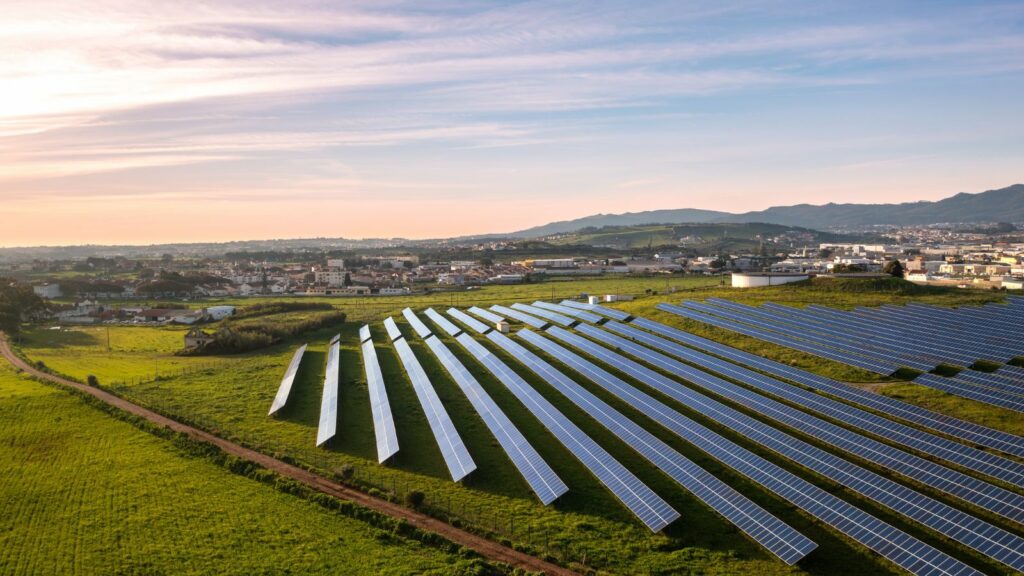
Alberta is preparing for a solar-waste problem that largely has not arrived yet. Beginning October 1, 2026, the province will launch a dedicated solar-panel recycling program, prohibit discarded panels from going to landfills and impose a $14 environmental fee on eligible new panels supplied in Alberta.
The government says acting early will prevent municipalities and taxpayers from inheriting a costly waste stream decades from now. Renewable-energy groups agree that panels should be responsibly recycled, but several are challenging the size and timing of the fee. With Alberta’s solar sector having expanded rapidly in recent years, the disagreement is becoming a broader debate over who should pay for clean-energy infrastructure at the end of its life—and how much should be collected long before that day arrives.
A $14 Fee Arrives on October 1
Alberta’s new system formally begins October 1, 2026. The Alberta Recycling Management Authority, or ARMA, will collect environmental fees from suppliers while simultaneously beginning to accept end-of-life solar panels into the recycling program. Eligible products include crystalline-silicon and thin-film panels measuring at least one square metre, covering equipment used in residential, commercial, industrial and utility-scale installations. The program grew out of a provincial solar-recycling pilot conducted between 2022 and 2025.
For homeowners, the fee is straightforward to calculate. A residential installation containing 20 eligible panels would generate $280 in environmental fees at $14 each. A 30-panel system would carry $420. The amount becomes far more noticeable on a utility project involving tens of thousands of modules. Importantly, panels already installed before the program begins will not be charged retroactively, even though the program is intended to help manage both older and newly supplied panels when they eventually need recycling.
Alberta Says a Large Waste Stream Is Coming
The province’s argument rests heavily on what happens decades from now. Alberta estimates that more than 95 per cent of the solar panels currently operating in the province will have reached the end of their useful lives by 2045. Together, those retired modules could generate as much as 72,700 tonnes of material. Solar panels generally operate for roughly 25 to 35 years, meaning infrastructure installed during Alberta’s recent solar boom will increasingly enter the waste stream during the 2040s and beyond.
The scale of Alberta’s solar market helps explain the concern. Statistics Canada reported that Alberta generated 3.5 million megawatt-hours of solar electricity in 2025, up 26.6 per cent from the previous year and the highest provincial solar generation in Canada. Microgeneration is growing as well: Alberta had about 335 megawatts of microgeneration capacity by August 2025, with solar representing more than 96 per cent. The government’s position is essentially that a disposal system should exist before those installations become waste.
The Landfill Ban Changes What Happens at End of Life
Starting October 1, retired solar panels cannot simply be sent to Alberta landfills. They will instead have to move toward reuse or recycling through approved channels. Municipal disposal guidance is already moving in that direction. Calgary, for example, tells residents that solar panels do not belong in ordinary garbage or blue recycling carts and directs people to ARMA for appropriate handling.
There is a practical reason for separating the panels from conventional waste. A photovoltaic module is a layered industrial product rather than one homogeneous material. Typical panels contain large quantities of glass and aluminum alongside silicon, copper, silver, polymers and electrical components. Some technologies can also contain substances such as cadmium. The federal government has identified the difficulty of separating those bonded materials as one of the central challenges in solar recycling. Sending an intact module to landfill may be cheaper in the short term, but doing so also buries materials that potentially have another economic use.
Industry Supports Recycling but Questions the $14 Price
The sharpest dispute is not over whether solar panels should be recycled. It is over the price Alberta has attached to doing so. The Canadian Renewable Energy Association has argued that $14 per module is significantly above what recycling should cost over the panel’s lifetime. CanREA says independent research it commissioned calculated a present-value recycling cost of roughly $5 per module after considering future cost increases and opportunities to reuse equipment before recycling it.
Alberta Environment Minister Grant Hunter has offered a very different benchmark. When questioned about the fee, Hunter said sending old panels to the United States for processing can currently cost about $40 per panel. He argued that Alberta recyclers should eventually benefit from economies of scale and that lower costs could ultimately be reflected in the program. The disagreement therefore turns partly on whether today’s relatively expensive recycling market or an anticipated lower-cost future industry provides the better basis for setting a fee collected decades in advance.
Solar Alberta Warns Small Installers Could Feel the Pressure
For a homeowner spending many thousands of dollars on a rooftop system, several hundred dollars may not determine the entire investment. Solar Alberta, however, argues that the fee is large when measured against the price of the panel itself. Executive director Heather MacKenzie has estimated that $14 can amount to roughly a 10 per cent charge on a typical module. She has warned that making installations more expensive could reduce demand and put pressure on installers and electricians whose businesses depend on a steady flow of projects.
The effect becomes much larger at utility scale. Business Renewables Canada estimates that the fee could add approximately $1 million upfront to an average Alberta solar project. The organization supports recycling requirements but says its comparison with other jurisdictions found Alberta’s charge substantially higher. That distinction is important: much of the industry criticism is not an argument for landfill disposal. Instead, companies and associations are asking whether the amount collected today reasonably matches the eventual cost that the recycling system is supposed to cover.
Existing Reclamation Rules Complicate the Debate
Solar developers in Alberta were already facing new end-of-life obligations before the recycling fee was introduced. Under provincial rules that took effect in 2025, wind and solar operations must provide financial security intended to ensure sites can be decommissioned and reclaimed even if an operator later becomes unable to perform the work. Operators can arrange qualifying security with landowners or use the government-held security system, with third-party professionals required to prepare estimates in relevant cases.
That has prompted concern about overlapping costs. CanREA argues that utility-scale project reclamation estimates can already account for dismantling, recycling and disposal, raising the possibility that developers may be funding similar liabilities through two separate mechanisms. The province views the new recycling system differently: the environmental fee supports an organized collection, transportation and recycling network for panels themselves. Untangling those responsibilities will matter particularly for large projects containing tens or hundreds of thousands of modules, where small per-panel charges quickly become major capital expenses.
Recycling a Solar Panel Is More Complicated Than Breaking Glass
At first glance, a solar panel can look like a convenient recycling product. Much of its mass consists of familiar materials such as glass and aluminum. The challenge is that the valuable components are laminated and bonded together to survive decades of rain, snow, ultraviolet light, wind and temperature swings. Recovering high-purity silicon, silver and other materials therefore requires more than simply removing the aluminum frame and crushing the remaining module.
Research from the International Energy Agency’s Photovoltaic Power Systems Programme shows the technology is improving. Mechanical processing remains a common commercial route for crystalline-silicon panels, while combinations of thermal and chemical processes can recover materials such as silicon and silver at greater purity. Researchers nevertheless describe today’s market as challenging because end-of-life volumes remain relatively small, logistics are expensive and markets for recovered material are still developing. That combination helps explain why the actual cost of recycling can vary substantially depending on technology, location, transportation distance and scale.
Reuse Could Be Just as Important as Recycling
Not every panel removed from a roof or solar farm is necessarily at the end of its functional life. Utility operators sometimes replace older modules with newer, higher-output equipment before the original panels completely stop producing power. Damaged installations can also contain a mixture of unusable panels and modules that remain functional. In those situations, testing, refurbishment and resale can potentially extend the useful life of some equipment before material recycling becomes necessary.
Alberta’s own implementation timeline recognizes that opportunity, although recycling comes first. ARMA says stakeholder work on reuse is scheduled from 2027 onward, alongside efforts to develop additional local recycling capacity. Industry groups argue that reuse standards deserve greater attention because every panel safely placed back into productive service postpones the cost and environmental impact of processing it. A mature end-of-life system therefore may need several pathways: continued use where practical, refurbishment and secondary markets where appropriate, and material recovery once a panel can no longer perform a useful role.
Alberta Wants to Build a Domestic Recycling Industry
The provincial government is presenting the program as more than a waste-management measure. It wants discarded panels to become feedstock for a circular economy in which glass, aluminum, silicon, copper, silver and other materials are recovered rather than buried. Alberta and ARMA have said they intend to work with industry on investments in local recycling capacity as volumes increase, potentially reducing dependence on long-distance transport to processors elsewhere.
Some of that industrial groundwork is already visible. Sunset Renewable Asset Management operates facilities in Brooks and Taber and has developed technology aimed at separating materials from retired solar modules. The company says its processes can recover a high share of panel materials and has worked with government, industry and academic partners on renewable-energy recycling. International research points in the same direction: IEA-PVPS says greater volumes, improved processes and markets for recovered materials will be essential for moving solar recycling from today’s relatively high-cost environment toward a more commercially sustainable industry.
The Program Will Become a Test of Whether the Fee Matches Reality
Alberta’s October rollout solves one problem immediately: solar-panel owners will have a defined end-of-life route instead of relying on landfill disposal or ad hoc recycling arrangements. The harder question will take years to answer. If local processing capacity expands and recycling becomes significantly cheaper, pressure will grow to reduce the $14 charge. If collection, transportation and material recovery remain costly, the government will have a stronger argument that collecting money early prevented future costs from falling on municipalities.
The result will be watched beyond Alberta because solar waste is not unique to the province. IRENA and IEA research has long warned that rapidly expanding photovoltaic deployment will eventually produce substantial global waste streams while simultaneously creating an opportunity to recover valuable raw materials. Alberta is choosing to build the financial and regulatory framework before most of its panels retire. Whether that approach becomes a model or a cautionary example will depend less on the landfill ban itself than on transparency, recycling performance and whether the fee ultimately tracks the real cost of the service it funds.
