Canada has entered a critical round of international diplomacy as President Donald Trump renews efforts to negotiate an end to Russia’s war in Ukraine. Foreign Affairs Minister Anita Anand joined U.S. Secretary of State Marco Rubio and other G7 counterparts in Paris on November 9 and 10, while American mediators brought Ukrainian and Russian officials together for separate negotiations in Abu Dhabi. The parallel meetings have raised hopes for renewed diplomatic progress but also exposed disagreements over Ukraine’s territory, European security and Russia’s intentions. Ottawa has welcomed the return to negotiations while reinforcing its support for Ukraine through additional sanctions against Moscow. With fighting continuing and both sides maintaining difficult negotiating positions, the discussions could shape not only Ukraine’s future but the wider security relationship between Russia and Western nations.
Canada Takes Its Place at a High-Stakes G7 Meeting
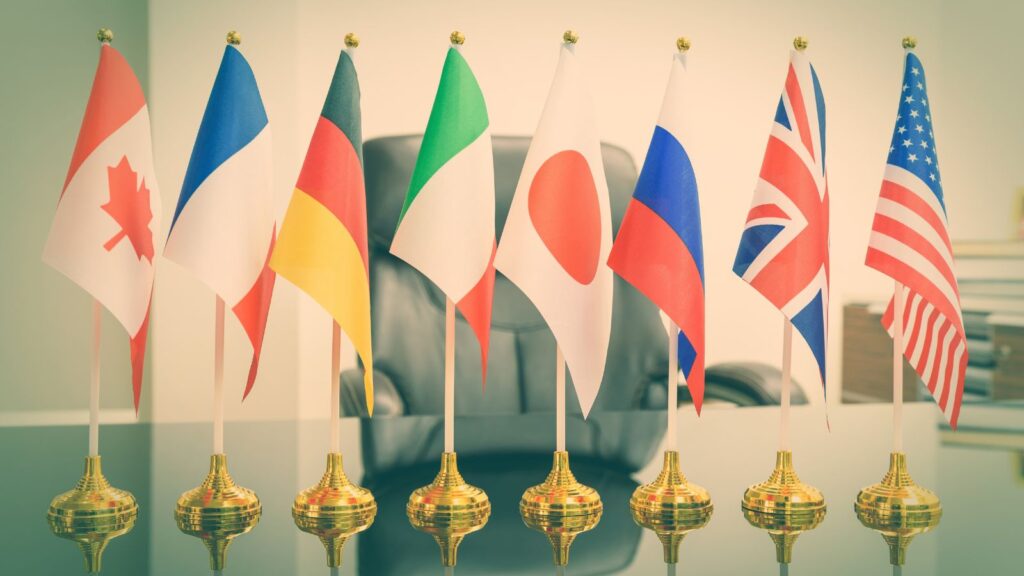
The November 9–10 gathering in Paris brought together foreign ministers from Canada, France, Germany, Italy, Japan, the United Kingdom and the United States, alongside European Union representatives. For Canada, the discussions provided an opportunity to influence Western diplomacy at a time when Washington is reopening negotiations with Moscow. Foreign Affairs Minister Anita Anand arrived with several priorities, including supporting Ukraine, responding to international security threats and strengthening cooperation among democratic allies.
Global Affairs Canada confirmed that Anand would help lead discussions concerning Russia’s war against Ukraine, alongside Haiti, artificial intelligence and hybrid security threats. The timing was particularly significant because the G7 meeting coincided with the reopening of peace negotiations in the United Arab Emirates. Canada’s involvement places Ottawa inside the broader diplomatic discussions, although it is not directly participating in the U.S.-mediated negotiations with Russia. The distinction matters as allied governments attempt to coordinate their positions before any potential agreement takes shape.
Trump Restarts Negotiations After Months of Limited Progress
President Donald Trump’s administration brought Russian and Ukrainian representatives together in Abu Dhabi on November 10 for their first U.S.-mediated trilateral negotiations since February. The two-day discussions mark the latest attempt to establish a path toward ending the war, which began with Russia’s full-scale invasion in February 2022. Previous diplomatic efforts failed to produce a lasting agreement, leaving fundamental disagreements over territory, sovereignty and military security unresolved.
American negotiators Steve Witkoff and Jared Kushner are leading Washington’s mediation efforts. Ukraine’s delegation is headed by Rustem Umerov, while Russian presidential aide Vladimir Medinsky leads Moscow’s representatives. Trump recently held discussions with Russian envoy Kirill Dmitriev and suggested a broader settlement involving European security could be possible. However, renewed contact does not mean the opposing sides have reached an understanding. Washington is facilitating negotiations between governments that remain deeply divided, and Trump’s renewed engagement with Moscow should not be confused with a finalized peace agreement or a personal negotiation between Trump and Russian President Vladimir Putin.
Canada’s Foreign Minister Welcomes Talks but Emphasizes Practical Progress
Anita Anand has expressed cautious optimism about the renewed negotiations, telling Agence France-Presse on November 9 that the willingness of Russia and Ukraine to discuss a possible settlement represented a positive development. Her comments reflected Canada’s interest in diplomatic progress without suggesting that a breakthrough was imminent. Anand also emphasized that complicated negotiations might become more manageable if specific humanitarian and infrastructure problems were addressed separately.
Among the priorities she identified were food exports through the Black Sea and protection of Ukraine’s energy infrastructure. Anand highlighted grain and fertilizer shipments that could benefit countries facing food insecurity, including nations in Africa. She also called for an agreement to stop attacks on Ukrainian energy facilities as winter approaches. These concerns demonstrate how negotiations extend beyond battlefield positions. A family living without electricity or a country dependent on imported grain can experience the consequences of the conflict thousands of kilometres from the front. For Ottawa, practical measures addressing those problems could provide meaningful early progress.
European Allies Demand a Stronger Voice in Negotiations
One of the clearest disagreements surrounding the renewed diplomatic process concerns Europe’s participation. Germany, France and other European partners have argued that any agreement affecting Ukraine’s future must involve governments responsible for much of the continent’s security. German Foreign Minister Johann Wadephul raised the issue directly with Marco Rubio in Paris, insisting that European countries cannot simply be presented with arrangements negotiated elsewhere.
European representatives were present in Abu Dhabi for consultations with Ukrainian and American officials, but Russia opposed their participation in the central trilateral negotiations. Rubio indicated that European involvement in direct talks could be constructive later, while acknowledging that considerable work remained. This creates a delicate situation for Canada and its allies. European countries provide military assistance, financial support and political backing to Ukraine, while NATO members would face many of the consequences of a wider security agreement. Excluding those governments from key decisions could complicate the implementation of any settlement, even if Washington successfully moves Moscow and Kyiv closer to an agreement.
Ukraine Insists Its Sovereignty Must Remain Non-Negotiable
Ukraine’s leadership is determined to prevent its future from being decided through arrangements made without Kyiv’s consent. Foreign Minister Andrii Sybiha travelled to Paris for the G7 discussions and met with Marco Rubio on November 10. Their talks addressed American-led peace efforts, Ukraine’s battlefield situation, energy resilience and defence cooperation. Sybiha has also emphasized that Ukraine must retain a decisive voice in negotiations affecting its independence and territory.
The Ukrainian government is pursuing diplomacy while continuing to request military assistance, particularly air-defence capabilities needed to protect cities and essential infrastructure. Discussions with Rubio also covered cooperation on drone production and restoring freedom of navigation in the Black Sea. Meanwhile, Ukraine’s representatives in Abu Dhabi coordinated their positions with European and NATO officials before entering the trilateral negotiations. This approach reflects a central concern in Kyiv: peace must provide security that lasts beyond the immediate end of fighting. A temporary reduction in military activity would offer limited reassurance if Ukraine remained vulnerable to another invasion or lost control over decisions affecting its national defence.
Territorial Disputes Remain the Greatest Obstacle
Despite renewed optimism from Washington, Russia and Ukraine remain divided over the territory Moscow occupies and claims as its own. Russian President Vladimir Putin continues to demand Ukrainian concessions, including withdrawal from territory in eastern Ukraine. Moscow also claims Donetsk, Luhansk, Zaporizhzhia and Kherson, four Ukrainian regions it declared annexed in September 2022 despite not fully controlling them. Kyiv rejects the legitimacy of those annexations and has resisted proposals requiring it to surrender additional territory.
American officials have suggested privately that compromises might eventually become possible, but Ukrainian representatives have disputed suggestions that Kyiv is prepared to accept territorial concessions. The disagreement is especially difficult because territorial negotiations involve communities, homes, industrial facilities and national identity, not simply lines on a map. The Donbas region, for example, contains communities that have endured years of fighting and displacement. Any decision regarding its future would carry lasting consequences for residents and the Ukrainian government. Without an acceptable arrangement on territory, even progress on other negotiating issues may not produce a comprehensive settlement.
Trump’s Wider Security Proposal Raises Questions Across Europe
The Trump administration has suggested that negotiations could eventually produce a broader security framework involving Russia and European countries. Washington’s proposal goes beyond ending the current fighting by exploring measures intended to reduce future military tensions. Jared Kushner has discussed ideas involving regular security consultations, crisis communications and greater military transparency. American officials have also raised the possibility of offering Ukraine security guarantees resembling NATO’s collective-defence protections.
However, no final framework has been agreed upon. Rubio acknowledged that Ukraine would need credible assurances against renewed aggression, while suggesting that the arrangements would also have to be acceptable to Russia. European officials remain cautious because Moscow has previously sought restrictions on NATO’s activities and influence in Eastern Europe. Germany has argued that existing European security principles should be upheld rather than replaced. For Canada, a NATO member, the distinction is consequential. Negotiations that change regional military arrangements could affect allied defence planning and the security commitments that Canadian forces help maintain across Europe.
Russian Attacks Continue as Peace Negotiations Resume
The diplomatic meetings have unfolded against a backdrop of continued Russian attacks on Ukrainian infrastructure. On November 10, Reuters reported that Russian forces struck 10 Ukrainian regions overnight, targeting five major electrical substations and causing widespread power outages. Ukrainian officials reported two deaths in the Vinnytsia region, while electricity disruptions affected communities in several parts of the country. The attacks underscored the difficulty of negotiating a ceasefire while military operations continue.
The humanitarian consequences have become increasingly severe. According to the United Nations Human Rights Monitoring Mission in Ukraine, at least 328 civilians were killed and another 2,105 injured during September 2026 alone. Those figures represented a substantial increase from the same month a year earlier. With winter approaching, damage to electricity and heating infrastructure threatens to create additional hardship for households already living through years of conflict. For negotiators in Paris and Abu Dhabi, these conditions create urgency while raising difficult questions about whether Moscow is prepared to reduce military pressure during diplomatic discussions.
Ottawa Announces New Sanctions Targeting Russia’s Military Capabilities
Canada used the G7 gathering to announce additional economic measures against Russia. On November 9, Anita Anand confirmed sanctions targeting 38 entities and 24 individuals under Canada’s Special Economic Measures regulations. The restrictions focus on Russia’s defence industry, including organizations and individuals involved in ballistic missile technology and cyber activities. Financial networks supporting Moscow’s war effort, including certain cryptocurrency exchanges, were also targeted.
The announcement reinforces Ottawa’s position that diplomatic engagement should not mean removing economic pressure before an acceptable settlement is reached. Canadian officials argue that disrupting Russia’s ability to manufacture weapons and access financial resources could make its continued aggression more costly. According to Global Affairs Canada, the country has imposed sanctions on more than 3,500 individuals and entities and over 700 vessels since 2014 in connection with Russia’s violations of Ukrainian sovereignty and related abuses. The latest measures show how Canada is attempting to support negotiations while maintaining pressure on the Russian government. Their effectiveness will depend partly on enforcement and international coordination.
Canada’s Financial and Military Support Gives Ottawa a Long-Term Stake
Canada’s participation in the G7 discussions reflects years of substantial assistance to Ukraine. Government figures show that Ottawa has committed more than $25.5 billion in economic, military, humanitarian, development and other assistance since 2022. That total includes over $8.5 billion in military assistance, alongside financial support designed to help Ukraine maintain public services and sustain its economy. Canadian contributions have also supported humanitarian relief and reconstruction projects.
Military training represents another important element of the relationship. Through Operation UNIFIER, Canadian Armed Forces personnel have trained more than 47,000 Ukrainian security personnel since 2015, according to Global Affairs Canada. The mission was extended to 2029, reflecting the expectation that Ukraine will require defence assistance regardless of how the current negotiations develop. Canada and Ukraine also signed a declaration in September 2026 outlining plans for a century-long strategic partnership. Together, these commitments give Ottawa a significant interest in ensuring any peace arrangement supports Ukraine’s long-term independence, economic recovery and ability to defend itself.
Canada’s NATO Presence Makes European Security a Direct National Concern
The debate over Europe’s future security arrangements also carries practical implications for Canadian military personnel. Canada leads NATO’s Multinational Brigade in Latvia, where approximately 2,000 Canadian Armed Forces members serve under Operation REASSURANCE. The mission is part of NATO’s efforts to deter aggression and defend allied territory along the alliance’s eastern flank. It includes cooperation with personnel from numerous NATO countries and involves land, maritime and air operations.
In July 2026, Prime Minister Mark Carney announced that Canada would expand its leadership responsibilities by joining Latvia and Denmark as a framework nation for Multinational Division North. Ottawa also extended Operation REASSURANCE through 2031, reinforcing its long-term commitment to European defence. These responsibilities help explain why negotiations involving Russia and NATO’s future cannot be treated as distant diplomatic matters for Canada. Any agreement that alters military deployments, alliance relationships or regional security arrangements could have consequences for Canada’s own defence planning. Ottawa therefore has an interest in ensuring European allies participate in decisions that could reshape the security environment in which Canadian forces operate.
Humanitarian Agreements Could Offer the First Signs of Progress
Although territorial disputes and security guarantees remain difficult, negotiators have identified several areas where more limited agreements might be possible. Ukraine has prioritized prisoner exchanges, the return of Ukrainian children, protection of energy infrastructure and safer navigation in the Black Sea. Such measures would not resolve the war, but they could improve conditions for civilians and provide evidence that negotiations are capable of producing practical results.
The first day of talks in Abu Dhabi concluded on November 10, with discussions scheduled to resume on November 11. Ukrainian officials had not announced a comprehensive settlement or ceasefire following the initial session. That leaves the central questions unresolved: whether Russia is prepared to compromise, whether Ukraine can obtain reliable security guarantees and whether European governments will have sufficient influence over the outcome. For Canada, the immediate challenge is balancing encouragement for diplomacy with continued support for Ukraine’s sovereignty and defence. The renewed negotiations represent an important opening after months of limited progress, but their significance will ultimately be measured by concrete agreements and whether those commitments can be maintained on the ground.
