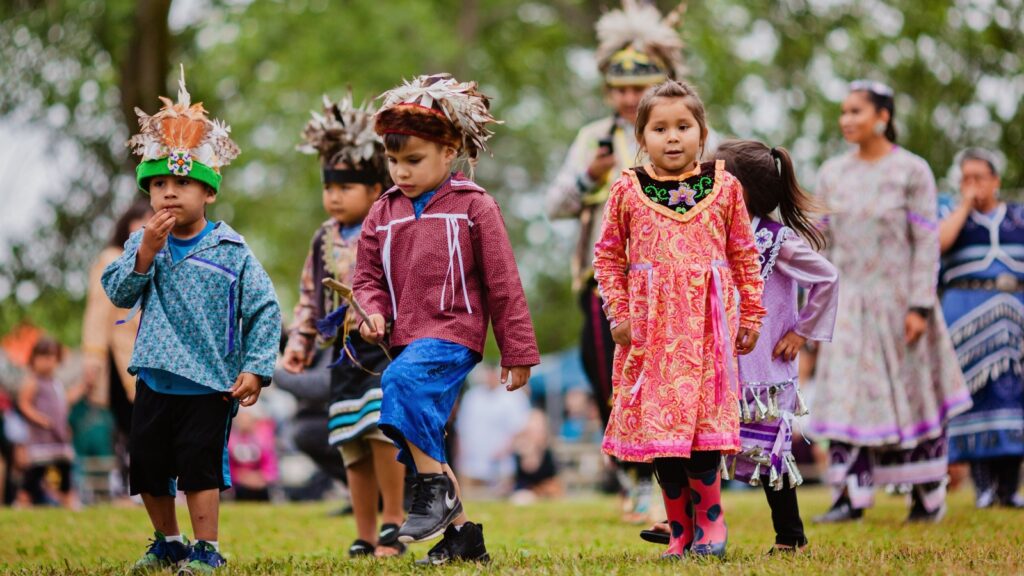
Canada’s efforts to preserve Indigenous languages are entering a critical period as newly appointed commissioner Dorothy Myo inherits an organization facing questions about spending, workplace culture, and accountability. The controversy centres on allegations of excessive travel, unresolved employee complaints, and approximately $10 million spent over two years organizing and hosting a major Indigenous languages conference in Ottawa.
Appointed in November 2026, Myo must restore public confidence while addressing a much larger challenge: the continued decline of Indigenous-language speakers across Canada. With a federal financial examination underway and communities seeking stronger support for language revitalization, her leadership represents an opportunity to rebuild an institution created to protect an essential part of Canada’s cultural heritage.
A New Commissioner Takes Over at a Difficult Moment
Dorothy Myo officially began her five-year term as Canada’s commissioner of Indigenous languages on November 12, 2026. Her appointment followed consultations with Indigenous governments and organizations and ended several months of transitional leadership. Former commissioner Ronald Ignace’s term expired in July, after which Candice St-Aubin served as interim commissioner. The transition comes at a particularly sensitive time, with the office facing financial scrutiny and its three director positions still awaiting permanent appointments as of late November.
Myo brings extensive experience in Indigenous language preservation, cultural research, and community leadership. Raised in Saulteaux First Nation in Saskatchewan, she speaks Saulteaux, Cree, and English. Her professional background includes leading the Saskatchewan Indian Cultural Centre and holding senior policy and research responsibilities with the Métis Nation–Saskatchewan. Those experiences connect her directly to communities affected by language loss. However, her appointment also carries significant expectations. Beyond advocating for Indigenous languages, she must demonstrate that the national office can manage public resources responsibly, maintain a respectful workplace, and deliver meaningful results.
Why Language Preservation Is Deeply Personal for Dorothy Myo
For Myo, protecting Indigenous languages is more than a government responsibility. It reflects her childhood experiences growing up in a home where Cree and Saulteaux were spoken regularly. When she entered an English-speaking school at five years old, she struggled to distinguish between English expressions such as “farm” and “barn.” Her parents did not speak English, making the language of the classroom unfamiliar. Those early experiences shaped her understanding of how language connects families, communities, and cultural identity. She has also spent decades documenting oral histories, researching treaties, and preserving Indigenous knowledge.
Her background contrasts sharply with the experiences of younger generations who have not always grown up hearing their ancestral languages at home. Canada’s residential school system contributed to that disconnect by suppressing Indigenous languages and separating children from their families and cultures. Today, many survivors and their descendants are working to recover what earlier generations were prevented from passing down. Myo’s personal connection to this history gives her a distinctive perspective, but meaningful progress will depend on whether communities experience practical improvements in language education and preservation.
The Office Was Created to Advance Truth and Reconciliation
The Office of the Commissioner of Indigenous Languages was established following the passage of Canada’s Indigenous Languages Act in 2019 and became operational in 2021. Its creation responded to recommendations from the Truth and Reconciliation Commission, particularly Call to Action 15, which called for an Indigenous languages commissioner. The office was designed to operate independently from the federal government while promoting language revitalization, supporting Indigenous-led initiatives, and reporting on whether government funding is adequate. Its leadership structure includes a commissioner and up to three directors representing First Nations, Inuit, and Métis interests.
The office’s responsibilities go beyond raising awareness. Under the legislation, it can support research, encourage innovative approaches to language education, and help resolve certain disputes involving language programs and funding. However, it is not designed to function as a general grant-distribution agency for community language programs. That distinction is important when evaluating its performance. The commission’s effectiveness should be assessed through its research, advocacy, partnerships, and other responsibilities rather than solely through the amount of direct funding reaching classrooms. Its founding purpose also creates a particular obligation to ensure Indigenous communities remain central to decisions affecting their languages.
Federal Auditors Examine Allegations of Financial Mismanagement
Concerns about the commission’s operations reached the Department of Canadian Heritage in 2025, when former employees raised allegations involving financial decisions, contracting practices, and workplace conditions. The department subsequently commissioned an independent third-party examination under the Indigenous Languages Act, with an auditing firm reportedly contracted in January 2026. The review is intended to examine whether the office’s financial records, management systems, and operational practices meet the standards established by legislation. Canadian Heritage officials confirmed the special examination during a House of Commons public accounts committee meeting on June 1.
The examination represents an important test of the organization’s accountability, but the allegations must be distinguished from established findings. A formal review does not automatically mean wrongdoing occurred, and the publicly available reporting reviewed through November 28 did not establish a final determination of financial misconduct. The department has indicated that the examination is separate from the regular financial reporting expected of the organization. For Myo, the challenge is ensuring that any weaknesses identified lead to meaningful improvements. Clear findings, documented corrective actions, and public explanations will be essential to restoring confidence in how the office operates.
The $10 Million Conference at the Centre of the Controversy
One of the most significant concerns involves WAVES 2025, a Global Indigenous Languages Summit held in Ottawa from August 11 to 14, 2025. According to the commission’s annual report, the four-day gathering attracted more than 2,000 participants from approximately 20 countries and featured 195 presenters. Its programming included workshops, cultural performances, international discussions, and activities designed for Indigenous youth. The commission subsequently acknowledged spending approximately $10 million over two years to organize and deliver the event, meaning the figure includes planning and preparation rather than only four days of on-site activities.
Questions about the conference’s financial scale emerged well before it took place. Internal documents obtained by The Canadian Press showed that an April 2024 memorandum warned against an initial budget estimate of $8.9 million. Senior officials recommended reducing costs and reconsidering the event’s scope because the projected expenditure approached the organization’s annual operating budget. Later recordings also revealed concerns about possible pressure on salaries and office expenses. The commission said it considered the recommendations but did not specify which were implemented. The controversy has consequently raised questions about financial oversight and how the event’s long-term benefits should be evaluated.
Financial Statements Reveal a Significant Increase in Event Spending
The commission’s published financial statements provide additional context for the spending controversy. For the fiscal year ending March 31, 2026, the organization reported approximately $21.71 million in total expenses, compared with $12.13 million the previous year. Spending categorized as events and gatherings increased from approximately $2.04 million to $12.46 million. Travel expenses reached about $814,000, while consulting expenses totalled approximately $4.29 million. These figures cover the organization’s financial year and should not be confused with the reported cost of the WAVES conference alone.
The statements were audited by accounting firm Welch LLP, which concluded that they fairly presented the organization’s financial position in all material respects under applicable accounting standards. That opinion is an important distinction from the separate federal special examination. A standard financial audit does not necessarily answer whether particular spending decisions represented good value, whether procurement practices were appropriate, or whether projects achieved their intended outcomes. With approximately 97% of the office’s reported revenue tied to federal government funding, those questions carry substantial public importance.
Former Employees Describe Workplace and Governance Problems
The spending controversy is only one part of the challenges confronting the commission. Six sources, including former employees interviewed by The Canadian Press, alleged that the office had developed a difficult working environment involving bullying, micromanagement, and unfinished projects. Documents and recordings obtained by the news agency indicated that concerns about human resources procedures had repeatedly been brought to the attention of former commissioner Ronald Ignace and other senior officials. Some individuals spoke anonymously because they feared professional repercussions, adding another dimension to questions about accountability inside the organization.
The commission has disputed aspects of these accusations. In a statement earlier in 2026, it acknowledged receiving three formal bullying complaints, which it said were investigated in 2025. The organization reported making personnel changes and receiving no additional formal complaints at that time. It also defended its approach to working with specialized contractors, explaining that professional networks in Indigenous language preservation can be closely interconnected because expertise is limited. Ignace acknowledged that building the institution presented challenges while maintaining that it established an important foundation. For Myo, rebuilding internal confidence means ensuring employees can raise concerns safely and that contracting and personnel decisions are handled consistently and transparently.
Indigenous Language Advocates Question the Conference’s Value
The conference’s cost has prompted debate among Indigenous language advocates about whether major gatherings are the most effective way to support revitalization. Patricia Ningewance, an Ojibwe speaker and associate professor of Indigenous studies at the University of Manitoba, attended the summit but questioned its practical benefits. She suggested that bringing together speakers of related languages might have produced more focused discussions and specific preservation strategies. Ningewance also expressed frustration about the lack of follow-up information on what the gathering accomplished, raising concerns about how its impact would be measured.
David Chartrand, president of the Manitoba Métis Federation, also criticized the commission’s approach to relationship-building. He said the federation had not been adequately consulted about which Michif speakers and Elders should attend and had paid to send its own representatives. However, Chartrand continued to support the existence of a national Indigenous languages office, emphasizing the need for inclusion. The commission, meanwhile, has highlighted the summit’s international participation, more than 65 collaboration sessions, and youth programming as achievements. The disagreement illustrates an important distinction between successfully organizing a major event and demonstrating measurable, lasting benefits for communities.
Indigenous Languages Are Declining Despite Growing Revitalization Efforts
The urgency of the commission’s mandate becomes clear in Statistics Canada’s language data. According to the 2021 Census, approximately 237,420 Indigenous people could speak an Indigenous language well enough to hold a conversation, representing 13.1% of the Indigenous population. That was a 4.3% decline from 2016. The number of Indigenous people reporting an Indigenous mother tongue also declined, falling by approximately 14,120 to 184,170. Some languages have particularly small populations of speakers, making intergenerational transmission increasingly important as fluent Elders grow older.
There are encouraging developments alongside these challenges. Statistics Canada reported that 66,880 Indigenous people had learned an Indigenous language as a second language in 2021, an increase of approximately 6% from 2016. Languages including Blackfoot and Mi’kmaq have also experienced growth in conversational speakers. More recent research published in June 2026 examined people who understand their ancestral language but no longer speak it fluently, highlighting another important group for revitalization. These findings suggest that language recovery is possible, but success requires sustained opportunities to learn and use languages in everyday settings. For the commissioner, tracking new speakers and community outcomes will be essential.
Myo Promises Stronger Financial Controls and Greater Transparency
Myo has identified rebuilding trust and strengthening internal governance as immediate priorities. In a November 28 interview with The Canadian Press, she said the commission had completed an external review of its human resources and procurement policies. According to Myo, new purchasing procedures include conflict-of-interest disclosures, while a code of ethics is intended to provide clearer standards for financial decision-making. These measures address some of the issues raised by former employees, although their effectiveness will depend on consistent implementation and independent oversight.
The organization is also participating in a broader review of the Indigenous Languages Act. That legislated five-year review is separate from the special financial examination and provides an opportunity to assess whether the commission’s structure and responsibilities require changes. Federal reporting indicates that some Indigenous partners want stronger legislative protections and clearer commitments for Indigenous languages. Myo has emphasized that rebuilding confidence cannot be accomplished solely through administrative reforms in Ottawa. She intends to engage First Nations, Inuit, and Métis communities directly about their priorities. The challenge will be turning those conversations into transparent decisions, measurable commitments, and improvements that communities can recognize.
Teacher Training and Immersion Could Become Central Priorities
Myo wants the commission to place greater emphasis on developing fluent speakers through teacher training, language immersion, and educational resources. The need is substantial. A commission-led research initiative examining Indigenous language teacher education identified just 25 programs across Canada primarily focused on teacher training. Of those, only 11 provided pathways for graduates to apply for provincial or territorial teacher certification, while just four were designed for proficient language speakers. The commission’s Fluency and Immersion Teacher Education Roadmap, released in March 2026, calls for stronger training, certification, and professional support for educators.
Some governments and educational institutions are already pursuing these objectives. Manitoba announced more than $4.5 million in October 2025 for Indigenous language degree programs at the University of Winnipeg and University College of the North. In June 2026, the Ontario College of Teachers also approved work toward a proposed community-endorsed certification pathway for Indigenous language teachers, although regulations were still required before implementation. These initiatives illustrate the kinds of practical opportunities Myo hopes to support. Her challenge is helping communities and educational partners overcome barriers without duplicating work that is already underway.
International Examples Offer Lessons, but Rebuilding Trust Starts at Home
Myo is also examining language revitalization efforts in Hawaiʻi and New Zealand. Hawaiʻi’s Indigenous language movement has developed immersion education through organizations such as ʻAha Pūnana Leo, which began its grassroots revitalization work in 1983. In New Zealand, Māori-language education includes kōhanga reo early childhood programs and Māori-medium schooling designed to strengthen language proficiency across generations. These initiatives demonstrate the importance of making Indigenous languages part of everyday education rather than limiting opportunities to occasional classes or cultural events. However, approaches must be adapted to Canada’s diverse First Nations, Inuit, and Métis communities.
Myo has also argued that stronger legislative recognition and resources are needed because Indigenous languages do not receive the same protections as English and French. The coming years will determine whether her office can translate these priorities into progress. Financial transparency, trustworthy workplace practices, meaningful community partnerships, and improved access to language education will all matter. Ultimately, rebuilding confidence requires more than resolving past controversies. For families hoping their children and grandchildren will speak the languages of their ancestors, the most important measure of success will be whether those languages become stronger, more accessible, and more widely spoken.
