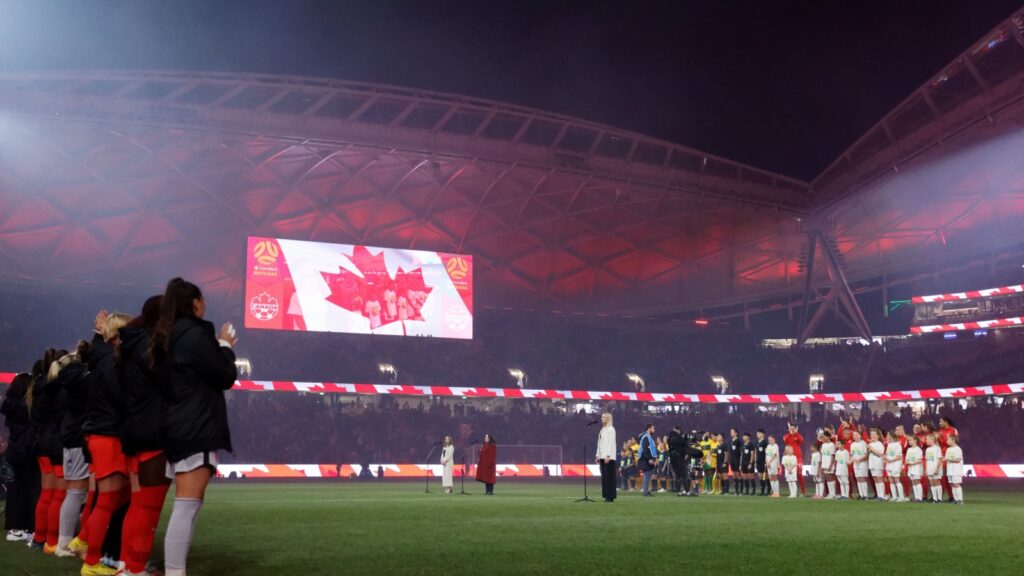
Canada’s brief turn at the centre of world soccer ended in dramatic fashion at BC Place, where Vancouver’s final match required penalties to determine a winner. The stadium lights have since dimmed, temporary infrastructure is being removed and the tournament has shifted entirely to the United States. What remains is a much harder contest to settle: whether the experience justified its public cost.
The Parliamentary Budget Officer estimated that Canadian governments would spend approximately $1.066 billion to stage 13 matches in Toronto and Vancouver. That works out to roughly $82 million per game. Yet the figure is not a final invoice. Several budgets contained estimates, contingencies and projected revenues, meaning Canadians may not know the true financial outcome until governments complete their post-tournament accounting.
The $1.07-Billion Figure Is Still Only an Estimate
The Parliamentary Budget Officer’s calculation offers the clearest national snapshot available. It estimated federal support at approximately $473 million, with provincial, municipal and other levels of government responsible for another $593 million. Toronto hosted six matches, while Vancouver staged seven, including Canada’s group-stage appearances and two knockout games. The final Canadian-hosted match took place in Vancouver on July 7, when Switzerland defeated Colombia in a penalty shootout.
However, the PBO’s calculation was based largely on budgets and commitments available before the tournament was completed. Its analysis assumed that Toronto and British Columbia’s previously announced hosting totals would not increase. The office also warned that updated municipal and provincial spending plans could change the numbers. At the time of its review, only $96 million of the planned federal spending had been recorded as spent by January 2026. Outstanding invoices, contract adjustments and final security costs could therefore move the total in either direction.
Ottawa’s Commitment Expanded as the Tournament Approached
Federal involvement began modestly, with a $3.6-million grant to Canada Soccer during the early preparation period. Ottawa later committed up to $220 million directly to the Canadian host cities, divided between approximately $104 million for Toronto and $116 million for British Columbia. Budget 2025 then provided another $100 million for federal departments and agencies involved in delivering the event.
Security added another substantial layer. The federal government announced up to $145 million for provincial and municipal security operations, including $100 million for British Columbia and $45 million for Toronto. The PBO also identified planned spending by federal agencies, including approximately $79 million for the RCMP, $6.4 million for immigration services and $4.3 million for border operations. Those expenses reflect how hosting involved far more than opening stadium gates. Governments had to manage visas, border traffic, protected visitors, emergency planning, commercial-rights enforcement and security operations across crowded downtown areas.
Toronto’s Six-Match Plan Reached $380 Million
Toronto entered the tournament with a $380-million direct hosting budget. Approximately $226.4 million was allocated to operating expenses, while nearly $153.6 million was categorized as capital spending. That was considerably higher than the $300-million estimate presented to city council in 2022, before officials had confirmed the final number of matches and fully defined FIFA’s operational requirements.
The most visible investment was the transformation of BMO Field into the temporarily renamed Toronto Stadium. The work cost approximately $157.9 million, with the city providing $132.9 million and Maple Leaf Sports & Entertainment contributing $25 million. Improvements included expanded seating, new broadcast infrastructure, videoboards and upgraded player facilities. The $380-million figure does not necessarily capture every public resource connected to the event. Toronto’s budget documents separately identified supporting projects, accelerated infrastructure work and existing staff resources that were redirected toward tournament preparation without being recorded as additional World Cup spending.
Vancouver’s Financial Picture Became More Complicated
Vancouver’s final pre-tournament projections showed why a single headline number can obscure the way major-event budgets are assembled. The city estimated that core hosting and event costs would fall between $320 million and $338 million. Services delivered by other public organizations, including transportation, ambulance and health agencies, were expected to add another $67 million to $74 million.
Combined provincial and municipal security expenses were estimated at approximately $242 million, partly offset by Ottawa’s $100-million security contribution. Vancouver also expected significant revenues to reduce the public burden. A temporary accommodation tax was projected to generate between $250 million and $260 million, while sponsorships, facility rentals, festival income and other sources were expected to provide an additional $43 million to $53 million. British Columbia said its projected net provincial cost had declined, with the upper estimate falling from $145 million to $114 million. Even so, officials acknowledged that final expenses could be affected by factors outside the city’s control.
Governments Promised an Economic Return Beyond the Stadiums
Supporters have argued that comparing hosting costs only with ticket revenue misses the broader economic value. The federal government projected that the World Cup would add approximately $2 billion to the Canadian economy, attract more than one million visitors and support thousands of jobs. Those benefits were expected to extend into hotels, restaurants, transportation, construction and tourism promotion.
Regional forecasts were similarly ambitious. An assessment prepared by Deloitte Canada projected that the tournament could generate up to $940 million in economic output for the Greater Toronto Area, including $520 million in GDP, $340 million in labour income and $25 million in government revenue. British Columbia projected approximately $1 billion in provincial GDP and more than $200 million in tax revenue during the tournament and the five years afterward. Those figures are forecasts rather than profits. Economic output includes activity that flows to workers and private businesses, while only a fraction returns directly to governments to offset their spending.
Toronto’s Early Spending Data Told a Mixed Story
The first available Toronto data suggested that visitors did spend more, although the increase was uneven. Moneris transactions during the tournament’s first two weeks showed hotel spending rising 18 per cent from the same period a year earlier. Grocery spending increased six per cent, while restaurants and bars recorded a more modest three-per-cent gain. Apparel spending declined five per cent.
Foreign-issued cards provided a brighter picture, with international spending at Toronto restaurants and bars rising 34 per cent. Still, hotel occupancy reportedly declined during the opening portion of the tournament, suggesting some regular tourists or business travellers may have avoided the city. The public-transit impact was clearer: ridership increased between 40 and 47 per cent on five streetcar routes serving the stadium and fan festival. Toronto officials said a complete revenue assessment would be released after the tournament, making these figures an early indicator rather than the final verdict on the promised economic windfall.
Residents Remained Skeptical Despite the Celebration
The atmosphere surrounding the matches was difficult to measure in dollars. Toronto supporters described crowded watch parties, conversations with visiting fans and a sense of community that stretched well beyond the stadium. Vancouver hosted Canada’s emphatic victory over Qatar and later watched the national team reach unfamiliar territory in the knockout rounds. The final Canadian-hosted game ended with Switzerland advancing over Colombia after a tense shootout.
Public enthusiasm did not eliminate concern over the cost. An Angus Reid Institute survey conducted shortly before kickoff found that 70 per cent of Greater Toronto respondents and 72 per cent of Metro Vancouver respondents believed hosting was not worth the public expense. More than two-thirds also felt the event created too much disruption. The survey captured opinion before residents experienced the full tournament, but it revealed how difficult it would be for governments to declare success using atmosphere alone. Many residents wanted transparent evidence showing where the money went and what their communities received in return.
The Real Legacy Test Starts After the Final Whistle
Canada will retain several physical improvements. Toronto Stadium now has upgraded broadcast, hospitality and player facilities, while Centennial Park gained a regulation-sized training pitch and supporting infrastructure. Vancouver points to improvements at BC Place, Killarney Park and the city’s ability to coordinate transportation, security and emergency services during a global event. Community pitches, youth programming and increased interest in soccer could also produce benefits that take years to measure.
History nevertheless gives residents reason to demand careful accounting. Academic research covering 43 Olympic Games and men’s World Cups found that average event costs exceeded direct revenues, producing an average return on investment of negative 38 per cent. The PBO noted that Canada’s estimated per-game spending was broadly comparable with earlier World Cups, but being typical does not automatically make it good value. The final judgment will depend on audited costs, actual tax revenues, tourism changes, long-term facility use and whether governments clearly disclose expenses that fell outside their headline budgets.
