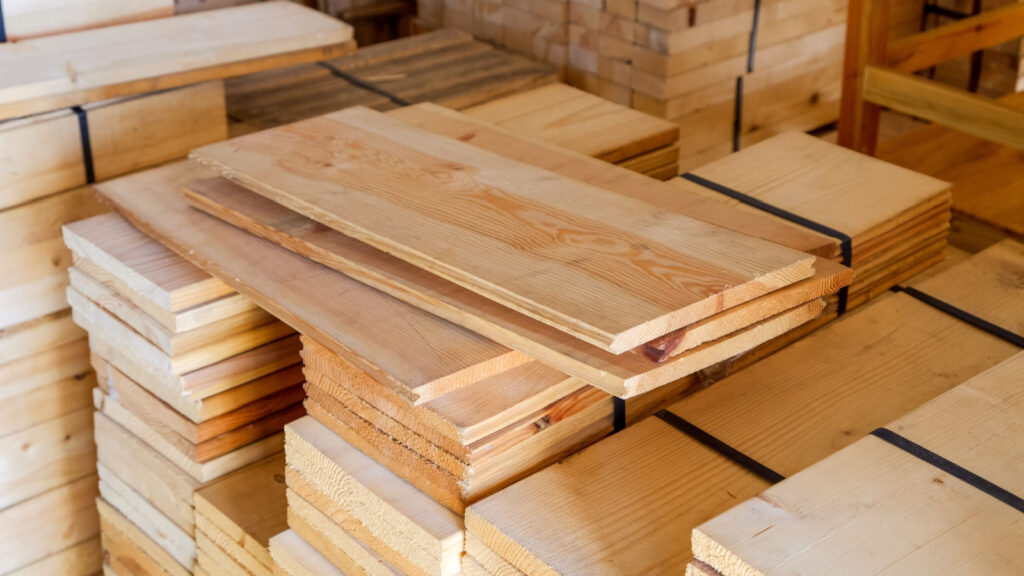
A board of framing lumber may cross the Canada–U.S. border long before its cost is reflected in an American family’s housing budget. That connection is at the heart of a renewed appeal by Canadian building-supply leaders to lawmakers in Washington. In an advocacy bulletin issued October 12, Supply-Build Canada described meetings with congressional offices aimed at showing how duties designed to protect American mills can also raise costs for U.S. builders and homebuyers.
The message comes amid stalled trade talks, strains on Canadian sawmills and a U.S. housing market already struggling with affordability. But it faces a powerful counterargument: American lumber producers say the duties protect domestic jobs from unfairly subsidized competition. Both sides are fighting over the same material, and the stakes extend from forest communities to the price of a new home.
A Canadian Delegation Takes the Housing Argument to Capitol Hill
On September 29 and 30, representatives of Supply-Build Canada traveled to Washington for what the organization described as its fifth U.S. advocacy trip. Rather than focus exclusively on losses suffered by Canadian exporters, the delegation framed its case around American housing affordability. Its October 12 account lists meetings with House and Senate offices, along with staff at the Canadian Embassy. The offices included those of California Democrat Nanette Barragán, Michigan Republican Bill Huizenga, Virginia Senator Mark Warner and Arizona Senator Ruben Gallego. The list identifies congressional offices, not confirmed personal meetings with each lawmaker.
The group brought voices from both sides of the supply chain. Supply-Build Canada president Liz Kovach was joined by representatives of Canadian forestry organizations and companies, while Matt Delaney of the U.S.-based National Lumber and Building Material Dealers Association also participated. That American presence mattered: dealers selling boards to builders have their own reasons to worry about unstable prices and supply. The trip was lobbying, not formal bilateral negotiation, but it placed an everyday American concern at the center of a longstanding Canadian trade grievance.
Lawmakers Show Interest, but No Trade Breakthrough Is Announced
According to Supply-Build Canada’s account, congressional offices from both parties responded positively to its affordability message. The association reported that some staff were unfamiliar with the differences between Canadian and U.S. framing lumber and wanted to see an economic-impact study on tariffs. Representatives from border states, it said, emphasized the value of the broader trade relationship. Those are encouraging signals for the delegation, although they are the organization’s characterization of the meetings, not independently recorded commitments by lawmakers to change trade policy.
The housing concern is not confined to Canadian voices. In September, five Democratic U.S. senators warned publicly that tariffs on Canadian lumber, plywood and construction equipment would raise the cost of building homes. American building-material dealers have also pushed for predictable access to Canadian supplies. Yet listening sympathetically in a congressional office is easier than persuading an administration to repeal a tariff. With the 2026 midterm elections approaching, housing affordability gives the industry a politically resonant argument; whether that attention produces legislation or a negotiated settlement remains unresolved.
The Tariff Bill Is Large, but It Is Not One Universal Rate
The headline figure in Supply-Build Canada’s appeal is 45.16%. It reflects a 35.16% combined U.S. anti-dumping and countervailing duty rate for the broad “all others” category of Canadian softwood lumber exporters, plus a separate 10% Section 232 tariff on covered lumber. The additional tariff took effect in October 2025. Anti-dumping duties address sales deemed unfairly low-priced; countervailing duties respond to government subsidies. Section 232 measures have a different legal basis: national security. Those overlapping charges help explain why an ordinary shipment can face a heavy cost before reaching an American lumberyard.
There are important limits to the arithmetic. Individual companies face different duty rates, some products or regions have special treatment, and not every tariff is stacked on every wood product. A seventh U.S. administrative review in 2026 proposed lower duties for several exporters, but Canada’s published guidance distinguished preliminary findings from effective final rates. Separately, the 50% Section 338 measures on selected Canadian goods cover certain wood products without generally piling onto softwood lumber already subject to Section 232. Treating every Canadian board as subject to a single 50%, or even 95%, charge would misrepresent the rules.
American Homebuyers Can End Up Sharing the Cost
A tariff is collected at the border from an importer, not directly at a Canadian sawmill or an American closing table. But businesses must decide what to do with the extra expense. An importer may negotiate a lower purchase price, a dealer may accept a thinner margin, or a builder may pass higher material costs into the price of a house. Often those responses overlap. For a family hoping to buy a first home, even a modest addition to the construction budget can matter when financing, land and labor are already expensive.
The National Association of Home Builders reported that its April 2025 survey put the typical estimated effect of recent tariff actions at $10,900 per home. That figure covered tariffs broadly; it was not an estimate of Canadian lumber duties alone. The group has also said more than 60% of surveyed builders experienced tariff-related cost increases. Separate New York Federal Reserve research on consumer goods found that tariff costs can reach shoppers indirectly and over time. The study was not specific to housing, but it helps explain why a levy on imported materials need not stay confined to the company paying it.
Canadian Lumber Remains a Significant Part of U.S. Supply
The United States has its own substantial forest-products industry, yet imported softwood remains important to its building market. The National Association of Home Builders estimates that Canada supplies roughly 85% of American softwood lumber imports and accounts for almost one-quarter of total U.S. supply. Those numbers explain why Canadian producers stress that the dispute affects more than foreign exporters. A change in the cost or availability of Canadian boards can influence inventory decisions at American wholesalers, building-supply stores and construction sites far from the border.
The market is already sensitive to uncertainty. The U.S. Census Bureau estimated August 2026 housing starts at a seasonally adjusted annual rate of 1.275 million units, including 918,000 single-family homes. Those figures illustrate the scale of the construction industry, not proof that tariffs caused any particular change in homebuilding. Domestic output can expand, and builders can sometimes switch suppliers, but new sawmill capacity and reliable distribution cannot be created overnight. For the contractor trying to schedule framing crews, a predictable delivery may be as valuable as a slightly lower posted price.
The Difference Between Two Kinds of Framing Wood Matters
One of the delegation’s most technical points may also be among its most practical. Canadian spruce-pine-fir, commonly called SPF, is widely used for framing, while Southern Yellow Pine is an important U.S.-produced alternative. These are not simply interchangeable labels on identical products. Different characteristics and grading rules can affect which material is specified for a floor, wall or roof assembly. In a submission to the U.S. trade representative, the American lumber-dealers association emphasized Canadian SPF’s strength-to-weight properties and the difficulty of substituting other species without addressing grading requirements.
Supply-Build Canada said some congressional offices had not appreciated these differences. Its argument is not that American wood is incapable of building American homes, but that a supply chain organized around particular grades and specifications cannot always change course instantly. Picture a framing crew arriving with plans and material orders prepared around one grade of lumber. Changing the species may require checking engineering assumptions, local code requirements and supplier availability before work can continue. Those practical constraints are part of the delegation’s case that access to Canadian boards serves American builders, too.
The Squeeze Extends Beyond Ordinary Two-by-Fours
The dispute also reaches other materials that help turn a frame into a finished home. In August, the National Association of Home Builders reported that new 50% U.S. tariffs on specified Canadian products included plywood and certain engineered wood goods, such as laminated veneer lumber and fiberboard. Those measures were distinct from the tariffs already imposed on softwood lumber under Section 232. The distinction matters because a builder’s invoice contains many products, each potentially covered by different rules and often sourced through several intermediaries.
Meanwhile, a July 2026 NAHB survey found a median annual building-material cost increase of 6.7% for constructing the same home. Smaller builders reported a sharper increase: 9.1% among businesses that had started five or fewer homes in 2025, versus 1.8% for firms that had started at least 100. The survey did not attribute all of that inflation to tariffs; other market forces affect prices, too. Still, the disparity shows why smaller contractors can struggle to absorb unexpected costs. A large builder may have advance contracts and inventory buffers that a family-run operation simply cannot match.
Canadian Mill Towns Are Paying a Price of Their Own
For Canadian forestry communities, the debate is about paychecks as much as percentages. In July 2026, Canfor announced the permanent closure of its Fox Creek sawmill in Alberta, a move that removed 120 million board feet of annual production capacity. The company cited high U.S. duties and tariffs alongside weak lumber markets and diminished fiber availability following wildfires and the end of a pine-beetle management strategy. That mix of causes matters: the closure cannot fairly be blamed on trade policy alone. Its consequences nonetheless reach employees, contractors and local businesses that depend on mill activity.
Ottawa has also stepped in with financial support. In September, the federal government highlighted a C$30-million loan to Conifex Timber, which operates in Mackenzie, British Columbia, and supports 260 direct jobs. Officials said the business was particularly exposed because most of its products were exported to the United States. The government puts employment across Canada’s forest sector at nearly 200,000 workers. Such assistance may help companies adjust, but it does not erase the uncertainty of trying to plan shifts, investment and family finances around a cross-border dispute with no quick resolution.
American Sawmills Argue the Duties Protect Their Workers
Not everyone in the United States accepts the homebuilder industry’s diagnosis. The U.S. Lumber Coalition, which represents American producers and allied interests, argues that Canadian government support and low-priced exports have historically disadvantaged U.S. mills. It says duties create room for domestic production, investment and employment. In a July 2026 statement, the coalition claimed U.S. sawmills supplied nearly three-quarters of the domestic market and highlighted investments in new or expanded facilities. Its position is that relaxing trade protections could jeopardize workers in American forestry communities.
This is a genuine conflict between different parts of the same industry. A sawmill worker in the U.S. South may see imported lumber as a threat to local employment, while a building-material dealer or homebuilder may see it as an essential part of keeping homes affordable. The coalition’s investment and market-share claims should be understood as its advocacy case, just as Canadian claims about the damage from duties deserve scrutiny. U.S. trade authorities have maintained findings concerning Canadian subsidies, and an October 5 binational-panel decision affirmed a Commerce Department remand determination in one longstanding countervailing-duty challenge. None of that, by itself, measures the cost to a prospective buyer.
The Next Test Is Whether Housing Pressure Changes Trade Policy
There are proposed routes to relief, but none amounts to an announced settlement. In September, U.S. Representative Nanette Barragán backed a House measure that would create a process for exempting many homebuilding materials from tariffs. A related Senate initiative had been introduced by Senators Jacky Rosen and Chris Coons. The House proposal specifically excludes anti-dumping and countervailing duties, meaning that even a successful exemption process would not automatically eliminate every charge on Canadian lumber. Separately, U.S. building-material dealers have urged a new long-term softwood lumber agreement, following the expiration of the previous pact in 2015.
Supply-Build Canada says its next steps include sending an economic-impact study to interested congressional offices and continuing contact with U.S. dealers and Canadian diplomats. That is a strategy for building pressure, not evidence that Washington has agreed to reverse course. The dispute now pits two deeply American concerns against each other: affordable housing and secure manufacturing employment. The question is whether policymakers can protect fair competition while keeping enough lumber available for new homes. Until they find that balance, the cost of this Canadian-American disagreement will continue to be debated well beyond the border.
