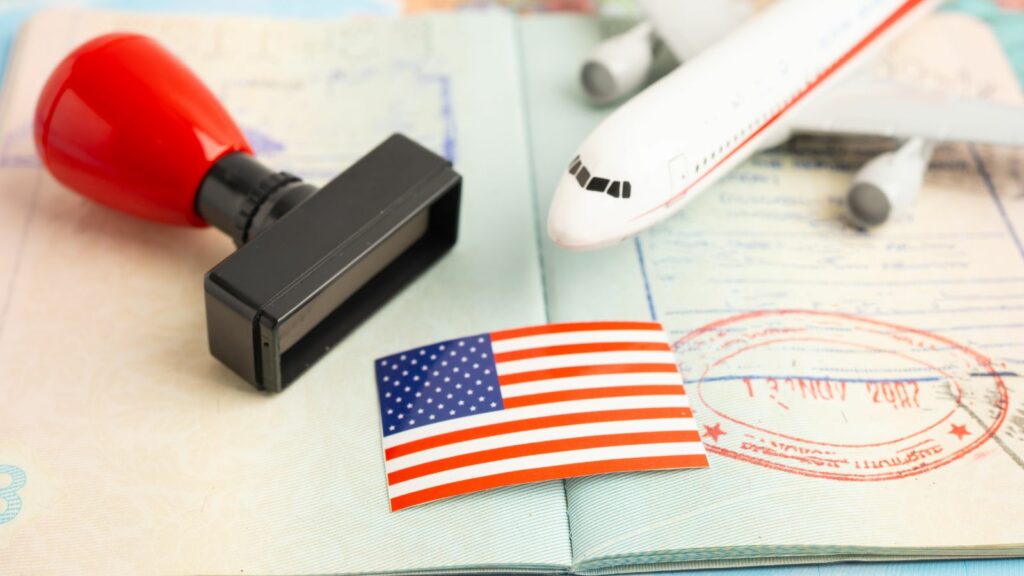
Canadians travelling to the United States by air will face a new federal health declaration beginning late Tuesday, November 3, 2026, as American authorities introduce additional screening requirements in response to a major Ebola outbreak in Africa.
The U.S. Centers for Disease Control and Prevention (CDC) is requiring international air passengers to confirm that they have not visited the Democratic Republic of the Congo within the previous 21 days. The requirement applies to Canadian travellers regardless of whether they have any connection to the affected region.
Although the declaration involves a relatively simple confirmation for most passengers, failing to complete it could prevent someone from boarding a flight. Airlines will be responsible for collecting the information, making the change particularly important for Canadians preparing for business trips, vacations and international connections through American airports.
New U.S. Travel Declaration Takes Effect at 11:59 P.M. Tonight
The new requirement officially takes effect at 11:59 p.m. Eastern Standard Time on November 3, 2026, according to an order issued by the CDC and published in the U.S. Federal Register on October 30. It applies to international flights departing for the United States at or after that time, including flights originating at Canadian airports. The declaration requires travellers to confirm that they have not been physically present in the Democratic Republic of the Congo during the 21 days immediately preceding their flight. The measure was initially ordered on October 22 and subsequently amended on October 28 to clarify its application to everyone aboard affected aircraft, including crew members.
For Canadians with upcoming flights, the important distinction is that this is an American federal public health requirement, not a new declaration introduced by Ottawa. It applies to passengers flying into the United States from foreign countries, regardless of where their journey began or their reason for travelling. Someone flying from Toronto to New York for a business meeting faces the same declaration requirement as a family travelling from Vancouver to Los Angeles for a holiday. The CDC has also confirmed that flights departing from Canadian airports equipped with U.S. customs preclearance facilities are covered. Completing customs procedures before departure does not eliminate the obligation to submit the new health declaration.
The Rule Applies to All Passengers, Including Children and Connecting Travellers
One of the most important aspects of the new requirement is its broad application. Canadian citizens, American citizens, U.S. permanent residents and travellers holding other nationalities must complete the declaration when boarding an international flight bound for the United States. The requirement also extends to airline crew members, including those travelling between assignments. Passengers do not need to have visited Africa or travelled internationally in recent weeks to be covered. Even someone who has remained entirely within Canada for several months must make the required declaration before boarding an affected flight. The policy is designed to establish a consistent screening process rather than requiring airlines to identify only passengers whose travel histories suggest a connection to the outbreak.
Families travelling together will also need to account for the requirement. The CDC says an attestation must be recorded for each individual, including children, although a parent, guardian or other authorized representative can complete the declaration on someone else’s behalf. The same flexibility applies to passengers who cannot independently complete the paperwork because of a disability or another limitation. Importantly, travellers who are merely connecting through the United States are not exempt. A Canadian passenger flying from Montreal through Miami to a destination in the Caribbean, for example, would still need to satisfy the declaration requirement before boarding the U.S.-bound portion of the journey. The destination on the final airline ticket does not change the rule.
Airlines Will Be Responsible for Collecting the New Declaration
Although the requirement comes from the American federal government, airlines will handle most of the practical work involved in collecting and verifying declarations. The CDC has authorized paper and electronic attestations, meaning passengers could encounter a printed document, a digital signature request or a confirmation checkbox incorporated into an airline’s check-in system. Airlines must confirm that each passenger has completed the declaration at or shortly before boarding. The CDC has published a standardized form that operators can use, but it has not required every airline to follow an identical submission process. Consequently, procedures may differ between carriers, particularly during the initial implementation period when companies are adapting their systems.
The recordkeeping obligations also fall on airlines rather than individual travellers. Operators must retain completed declarations for at least 42 days and provide them to American authorities when requested. The CDC says passengers do not need to retain their own copies, although keeping a photograph or electronic confirmation may be useful for personal records. Travellers also are not universally required to print the CDC’s form before arriving at the airport, because airlines must provide a method for completing the declaration. That distinction matters for Canadians leaving on short notice or travelling without access to a printer. Checking the operating airline’s instructions before departure remains the safest approach, particularly for passengers using multiple carriers during the same journey.
Even a Brief Airport Connection in Congo Can Trigger the 21-Day Restriction
The most consequential part of the declaration concerns travellers who have recently been in the Democratic Republic of the Congo. Under the CDC’s order, being present in the country includes entering or travelling through its territory by air, land or sea. Even an airport connection can count, regardless of whether a passenger leaves the terminal or remains aboard the aircraft. Simply flying over Congolese airspace without landing is treated differently and does not constitute presence in the country. The distinction could be significant for international travellers whose journeys involve complicated itineraries. Someone who connected through an airport in the Democratic Republic of the Congo a few days earlier would generally be unable to truthfully complete the required declaration, even if the connection lasted only a short time.
The restriction uses a specific calendar-day calculation that travellers should understand before arranging their flights. The day a person leaves the Democratic Republic of the Congo is considered Day 0, and the first full calendar day outside the country becomes Day 1. A traveller may board a flight bound for the United States beginning on Day 22, assuming all other entry requirements have been satisfied. The CDC selected the 21-day period because it reflects the maximum incubation period for Ebola disease, meaning the time between exposure and the possible appearance of symptoms. The waiting period therefore applies even to someone who feels completely healthy. Limited government-authorized exemptions are possible, but passengers should not assume that a negative health assessment or the absence of symptoms automatically qualifies them for an exception.
A Major Ebola Outbreak Is Behind the New American Travel Requirement
The declaration is part of the American government’s response to a severe Ebola outbreak involving the Bundibugyo virus, a type of Ebola virus that has spread through several parts of the Democratic Republic of the Congo. According to the CDC’s November 3 update, figures reported as of November 1 showed 10,563 confirmed cases and 5,130 confirmed deaths across affected countries, including 10,532 cases in the Democratic Republic of the Congo itself. The agency describes the outbreak as the second-largest Ebola outbreak on record. Cases have also been reported in countries including Uganda, Kenya and Nigeria. The World Health Organization has warned that the outbreak presents substantial challenges because of insecurity, population displacement, limited healthcare infrastructure and difficulties conducting disease surveillance in affected communities.
Despite the alarming figures, American health officials continue to assess the overall risk to the general public and ordinary travellers as low. As of November 3, the CDC reported no confirmed U.S. cases associated with the outbreak. Ebola is a serious infectious disease that spreads primarily through direct contact with infected bodily fluids or contaminated materials, rather than through the air. Its symptoms can include fever, weakness, vomiting and diarrhoea, with severe cases potentially becoming fatal. The new declaration is intended as a preventive measure to reduce the possibility of someone who has recently been in an affected country entering the United States during the incubation period. For most Canadians travelling directly from home to an American destination, the declaration should therefore be an administrative requirement rather than an indication of an immediate personal health threat.
Major Airlines Have Questioned the Short Implementation Timeline
The decision to introduce a declaration for every international passenger has drawn criticism from airline industry organizations, which argue that the requirement places substantial administrative responsibilities on carriers. Reuters reported on October 29 that the International Air Transport Association and Airlines for America had asked the CDC to reconsider the policy before its implementation. Their concerns centred on the limited time available to update check-in systems, develop electronic declarations, prepare airport procedures and train employees. The requirement was announced on October 22, leaving airlines less than two weeks to make operational changes. Because the policy covers passengers and crew on international flights to the United States, its implementation reaches far beyond travellers who have recently visited Central Africa.
Airlines for America also questioned whether the scale of the declaration process was proportionate to the number of travellers potentially affected by recent travel to the Democratic Republic of the Congo. According to figures the organization cited, U.S. Customs and Border Protection screened approximately 130 million air passengers in 2025, fewer than 25,000 of whom had a connection to that country. Industry groups argued that collecting declarations from millions of travellers would create significant costs and operational complications. However, the CDC’s published guidance continues to identify November 3 as the implementation date. The practical implication is that passengers may encounter unfamiliar health questions during check-in or boarding as airlines introduce their compliance procedures. Travellers should follow carrier instructions rather than assume the industry’s objections have delayed the requirement.
Missing or False Declarations Could Prevent Travellers From Boarding
Failing to complete the declaration is more than a paperwork inconvenience. The CDC instructs airlines to deny boarding to people who have not submitted a valid attestation, unless the U.S. government has granted an exemption. That means a passenger could arrive with a confirmed reservation, a valid passport and all the other documents needed for entry, yet still be unable to take the flight if the health declaration has not been completed. Airlines must confirm compliance before departure rather than leaving the matter for immigration officers after landing. Travellers who encounter an unfamiliar form should therefore ask the airline for assistance instead of skipping the question or assuming it can be resolved upon arrival.
Deliberately providing false information carries more serious consequences. The CDC warns that knowingly and willfully submitting a false declaration can lead to federal prosecution under U.S. law, including criminal fines. Government exemptions exist for limited circumstances, such as specifically authorized medical transportation or important humanitarian considerations, but they are not routinely available simply because a traveller has no symptoms. Separate American restrictions also apply to certain people who have recently been in Uganda or South Sudan, making it important not to confuse those rules with the new Congo-specific declaration. The U.S. Department of Transportation has emphasized that airlines must continue to honour applicable passenger protections, including rebooking, refunds or eligible travel vouchers, for people affected by Ebola-related travel restrictions.
Canada Has Separate Border Measures as U.S. Declaration Runs Through December
Canadians should also be aware that Ottawa has its own Ebola-related border measures, separate from the new American declaration. Canada’s rules affect people who have recently been in the Democratic Republic of the Congo, Uganda or South Sudan, and are currently scheduled to remain in place until November 27, 2026. Canadian citizens and permanent residents who have visited those countries may return to Canada, but they are generally required to quarantine for 21 days unless an exemption applies. Some foreign nationals face entry restrictions, depending on their residence, nationality and recent travel history. Those Canadian measures concern entry into Canada; the declaration beginning tonight is a U.S. requirement for flights departing foreign countries toward American airports.
The U.S. order is scheduled to remain in effect through December 18, 2026, although authorities can change, extend or rescind it based on the outbreak. Before departure, Canadians should review the operating airline’s current instructions, confirm whether their itinerary includes a U.S. connection and make sure every person in their travelling party has an attestation recorded. The new form does not replace normal entry documents: Canadian citizens flying to the United States generally require a valid Canadian passport, with a NEXUS card accepted in specified circumstances at designated airports. Canadian permanent residents who are not Canadian citizens may have different visa requirements. For most travellers, a few minutes spent confirming the airline’s procedures could prevent avoidable uncertainty at the airport.
