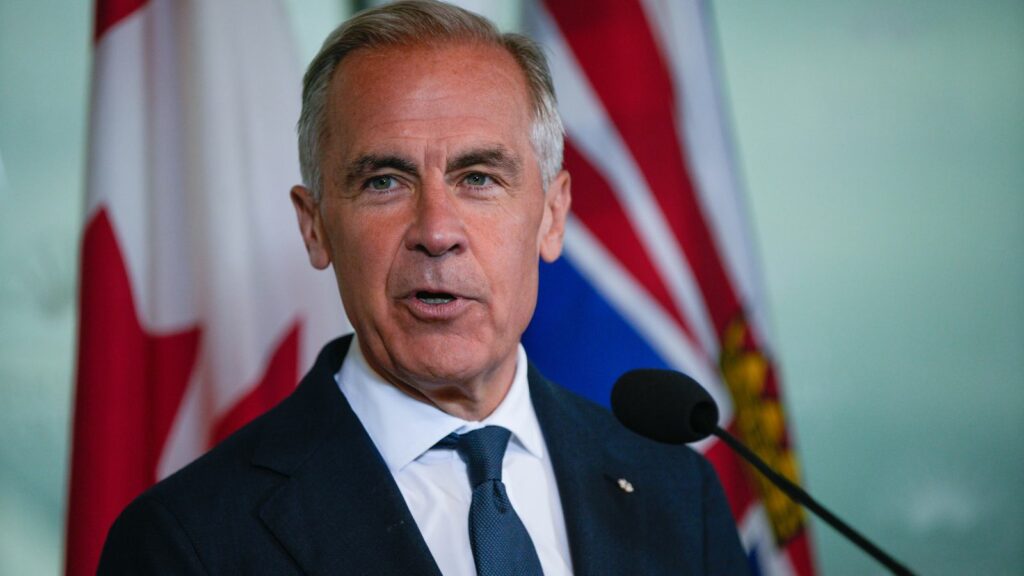
Canada’s search for a more secure economic future is bringing some of Europe’s most powerful leaders to Montreal. Prime Minister Mark Carney is hosting European Commission President Ursula von der Leyen and European Council President António Costa on October 29–30, 2026, as Ottawa works to strengthen trade, defence and technology partnerships beyond an increasingly unpredictable relationship with Washington.
The ambition is substantial: a new alliance that could bring Canada closer to the European Union than an ordinary trading partner. However, von der Leyen’s proposal to give Canada an unprecedented associate-member designation has encountered resistance from several European governments. The summit opens with a striking diplomatic contradiction: Canada and Europe largely agree on the benefits of closer cooperation, but they have yet to agree on the framework that would make it possible.
Montreal Becomes the Stage for a Bigger Canada–EU Alliance
The October 29–30 gathering is the 21st EU–Canada summit, and its guest list demonstrates how seriously European officials are treating the relationship. Carney is welcoming von der Leyen and Costa for discussions covering trade, critical minerals, digital policy, defence, research and education. A business forum is also scheduled, giving the meetings a commercial dimension beyond traditional diplomacy. The goal is not simply to reaffirm shared democratic values, but to identify opportunities where those values can support investment, stronger supply chains and new economic partnerships.
Officials are preparing to launch an “Alliance for the Future,” a framework for deeper economic cooperation and political coordination. The summit builds on a security and defence partnership agreed in Brussels in June 2025, but the next stage remains under negotiation. Leaders are expected to release a joint declaration on October 30, with broader negotiations continuing into 2027. For Canadian manufacturers seeking European customers or researchers considering international partnerships, the distinction matters. A promising diplomatic announcement is only the beginning; practical agreements are needed before new opportunities become accessible.
Canada’s Dependence on the United States Remains the Central Challenge
Canada’s economic relationship with the United States is too extensive to replace quickly, regardless of the political climate. Statistics Canada reported that 71.7% of Canadian merchandise exports went to the United States in 2025, down from 75.9% the previous year. That decline suggests some movement toward diversification, but it also explains why American tariff decisions still affect factories, farms and transportation networks across the country. Manufacturers whose products cross the border several times during production cannot simply move their entire customer base to Europe when trade tensions increase.
Recent figures nevertheless suggest that alternatives are becoming more important. Statistics Canada reported that merchandise exports to countries outside the United States were 19.4% higher in the first half of 2026 than in the second half of 2025, compared with an 11.6% increase in shipments to the United States over the same comparison period. Precious metals and energy products helped drive that growth, meaning it cannot be attributed entirely to European demand. Ottawa’s longer-term objective is to double exports of goods and services to non-U.S. markets by 2035. Europe represents a significant opportunity within that strategy, rather than a complete replacement for North American trade.
The Associate-Membership Proposal Raised Expectations Before Its Details Were Settled
In September, von der Leyen introduced an unusually ambitious idea into the Canada–EU relationship. During her September 16 State of the European Union address in Strasbourg, with Carney in attendance, she proposed opening the door for Canada to become the EU’s first “associate member.” The suggestion attracted international attention because it appeared to offer something between a conventional trading partnership and full membership in the 27-country bloc. For Canadians concerned about tariff disputes and economic uncertainty, the possibility of a more dependable European relationship carried considerable appeal.
However, the proposal arrived before governments had agreed on what that status would mean. EU treaties establish a process for European states seeking full membership, but they do not define the proposed associate-membership category for Canada. Would the designation provide additional market access, participation in European programs or simply a political expression of closer relations? Those questions remained unresolved as the Montreal summit approached. The uncertainty is more than a technical legal problem. An attractive diplomatic label cannot automatically remove regulatory barriers, create procurement rights or give Canadians broader employment opportunities across Europe. Those benefits require specific agreements supported by the governments responsible for implementing them.
Germany and France Lead Resistance to the Membership Label
The strongest resistance to the associate-membership proposal has come from European capitals rather than Ottawa. Germany led objections to the proposed designation, while France, Greece and Italy also raised concerns about aspects of the draft declaration. European diplomats identified a fundamental problem: the terminology had never been formally defined in EU treaties, and governments had not established what responsibilities or privileges it would create. Giving Canada an apparently special status could establish expectations among other countries pursuing closer European relations. What initially appeared to be a diplomatic gesture therefore became a debate about legal uncertainty, institutional authority and political precedent.
By October 28, EU governments had agreed to remove the disputed designation from the draft summit declaration. The replacement language commits both sides to developing an “ever closer association,” with the relationship’s details to be worked out ahead of the 2027 summit. Importantly, the change does not mean European governments oppose stronger cooperation with Canada. Instead, they want practical commitments clarified before accepting a new category of partnership. Von der Leyen nevertheless continued using the associate-member language after arriving in Montreal, illustrating the difference between her ambitions and the wording European governments are prepared to endorse.
Carney Wants Practical Benefits Without Full EU Membership
Carney has approached the dispute over terminology with greater caution than the original proposal might suggest. He has repeatedly said Canada is not seeking full membership in the European Union. Ahead of the Montreal meetings, he emphasized that the name of a new arrangement matters less than the opportunities it creates for Canadians. Government officials have also indicated that Canada would not assume the EU’s general membership-related budget obligations. Financial commitments would instead arise through participation in particular programs, potentially including expanded student exchanges. Carney has said an enhanced partnership would be presented to Canada’s Parliament for approval.
This approach reflects political considerations as well as questions of national sovereignty. Ottawa wants greater opportunities for Canadian businesses, researchers and young people without suggesting that domestic economic policy will be transferred to Brussels. It also offers an alternative to the idea that Canada must choose between heavy dependence on Washington and an unfamiliar form of European integration. For Canadian families and businesses, practical questions may ultimately matter more than diplomatic terminology. Whether a manufacturer can secure new customers, a university can expand international research or a graduate can access employment opportunities abroad will provide a clearer measure of the partnership’s success.
CETA Gives Canada and Europe a Stronger Trade Foundation
The proposed alliance is not starting from scratch. Canada and the EU already have the Comprehensive Economic and Trade Agreement, commonly known as CETA, which was signed in 2016 and began provisional application in September 2017. The agreement eliminated duties on 98% of tariff lines when it began operating, with additional reductions phased in afterward. According to European Commission figures, bilateral trade in goods and services reached approximately €130 billion in 2025, roughly 80% higher than in 2016. These figures demonstrate that closer commercial integration has already produced substantial growth, even without a special membership designation.
However, CETA also demonstrates how slowly major international agreements can advance. Nine EU member states, including France and Italy, have not completed national ratification, meaning the agreement is not fully in force despite most of its provisions already operating. That unfinished process matters for businesses seeking long-term certainty. The Montreal negotiations could help address digital trade barriers, regulatory cooperation and obstacles that make international business more expensive. Yet European governments must still complete their own approval procedures. As Carney pursues a more ambitious relationship, the experience of CETA provides an important lesson: diplomatic enthusiasm cannot eliminate the domestic political work required to make economic integration permanent.
Defence Cooperation Is Already Creating Opportunities for Canadian Companies
Defence represents one of the clearest examples of Canada and Europe strengthening their relationship through practical agreements. Following their security and defence partnership in June 2025, Canada became the first non-European country to participate in the EU’s Security Action for Europe initiative, commonly called SAFE. The €150-billion program supports joint defence procurement and investment in Europe’s military manufacturing capacity. Canada’s participation agreement entered into force in August 2026, allowing eligible Canadian companies and products to compete for procurement opportunities supported by the program without Canada becoming an EU member.
The economic potential is already visible. Ottawa announced in June that Montreal-based Marconi Technologies had secured an agreement to build Canadian-made ORION tactical radios for Poland’s Cyber Command. The arrangement gives a concrete example of how closer diplomatic ties can translate into manufacturing contracts and specialized employment. However, Canadian participation comes with rules governing product content, company eligibility and financial contributions. The agreement allows Canadian content to represent up to 80% of a SAFE-funded procurement contract under its provisions, but businesses must still satisfy the relevant conditions. Closer defence integration therefore offers meaningful opportunities, although it does not guarantee contracts or remove the need for competition.
Critical Minerals and Energy Could Become Major Economic Opportunities
Canada’s natural resources are another important part of the emerging partnership. European manufacturers need reliable access to minerals used in electric vehicles, batteries, electronics and advanced industrial equipment. Canada, meanwhile, wants to attract investment that can move resource projects from extraction through processing and higher-value production. The Canadian government has identified critical minerals and energy as major areas of cooperation, while European officials see secure supply chains as increasingly important to economic resilience. A framework agreement between Canada and the European Investment Bank, scheduled for October 30, is intended to support investment opportunities that include critical minerals.
Energy discussions could be more complicated. A draft summit declaration proposes a feasibility study examining long-term Canadian liquefied natural gas exports to Europe, alongside cooperation on electricity grids and energy infrastructure. However, a feasibility study is not a supply agreement, and significant questions remain about shipping capacity, infrastructure costs, environmental commitments and commercial demand. Canada’s LNG export infrastructure is concentrated on the Pacific coast, presenting logistical challenges for supplying European customers. The summit may help establish whether future energy investments make financial and strategic sense, but large projects would still require years of planning, approvals and construction.
Artificial Intelligence, Digital Trade and Research Are Becoming Strategic Priorities
Canada and the EU are also seeking closer cooperation in technologies that increasingly influence economic competitiveness and national security. Their digital partnership, launched in November 2023, covers artificial intelligence, cybersecurity, semiconductors, quantum technologies and secure connectivity. An October 2026 digital dialogue addressed AI regulation and innovation, high-performance computing, online safety and international digital infrastructure. A draft Montreal declaration also proposes improving connections between Europe, Canada and Asia through new subsea cable infrastructure. Such projects could help strengthen international data connections and reduce vulnerabilities affecting businesses, research institutions and governments.
Research cooperation already provides an example of what closer integration can accomplish. Canada became associated with Pillar II of the EU’s Horizon Europe research program in July 2024, allowing eligible Canadian organizations to participate in collaborative projects on terms comparable to European partners. Researchers can join international teams and access funding for projects addressing major scientific and technological challenges. Future cooperation could make it easier for Canadian technology companies and research institutions to work with European counterparts. However, differences in privacy standards, AI regulation and digital-market rules will require careful negotiation. Shared ambitions do not automatically mean identical laws, and regulatory alignment will have to balance business opportunities with each jurisdiction’s policy choices.
Young Canadians Could Gain New Opportunities to Study and Work in Europe
Opportunities for students and younger workers could become among the most visible benefits of a stronger Canada–EU relationship. Carney’s government has identified easier access to international education, employment and travel as important objectives. The draft summit declaration examined by Reuters includes proposals to expand opportunities for young Canadians and Europeans to work across the Atlantic. Ottawa has also discussed potential participation in Erasmus+, the European Union’s student-exchange program. For a Canadian university graduate interested in conducting research abroad or a young professional seeking international experience, these initiatives could eventually make European opportunities more accessible.
However, expanded mobility would not mean Canadians automatically gaining the right to live and work anywhere in the EU. Canada’s ambassador to the European Union, Jonathan Wilkinson, has indicated that discussions concern specialized employment opportunities rather than unrestricted movement of workers. Immigration requirements, professional qualifications and program eligibility would still matter. Canadian officials have also said participation in certain European programs could involve financial contributions. The challenge will be translating broad promises into arrangements that ordinary students and workers can actually use. Clearer professional accreditation and better exchange opportunities could deliver meaningful results without requiring a dramatic change in Canada’s political relationship with Europe.
Trump’s Warning Creates Another Diplomatic Risk for Ottawa
Closer cooperation with Europe also introduces complications in Canada’s relationship with the Trump administration. When von der Leyen proposed associate membership in September, President Donald Trump suggested the arrangement could be interpreted as a “hostile act” and warned that Europe might face additional American tariffs. His comments were conditional rather than an announcement of new duties, but they demonstrated how even a proposed diplomatic partnership could become entangled in trade disputes. With Canada still heavily dependent on American customers and cross-border manufacturing, Ottawa has a strong incentive to avoid unnecessarily escalating tensions.
Carney’s government has presented its European strategy as a way to strengthen Canadian independence rather than an effort to punish Washington. A senior Canadian official said ahead of the summit that closer EU ties were not directed against the United States. Nevertheless, disagreements over digital regulation, economic security and international institutions could create additional friction. In January, Carney argued at the World Economic Forum that middle powers needed to cooperate more closely in an era of economic coercion. Montreal represents an attempt to put that argument into practice. The challenge is to expand Canada’s options while maintaining an economically indispensable relationship with its largest trading partner.
Quebec’s Dispute With Ottawa Adds Pressure as Negotiations Move Toward 2027
The Montreal summit has also exposed political disagreements within Canada. Quebec Premier Paul St-Pierre Plamondon decided not to attend after Ottawa declined to give him an official speaking role. Carney had offered him a place at the leaders’ dinner, but the premier argued that Quebec should have a direct voice in discussions affecting its economic interests. Quebec’s chief diplomat, Pascal Paradis, is representing the province instead. The disagreement highlights a practical complication for future negotiations: areas such as education, natural resources and professional regulation can involve provincial jurisdiction, making cooperation between federal and provincial governments important.
The larger partnership is still a work in progress. Canada and the EU expect to continue defining their relationship ahead of another summit in 2027, rather than finalize every aspect of the new alliance in Montreal. The October 30 joint declaration should provide a clearer picture of the commitments both sides are prepared to support. Success will ultimately depend on measurable results: new investment, better market access, more research partnerships and practical opportunities for Canadian businesses and workers. The disappearance of the associate-membership designation from the draft declaration may attract attention, but it does not necessarily diminish the broader opportunity. If Canada and Europe can turn their common interests into durable agreements, the relationship could become an important part of Canada’s economic future, regardless of the name attached to it.
