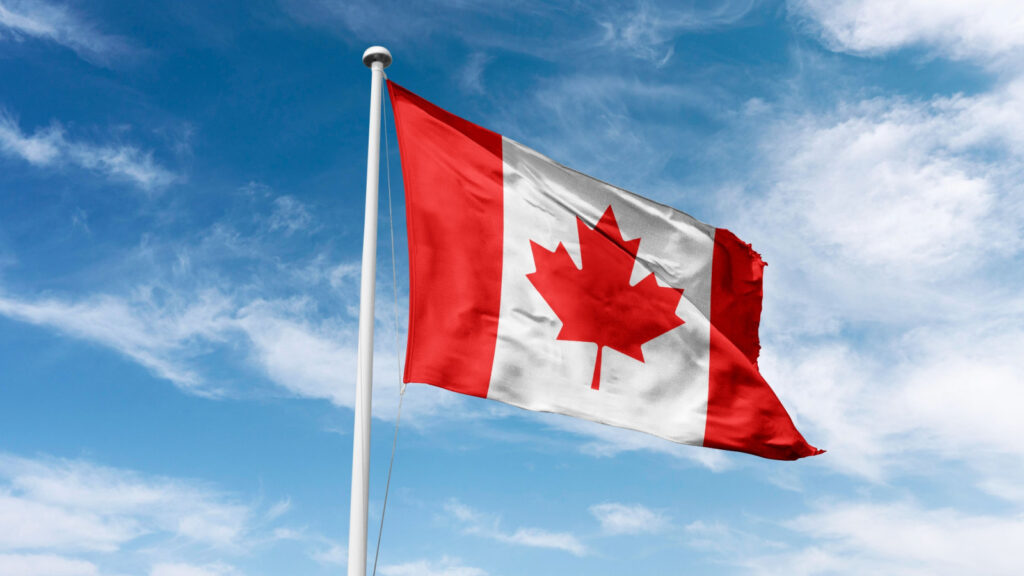
As tariff arguments continue to strain relations between Ottawa and Washington, residents of metropolitan Detroit are preparing a very different kind of message for their Canadian neighbours. A small aircraft is expected to tow a giant banner above the Detroit River, thanking Canadians and celebrating a relationship that reaches far beyond national politics.
The community-led effort, supported by the Downtown Detroit Partnership, is planned for Canadian Thanksgiving on Monday, October 12. It also recognizes Canada’s role in bringing the new Gordie Howe International Bridge into operation.
Against a backdrop of trade restrictions, disrupted tourism and uncertainty for manufacturers, the gesture offers something increasingly rare in the public debate: a reminder that people in Windsor and Detroit remain neighbours, coworkers and friends, regardless of decisions made in their capitals.
A 30-Foot Banner Is Planned for the Detroit River
The proposed display is designed to be unmistakable. A plane is scheduled to pull a banner measuring approximately 30 feet long and nine feet high along the Detroit River between Belle Isle and the Gordie Howe International Bridge. Organizers have identified Monday, October 12, as the planned date, with flights expected during a three-hour window from 11 a.m. to 2 p.m. Eastern Time. Local radio station AM800 reported those details on October 11, describing the effort as a public thank-you to Canadians living just across the water.
The flight is weather-dependent, so its appearance is not guaranteed. An earlier local report listed Sunday instead of Monday, while subsequent reports, including AM800 and CTV, identify the holiday Monday. That difference is worth acknowledging for anyone hoping to see the aircraft. The planned route should make the banner visible from portions of both waterfronts, although visibility will depend on the plane’s position and conditions. As of October 11, the display remains a plan, not a completed event.
Metro Detroit Residents Are Behind the Gesture
The initiative began with a group of people from metropolitan Detroit who wanted to express gratitude to their Canadian neighbours. The Downtown Detroit Partnership, a nonprofit focused on the city’s downtown economy and public spaces, is helping bring the idea to life. Its chief executive, Eric B. Larson, discussed the flight with Windsor radio hosts, explaining that the motivation reaches beyond the latest arguments over tariffs. He emphasized the personal connections that make the international boundary feel less like a dividing line.
The organization’s participation is consistent with its history. The partnership traces its roots to a business association established in 1922, when 13 Detroit business leaders gathered to address downtown development. Today, it convenes businesses, civic organizations and public-sector partners on initiatives intended to strengthen the city. The aerial message is relatively modest compared with major infrastructure and development projects, but its purpose is similarly community-minded. Residents, rather than elected officials, are making the appeal, while an established local organization provides support.
A Thanksgiving Greeting Carries a Bigger Message
The timing is deliberate. Monday, October 12, is Canadian Thanksgiving, a holiday when families gather and expressions of gratitude have particular meaning. Local reporting describes the banner’s message as a celebration of friendship between Detroit and Canada. AM800 reported the wording as “Detroit and Canada are bridged in friendship,” while CTV described a longer greeting that also wishes Canadians a happy Thanksgiving and offers a thank-you. In either version, the message is welcoming rather than accusatory.
That choice of tone matters. The aircraft will fly over water separating two countries whose elected leaders have sharply different positions on trade. Yet residents frequently experience the relationship through far more ordinary activities: working with colleagues across the border, visiting relatives, attending events or spending an afternoon in a neighbouring city. The holiday provides an accessible reason to recognize those ties without requiring agreement on tariff policy. It also makes the gesture distinctly Canadian, rather than simply another political statement from the American side of the river.
The Gordie Howe Bridge Gives the Thanks a Powerful Backdrop
The planned route includes one of the region’s most important new landmarks. The Gordie Howe International Bridge opened to traffic on July 27, 2026, connecting Windsor and Detroit with a six-lane crossing. Government and bridge-authority information describes a structure approximately 2.5 kilometres long, with a main cable-stayed span of 853 metres. The crossing offers a direct highway connection and modern border facilities, increasing capacity for both commercial vehicles and other travellers.
Its name also captures the relationship the banner seeks to celebrate. Gordie Howe was born in Saskatchewan but became a Detroit sporting icon during 25 seasons with the Red Wings. The Canadian hockey legend’s career gives residents on both sides a familiar point of pride. The bridge itself was financed by Canada and developed through a partnership with Michigan, reinforcing the region’s reliance on long-term cooperation. For the Detroit residents organizing the flight, thanking Canada for helping make the crossing possible is a concrete expression of appreciation, not merely a slogan.
The Bridge Opening Was Overshadowed by Politics
The summer opening should have offered an uncomplicated occasion for two neighbours to celebrate together. Instead, Canadian officials cancelled a planned joint ceremony in July following new tariff threats from President Donald Trump. Canada proceeded with its own event, while American dignitaries were absent from the Canadian celebration. The dispute followed months of arguments about tariffs and the bridge, including earlier questions over toll arrangements and its opening schedule.
The bridge nevertheless opened to vehicles on July 27. That outcome illustrated a contrast between diplomatic friction and practical cooperation: the infrastructure was complete, and commercial needs did not disappear because politicians disagreed. Michigan Governor Gretchen Whitmer publicly welcomed its opening, highlighting potential benefits for auto production, traffic movement and jobs. The October banner appears intended to reclaim some of the goodwill lost during the summer dispute. Rather than reopen the argument over who attended a ribbon-cutting, it directs attention toward the shared achievement and the Canadian contribution behind it.
A River Separates the Cities, but Their Daily Lives Overlap
Detroit and Windsor are not distant trading partners communicating solely through shipping documents. Their residents use multiple crossings for work, family visits, shopping and recreation. Canada’s border agency identifies the Windsor–Detroit corridor as its most important trucking gateway, accounting for roughly 30% of Canada–U.S. trade carried by truck. It also reported that more than $274 million worth of trade moves through the gateway daily. Those figures help explain why seemingly local border developments can attract national attention.
The new bridge has already changed travel patterns. Statistics Canada recorded about 134,900 Canadian-resident return trips and 101,000 trips by U.S. residents entering Canada through the Gordie Howe crossing in August, its first full operating month. The agency also counted 34,800 commercial trucks entering Canada there. Traffic was redistributed among the new bridge, the Ambassador Bridge and the Windsor–Detroit Tunnel, rather than simply disappearing from older routes. Behind those statistics are everyday border crossings that make the binational region function as one connected community.
Michigan Businesses Have a Large Financial Stake in Canada
For Michigan, cooperation with Canada is not just about friendly gestures or cultural traditions. The Office of the United States Trade Representative identifies Canada as the state’s largest foreign market for goods exports. Its Michigan profile reports approximately US$23.2 billion in exports to Canada during 2025, representing 39% of the state’s total goods exports. That makes relations with Canadian customers a commercial priority for companies far beyond the Detroit riverfront.
Automotive manufacturing demonstrates the significance of these ties. Plants in Michigan and Ontario participate in production networks in which parts, materials and finished vehicles move across the border. A supplier on one side may depend on a manufacturer on the other, while workers and local businesses depend on the resulting economic activity. Tariffs can increase costs or complicate investment decisions even when firms remain committed to North American production. Against that reality, a banner celebrating friendship may appear small, but it speaks to a relationship that supports employment and industrial competitiveness throughout the region.
A Pullback in Canadian Visits Has Hurt Some Detroit Businesses
The trade fight has affected more than factories. CTV reported that Detroit tour guide John Paul Stando had seen the Canadian portion of his business vanish; Canadians had previously represented about one-quarter of his customers. His experience illustrates the consequences for people who depend on visitors choosing to cross the border. Restaurants, attractions and tour operators can feel a change in travel sentiment long before the full economic effects appear in national statistics.
Official numbers present a more nuanced picture than a simple story of continuously falling travel. Statistics Canada reported Canadian-resident return trips from the United States rose 8.8% in August 2026 compared with August 2025. Nevertheless, automobile returns remained 27.4% below their August 2024 level, before the sharp pullback in cross-border travel. One tour operator’s losses do not establish a Detroit-wide decline, but his account helps explain why gestures of welcome resonate. Restoring confidence among visitors can matter to smaller businesses as much as resolving tariffs matters to manufacturers.
Cultural Partnerships Keep the Connection Visible
The banner is not the first project linking the Downtown Detroit Partnership with Windsor. The organization has collaborated with the Windsor International Film Festival on cultural programming, including a free screening of the comedy Best in Show at Campus Martius Park on September 25, 2026. A similar Canadian film night was held in July 2025. These events bring the connection into public spaces where people can experience it without attending a trade conference or following diplomatic negotiations.
The partnership has also taken part in larger binational conversations. In October 2025, its Fall Forum at Michigan Central brought together more than a dozen Detroit and Windsor leaders to discuss transportation, investment and regional collaboration. Organizers reported attendance exceeding 400. Such projects show that the riverfront relationship is maintained through many institutions, not only mayors and national governments. Film screenings, public discussions and community events cannot eliminate trade barriers, but they help preserve relationships that may make future cooperation easier when the political environment improves.
Detroit Business Leaders Are Openly Worried About Tariffs
Business organizations on the American side have also warned against letting trade tensions damage the region’s economic foundations. In August, the Detroit Regional Chamber said escalating tariffs would cause financial pain on both sides of the border, particularly in Michigan and the Windsor–Detroit region. Its president and chief executive, Sandy K. Baruah, argued that the two economies are stronger together and that prolonged disputes create opportunities for international competitors.
Baruah reinforced that concern during a September visit to Windsor. Speaking at a local chamber event, he described the two cities as a single integrated economic region despite being in different countries. He pointed to rising costs that can interfere with hiring, profits and new investment. These warnings do not imply that every Detroit business shares an identical position on trade. They do, however, reveal why the public message of thanks has an economic dimension alongside its emotional one. For employers serving customers across the river, practical relationships must endure through changes in national policy.
Michigan’s Political Debate Is Becoming More Complicated
The tariff dispute is also influencing electoral politics in Michigan. On October 7, Republican U.S. Senate candidate Mike Rogers called for an end to the trade fight with Canada in a campaign advertisement. Holding a bottle of Canadian Labatt Blue beer, he said Canada was not Michigan’s enemy and argued that tariffs were increasing costs for businesses and consumers. His position marked a break from his earlier support for much of President Trump’s trade agenda.
Rogers’ Democratic opponent, Abdul El-Sayed, questioned the shift and accused him of reversing course for political advantage. The disagreement reflects a competitive Senate race rather than a unified political consensus. Still, it shows how deeply the Canadian relationship matters in a state with a major automotive industry and substantial cross-border commerce. The Detroit banner is separate from these campaigns and should not be treated as an endorsement of any candidate. Its organizers have instead emphasized gratitude and neighbourliness, a message that can appeal to people with otherwise very different political opinions.
The Friendship Gesture Cannot Settle the Trade War
The goodwill campaign arrives while the future of North America’s trade rules remains uncertain. At the July 2026 joint review of the Canada–United States–Mexico Agreement, Washington declined to extend the pact in its existing form. The agreement nevertheless remains in force, with annual reviews scheduled as the governments continue discussing changes. The next review process is already underway, and businesses still face uncertainty over tariffs, manufacturing rules and market access.
Nothing about an aerial banner alters those legal or commercial realities. It cannot lift a tariff, guarantee renewed tourist visits or resolve arguments over vehicle production. Its value lies elsewhere. By selecting Canadian Thanksgiving and a flight path that takes in the Gordie Howe International Bridge, Detroit residents are drawing attention to a relationship that predates the current administration and will outlast any single political dispute. Whether the weather permits the planned flight or not, the message behind it is clear: neighbours can disagree over policy without abandoning one another.
