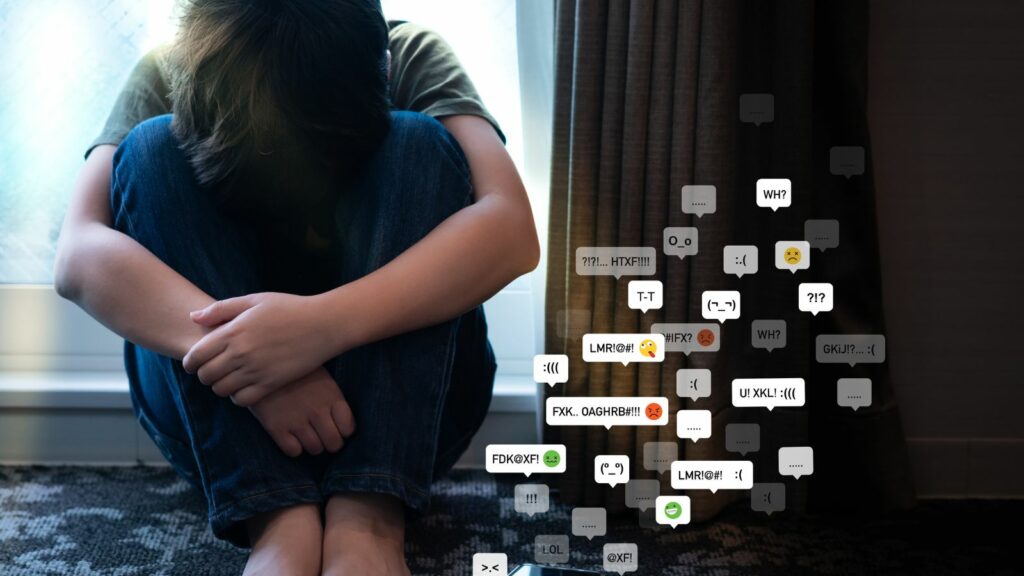
The fight over children’s screen time is moving from family kitchens to Parliament Hill. Ottawa is reportedly preparing a tougher approach to youth social media access, with a potential ban on accounts for children under 16 now part of the federal online safety debate.
The proposal arrives at a moment when parents, schools, doctors and lawmakers are all wrestling with the same uncomfortable question: who should be responsible when platforms built for engagement become a daily part of childhood? Supporters see an under-16 restriction as a long-overdue guardrail. Critics warn that age bans can be blunt, difficult to enforce, and risky for privacy if every user must prove their age online.
A Ban That Would Move the Burden Onto Big Tech
Ottawa’s reported plan would mark a major shift in how Canada treats children’s access to social media. Instead of leaving the decision mainly to parents, schools and platform terms of service, a federal rule could make the minimum age a matter of law. That would be a sharp change from today’s environment, where many platforms already set minimum ages but underage use remains common.
The most politically important detail is enforcement. A serious under-16 ban would likely have to place legal responsibility on social media companies rather than punishing children or parents. That model is already being watched internationally. For many families, the appeal is obvious: parents often feel they are fighting billion-dollar platforms with kitchen-table rules, app timers and arguments over bedtime. A federal ban would tell platforms that child safety is not just a household problem, but a compliance obligation.
Why Ottawa Is Watching Australia Closely
Australia has become the global test case for youth social media restrictions. Its under-16 social media law took effect in December 2025, requiring age-restricted platforms to take reasonable steps to prevent children under 16 from creating or keeping accounts. The law covers major platforms and can expose companies to large civil penalties if they fail to comply.
That experiment matters for Canada because it offers both a blueprint and a warning. Australia’s approach does not fine children or parents; it focuses on platforms. It also shows how complicated the definitions can become. A service may look like a messaging app, a video platform, a forum or a livestreaming site, but still function socially enough to attract regulators. If Ottawa follows that road, lawmakers will need to decide whether the rule applies only to obvious social media apps or also to hybrid platforms where young people chat, watch, post and follow creators.
The Mental-Health Case Behind the Push
The political momentum behind an under-16 ban is being driven by concern over mental health, online pressure and harmful content. Canadian data show how deeply young people are connected: almost all Canadians aged 15 to 24 used the internet in 2022, and most used social networking sites. That means the debate is not about a niche habit. It is about a daily environment where friendship, entertainment, identity and conflict often overlap.
The evidence is serious but not simple. Research bodies have warned that social media can expose young people to harmful content, cyberbullying, social comparison, sleep disruption and addictive design patterns. At the same time, experts also recognize that online spaces can provide connection, peer support and community, especially for young people who feel isolated offline. That is why the strongest version of the argument is not that every platform is always harmful. It is that children should not be expected to navigate adult-scale attention systems without stronger protections.
The Privacy Problem No Ban Can Avoid
Any under-16 ban runs quickly into a difficult question: how does a platform know someone’s age? Age checks can involve self-declaration, parental confirmation, age estimation, digital credentials or identity documents. Each method has trade-offs. Weak systems are easy to bypass. Stronger systems can collect sensitive personal information and create new privacy risks for everyone, including adults.
Canada’s privacy regulator has already warned that age assurance should not become the default ticket for accessing the internet. The concern is not only whether children are protected, but whether a safety measure turns into a wider identity-checking layer across everyday online life. For Ottawa, this may be the hardest design challenge. A law that is too soft may be symbolic. A law that is too intrusive may trigger backlash from privacy advocates, civil liberties groups and ordinary users who do not want to prove who they are just to browse or post.
Parents Want Help, But Not Everyone Wants Government in Charge
Public opinion appears to be moving toward tougher restrictions. A recent Angus Reid Institute study found strong Canadian support for banning social media use by children under 16, including support among parents with children in the household. Many parents also report using their own rules, such as limiting apps, monitoring activity or setting time limits.
Still, support for a ban does not mean Canadians are fully comfortable handing the whole issue to government. Many people continue to believe parents should have the primary role in regulating teen social media use. That tension will shape the politics of the proposal. A parent who wants help with TikTok, Instagram or Snapchat may still be uneasy about mandatory age checks or broad state control over online accounts. Ottawa’s challenge will be to present the measure as support for families, not a replacement for family judgment.
What Platforms Could Be Forced to Change
If the federal government moves ahead, the most visible change may not simply be an age gate. Platforms could be pushed to redesign how young users experience their services. That could include stronger default privacy settings, clearer reporting tools, limits on certain recommendation systems, fewer features that encourage endless scrolling, and more transparency about how content is promoted to minors.
Canada’s previous Online Harms Act proposal already pointed in this direction. It would have created duties for social media services, including a duty to protect children, reduce exposure to certain harmful content and publish transparency reports. Although that bill died when Parliament was dissolved, it showed how Ottawa was thinking: not just removing content after harm occurs, but forcing platforms to build safer systems from the start. An under-16 ban would likely become one layer in a broader package rather than the entire policy.
The Risk of Teens Moving Somewhere Harder to See
A ban may reduce access to major platforms, but it will not erase teenagers’ desire to communicate, follow trends or form communities. That is one reason some experts are cautious. When access is blocked on mainstream platforms, young people may move to smaller apps, private groups, workarounds or less visible corners of the internet where parents and regulators have even less oversight.
Australia’s early experience is especially relevant here. Researchers studying young people’s responses to age verification found that some children saw bans as unfair or ineffective and learned how systems could be tested or avoided. That does not mean Canada should do nothing. It does mean a ban would need to be paired with education, better platform design, stronger reporting systems and support for parents and schools. Otherwise, the country could end up with fewer visible teen accounts without necessarily creating safer digital lives.
The Parliamentary Fight Ahead
The politics of the proposal could be intense. Supporters will frame an under-16 ban as a child-protection measure aimed at companies that profit from attention. Opponents will ask whether the evidence supports a broad age cutoff, whether enforcement is realistic, and whether privacy risks are being underestimated. Tech companies will likely argue that safety tools, parental controls and platform-level design changes are better than blanket restrictions.
The key question is whether Ottawa can turn a popular idea into a workable law. A slogan can be simple: keep children off harmful social media until 16. Legislation is messier. It must define the platforms, assign responsibility, protect privacy, survive industry pressure and avoid unintended consequences. The coming debate will not just decide whether children under 16 can hold social media accounts. It will test whether Canada can regulate the digital childhood without building a more intrusive internet for everyone else.
