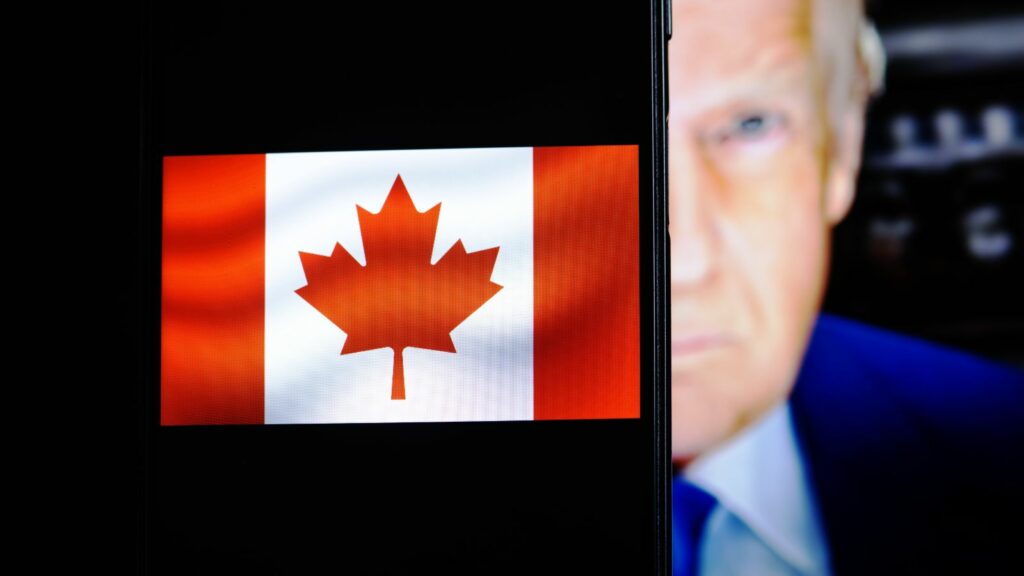
Three federal byelections on Monday, August 31, are arriving at a moment when domestic politics and Canada’s confrontation with Donald Trump are increasingly difficult to separate. Voters in Chicoutimi–Le Fjord, Beaches–East York and North Vancouver–Capilano will choose new MPs just days after Ottawa suspended trade negotiations with Washington and announced fresh retaliation against U.S. tariffs.
Two of the ridings were won comfortably by Liberals in 2025. The third is far more volatile: Chicoutimi–Le Fjord, held by the Conservatives since 2018, has become a genuine Liberal-Bloc battleground after former Conservative MP Richard Martel moved to the Senate. The result there could provide the clearest early indication of whether the Trump trade fight is reshaping partisan loyalties in Quebec or simply reinforcing trends already underway.
Chicoutimi–Le Fjord Could Deliver the Biggest Political Shock
Chicoutimi–Le Fjord is the race with the greatest potential to produce a political shock. Richard Martel first captured the riding for the Conservatives in a 2018 byelection and was re-elected in 2019, 2021 and 2025. His final victory was anything but overwhelming: Elections Canada records show Martel took 34.1 per cent of the vote in 2025, compared with 31.2 per cent for the Bloc Québécois and 31.1 per cent for the Liberals. His departure for the Senate removed a familiar local incumbent from an already fragmented contest. The Conservative replacement, Régis Gaudreault, is now facing Liberal Daniel Gobeil and Bloc candidate Caroline Dubé, along with candidates from the NDP, Greens and People’s Party. That makes the riding less a conventional two-party defence than a three-way struggle in which relatively small shifts can decide who represents the Saguenay region in Ottawa.
The trade conflict gives that struggle unusually local stakes. Gobeil is a dairy producer and former president of Les Producteurs de lait du Québec, while Washington has made Canadian dairy policy and supply management recurring targets. Trump’s administration imposed additional 50 per cent duties on certain Canadian products in August, and Ottawa has announced matching counter-tariffs on $27.6 billion of U.S. imports beginning September 8. Saguenay’s aluminum industry has also lived with U.S. tariff pressure; Statistics Canada reported that nearly 80 per cent of Canadian aluminum exports originated in Quebec in 2024. A Segma Recherche poll released August 26 put Gobeil at 40.3 per cent, Dubé at 37.8 per cent and Gaudreault at 16.8 per cent, with the Liberal-Bloc gap inside the poll’s 4.6-point margin of error. For Conservatives, losing a seat held since 2018 would be difficult to dismiss as routine byelection volatility.
Beaches–East York Tests How Much of the Liberal Landslide Remains
Beaches–East York is a very different test. The east Toronto riding gave Liberal Nate Erskine-Smith 67.7 per cent of the vote in the April 2025 election, while the Conservatives finished at 23.5 per cent. That 44.2-point gap makes an outright Liberal defeat a much taller order than in Chicoutimi–Le Fjord. Erskine-Smith formally resigned in July after representing the riding since 2015, and the Liberals selected Tanveer Shahnawaz, a longtime local political staffer who worked with the former MP for roughly a decade. Elections Canada lists Conservative Jim Syrbos, New Democrat Shannon Devine, Green Bruce Livesey, Canadian Future Party candidate Cameron Thomas and People’s Party candidate Michel Lachance among the challengers. Devine also ran in 2025, when the NDP received 6.9 per cent. In practical terms, the more revealing question may be how much of the enormous 2025 Liberal margin survives without Erskine-Smith on the ballot.
Trump’s trade confrontation still matters here because the Liberals are asking urban voters to judge the government during a fresh escalation, not in the calmer environment that existed immediately after the 2025 election. Ottawa says it suspended negotiations rather than accept U.S. terms it considered damaging to Canadian workers and strategic sectors, while announcing a $7.5-billion support package for businesses and workers affected by tariffs. Shahnawaz has explicitly addressed the U.S. threat during the local campaign, arguing that Canadian jobs require a firm federal response. Reuters reported on August 26 that 76 per cent of Canadians backed Carney’s tough approach at that point. Beaches–East York therefore offers a useful turnout test: strong national approval does not automatically guarantee enthusiasm in a low-profile byelection. If the Liberal vote falls sharply while the seat remains safe, rivals will have evidence that national unity around Trump is not translating evenly into partisan loyalty.
North Vancouver–Capilano Puts a Former Carney Insider on the Ballot
North Vancouver–Capilano sits between the other two contests: clearly Liberal in the last general election, but politically interesting because the candidates create a direct comparison with the Carney government. Former cabinet minister Jonathan Wilkinson won 59.8 per cent in 2025, defeating Conservative Stephen Curran, who took 33.7 per cent. Wilkinson later left Parliament after being appointed Canada’s ambassador to the European Union. Curran is running again, while the Liberals chose Braeden Caley, who served as deputy chief of staff to Prime Minister Mark Carney before entering the race. Elections Canada also lists New Democrat Stephen Tweedale, Green Shelley Luce, People’s Party candidate Ehsan Arjmand and independent Jeff Monds. The Conservatives therefore have a recognizable rematch candidate, while the Liberals are presenting someone closely associated with the prime minister’s own policy operation. That gives the result symbolic value beyond the mathematics of one suburban British Columbia seat.
The U.S. dispute strengthens that symbolism because Caley’s recent work in the Prime Minister’s Office included the government’s response to tariffs, according to his Liberal nomination announcement. A comfortable Liberal hold would allow Carney’s team to argue that its trade posture remains politically durable on the West Coast as well as in central Canada. A narrower result would give Conservatives a different story: voters may support resistance to Trump while still punishing the governing party over affordability, housing or other domestic pressures. The 2025 baseline sets a demanding benchmark, since Wilkinson defeated Curran by more than 16,500 votes. Taken together, the three August 31 contests are not equal measures of national opinion, but they form a useful political stress test. Chicoutimi–Le Fjord measures vulnerability, Beaches–East York measures Liberal retention, and North Vancouver–Capilano measures whether Carney’s governing brand travels beyond Ottawa when his former senior aide is personally on the ballot.
