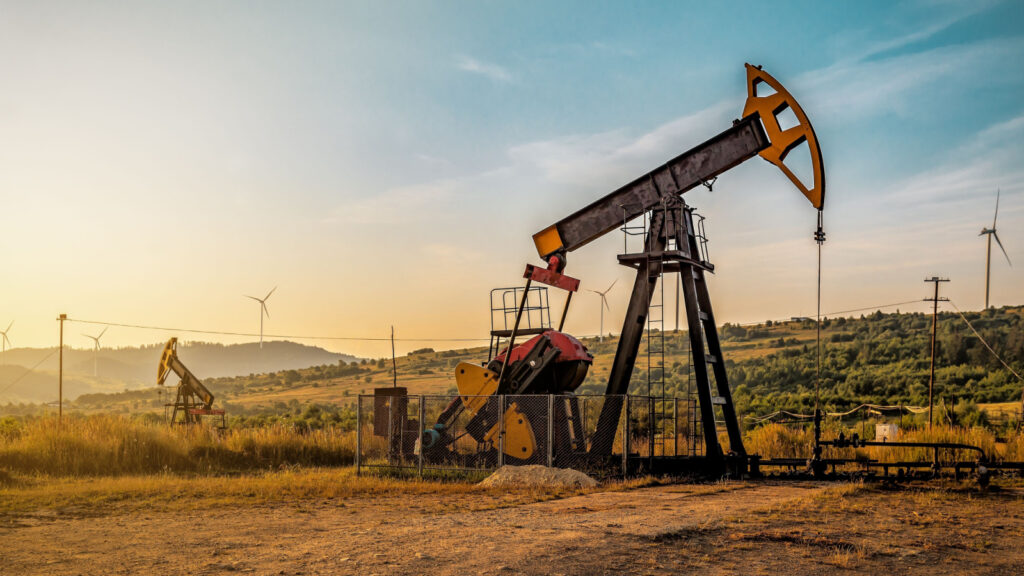
For years, Donald Trump’s energy message has rested on a simple claim: the United States has enough resources to stand on its own. His ambassador to Canada has now offered a more complicated—and more revealing—version of the story. Speaking in Edmonton, Pete Hoekstra said the U.S. needs to find an additional three to four million barrels of oil per day over the next decade, describing Alberta and Saskatchewan as among the most compelling places to secure them.
That admission does not mean Washington is preparing to hand Canada a guaranteed supply contract. Hoekstra also stressed that the United States has alternatives and that Canada must make its case. Still, the underlying economics are difficult to ignore. American refineries already depend heavily on Canadian crude, cross-border pipelines are deeply embedded in the continent’s fuel system, and Canada offers a stable source close to the markets that need it most.
A Remark That Cuts Through Washington’s Rhetoric
Hoekstra’s Edmonton remarks were striking because they came from inside the Trump administration, not from an Alberta premier, an oil executive or a Canadian trade negotiator. He said the United States would need to locate three to four million additional barrels per day over the next decade and that Alberta and Saskatchewan could make the “most compelling” case for supplying part of that demand. He also said cabinet members had been eager to reach an agreement for more Canadian oil, while Trump preferred to keep negotiating because other suppliers remained available.
The message was both an endorsement and a warning. Canada has a strong commercial argument, but Washington does not intend to treat access to the American market as an entitlement. Hoekstra made a similar point in earlier trade remarks, urging Canada to negotiate aggressively by showing how its integrated industries, comparable standards and existing infrastructure meet U.S. needs. In practical terms, he was telling Canadian governments to stop relying on geography alone and start selling reliability, speed and strategic value.
Record U.S. Production Does Not Eliminate the Import Gap
The United States is producing oil at historic levels, but that fact is often used too loosely in political debate. The U.S. Energy Information Administration’s July 2026 outlook projected average American crude production of roughly 13.8 million barrels per day this year. Yet U.S. refineries were expected to process about 16.3 million barrels of crude per day, while total petroleum-product consumption was forecast near 20.7 million barrels per day. Those categories are not identical, but together they show why record production does not translate into complete self-sufficiency.
America also exports crude and refined fuels, and its domestic production mix does not perfectly match what every refinery was built to process. A country can therefore be a major producer, a major exporter and a major importer at the same time. For motorists, airlines and trucking companies, the important question is not whether the United States produces a lot of oil in the abstract. It is whether the right grades can reach the right refineries at the right price. Canadian crude already fills a large part of that operational gap.
Canada Already Supplies the Majority of Imported Crude
Canada is not trying to enter the U.S. oil market from the sidelines. It is already the dominant external supplier. Canada Energy Regulator data show that Canada exported about 4.3 million barrels of crude per day in 2025, with approximately 3.9 million barrels per day going to the United States. Canada supplied 63.4 per cent of all crude oil imported by the U.S. that year—far more than any other country.
The financial stakes are equally large. Canadian crude exports were worth about C$140 billion in 2025, and roughly C$126.1 billion of that value came from shipments to the United States. Those flows support producers and workers in Western Canada, but they also feed refineries, petrochemical plants and fuel-distribution networks across the Midwest, Rocky Mountain region and Gulf Coast. The relationship is therefore not a favour from one country to the other. It is a mature industrial system in which Canadian supply and American processing capacity have grown around each other over decades.
The Barrel Type Matters as Much as the Barrel Count
Much of the rapid growth in U.S. production has come from relatively light crude, including shale output. A significant share of Canadian production, particularly from the oil sands, consists of heavier crude. That difference matters because many U.S. refineries have invested heavily in equipment designed to process those barrels into gasoline, diesel, jet fuel, asphalt, chemicals and other products. Replacing Canadian oil is therefore not as simple as directing more domestic shale output into the same facility.
The U.S. Energy Information Administration reported that Canadian crude represented about 24 per cent of total U.S. refinery throughput in 2023, up from 17 per cent a decade earlier. It also noted that many American refineries are specifically designed to handle heavy Canadian oil. For a refinery manager in the Midwest, this is a daily engineering and economics question rather than a patriotic slogan. A plant optimized for a particular feedstock can change its crude slate, but doing so may raise costs, reduce efficiency or require supplies from more distant and politically complicated producers.
The Pipeline Network Gives Canada an Immediate Advantage
Canada’s strongest advantage is not only the size of its resource. It is the infrastructure already connecting Western Canadian production to American refining centres. The Enbridge Mainline averaged about 3.2 million barrels per day in the first quarter of 2026. Keystone has nominal capacity of roughly 622,000 barrels per day, while Express can move about 310,000 barrels per day. Together, those systems form a large overland supply chain linked directly with established storage, trading and refinery hubs.
That does not mean several million extra barrels can begin flowing immediately. Existing systems are heavily utilized, and expansions still require contracts, capital, permits and construction. Enbridge is advancing projects that could add hundreds of thousands of barrels per day, while smaller optimization projects may unlock capacity faster than an entirely new pipeline. Canada’s Pacific outlet also matters: the expanded Trans Mountain system can carry about 890,000 barrels per day, giving producers access to overseas buyers and strengthening Canada’s negotiating position with the United States.
Three to Four Million More Barrels Is Still an Enormous Ask
Hoekstra’s three-to-four-million-barrel figure should not be read as a forecast that Canada will supply the entire increase. Canada produced a record volume in 2025, rising four per cent to 310.9 million cubic metres of crude oil and equivalent products. Even so, adding several million barrels per day would amount to an extraordinary expansion relative to the country’s current production base, requiring major new projects, pipeline capacity, labour, electricity, diluent, financing and regulatory approvals.
The Canada Energy Regulator’s current-measures scenario projects national crude production rising from about 5.5 million barrels per day in 2024 to 5.8 million by 2030, then reaching approximately 6.1 million around 2040. Its higher-growth scenario climbs to about 6.7 million barrels per day during the 2040s. Those projections suggest Canada could capture a meaningful share of additional U.S. demand, but not automatically all of it. The realistic near-term opportunity is measured in incremental expansions and market-share gains—not an overnight doubling of output.
Energy Is Leverage, but Dependence Runs Both Ways
Hoekstra’s remarks arrive while broader Canada-U.S. trade negotiations remain tense. Washington has criticized Canada for not offering enough concessions in the CUSMA review, even as the ambassador acknowledges that American energy demand creates an opening for Canadian producers. That contradiction gives Ottawa and the western provinces leverage: the United States wants secure barrels, and Canada can offer a politically stable source connected by existing infrastructure.
But Canada’s leverage has limits because its own industry remains heavily dependent on American customers. About 90 per cent of Canadian crude exports still went to the United States in 2025. Trans Mountain has begun changing that equation by opening more access to Pacific markets, and the Canada Energy Regulator says the share of western export supply with access to global markets could rise from roughly 13 per cent in 2025 to as much as 25 per cent in some future scenarios. The more credible Canada’s alternatives become, the stronger its negotiating position will be.
A Durable Deal Would Need More Than a Handshake
A serious North American energy agreement would require more than a political announcement about buying additional barrels. Producers need long-term shipping commitments before financing projects. Pipeline companies need predictable regulation and cross-border permits. Refiners need confidence that tariffs or sudden trade actions will not disrupt feedstock costs. Indigenous nations affected by major projects need meaningful consultation and opportunities for ownership, rather than participation added at the end of the process.
Environmental performance would also remain central. The oil and gas sector was Canada’s largest source of greenhouse-gas emissions in 2024, accounting for about 30 per cent of the national total. Any large production increase would intensify pressure to reduce methane, electrify operations and deploy carbon-management technology. Ottawa has expanded its Indigenous Loan Guarantee Program to C$10 billion, creating a tool that could support equity stakes in major infrastructure. The opportunity identified by Trump’s envoy is real, but converting it into durable prosperity would demand stable policy, credible emissions reductions and partnerships capable of surviving the next political cycle.
