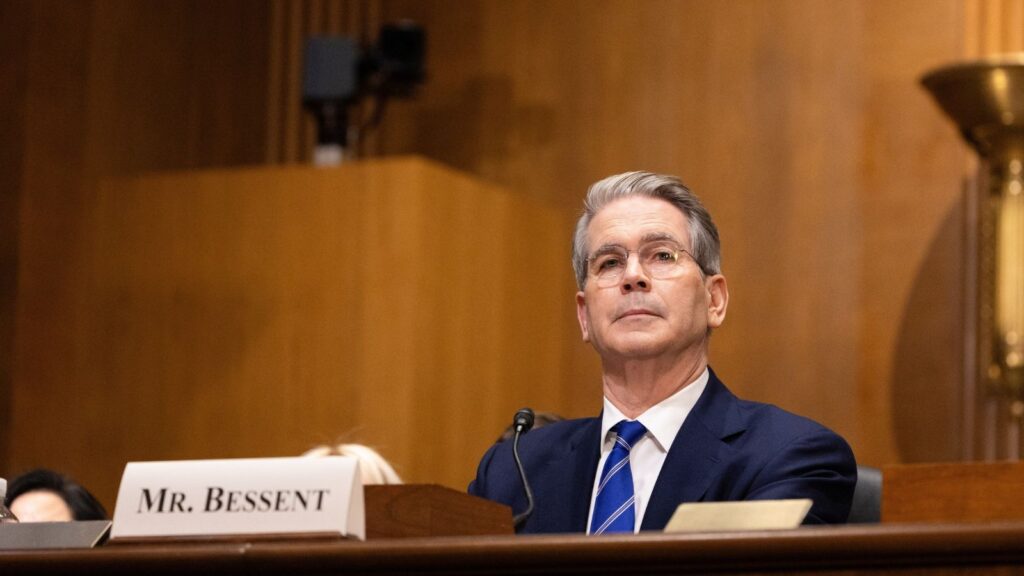
An unexpected note of optimism has emerged from Washington as North America’s trade tensions continue to deepen. U.S. Treasury Secretary Scott Bessent says he believes the United States can reach new trade agreements with Canada and Mexico, even as President Donald Trump maintains an aggressive tariff strategy and negotiations over the continent’s existing trade framework remain unresolved.
Bessent’s comments on November 13, 2026, offer a potential opening for three economies that have spent decades building deeply interconnected supply chains. However, the optimism comes with significant uncertainty. Washington has yet to outline the terms of any potential agreement, while fresh tariff threats and competing national priorities continue to complicate negotiations.
For Canadian businesses, workers and policymakers, the central question is whether Washington’s willingness to negotiate can translate into lasting economic stability.
Bessent Signals Optimism Despite Months of Trade Tensions
U.S. Treasury Secretary Scott Bessent delivered an encouraging message during a November 13 interview with CNBC, expressing confidence that Washington could eventually reach trade agreements with both Canada and Mexico. His statement came at a particularly sensitive moment, with negotiations complicated by President Donald Trump’s tariff demands and uncertainty surrounding the future of the United States-Mexico-Canada Agreement (USMCA). Bessent said he was optimistic about securing agreements, suggesting that the administration still sees a path toward negotiated outcomes rather than a permanent breakdown in continental trade relations.
However, the Treasury secretary provided no specific proposals, deadlines or concessions that might bring the three countries closer to an agreement. His comments also stopped short of confirming whether Washington was pursuing separate bilateral arrangements or a broader trilateral settlement. That distinction matters because political encouragement does not necessarily translate into meaningful progress at the negotiating table. For manufacturers, exporters and investors already dealing with unpredictable trade conditions, Bessent’s remarks offer a reason to remain hopeful but little immediate certainty.
Trump’s Latest Tariff Threat Against Mexico Complicates Negotiations
Bessent’s comments followed a sharp escalation in Washington’s relationship with Mexico. On November 12, Trump threatened to double tariffs on Mexican goods unless the country stopped a group of migrants travelling north toward the United States. Reuters reported that approximately 1,500 migrants, many from Central America, had begun travelling from southern Mexico. Trump linked the movement directly to potential economic penalties, demonstrating how immigration enforcement continues to influence his administration’s approach to international trade.
Mexican President Claudia Sheinbaum acknowledged the movement of migrants but emphasized that caravans had not reached the American border since Trump returned to office. She also indicated that Mexican authorities were informing migrants about the difficulties of entering the United States and exploring options for returning them to their countries of origin. The confrontation illustrates the challenge facing trade negotiators: even when economic discussions appear to advance, disputes involving border security can introduce new demands. Bessent did not address Trump’s specific threat during his interview, leaving questions about how the two positions would be reconciled.
North America’s Existing Trade Agreement Remains in Force
One of the most important developments in the dispute occurred on July 1, 2026, when the Trump administration declined to extend the USMCA for another 16-year period under its existing terms. U.S. Trade Representative Jamieson Greer confirmed that Washington wanted changes to the agreement, including measures addressing trade imbalances and perceived shortcomings in its operation. Despite widespread concern about the treaty’s future, the decision did not immediately cancel the agreement. The USMCA, known as CUSMA in Canada, continues to provide a legal framework for trade among the three countries.
Under the treaty’s review provisions, the agreement remains in force until 2036 unless it is extended or otherwise terminated under its provisions. Because the United States declined the extension, the three governments must conduct annual reviews until they reach an agreement on renewal or the treaty expires. This creates an unusual situation in which businesses can continue operating under existing trade rules while governments negotiate potentially significant changes. For Canadian exporters, preserving those protections remains essential, particularly as additional tariffs complicate otherwise preferential trading arrangements.
Canada and Mexico Remain Essential to the American Economy
The enormous scale of North American commerce explains why negotiations remain important despite the political confrontation. According to the Office of the U.S. Trade Representative, American goods and services trade with Canada totalled approximately US$872.3 billion in 2025. Trade with Mexico reached an estimated US$964.1 billion. Together, those relationships represented more than US$1.8 trillion in annual two-way commerce, connecting manufacturers, agricultural producers, retailers and service providers across all three countries. Disruptions to these relationships therefore extend well beyond the businesses directly targeted by tariff measures.
Canada remains particularly dependent on access to the American market. Statistics Canada reported that 71.7 per cent of Canadian merchandise exports went to the United States in 2025, although that proportion declined from 75.9 per cent in 2024. The figures highlight both the depth of the relationship and the gradual adjustment underway. American businesses also depend on Canadian energy, vehicles, agricultural products and industrial materials. For companies operating on both sides of the border, trade negotiations influence everything from inventory planning to future hiring and investment decisions.
Automotive Manufacturing Could Become a Decisive Battleground
The automotive industry stands among the most consequential areas of disagreement because vehicle manufacturing depends on production networks spread across all three countries. Under existing USMCA rules, passenger vehicles and light trucks generally must meet a 75 per cent North American regional value-content requirement to qualify for preferential treatment. Additional provisions require 40 to 45 per cent of qualifying vehicle production value to come from facilities where workers earn at least US$16 per hour. These requirements were intended to encourage regional manufacturing and higher-wage production.
Washington has nevertheless pushed for changes that would increase American manufacturing content and reduce reliance on foreign suppliers. The pressure intensified in August when Trump threatened to raise tariffs on Canadian vehicles and automotive parts to 50 per cent beginning January 1, 2027. Existing U.S. automotive tariffs generally carry a 25 per cent rate, with specific relief for qualifying North American content and parts. For assembly plants in Ontario and Michigan, potentially stricter requirements could influence future production decisions. Any settlement would need to reconcile Washington’s domestic manufacturing ambitions with an automotive industry built around continental integration.
Steel, Aluminum and Other Tariffs Keep Pressure on Canada
The trade conflict extends well beyond automobiles, affecting Canadian steel, aluminum, lumber and a growing range of manufactured goods. In August 2026, Washington implemented 50 per cent tariffs on numerous Canadian products under Section 338 of the Tariff Act of 1930. The affected categories included furniture, plastics, electronics, paper products and industrial machinery. Separate American national-security tariffs have continued to affect steel, aluminum, copper and softwood lumber, with rates depending on the product and applicable exemptions. Some measures also apply to goods that would otherwise qualify for preferential USMCA treatment.
Canada responded with additional counter-tariffs beginning September 8, applying rates of 15, 25 or 50 per cent to selected American imports. Ottawa said its measures covered approximately C$27.6 billion in U.S. goods. The economic consequences have also prompted domestic relief measures. On November 9, Finance Minister François-Philippe Champagne announced changes to Canadian tariff-remission programs intended to protect businesses facing exceptional costs or limited alternatives to American suppliers. The measures illustrate a difficult reality: governments are attempting to defend domestic industries while reducing the financial damage created by their own retaliatory duties.
Mexico’s Separate Negotiations Could Offer a Possible Template
Mexico has pursued its own negotiating channel with Washington while talks with Canada have repeatedly stalled. In October, President Claudia Sheinbaum said bilateral discussions were advancing, although Mexico was still seeking substantial reductions in American tariffs on automobiles, steel and aluminum. Reuters reported that a possible interim arrangement could exchange some tariff relief for progress on U.S. concerns about automotive content and Chinese investment. Such a bargain could ease immediate pressure without settling every question surrounding the trilateral agreement.
Yet events in November demonstrate how fragile that progress remains. After Trump threatened Mexico over a migrant caravan, Sheinbaum said on November 13 that no group was currently travelling north toward the American border. Mexico’s economy minister, Marcelo Ebrard, also said the situation was not affecting ongoing trade talks as of Friday. That distinction may help keep negotiators focused on commercial issues. It does not establish that an agreement is imminent, nor does it guarantee Canada would receive the same terms as Mexico.
Canada Reopens Trade Discussions While Protecting Its Economic Independence
Canada has also reopened a channel to Washington after negotiations collapsed in August. Prime Minister Mark Carney said on November 3 that more intensive discussions had begun after a conversation with Trump. He indicated that Washington had stepped back from some demands affecting Canada’s language protections, cultural policies and freedom to make agreements with other countries. But Carney also acknowledged that difficult issues remained unresolved. The renewed dialogue therefore offers a possible opening without erasing the disagreements that derailed the previous round.
Ottawa’s challenge is to secure meaningful tariff relief while preserving room to make its own economic and cultural decisions. Canadian officials have repeatedly identified duties on automobiles, steel, aluminum and lumber as priorities. Carney also said in November that the Trump administration would remain Canada’s main negotiating counterpart despite Democratic victories in the U.S. midterm elections. For provincial governments, employers and workers, the essential test is not the warmth of diplomatic language but whether any settlement protects Canadian production and predictable market access.
Trade Uncertainty Is Already Changing Canadian Investment Decisions
The uncertainty surrounding trade negotiations is already influencing where Canadian businesses plan to invest. A KPMG Canada survey of 275 manufacturers, released in July, found that 42 per cent had moved some production to the United States or were considering doing so. Another 57 per cent reported delaying, reducing or cancelling capital investment projects amid trade uncertainty and competitiveness concerns. Those figures do not mean every contemplated move will happen, but they show why even temporary tariff disputes can have long-lasting consequences.
The Bank of Canada reached a similarly cautious conclusion in its October business outlook survey. Although overall sentiment had improved earlier in the third quarter, responses gathered after the August breakdown in Canada–U.S. talks showed weaker expectations for exports and investment. Firms also reported mounting cost pressure, with some planning to pass additional expenses to customers. Consider a supplier deciding where to install its next production line: it cannot base a multimillion-dollar commitment on a hopeful television interview. It needs dependable rules and costs it can estimate.
What Happens Next Could Determine North America’s Trade Future
Bessent’s optimism will carry greater weight if it is followed by specific, verifiable commitments. Near-term progress could mean a documented reduction in sectoral tariffs, agreement on disputed automotive rules or a public timetable for negotiating remaining issues. A separate deal with Mexico might relieve pressure on one trading relationship, but it would not automatically renew the three-country USMCA framework. That broader decision still requires agreement among all three governments, and Washington has not announced detailed terms for a new settlement with Canada.
There is also an established process beyond the latest political statements. The U.S. Trade Representative opened consultations ahead of the 2027 annual USMCA review, inviting written comments and hearing requests by January 12, 2027. Congressional oversight may become more prominent after the midterm elections, although it does not replace negotiations with the administration. For businesses awaiting clarity, the next meaningful signal will be a concrete change to tariffs or treaty commitments. Until then, Bessent’s comments represent diplomatic possibility rather than economic certainty.
