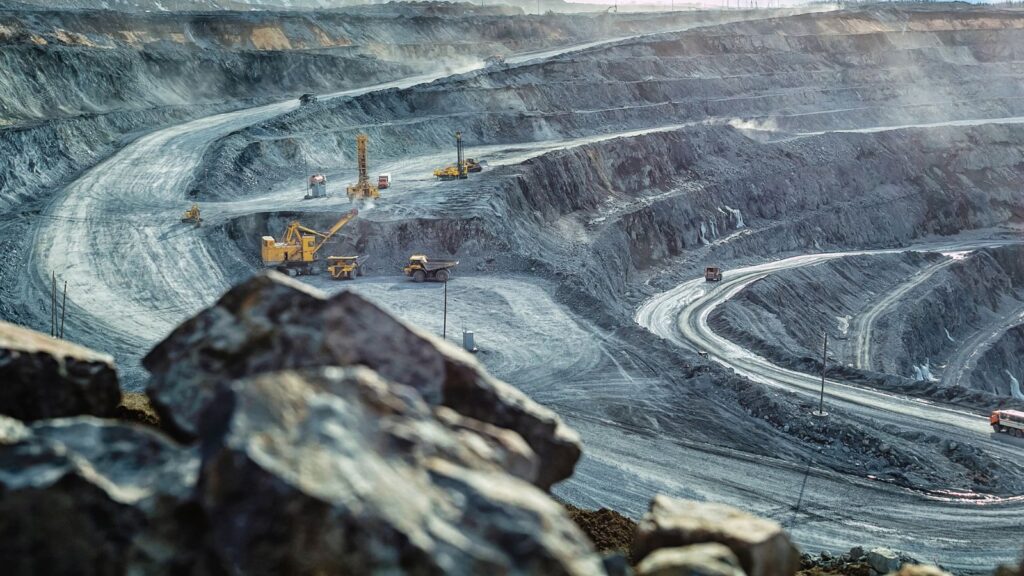
Gold’s most valuable opportunities are sometimes sitting just beyond an existing mine fence. Denver-headquartered SSR Mining has agreed to acquire Toronto-listed Roxmore Resources in a proposed C$712-million transaction centered on the Converse gold project in Nevada, only six kilometres from SSR’s Marigold operation.
Announced October 13, 2026, the agreement could unite a large undeveloped deposit with a company that already knows the district and operates nearby mining infrastructure. Roxmore shareholders would receive cash plus an interest in a new exploration business. But the deal is not completed, and its value is not entirely cash. Its significance lies in what SSR believes the neighbouring properties could become together, not in gold production that Converse is already delivering.
A C$712-Million Deal With a Cash Core
The C$712-million headline combines two different forms of consideration. Under the October 13 agreement, SSR Mining would pay approximately C$663 million in cash while Roxmore shareholders would also receive stock in a new exploration company with an estimated collective value of C$49 million. Those figures reflect the transaction on a fully diluted basis, which accounts for relevant securities beyond existing common shares. It is not a US$712-million cash cheque, an important distinction when comparing mining deals reported in different currencies.
SSR’s own announcement values the cash acquisition at approximately US$464 million in fully diluted equity terms and gives an enterprise value of about US$392 million. Enterprise value adjusts the equity figure for factors such as cash and debt, so it answers a different question from the amount shareholders receive. SSR says it intends to fund the payment from cash already on its balance sheet rather than issue its own shares. The company is based in Denver, but incorporated in British Columbia and listed in both Toronto and New York.
Shareholders Are Being Offered a Substantial Premium
For each Roxmore common share, the agreement offers C$6.75 in cash and 0.33 of a share in the proposed exploration spinout. Roxmore estimates the latter component at about C$0.50 per existing share, bringing the indicated package to roughly C$7.25. The company’s shares finished October 9 at C$5.32 on the Toronto Stock Exchange. Measured against that closing price, the proposed package carries a premium of approximately 36%, while the cash component alone offers about 27%.
The longer comparison is even more striking. Roxmore puts the total consideration approximately 58% above its 20-day volume-weighted average price, or 47% if the spinout is excluded. That premium offers a tangible reward to shareholders who backed a project still years away from possible production. There is a catch: the spinout’s C$0.50 estimated value is not guaranteed cash, and investors will have to assess the exploration company separately if the transaction closes.
Six Kilometres Separate Converse From Marigold
Converse sits on Nevada’s Battle Mountain–Eureka mineral trend, about six kilometres west of SSR’s operating Marigold complex. Its property package covers more than 5,000 hectares in Humboldt and Pershing counties, including 526 unpatented mining claims and seven privately held land parcels, according to SSR. The proximity is unusually important: the properties border each other, and Marigold has operated in the area since 1989. SSR therefore brings existing regional experience rather than approaching Nevada as an unfamiliar mining jurisdiction.
For nearby communities and suppliers, the practical advantage is straightforward. A new project developed in isolation might need to build up procurement networks, maintenance arrangements and administrative functions from scratch. A project beside an established operation may be able to coordinate some of that work. It does not eliminate the need for new pits, processing equipment or permits, but it changes the economic starting point. SSR is buying geography as well as a gold deposit.
The Resource Is Large, but Not All Gold Is Proven
Roxmore’s 2026 mineral estimate identifies approximately 2.2 million ounces of gold in the indicated category and another 3.0 million ounces in the inferred category at Converse. The indicated estimate is contained in about 103 million tonnes of rock averaging 0.65 grams of gold per tonne. The inferred portion covers approximately 218 million tonnes averaging 0.43 grams per tonne. Together, the figures help explain why a major operator would pay hundreds of millions for a project that is not yet producing metal.
The distinctions matter. An inferred resource carries greater geological uncertainty than an indicated resource, and neither category is automatically a mineable reserve. Additional drilling, engineering and economic studies are needed before production assumptions can be treated with greater confidence. Roxmore reported new results in September from a hole that intercepted 58.2 metres grading 1.85 grams of gold per tonne, including a stronger interval. That supports interest in the district, but individual drill results do not guarantee future mine output.
SSR’s Production Vision Is More Cautious Than Roxmore’s
Before the takeover announcement, Roxmore’s preliminary economic assessment envisaged an open-pit, heap-leach operation producing an average of around 246,000 ounces of gold annually over roughly 14 years. SSR is working with a different concept. Its October 13 announcement proposes approximately 150,000 to 170,000 ounces per year over more than a decade, with initial production targeted for 2033. The smaller output estimate does not mean the deposit has abruptly shrunk; it reflects a different design and more conservative planning assumptions.
SSR says it evaluated Converse using gold-price assumptions aligned with its new Marigold technical study: US$2,200 an ounce for reserve pit shells and US$2,500 for resource pit shells. Roxmore’s earlier assessment used US$3,000 to constrain its resource pit. Different assumptions can change which portions of a deposit look attractive to mine. The key is that SSR’s production figures are conceptual targets based on resources, not a promise supported by established Converse reserves.
Construction Could Cost More Than the Acquisition
Acquiring Roxmore is only the first financial commitment. SSR estimates that building Converse could require US$800 million to US$900 million in initial capital, covering the industrial work needed before commercial gold production. That sum is separate from the takeover consideration and is denominated in U.S. dollars. Gold deposits may command impressive valuations, but a working mine also needs earthmoving equipment, crushing circuits, leach facilities, power arrangements and roads before any sustained revenue can begin.
The timing is designed to limit immediate pressure on SSR’s finances. Management says it does not expect material development capital spending on Converse until the early 2030s, after advancing its Buffalo Valley project at Marigold. That sequencing gives engineers time to refine costs and complete studies, although it leaves the estimate exposed to future inflation, equipment prices and permitting requirements. A purchase funded with existing cash may avoid financing the takeover with new SSR shares; it does not eliminate the much larger question of funding mine construction several years later.
The Biggest Claimed Advantage Is US$200 Million in Savings
SSR estimates Converse could deliver at least US$200 million in undiscounted savings over its operating life compared with developing the deposit as an independent mine. Management points to opportunities to avoid duplicate site administration and corporate expenses, as well as efficiencies in purchasing and supply chains. Those savings would arise from the properties’ proximity and the ability to coordinate operations at Marigold rather than operate two completely separate mining businesses.
The number is a projected synergy, not a cash balance or guaranteed annual saving. SSR also identifies possible additional efficiencies involving shared maintenance facilities, mine fleets and water rights, but says those opportunities need further evaluation. In mining, small differences in costs per tonne can become meaningful when millions of tonnes must be moved and processed. Still, the savings case will depend on design choices, operating rates and eventual permissions. Investors should treat the US$200 million as part of SSR’s investment thesis, not as profit already earned.
Marigold’s New Mine Plan Explains the Timing
On the same day it announced the Roxmore deal, SSR released a new long-term plan for Marigold. Its updated technical report identifies 4.6 million ounces of gold mineral reserves, 43% above the company’s year-end 2025 figure, and sets out a mine plan stretching about two decades. SSR forecasts average annual production of 231,000 ounces from Marigold between 2027 and 2031. The plan also incorporates Buffalo Valley, another nearby project, with first production expected in 2029.
That timetable helps explain why Converse is being positioned as a later addition rather than a near-term production boost. SSR wants to modernize and expand Marigold while advancing Buffalo Valley before taking on Converse’s largest construction bills. The company says that, once Converse starts, its U.S. operations could average around 350,000 to 400,000 ounces annually from 2033 through 2042, with some peak years exceeding 450,000 ounces. Those are combined-platform forecasts and remain conditional on development going to plan.
Canadian Investors Keep Three Exploration Projects
Roxmore shareholders would not walk away with cash alone. The transaction would establish a separate exploration business holding the Rattlesnake Hills gold project in Wyoming, the Newton property in British Columbia and the Shabu River property in Ontario. Former Roxmore shareholders are expected to own 85.01% of the spinout, while SSR would keep a 14.99% strategic interest. Roxmore executive chairman and chief executive John Dorward is expected to lead the new company with members of the existing team.
The proposed business would start with US$10 million in cash, offering funding for exploration without immediately relying on another equity raise. Rattlesnake Hills already has reported gold resources; Newton has reported gold and silver resources; Shabu River is an earlier-stage exploration property. None of that makes their development certain. Investors would effectively exchange their direct exposure to Converse for a cash payment and a new, more speculative collection of projects. The spinout’s eventual market value—and whether its shares obtain an exchange listing—remain uncertain.
The Transaction Still Needs a Shareholder Vote
A signed arrangement agreement is not the same as a completed acquisition. Roxmore expects to hold a special securityholder meeting in December 2026, where the deal must receive approval from at least two-thirds of votes cast by the relevant shareholders, warrant holders and option holders voting together. A separate minority shareholder vote may also be required under Canadian securities rules, and the Supreme Court of British Columbia must approve the arrangement. The companies are targeting closing in December if the conditions are met.
Management has support but not an automatic victory. Voting agreements cover approximately 26.8% of Roxmore’s shares, including holdings associated with its largest investor and company insiders. The board has unanimously recommended the transaction, and financial advisers have provided fairness opinions subject to their stated assumptions. The agreement also includes a C$18-million termination fee payable in specified circumstances, along with provisions for dealing with superior offers. Until approvals arrive, shareholders face execution risk as well as the opportunity reflected in the offer.
Permits, Gold Prices and a 2033 Start Remain the Tests
The largest uncertainty begins after the acquisition, not before it. Converse will need major federal approvals overseen by the U.S. Bureau of Land Management, environmental baseline studies and what SSR expects to be an environmental impact statement process. Roxmore already has authorizations for exploration activities, but those are not permission to construct and operate the full proposed mine. Decisions about water, waste material, mine layout and restoration obligations will matter to regulators and communities as engineering moves forward.
Gold prices add another layer of uncertainty. The projected resources and economic attractiveness of an open pit change when assumptions about future gold prices, recovery rates or costs shift. SSR plans further technical and metallurgical work, including refining a proposed three-stage crushing and heap-leach system. The next milestones are clear: completing the takeover, upgrading confidence in the mineral estimate, advancing permits and testing the capital budget. A 2033 production goal gives the deal a long horizon—and plenty that must go right before its potential becomes reality.
