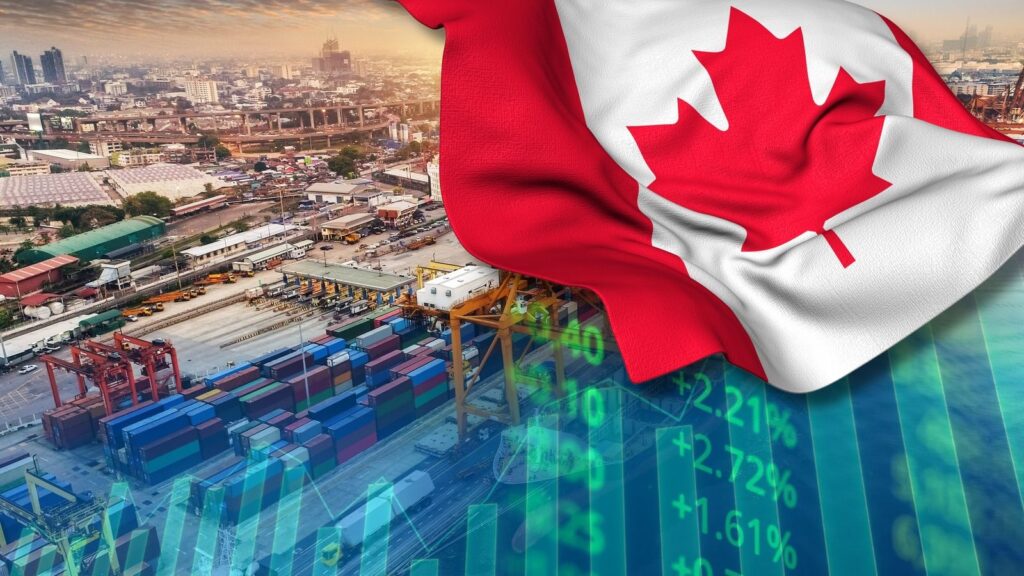
The economic fallout from President Donald Trump’s trade war with Canada is becoming increasingly visible on the American side of the border. At the Port of Oswego in New York, officials say tariffs and disrupted trade have cost the facility more than $1 million in potential revenue, raising concerns about maritime jobs and future infrastructure investments.
On October 29, 2026, Senate Democratic Leader Chuck Schumer visited the port to demand an end to the latest tariffs, arguing that American businesses and families are paying a growing price for Washington’s confrontation with one of its closest trading partners.
The dispute is revealing how policies intended to protect U.S. industries can also create unexpected problems for American ports, manufacturers, small businesses and communities that have spent decades building economic relationships with Canada.
Port of Oswego Reports More Than $1 Million in Lost Potential Revenue
The Port of Oswego Authority says the Trump administration’s tariffs and trade dispute with Canada have resulted in more than $1 million in lost potential revenue. Port Executive Director Tom Drumm disclosed the figure during Schumer’s October 29 visit, explaining that the trade confrontation has disrupted customer demand, complicated shipping arrangements and reduced opportunities for maritime workers. Located on the southeastern shore of Lake Ontario, the port depends partly on commercial relationships with Canadian suppliers and shipping companies. When those shipments become more expensive or less predictable, the financial consequences extend beyond the businesses directly importing the goods.
Importantly, the $1 million figure represents estimated revenue opportunities that did not materialize, rather than a confirmed accounting loss. In an October 14 interview with Oswego County Business Magazine, Drumm explained that the port would not have a complete picture of its financial performance until the shipping season ended, typically in late November. Nevertheless, the newly disclosed estimate illustrates how reduced trade activity can affect a transportation facility long before its final annual financial results are available.
Canadian Aluminum Shipments Are Arriving With Smaller Loads
Canadian aluminum has traditionally been an important part of the Port of Oswego’s business, but higher U.S. import duties are changing the economics of those shipments. In his October interview, Drumm explained that vessels carrying Canadian aluminum were arriving with considerably less cargo than the port would prefer. While a desirable shipment would contain approximately 10,000 metric tons, vessels during 2026 had generally been carrying between 4,000 and 6,000 metric tons. The difference is significant for a facility that earns revenue from handling and moving commercial freight, particularly when repeated across multiple shipments throughout a shipping season.
Drumm identified the 50% tariff on Canadian aluminum as one important reason for the weaker volumes, although he also acknowledged changing demand connected to aluminum processor Novelis. That distinction matters because not every reduction in shipping can be attributed exclusively to tariffs. Still, the impact is visible: smaller cargo loads mean less handling work and fewer transportation services required. American businesses that depend on Canadian aluminum also face higher import costs, creating pressure to adjust purchasing decisions, postpone orders or reconsider supply arrangements.
Why This New York Port Matters Far Beyond Its Waterfront
The Port of Oswego occupies a strategic position on the Great Lakes, serving as a deepwater shipping gateway between the St. Lawrence Seaway and industrial markets throughout the northeastern United States. According to the authority’s published profile, the facility has historically handled nearly 120 vessels and more than one million tons of cargo annually. Its operations connect waterborne transportation with trucking and rail services, allowing commodities to move between international suppliers and American manufacturers. Aluminum is only one part of that activity, alongside agricultural products, steel and other industrial materials.
The port’s economic influence is considerably larger than its own operating revenue. The authority cites a 2023 U.S.-Canadian economic impact study estimating that maritime activity associated with the port supported approximately 2,229 jobs and generated $513 million in regional economic activity. Those figures describe a broader network of economic contributions, rather than the port’s direct payroll or annual earnings. They help explain why declining cargo volumes matter to local officials: disruption at the docks can reach transportation companies, industrial customers, suppliers and households that depend on the region’s commercial activity.
Dockworkers Are Feeling the Pressure Through Reduced Working Hours
For maritime employees, the consequences of lower shipping volumes often appear in working hours rather than immediate job losses. Drumm explained that when vessels arrive with smaller aluminum shipments, fewer workers are needed to unload, organize and transfer the cargo. In some circumstances, an operation that might previously have required approximately 15 hours of work can now take only seven or eight hours. For longshoremen whose earnings depend partly on available assignments, those reductions can translate into fewer opportunities to earn income, even while the port remains operational and continues receiving vessels throughout the season.
However, Drumm also emphasized that the port has not experienced a uniform collapse in employment activity. Other business, including a substantial rock salt shipment of approximately 24,000 metric tons, helped keep workers occupied during the summer. The port has also been handling significant quantities of aluminum ingots in storage. That combination illustrates a complicated reality: the facility continues to attract business, but changing cargo patterns are affecting the amount of work individual shipments generate. For employees and transportation contractors, stability can matter almost as much as overall activity.
Tariff Uncertainty Threatens Plans to Support Central New York’s Manufacturing Expansion
The Port of Oswego’s concerns extend beyond its current shipping season. Drumm warned that continued tariff uncertainty could make it harder to invest in the infrastructure required to support Central New York’s expanding manufacturing economy. One of the region’s biggest opportunities is Micron Technology’s semiconductor manufacturing complex in Clay, New York. The company has outlined plans for up to $100 billion in investment over more than two decades. Construction officially began in January 2026, and Micron announced in July that workers had started pouring the first concrete foundations, marking an important transition toward building its initial fabrication facility.
Micron’s project is expected to create substantial employment opportunities across manufacturing, construction and supporting industries, with approximately 50,000 jobs projected across New York when direct and broader economic effects are included. The Port of Oswego hopes to position itself to benefit from the regional industrial expansion, although a direct Micron shipping contract has not been established in the available reporting. The concern is that reduced revenue and unpredictable cargo demand could delay investments in equipment, transportation connections and handling capacity just as the region prepares for greater industrial activity.
Schumer Wants Congress to Reverse Trump’s Latest Tariff Measures
Schumer used his October 29 appearance to promote the End Trump’s Tariff Tax Act, legislation intended to reverse several major tariff measures imposed by the administration. The proposal, formally introduced in the Senate on September 14, 2026, as S. 5390, would terminate certain duties established under Section 301 of the Trade Act of 1974 and repeal tariff authorities under Section 122 of that law and Section 338 of the Tariff Act of 1930. It would also establish refunds for specified tariffs previously collected from importers. Schumer argues that reversing these measures would reduce costs for businesses and households struggling with higher prices.
The legislation has not become law. It was referred to the Senate Finance Committee, and an attempt to secure its immediate passage on September 16 was blocked by Republican Senator Mike Crapo, who argued that tariff legislation should be considered through the committee process. There is also an important limitation: the bill does not directly repeal the separate Section 232 national-security tariffs that apply to Canadian aluminum. Consequently, even if Schumer’s proposal became law, it would not automatically eliminate every duty affecting the Port of Oswego. Broader relief would require additional policy changes or negotiations.
Different Tariff Rules Are Creating Complications for Cross-Border Trade
Understanding the dispute requires distinguishing between two major tariff systems. Section 232 tariffs, justified by the Trump administration on national-security grounds, impose duties of up to 50% on covered metal products, including Canadian aluminum. Separately, Trump introduced additional 50% duties on specified Canadian goods under Section 338 of the Tariff Act of 1930. The administration argues those measures respond to Canada’s treatment of American automotive, alcoholic beverage and dairy exports. Canada disputes important elements of Washington’s position and maintains that several restrictions criticized by the United States were responses to earlier American trade measures.
These overlapping policies also create uncertainty for businesses trying to calculate import expenses. Certain Section 338 duties can apply even to goods qualifying under the United States-Mexico-Canada Agreement, and where applicable they can be added to Section 232 duties. The White House announced further product-level changes on October 23, scheduled to take effect October 30. While Washington argues tariffs protect domestic producers, economic research has highlighted their costs for American buyers. A February 2026 Federal Reserve Bank of New York analysis estimated that U.S. businesses and consumers bore nearly 90% of the economic burden from the 2025 tariff increases.
A Syracuse Manufacturer Says Tariffs Drove Business Overseas
For Eagle Metalcraft, a precision metal fabricator based in East Syracuse, the tariff dispute has reportedly produced the opposite of the manufacturing revival promised by the White House. In material presented during Schumer’s port visit, the company said it had lost millions of dollars in business because of tariffs. One major customer shifted manufacturing and much of its purchasing to Asia, according to the company’s account, cutting revenue from that customer by approximately half. Eagle Metalcraft said it had subsequently conducted two rounds of layoffs affecting six employees. The figures are company-reported, not an independently audited estimate of tariff damage.
The example is particularly striking because Eagle Metalcraft makes products in the United States. The company describes its operations as including CNC machining, laser cutting, welding and custom metal fabrication, services that American industrial customers rely on for specialized components. When customers respond to escalating costs by relocating production or changing suppliers, the consequences can land on domestic manufacturers that were never the intended targets of the tariffs. For workers, a procurement decision made elsewhere in the supply chain can suddenly become a lost shift, a cancelled project or a job that disappears.
A Farm and a Café Confront a Different Kind of Trade-War Cost
The pressure described in Oswego is not confined to heavy industry. Sterling House Farm, a multigenerational agricultural business with land in Cayuga and St. Lawrence counties, said tariffs and higher material costs complicated construction of a new greenhouse. According to the account presented by Schumer’s office, the farm sought alternatives to its usual local lumber suppliers as prices climbed. A project originally expected to take one season stretched into several years and ran thousands of dollars over budget. That experience illustrates how uncertainty can change the pace of investment even for businesses that are not directly exporting goods.
In Fulton, café owner Mikaela Tubolino described a different version of the same squeeze. Her business, 114 Reserve, reported paying an additional dollar per pound for coffee beans and nearly 50% more for heavy cream and oat milk, alongside higher expenses for packaging, cocoa and other supplies. The café said it had absorbed much of the increase rather than charging customers more, reducing profit and postponing additional hiring. Those prices are the business’s reported experience; the precise share caused specifically by Canadian tariffs has not been independently established.
Fewer Canadian Visitors Are Straining Border Communities Too
The deterioration in cross-border relations is also affecting businesses that depend on visitors rather than freight. During Schumer’s October 29 appearance, city officials described a substantial reduction in Canadian visitors to Oswego compared with earlier years. They said the effects were being felt by restaurants, hotels, shops, fishing charters, museums and attractions such as Oswego Speedway. Fewer customers can mean not just weaker private-sector sales but less local sales-tax revenue for municipal services. No independently verified dollar estimate for Oswego’s lost tourism revenue accompanied those remarks, so the precise financial effect remains uncertain.
National travel statistics provide important perspective. Statistics Canada’s September 2026 preliminary figures showed Canadian-resident return trips from the United States by automobile increasing 5.6% compared with September 2025, but remaining 31.1% below September 2024 levels. Air return trips were also below their 2024 level. That means travel has begun recovering from last year’s steep decline without returning to earlier patterns. These nationwide figures cannot establish exactly how many Canadians cancelled visits to Oswego, but they support the broader picture of cross-border travel that remains unusually subdued.
Trade Negotiations Offer Hope, but No Guaranteed Recovery
For now, the prospect of tariff relief depends on negotiations as well as political pressure in Washington. Reuters reported on October 28 that U.S. and Canadian officials had made only limited progress despite renewed discussions about reducing duties on Canadian steel and automobiles. Prime Minister Mark Carney had described a modest intensification of talks earlier in the week, while U.S. officials continued to seek concessions. The negotiations have focused on Section 232 measures, a separate legal track from the Section 338 duties targeted by Schumer’s bill. No comprehensive settlement had been announced as of October 29.
The White House has already demonstrated that it can change the rules: its latest Section 338 product adjustments were scheduled to take effect October 30, removing some goods and adding others. But a narrower exemption is not the same as restoring predictable trade across the border. For the Port of Oswego, the practical questions are whether Canadian cargo volumes recover, workers receive steadier assignments and future investment once again becomes easier to plan. The reported $1 million-plus in potential revenue captures what may already have been missed; what happens next will determine whether that lost opportunity becomes a lasting constraint.
