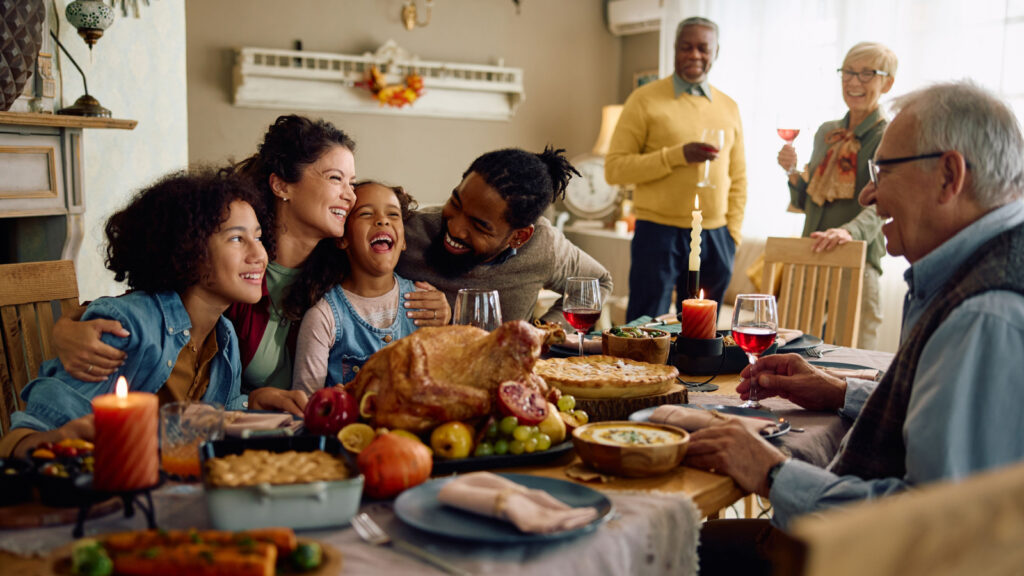
Thanksgiving can make even familiar family routines surprisingly complicated. A gathering that sounds simple—share a meal, give thanks, enjoy the long weekend—can produce disagreements over everything from shoes at the door to phones at the table. Much of the tension comes from the fact that etiquette is rarely universal. Customs shift between generations, regions, cultures, religions and even households that live on the same street.
Canadian Thanksgiving traditions have also evolved considerably over time, leaving families to create their own expectations around hosting and dining. These 17 Thanksgiving etiquette rules Canadians can’t seem to agree on explore the everyday questions that can turn an otherwise peaceful turkey dinner into a surprisingly lively negotiation.
How Early Is Too Early to Arrive?

For hosts racing between the oven, dining room and front door, an early guest can sometimes be more disruptive than a late one. Traditional party etiquette generally advises arriving at the stated time or shortly afterward rather than ringing the bell 20 minutes early. Emily Post guidance suggests that arriving within roughly 15 minutes after the scheduled time is normally reasonable for a social gathering. Showing up significantly earlier can catch a household while the table is still being set, children are being dressed or the turkey is receiving its final attention.
Yet many Canadian families operate on their own clocks. One household may announce dinner for 5 p.m. while secretly expecting relatives to begin appearing at 3:30 for drinks and conversation. Another treats 5 p.m. as an actual deadline because food is being timed precisely. The safest etiquette is communication rather than assumption. Guests running seriously late should alert the host, while hosts who expect an extended pre-dinner gathering should make that clear. The disagreement usually is not really about punctuality. It is about whether the invitation time means “arrive now” or “dinner starts now.”
Is Bringing a Host Gift Necessary?
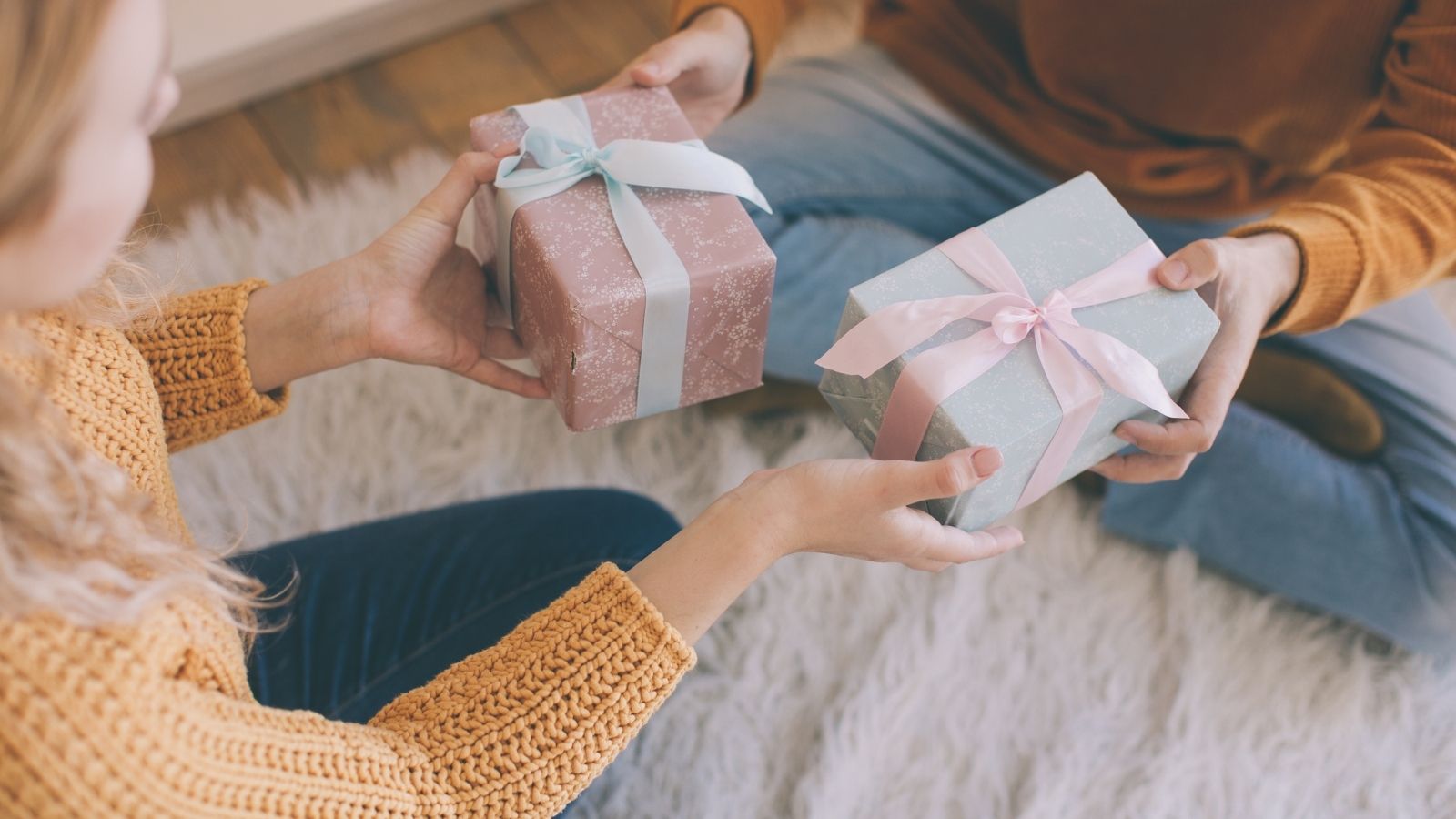
Some Canadians were raised with a simple rule: never arrive at someone’s home empty-handed. A bottle of wine, flowers, chocolates or another modest item is seen as recognition of the work involved in hosting. Others view that tradition as needlessly formal when the gathering involves close relatives who see one another regularly. Modern etiquette guidance lands somewhere in the middle. A host gift is often appreciated at a dinner party, but it is not an absolute requirement for every casual meal, particularly among friends or family members who entertain each other frequently.
The size of the gift can create another etiquette problem. A small token is usually easier for a busy host to receive than an elaborate bouquet requiring immediate trimming and arranging. A bottle of wine can also cause confusion if the guest assumes it will be opened with dinner. Traditional etiquette treats a host gift as belonging to the host, meaning there is no obligation to serve it that evening. Thanksgiving exposes the generational divide especially well: one guest sees arriving without a gift as inconsiderate, while another believes accepting the invitation and offering sincere thanks is entirely sufficient.
Should Everyone Bring Something for the Meal?
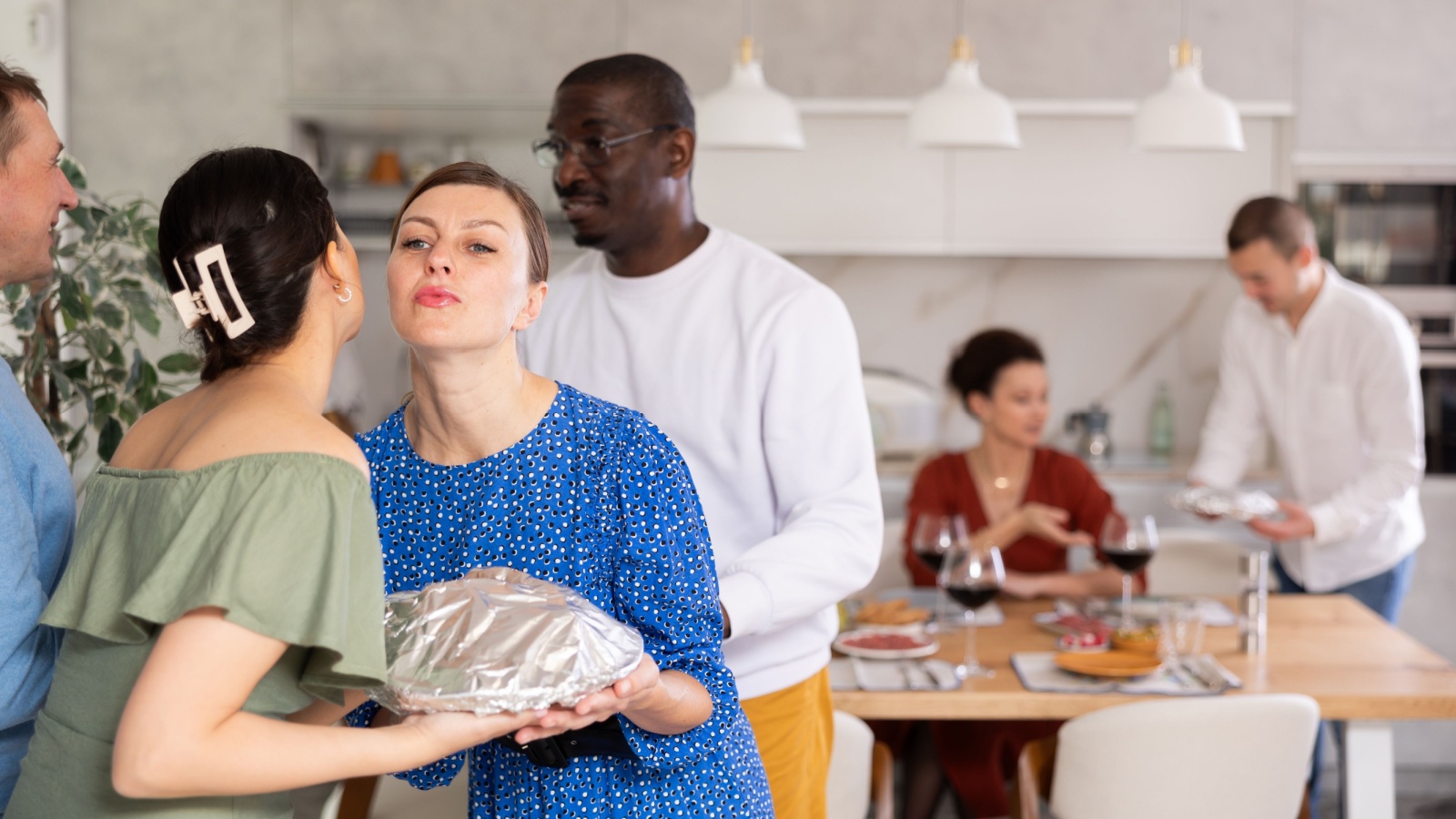
Thanksgiving sits awkwardly between a formal hosted dinner and a community potluck. Some households expect the host to provide almost everything, allowing guests to arrive without carrying casserole dishes across town. Others divide the meal almost automatically: one sibling handles potatoes, another brings pie, an aunt supplies vegetables and someone else arrives with wine. Etiquette guidance generally recommends offering to contribute rather than simply announcing what will be brought. That allows the host to coordinate the menu and avoid receiving four nearly identical desserts.
Coordination matters for more than appearance. Refrigeration, oven space, dietary restrictions and serving times can make an unexpected dish surprisingly inconvenient. A guest arriving with an uncooked casserole that requires 45 minutes at a different oven temperature may unintentionally create more work than help. Conversely, hosts who genuinely want contributions should provide clear instructions instead of expecting relatives to read their minds. Thanksgiving works best when “bring something” has an actual meaning: perhaps a specific side, a ready-to-serve dessert or simply drinks. The politest contribution is usually the one the host knows about before the doorbell rings.
Should Shoes Come Off at the Door?
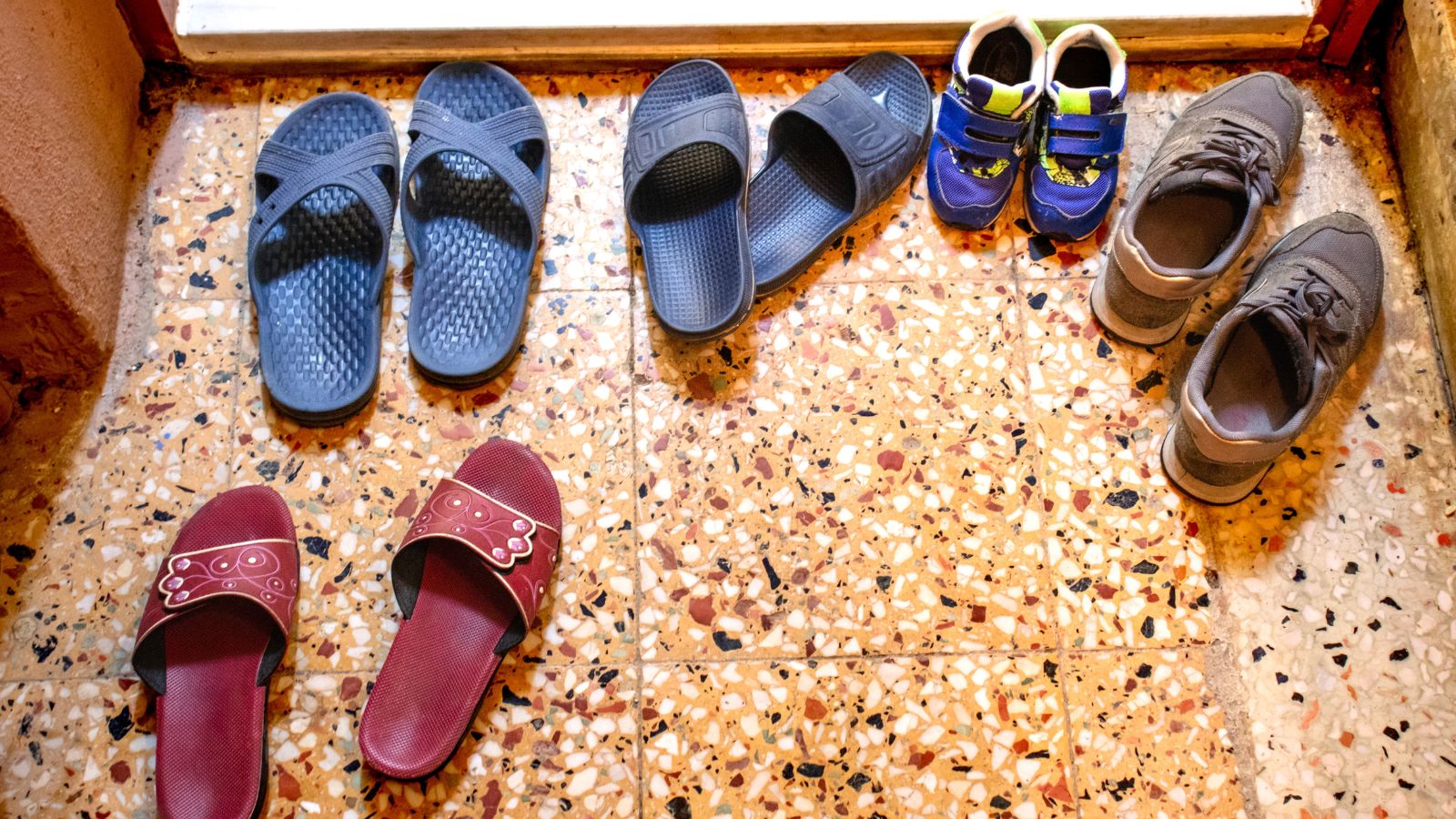
Few small habits reveal Canadian household culture as quickly as the shoe question. In many homes, outdoor footwear comes off almost automatically, particularly once autumn rain, mud, road grit and eventually winter salt enter the picture. Canadian Living has advised guests who are uncertain simply to ask whether a gathering is shoes-on or shoes-off. Canadian lifestyle guidance likewise commonly recommends looking for cues such as a row of footwear near the entrance rather than assuming every household operates the same way.
The disagreement becomes more noticeable at Thanksgiving because guests may arrive dressed for a special dinner rather than an ordinary visit. Someone who coordinated an outfit around formal shoes may feel unexpectedly underdressed in socks, while the host may be imagining wet soles crossing hardwood floors. A practical compromise is to bring clean indoor shoes or slippers, especially when bad weather is expected. Hosts with a firm no-shoes rule can also make the transition easier by providing a bench, clear storage space and perhaps slippers. The etiquette principle underneath the debate is simple: the homeowner sets the house rule, but a thoughtful host makes that rule comfortable to follow.
Can a Guest Bring an Extra Person?

Thanksgiving carries such a strong image of abundance that an extra chair can seem harmless. That assumption can create real problems, however, when a host has purchased food, arranged seating and planned sleeping arrangements around a specific head count. Established etiquette guidance is clear that guests should not simply arrive with someone who was never included in the invitation. Even at Thanksgiving, where including someone who would otherwise be alone can be a generous gesture, the host should be asked first.
The complication is that hosts may feel social pressure to say yes regardless of whether another person is convenient. A last-minute addition can mean finding an extra place setting, adjusting allergy precautions or stretching a meal that was carefully portioned. At the same time, Thanksgiving has long been associated with gathering family and friends, and many hosts genuinely prefer squeezing in another chair to leaving someone out. The courteous approach gives the host a real choice. “Would there be room for one more?” is very different from appearing at the door with a surprise guest standing beside the cranberry sauce.
Who Decides When Everyone Sits Down?

One family starts Thanksgiving dinner the moment the turkey reaches the table. Another waits while photographs are taken, drinks are topped up, a blessing is said and a relative searches for someone still talking in the kitchen. Traditional dining etiquette generally gives the host control over the transition. Guests are expected to follow when the host announces that dinner is ready rather than wandering independently toward the table or continuing a conversation while the rest of the group waits.
There is practical value in having someone call the start. Hot food can spend only so much time sitting before quality declines, and food-safety guidance also emphasizes keeping hot foods hot rather than leaving them indefinitely at room temperature. That does not mean Thanksgiving needs military precision. It means the host should communicate clearly: “We’re sitting down in five minutes” is far easier to follow than hoping everyone notices that the gravy has appeared. Families that prefer a relaxed buffet can be equally clear that guests may begin whenever they wish. The disagreement disappears surprisingly quickly when everyone knows whether the meal is structured or intentionally informal.
Must Everyone Wait Until All Plates Are Filled?
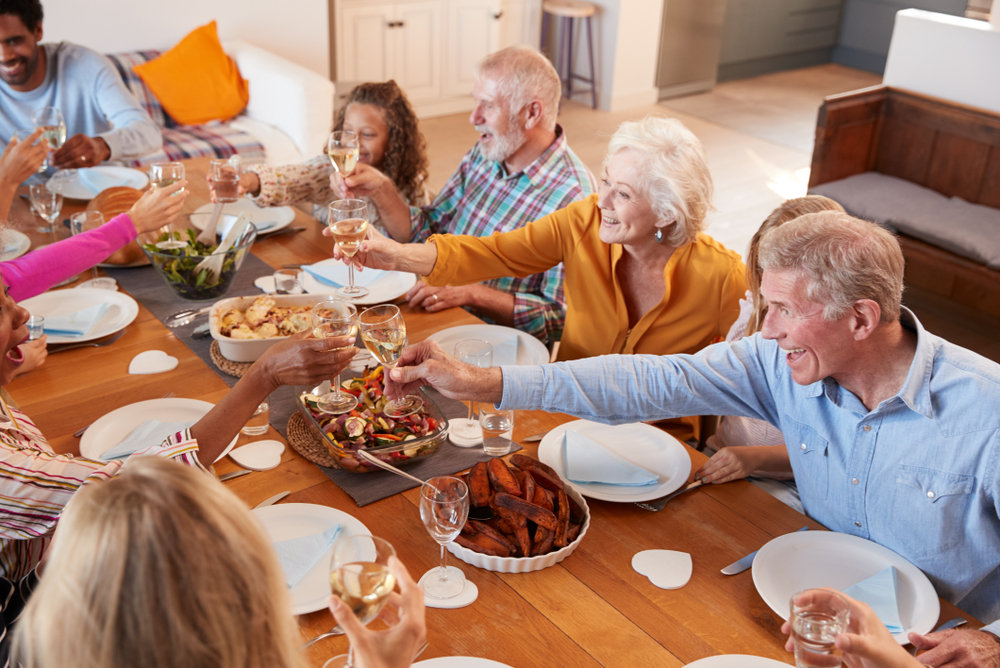
Waiting until everyone has food is one of those table manners that sounds straightforward until Thanksgiving dinner involves 14 people, a crowded buffet and potatoes cooling by the second. Traditional etiquette encourages diners to take their cue from the host. Emily Post guidance says people should generally begin together unless the host specifically tells them to start while the food is hot. That small exception explains why two equally polite families can develop opposite traditions.
At a plated dinner where everyone is served within a minute or two, waiting is usually easy. At a buffet, insisting that the first person stand beside a cooling plate until the final guest has finished choosing vegetables can be less considerate than simply allowing everyone to begin. Hosts can eliminate the uncertainty with a sentence such as, “Please start—don’t wait for us.” The real etiquette goal is shared comfort rather than rigid synchronization. Nobody should be left feeling that they have broken a sacred rule because they tasted the stuffing 30 seconds before an uncle reached the table.
Should Thanksgiving Dinner Begin With Grace?
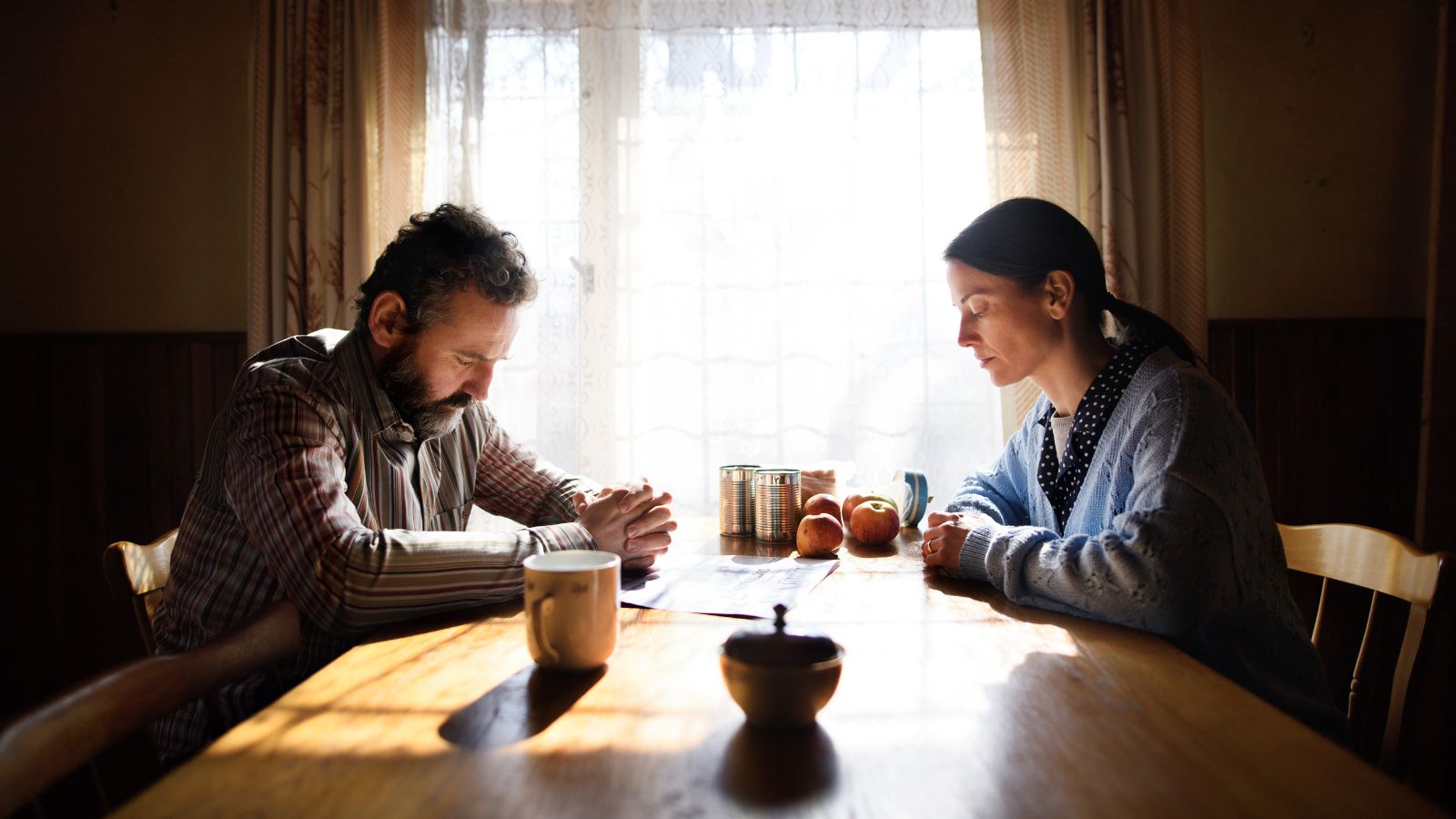
For some households, a prayer before Thanksgiving dinner is the most meaningful moment of the gathering. For others, gratitude is expressed in secular terms, perhaps by asking everyone to name something they appreciate. Some families skip any formal ritual entirely. Canada’s cultural and religious diversity makes a single national rule unrealistic, and even relatives within one family may have different beliefs about whether faith should be part of the meal.
The broader practice of deliberately expressing gratitude has been examined extensively by researchers. A 2025 meta-analysis covering 145 papers, 163 samples and 24,804 participants across 28 countries found that gratitude interventions produced small overall improvements in well-being, though results varied by culture and method. That does not turn a Thanksgiving toast or prayer into a psychological treatment, but it helps explain why a moment of reflection can feel meaningful beyond religious tradition. Etiquette is best served when hosts explain what is happening without forcing participation. Guests can remain respectfully quiet during a prayer, while secular households can create their own traditions of appreciation without pretending there is only one proper way to give thanks.
Are Phones Allowed at the Table?

Few modern Thanksgiving arguments are as predictable as the phone debate. One person considers a phone beside the plate harmless, especially when relatives are sharing photographs or waiting for a message from someone who could not attend. Another sees even a face-down device as a symbol that the people in the room are competing with notifications. Traditional etiquette guidance strongly favours putting phones away during a shared meal unless there is a genuine reason they need to remain accessible.
Research gives the phone-free side more than nostalgia to work with. In a University of British Columbia experiment involving more than 300 people dining with friends or family, participants assigned to keep their phones available reported greater distraction and less enjoyment of the social interaction than those who put them away. A reasonable Thanksgiving compromise is therefore not necessarily a total technology ban. Families can take photographs before dinner, answer genuinely necessary calls and then create a phone-light period while people are eating. The important distinction is between using technology to connect with the gathering and allowing it to replace the gathering.
Should Politics Be Banned From Thanksgiving Conversation?
Some families regard political discussion as normal dinner-table conversation. Others can predict exactly which two relatives will transform a casual comment into a two-hour argument. There is no universal rule that politics is inherently impolite. The problem is context. Thanksgiving etiquette guidance from the Emily Post Institute recommends caution around controversial or painful topics when the likely result is arguing or hurt feelings rather than productive discussion.
That does not require pretending important issues do not exist. A family comfortable debating public affairs can have an energetic conversation without violating etiquette if participants are willing to listen, avoid personal attacks and change the subject when someone becomes uncomfortable. The host also has a legitimate role in redirecting discussion when a gathering intended for connection begins turning adversarial. Neutral topics—travel, family news, sports, local events or memories—can rescue a table surprisingly quickly. Thanksgiving etiquette is less about outlawing political opinions than recognizing that nobody should feel trapped in a confrontation simply because leaving the dinner table would appear rude.
How Far Should Hosts Go to Accommodate Dietary Restrictions?
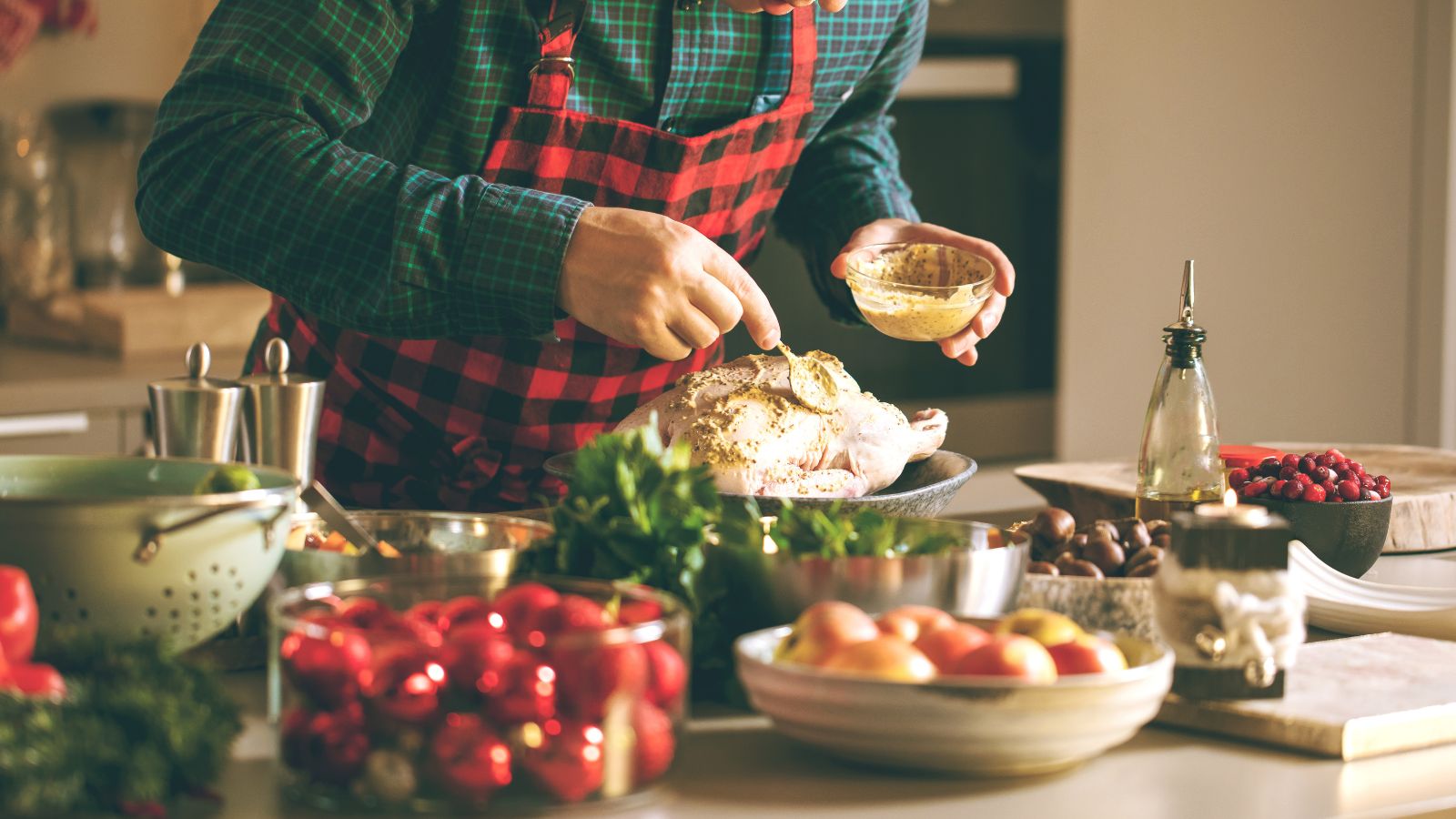
A generation ago, a Thanksgiving menu might have been presented as a fixed package: turkey, stuffing, potatoes, gravy, vegetables and pie. Modern gatherings more frequently include vegetarian diets, religious restrictions, intolerances and medically significant food allergies. Those situations are not all interchangeable. A guest may choose not to eat meat, while someone with a severe allergy may need protection from cross-contact with even a small amount of an allergen.
Food Allergy Canada recommends advance communication about menus and safe preparation, careful ingredient checking, clean work surfaces and utensils, and strategies that reduce cross-contamination. That makes “just pick around it” an inadequate response to a genuine allergy. At the same time, hosts do not necessarily need to redesign every dish for every preference. Guests can help by explaining restrictions early and, where appropriate, offering to bring something safe. Thanksgiving etiquette works best when neither side turns the issue into a test of loyalty. A guest should not surprise a host with a complicated dietary requirement at serving time, and a host should not pressure someone to eat food they have already said is unsafe or unsuitable.
Is It Rude to Refuse a Drink?

Thanksgiving hospitality is sometimes expressed through repeated offers: wine with dinner, another beer during the game, perhaps something stronger after dessert. In some families, declining once merely triggers a second round of persuasion. That custom has become increasingly difficult to defend as etiquette. Adults can choose not to drink for countless reasons, including health, religion, driving, medication, pregnancy, recovery or simple preference, and none requires explanation at the dining table.
Canada’s Guidance on Alcohol and Health emphasizes that less alcohol is better from a health-risk perspective and identifies increasing risks as weekly consumption rises. It also notes that consuming more than two standard drinks on an occasion is associated with increased risk of harm. Etiquette does not require hosts to recite health guidance, but it does suggest offering appealing non-alcoholic choices and accepting “no thank you” the first time. Guests who bring wine should similarly avoid assuming everyone wants it. A generous Thanksgiving host makes drinking an option rather than a membership requirement, allowing sparkling water, cider, coffee or nothing at all to be treated as perfectly ordinary choices.
Should Children Sit With the Adults?

The children’s table has an almost nostalgic place in holiday culture: smaller chairs, simpler conversation and perhaps a few peas ending up somewhere other than a plate. Some adults remember it fondly. Others recall spending years wondering when they would finally qualify for the “real” table. Modern families increasingly mix generations, particularly when space allows, while others continue separating children because it gives adults and younger guests different kinds of social time.
Research on ordinary family meals provides an interesting backdrop. A 2023 umbrella review examined 41 systematic reviews of family mealtimes and found associations between more frequent family meals and numerous dietary and psychosocial outcomes in children and adolescents, while noting that the evidence and interventions vary in strength. Other research has linked positive mealtime atmosphere and children’s involvement with favourable nutritional patterns. None of that proves a child must sit beside an adult at Thanksgiving. It does, however, support treating children as participants rather than logistical problems. A sensible arrangement considers age, available space and personalities. Sometimes the children’s table is freedom. Sometimes it feels like exile.
Are Guests Supposed to Help in the Kitchen?
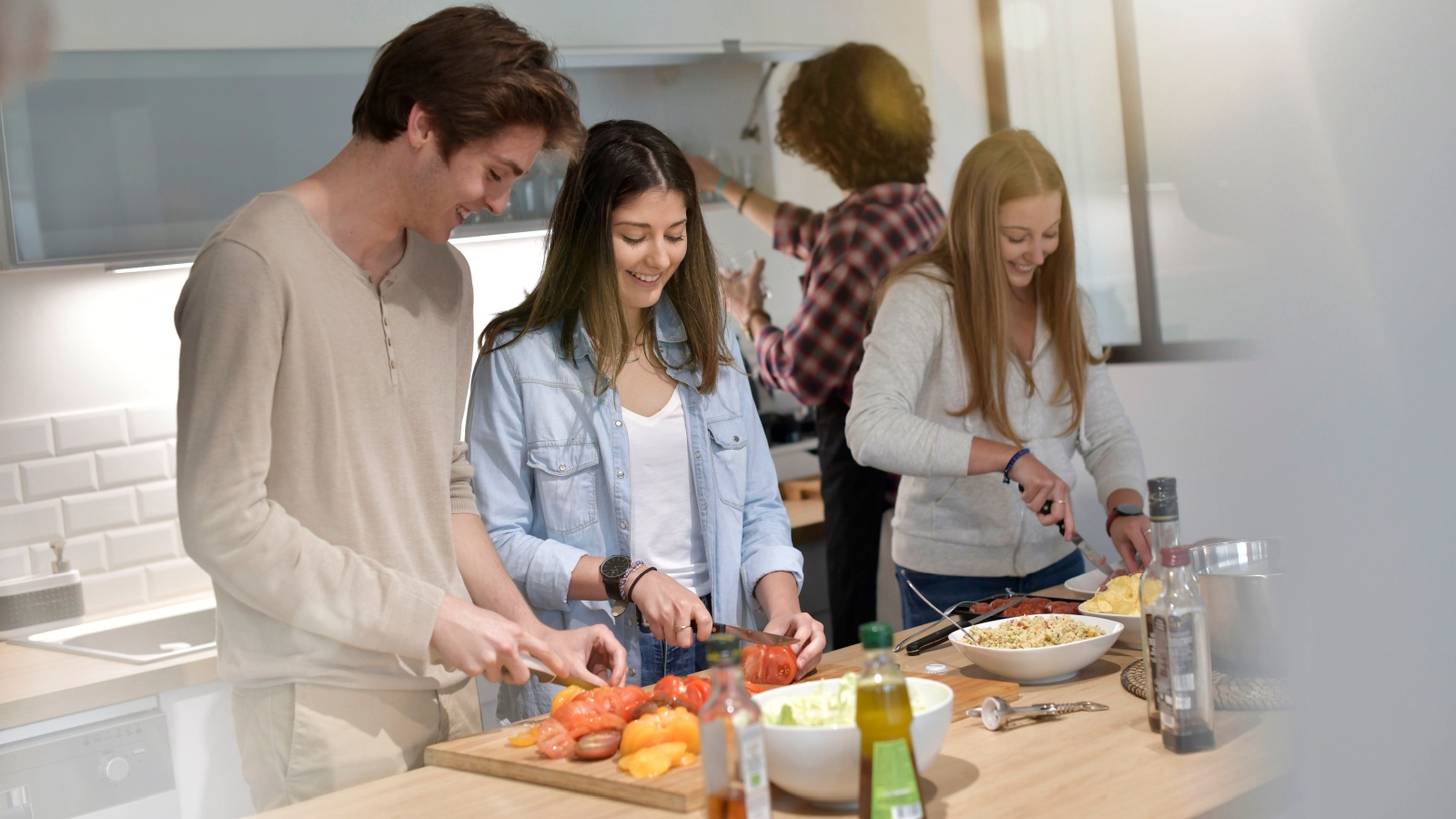
The offer to help can produce a uniquely Canadian standoff: “Can I do anything?” “No, no, relax.” “Are you sure?” “Absolutely.” Five minutes later, the host is carrying twelve plates while the guest wonders whether taking “no” literally was a mistake. Conventional etiquette recommends making a genuine offer to help but respecting the answer. Emily Post specifically advises guests to offer assistance with serving or cleanup while avoiding the kitchen if the host has indicated help is unnecessary.
Specific offers often work better than vague ones. “Can I fill the water glasses?” or “Would it help if I cleared the plates?” gives a busy host an easy decision. The principle becomes even more important when food allergies are involved, because an enthusiastic helper unfamiliar with the host’s preparation system can inadvertently mix utensils or ingredients. Help should reduce the workload, not create another person to supervise. After a large Thanksgiving dinner, clearing plates, loading a dishwasher or packing leftovers may be welcome. But once the host says the kitchen is under control, good etiquette means believing them and returning to the guests.
Is It Acceptable to Go Back for Seconds Right Away?
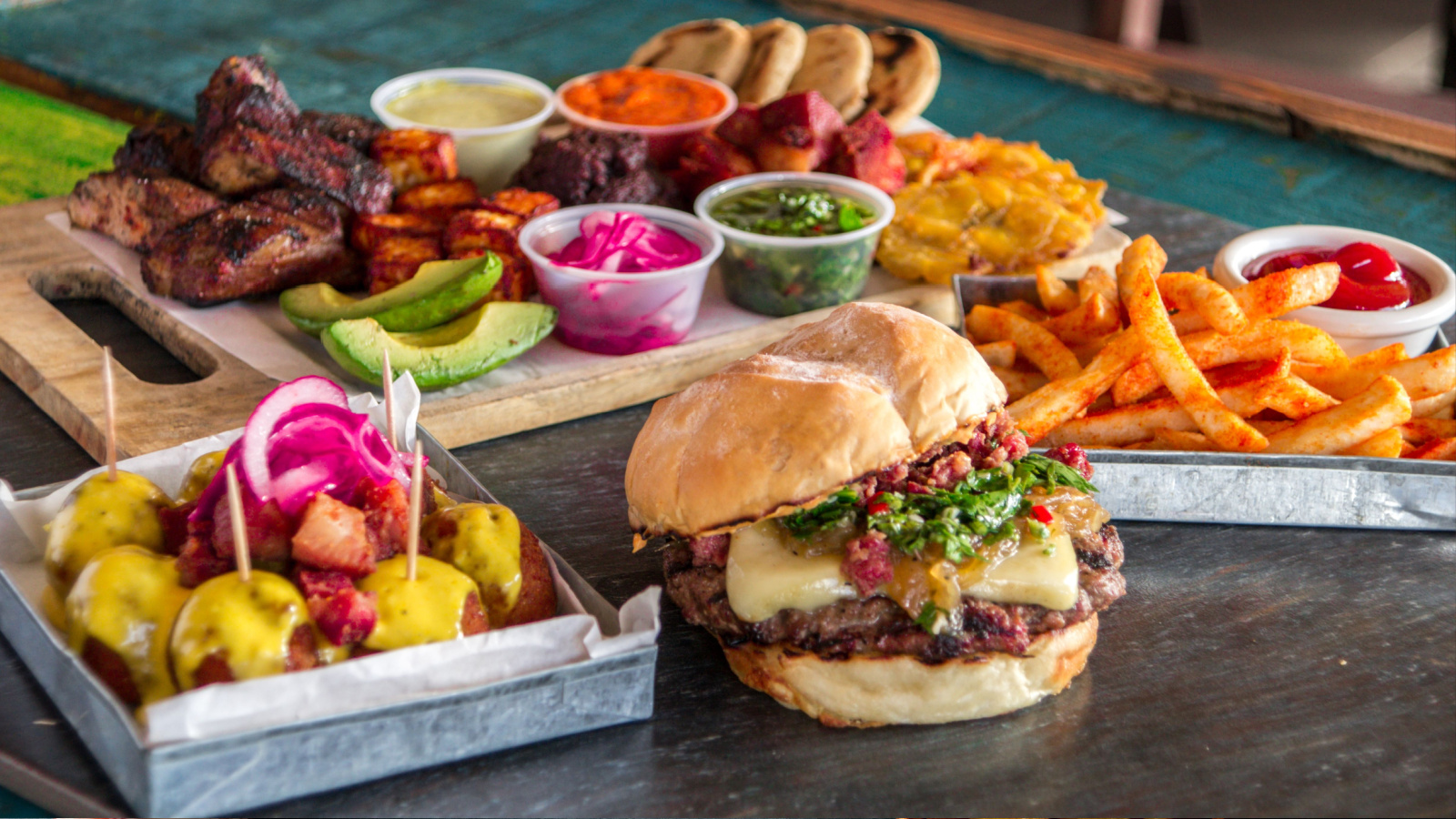
The turkey is carved, the stuffing is excellent and someone is already heading back to the kitchen before other guests have finished their first serving. Is that enthusiasm or bad manners? Traditional table etiquette encourages moderation and awareness of other diners. Emily Post guidance advises taking portions small enough to ensure food remains for everyone, which becomes particularly relevant at a holiday meal where a favourite side dish may exist in limited quantity.
The setting matters. At a generous family buffet with visibly abundant food, second helpings may be expected almost immediately. At a smaller dinner where the host has calculated one serving per guest plus a modest amount extra, racing toward the final dinner roll before everyone has eaten can look inconsiderate. A useful unofficial rule is to make sure everyone has had a reasonable chance at a first portion before claiming scarce items again. Hosts can reduce uncertainty by saying, “There’s lots—please go back for seconds.” Thanksgiving is supposed to celebrate abundance, but manners still require noticing whether that abundance has actually reached every plate.
Who Is Entitled to Take Home the Leftovers?
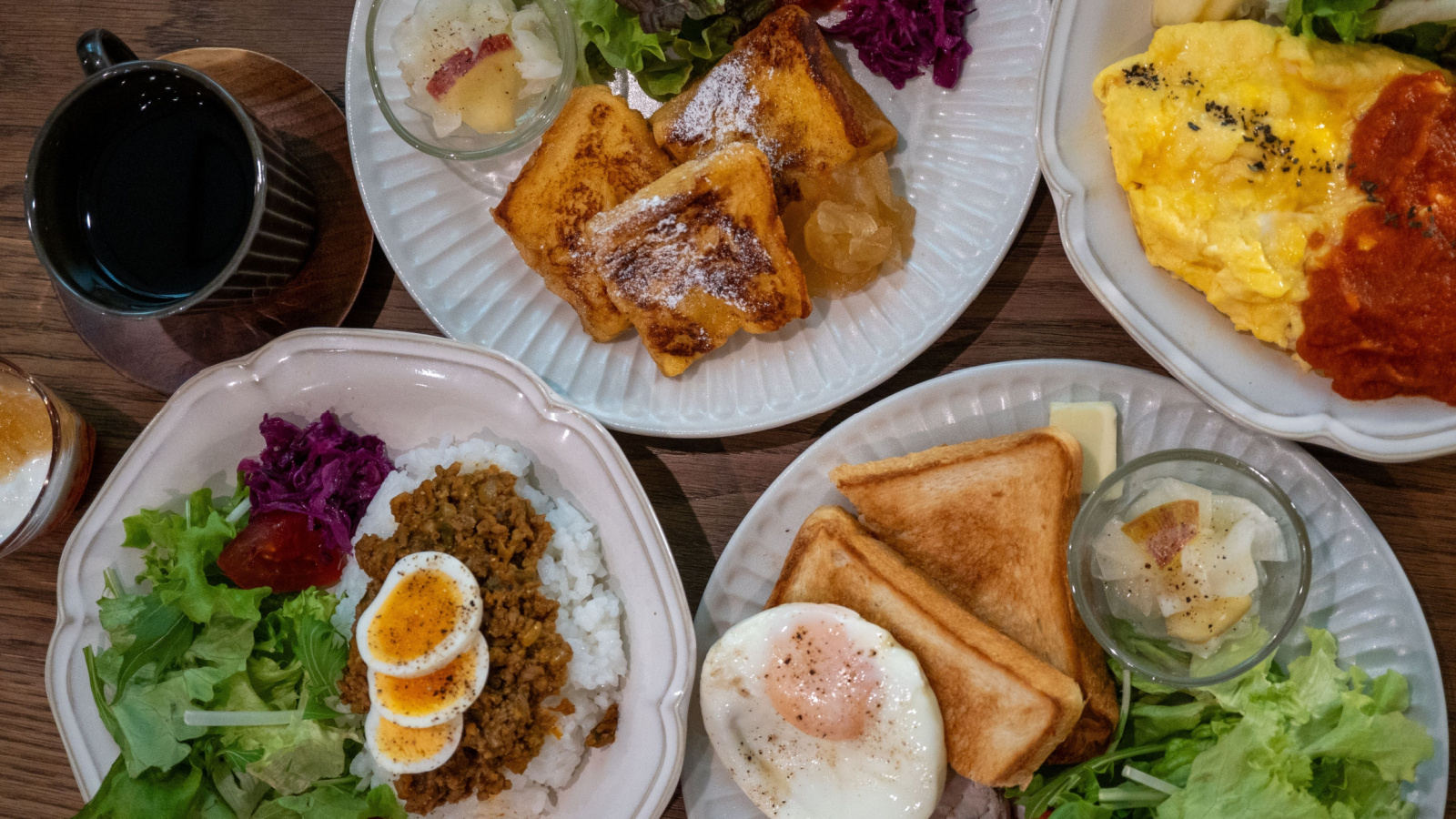
For some families, Thanksgiving leftovers are nearly as important as the original dinner. Turkey sandwiches, reheated stuffing and pie for breakfast can extend the celebration for days. That creates an etiquette dilemma: do leftovers belong entirely to the host, should every guest receive a container, or does the person who contributed a dish automatically take what remains of it home? There is no universal social rule, which is exactly why packing food without asking can feel presumptuous.
From a waste-reduction perspective, sharing makes sense when the host wants to do it. Love Food Hate Waste Canada explicitly encourages sharing holiday leftovers with guests and suggests reusable containers. The organization estimates that 63 per cent of household food waste in Canada is avoidable and puts the annual cost of wasted edible food at more than $1,300 for an average household. Safety still matters. Health Canada advises refrigerating or freezing perishable leftovers within two hours and reheating leftovers to 74°C. The simplest etiquette is therefore also practical: hosts offer what they are comfortable giving away, and guests ask before constructing tomorrow’s turkey sandwich at the door.
How Long Should Guests Stay After Dinner?

The meal is finished, dessert plates are empty and the host has begun quietly stacking dishes. Half the family interprets this as the natural end of the evening. The other half settles in for another three hours. Thanksgiving invitations rarely include a departure time, leaving guests to interpret everything from coffee service to yawning children as possible signals. Traditional party etiquette expects guests to pay attention to the rhythm of the gathering rather than waiting until the host explicitly asks them to leave.
There is no magic number of minutes after dessert. A gathering that begins at noon may naturally stretch into the evening, while a host who has cooked all day may be ready for quiet surprisingly early. Helpful clues include other guests departing, the kitchen being cleaned, music being turned down or the host shifting conversation toward plans for the next day. Overnight guests require clearer expectations still; etiquette authorities recommend establishing the beginning and end of an extended visit in advance. The gracious Thanksgiving guest should leave while the host is still pleased they came—not after the household has begun wondering whether breakfast must now be served.
16 Costco Canada Habits That Could Be Costing Shoppers More Than They Save

The Executive Membership can feel like an obvious upgrade because the 2% annual reward sounds straightforward. For households that spend heavily at Costco Canada, the extra fee may be easy to justify. But the habit becomes costly when shoppers upgrade first and calculate later. A Gold Star Membership costs less, while Executive costs more and only pays off if eligible annual spending is high enough to offset the difference.
16 Costco Canada Habits That Could Be Costing Shoppers More Than They Save
