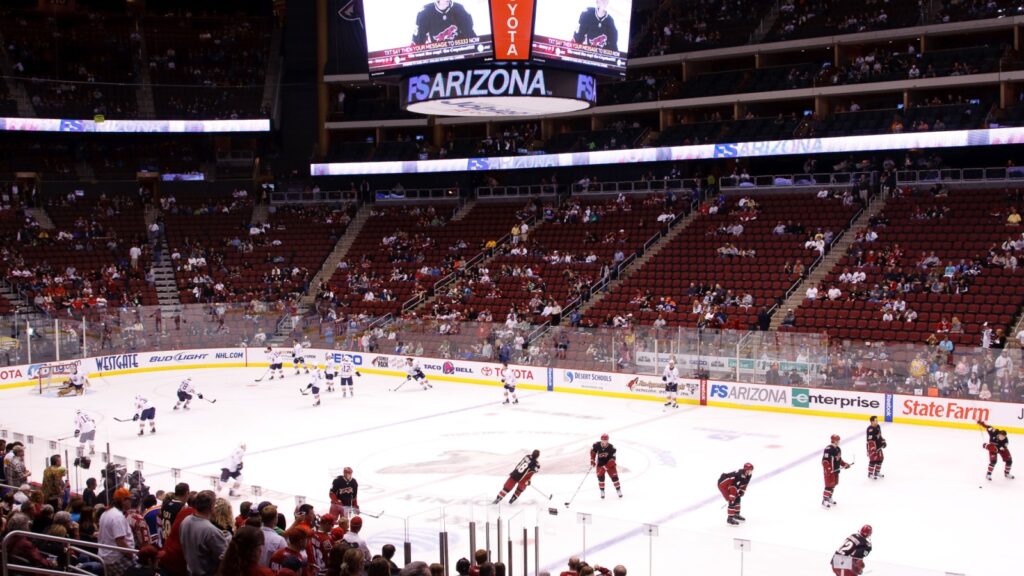
For generations, Saturday night hockey on CBC felt less like scheduled programming and more like a national appointment. That ritual is about to undergo its most consequential change in decades.
Sportsnet and CBC announced on June 16, 2026, that the public broadcaster will no longer carry NHL games after the current season. The decision ends a television relationship stretching back nearly 75 years and closes the latest chapter of a partnership that kept Hockey Night in Canada on CBC even after Rogers acquired the league’s national media rights. The program itself will continue under Sportsnet, but it will no longer appear on the network with which millions of Canadians still associate it. For viewers, the change raises questions about accessibility, streaming costs and whether a familiar Saturday tradition will feel the same away from CBC.
A Saturday-Night Institution Reaches the End of an Era
The television version of Hockey Night in Canada began on CBC in 1952, shortly after Canadian television broadcasting was launched. Its roots extend even further into the past. National Saturday-night hockey broadcasts began on radio in 1931, when audiences gathered around their sets to hear Toronto Maple Leafs games. The first televised game from Montreal arrived on October 11, 1952, followed three weeks later by the first Toronto telecast.
Those early broadcasts looked very different from the polished productions of today. Games were initially joined in progress rather than shown from the opening faceoff, and complete regular-season broadcasts did not become standard until 1968. Still, the routine quickly became embedded in Canadian life. Saturday evenings were planned around the game, children learned players’ names from announcers and families separated by thousands of kilometres watched the same teams at the same time. CBC’s departure therefore represents more than a scheduling adjustment. It breaks one of the longest-running connections between a Canadian cultural institution and the public broadcaster that helped build it.
CBC Had Already Surrendered Control of the Broadcast
Although hockey continued appearing on CBC, the network had not controlled the production since the 2014-15 season. Rogers secured exclusive Canadian television and digital NHL rights through a landmark 12-year agreement announced in 2013 and valued at $5.2 billion. CBC subsequently became a distribution partner, allowing Rogers-produced games to continue reaching the public broadcaster’s large conventional-television audience.
Under the partnership, Sportsnet produced the games, retained editorial control and managed advertising. CBC supplied valuable national reach and a familiar home for Saturday-night broadcasts. A seven-year extension beginning with the 2019-20 season kept nationally televised regular-season games and all four rounds of the Stanley Cup playoffs on CBC through 2025-26. That arrangement sometimes blurred the lines for casual viewers. The logo and channel remained familiar, but the business and production operation behind the telecast had changed. The June 2026 announcement completes that transition: CBC is no longer simply losing control of hockey coverage, because that happened years ago. It is now losing the broadcasts themselves.
Rogers’ $11-Billion Deal Reshapes the Television Landscape
The departure coincides with the beginning of Rogers’ new national NHL rights agreement. Announced in April 2025, the contract is worth $11 billion over 12 seasons and runs from 2026-27 through 2037-38. It covers national regular-season games, the playoffs, the Stanley Cup Final, special events, out-of-market games and rights across television, digital and streaming platforms.
The size of the agreement illustrates why NHL programming has become so strategically important. Rogers is committing an average of more than $916 million per year, although the actual payments increase over the life of the contract. The company has said the new structure will provide more nationally available games and fewer regional blackouts. It also permits strategic sublicensing, meaning selected packages can still be placed with other broadcasters or streaming services. CBC, however, will not be part of the arrangement when it begins. That leaves Rogers with greater control over where the country’s most valuable sports programming appears—and places more pressure on Sportsnet subscriptions, streaming products and other Rogers-owned platforms to justify the enormous cost of the rights.
Viewers Are Losing a Widely Accessible Hockey Window
For many households, the most immediate difference will involve access. CBC is a conventional network distributed through basic television packages and available over the air in communities served by its transmitters. That made major Saturday games and playoff matchups easier to find without purchasing a dedicated sports package. The Canadian Radio-television and Telecommunications Commission has repeatedly recognized conventional over-the-air broadcasting as an affordable and important way to access local and national programming.
CBC’s previous arrangement included nationally televised Saturday games and coverage from all four playoff rounds. Removing that window does not mean NHL hockey will become unavailable, but it may change what some viewers must pay, install or subscribe to in order to watch. A household that casually turned on CBC during a playoff run could now face a more deliberate choice involving Sportsnet, Sportsnet+ or another future distribution partner. The effect may be felt most by occasional fans, seniors, rural viewers and families trying to limit monthly subscriptions rather than by dedicated supporters who already pay for extensive hockey coverage.
Hockey Night in Canada Will Continue Without CBC
The June announcement does not eliminate Hockey Night in Canada. Rogers retains the program’s branding and Sportsnet said it remains committed to delivering the country’s traditional Saturday-night hockey experience. That distinction matters: CBC is losing NHL broadcasts, but the familiar name will survive on other platforms.
What has not yet been fully explained is how every Saturday package will be distributed once the new contract begins. Rogers owns the Sportsnet specialty channels, the Sportsnet+ streaming service and the conventional Citytv network, giving it several possible outlets. Previous Saturday schedules often divided games among CBC, Sportsnet and Citytv, particularly when several Canadian teams played during the same time window. The absence of CBC removes one of the largest pieces from that system. Sportsnet will need to determine where marquee early games, western doubleheader matchups and playoff broadcasts appear—and whether any major games remain available on conventional television. Until a complete 2026-27 schedule is released, the end of CBC’s involvement is clearer than the precise viewing experience that will replace it.
Streaming Has Moved From Experiment to Core Strategy
The change also reflects a broader transformation in Canadian sports media. Rogers and Amazon previously created a two-season package that placed national Monday-night NHL games exclusively on Prime Video during the 2024-25 and 2025-26 seasons. It was the league’s first exclusive national Canadian package carried by a digital-only streaming service, offering a test of how audiences would respond when important games moved away from traditional channels.
Canadian viewing habits are moving in that direction. CRTC industry data showed that the share of streaming-only households rose from 23 per cent in 2023 to 29 per cent in 2024. Online undertakings accounted for 36 per cent of total broadcasting revenue that year. Live sports remain unusually valuable because viewers generally watch in real time, making games attractive to advertisers and subscription platforms. For Rogers, separating some games across television and streaming services can encourage customers to remain inside its media ecosystem. For fans, however, the same strategy may create confusion when different nights, teams or playoff rounds require different services.
CBC Is Choosing a Different Sports Strategy
The joint statement connected CBC’s decision to a new sports-programming strategy developed after the success of the 2026 Milano Cortina Winter Olympics. Those Games demonstrated that the public broadcaster can still attract enormous audiences when it offers widely accessible national events across television and digital platforms.
CBC/Radio-Canada reported that almost 31 million people—or 76 per cent of Canadians aged two and older—watched some portion of the Olympics through an English- or French-language Olympic network. More than 42 million hours were streamed on CBC/Radio-Canada’s digital platforms, a 44 per cent increase from the Paris Games and a 378 per cent increase from Beijing. CBC Gem alone accounted for 67 per cent of Olympic digital visits and 93 per cent of video views. Those results offer a possible model for CBC’s future: concentrating resources on major international competitions, amateur sports, women’s leagues and events where the broadcaster can build its own identity rather than carrying a production controlled by another company. The challenge will be replacing the consistency of NHL games, which filled valuable Saturday and spring schedules every year.
The Cultural Loss May Outweigh the Programming Change
Television habits have fragmented, but hockey has repeatedly shown that it can still bring an unusually large share of the country together. Game 7 of the 2011 Stanley Cup Final between Vancouver and Boston averaged 8.76 million viewers on CBC, peaked at 11.2 million and reached approximately 18.45 million people. At the time, it was the largest NHL audience in the public broadcaster’s history.
Not every Saturday game produced numbers on that scale, yet the possibility of a shared national moment gave CBC hockey significance beyond weekly ratings. A dramatic overtime goal could be discussed at school, in workplaces and at backyard rinks the next morning because so many people had watched through the same widely available channel. Sportsnet can preserve the name, commentators and doubleheader format, but recreating that sense of common access may be more difficult. When the next NHL season opens, Hockey Night in Canada will still exist. What disappears is its final direct connection to the network that carried it from television’s earliest years into the streaming age.
