
For decades, the “forever home” represented a reassuring Canadian ideal: pay down the mortgage, build memories, and remain there for as long as possible. That goal remains deeply important to many older adults, but the definition of a suitable home can change dramatically with age. A property that worked beautifully during working and family years may eventually demand more money, maintenance, mobility and outside help than expected.
Canada’s aging population is bringing those questions into sharper focus. The issue is rarely as simple as wanting to leave or wanting to stay. Instead, housing decisions increasingly involve health, transportation, family, finances and access to support. These 20 reasons help explain why some Canadian seniors are taking a second look at what a true “forever home” needs to provide.
The House Is Bigger Than the Life Happening Inside It

A four-bedroom suburban house can make perfect sense when children are at home, relatives visit regularly and every corner serves a purpose. Decades later, much of that space may become storage that still needs heating, cleaning and maintaining. CMHC research has found that housing preferences do change as Canadian households age, with older households becoming somewhat more likely to move into condominiums, rent or reduce their living space. The shift is not universal, however, and most younger senior households still remain in their existing homes.
That distinction matters. Downsizing is not necessarily a rejection of a cherished property or neighbourhood. For some households, it is closer to “rightsizing”—finding a home that reflects how daily life actually works now. Two bedrooms, an accessible bathroom and a small outdoor space may ultimately provide more usable living than a large house with several seldom-visited rooms. Emotional attachment can remain strong even while the practical argument for all that square footage becomes weaker.
Maintenance Can Gradually Become a Second Job

Homeownership carries a workload that rarely appears on a mortgage statement. Lawns require cutting, gutters need cleaning, furnaces eventually need attention, snow has to be moved and unexpected repairs arrive without much concern for retirement schedules. Tasks that once felt routine can become more demanding as strength, balance, flexibility or endurance changes. Statistics Canada reported that 40% of Canadians aged 65 and older had at least one disability in 2022, while mobility disabilities affected roughly one-quarter of seniors.
That does not mean an older homeowner suddenly becomes incapable of maintaining a property. The change can be gradual. A ladder that seemed harmless at 55 may look very different at 75, and clearing a heavy snowfall can shift from an inconvenient morning chore to something that requires outside help. Paying contractors can solve many of these problems, but doing so turns physical work into a recurring financial expense. Eventually, a lower-maintenance home can start looking less like a compromise and more like freedom.
Stairs and Bathrooms Can Change From Features to Hazards
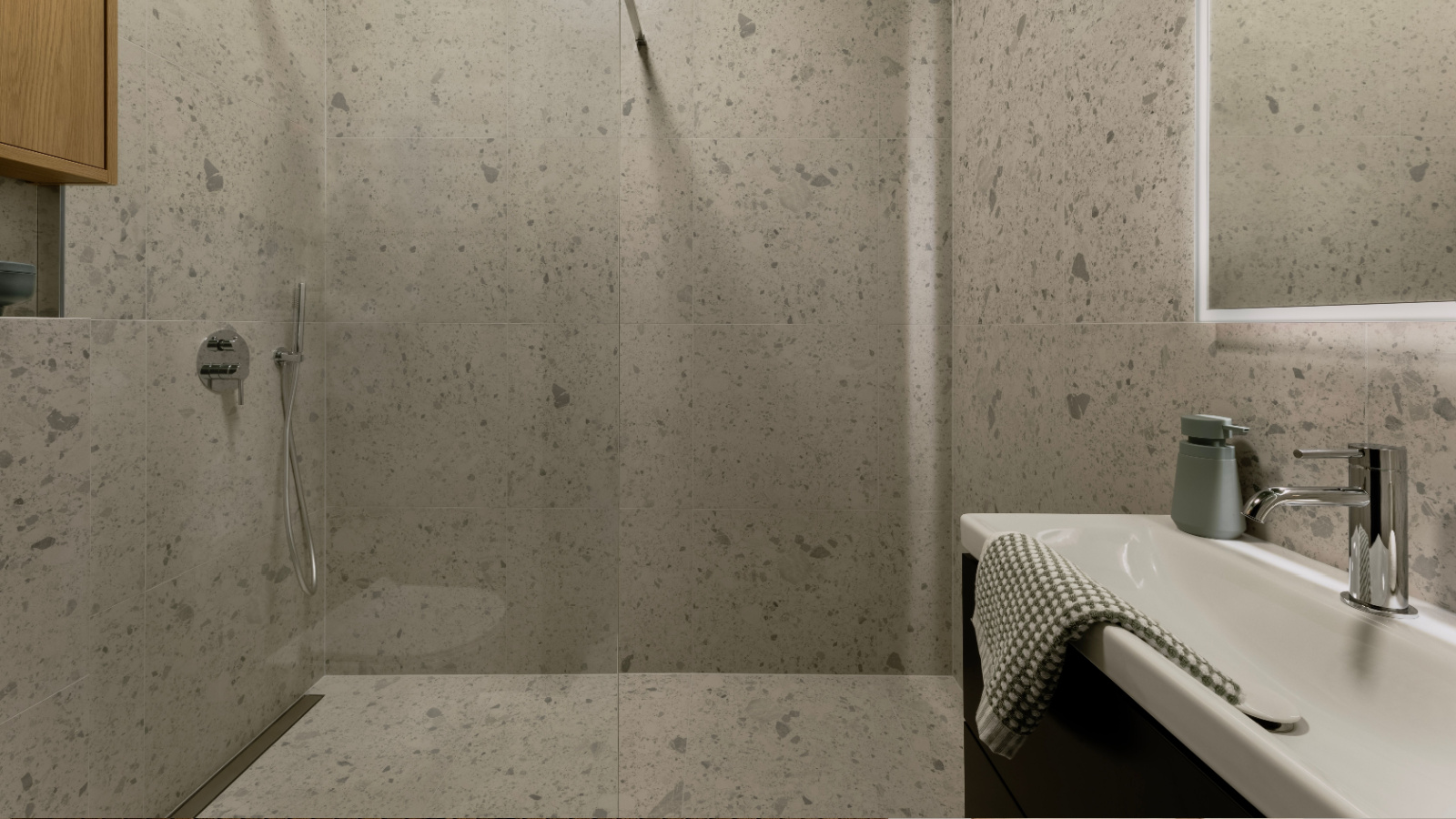
The staircase that once separated bedrooms from the main floor can become one of the most important questions in a long-term housing plan. Public Health Agency of Canada data show how serious falls are for older adults: falls account for the overwhelming majority of injury-related hospitalizations among Canadians aged 65 and over, and roughly one-third of fall-related hospitalizations involve a hip fracture. Many serious falls also happen in residential settings.
That changes how people evaluate ordinary home design. Split-level entrances, basement laundry rooms, steep porch steps and slippery tubs may be manageable for years before suddenly becoming inconvenient or unsafe. Families sometimes respond by adding handrails, grab bars, better lighting or non-slip surfaces. Others begin looking for single-level living, elevators or accessible apartments. The important shift is psychological: the number of bedrooms or size of the backyard can start mattering less than whether someone can comfortably move from the bedroom to the kitchen at 2 a.m. without negotiating a staircase.
Aging in Place Can Require More Renovation Than Expected

Remaining at home is often described as doing nothing—simply staying where life already happens. In practice, successful aging in place can require significant adjustments. Statistics Canada found that home adaptations were the most common support used by older Canadians in 2019 and 2020. About 25% of people aged 65 to 79 used home adaptations, rising to 51.9% among those aged 80 and older. Examples include grab bars, handrails and adapted bathing facilities.
Some houses are far easier to modify than others. A bungalow with wide hallways and a main-floor bathroom may require relatively modest changes. An older two-storey house with narrow doorways, multiple steps and a small upstairs bathroom can present a much larger project. Ramps, walk-in showers, stair lifts, widened doors and accessibility upgrades can extend independence, but they still involve planning, contractors and money. For some seniors, the question becomes whether renovating the old home is preferable to moving into a property where many of those features already exist.
A Paid-Off Mortgage Does Not Create a Free House

Reaching mortgage-free status is a major financial milestone, but it does not eliminate the cost of housing. Property taxes, utilities, insurance, repairs and maintenance continue, and condominium owners may also face monthly fees. Statistics Canada’s 2023 Survey of Household Spending found that homeowners without mortgages still spent an average of $13,750 on shelter during the year. That figure was 7.5% higher than in 2021, although the reported dollar amounts were not adjusted for inflation.
Those expenses can feel different after employment income disappears. A new roof, furnace replacement or major plumbing repair may be easy to absorb during peak earning years but harder to fit around pension and investment withdrawals. Even predictable expenses can accumulate: heating a larger home, maintaining landscaping and paying municipal taxes year after year all consume cash. That is why some retirees stop asking whether their house is paid for and begin asking a more revealing question—how much does this house require every year simply to keep?
Retirement Budgets Have Less Room for Housing Surprises
Inflation has reminded many retirees that a comfortable budget can change even when the mortgage payment does not. Statistics Canada reported that in spring 2024, 28% of Canadians aged 65 and older said rising prices were greatly affecting their ability to meet everyday expenses. Older Canadians were less likely than younger groups to report severe pressure, but more than one-quarter was still a meaningful share.
A large detached home can amplify that uncertainty because many costs are difficult to control. Electricity, natural gas, municipal charges, maintenance labour and replacement appliances do not necessarily move in step with retirement income. The result can be a strange form of housing wealth: someone may own a valuable property outright while still worrying about monthly cash flow. A smaller property will not solve every cost-of-living problem, but predictable housing expenses can become increasingly attractive when income is less flexible. For some retirees, financial security begins to mean not merely owning a home, but owning one that leaves room in the budget for everything else.
Not Everyone Reaches Retirement Mortgage-Free

The familiar retirement picture assumes the mortgage disappeared before the final paycheque. Reality is more varied. The Financial Consumer Agency of Canada’s 2019 Canadian Financial Capability Survey found that about 17% of Canadians aged 65 and older still had a mortgage. Home equity lines of credit and other borrowing can also remain part of a household balance sheet, particularly after renovations, family assistance or unexpected expenses.
Carrying housing debt into retirement does not automatically indicate financial trouble. Some households have substantial assets and deliberately maintain borrowing. The concern is flexibility. Debt payments compete with groceries, travel, health expenses and savings at precisely the stage of life when replacing lost employment income can be harder. An interest-rate change can also turn a manageable obligation into a larger monthly commitment. That is one reason a senior homeowner may contemplate selling a larger property, paying off remaining debt and buying something less expensive. The decision can transform housing wealth into greater monthly breathing room rather than leaving it locked inside a costly property.
Home Equity Starts Looking Like Retirement Capital

A long-held home can represent decades of accumulated wealth, especially for owners who bought before major increases in Canadian real estate values. That creates an unusual retirement dilemma: a person can possess significant wealth without having corresponding cash available for everyday life. Home equity can eventually compete with the emotional goal of remaining in the property indefinitely.
There are several ways to address that tension. The Financial Consumer Agency of Canada notes that reverse mortgages are generally available to homeowners aged 55 and older and can typically allow borrowing of up to 55% of a home’s current value, subject to lender requirements. They also come with interest and other costs, so they are not a simple solution. Selling is another possibility. For some households, moving to a less expensive property can make part of the equity available for retirement spending or future care without increasing debt. The “forever home” therefore becomes not just somewhere to live, but one of the largest financial assets that retirement planning has to consider.
Selling Can Simplify More Than the Mortgage

Downsizing is often described primarily as a real estate transaction, but the financial effects can extend further. The Financial Consumer Agency of Canada notes that selling and moving to a smaller property can potentially reduce expenses such as utilities and property taxes while allowing homeowners to access accumulated equity. A move can also eliminate upcoming repair obligations that might otherwise require significant cash.
Consider a retired couple living in a detached house where several rooms remain unused. Moving to a smaller residence could mean fewer exterior repairs, less space to heat and no oversized yard to maintain. The savings will vary dramatically by location and property, and buying another home creates costs of its own, so downsizing should never be assumed to produce an automatic windfall. Still, simplifying the housing side of a balance sheet can have value beyond the sale price. Fewer recurring obligations can make monthly retirement spending easier to understand, particularly for households that prefer stability over managing an aging property.
Smaller Does Not Automatically Mean Cheaper

One of the biggest complications in leaving a longtime house is discovering that alternatives can be expensive too. The Financial Consumer Agency of Canada cites CMHC’s 2021 Seniors Housing Survey, which found that the average rent for a standard seniors’ housing space was about $3,075 per month. Costs vary widely by location, services and care level, and spaces offering greater assistance generally cost more.
That creates a difficult comparison. A mortgage-free homeowner may look at the market value of a detached home and assume moving will substantially reduce monthly expenses, only to find that retirement residences, newer accessible condos and well-located rentals carry significant costs. A less expensive property may also come with condo fees or higher service charges. Consequently, some seniors decide that modifying the existing home remains financially preferable, while others conclude the convenience of another housing arrangement is worth the price. “Smaller” and “cheaper” are not synonyms. The useful comparison is the complete cost of each lifestyle, including maintenance, transportation, care and the value of services included.
Home Care Availability Can Determine Whether Staying Is Realistic

A home may be perfectly familiar and emotionally important, yet aging in place ultimately depends on more than the building. Help with bathing, meals, medications, mobility or household activities can become essential. Statistics Canada estimated that approximately 46,000 Canadians aged 85 and older—6.5% of that age group—reported unmet home-care needs in 2019 and 2020. Those in poorer health and with heavier care needs were particularly likely to report unmet needs.
That introduces an element homeowners cannot solve simply by renovating. A wheelchair-accessible bathroom is valuable, but it does not replace a personal support worker when hands-on assistance is required. Availability also differs by community and circumstance, while private services can create additional out-of-pocket costs. A family may therefore love the house but become concerned about whether enough support will be available there five or ten years later. In some cases, moving closer to services or into housing that incorporates assistance can provide a level of reliability that an isolated detached home cannot easily match.
Family Caregivers Cannot Always Fill Every Gap

Aging at home often works because someone else quietly makes it work. Adult children drive to appointments, spouses manage medications, relatives bring groceries and family members handle paperwork or home maintenance. Recent National Seniors Council material highlights how demanding that role can become. More than 95% of people receiving long-term home care have an unpaid caregiver, and close to two in five of those caregivers have been reported as distressed. The council also cites evidence that almost one-quarter of caregivers spend more than $1,000 a month out of pocket.
That changes the meaning of independence. An older person may technically live independently while relying on many hours of family labour behind the scenes. The arrangement can work beautifully when relatives live nearby and responsibilities remain manageable. It becomes harder when children live in another province, caregivers have jobs or their own health changes. Some seniors therefore reconsider housing not because family members are unwilling to help, but because they do not want one house to determine how much caregiving everyone else must provide.
Driving Can Become the Weak Link in the Plan

A suburban or rural home can feel wonderfully independent as long as a vehicle remains available. Once driving becomes difficult, the same property may suddenly be far from groceries, appointments, friends and community activities. The federal government’s aging-in-place checklist cites an estimate that many older adults may live seven to ten years beyond the point when they can drive safely and specifically encourages planning for alternative transportation.
That makes location a long-term housing feature. A smaller home near transit, shops and medical services can sometimes preserve independence better than a larger detached property that requires a car for every errand. Public transportation is not equally available across Canada, particularly outside major urban centres, so the calculation differs considerably by community. Still, the principle is straightforward: the ability to remain in a home depends partly on being able to leave it. For seniors considering whether a property can genuinely work for life, transportation may matter almost as much as the kitchen, garden or number of bedrooms.
Social Isolation Can Change What “Peace and Quiet” Feels Like

Privacy and quiet are often major reasons people value detached homes. Later in life, those same qualities can become less appealing if friends move away, a spouse dies or everyday social contacts become less frequent. Statistics Canada found that 19% of Canadians aged 65 and older reported loneliness in 2019 and 2020. Loneliness was substantially more common among widowed, separated or divorced seniors than among those who were married or living common-law.
Housing cannot eliminate loneliness, but it can influence how easily social contact happens. An apartment with neighbours nearby, a retirement community with shared spaces or a walkable neighbourhood with cafés and recreation may create more routine opportunities for interaction than an isolated house. For some people, the backyard and privacy remain priceless. For others, being able to step outside and encounter familiar faces becomes increasingly important. That is why a “forever home” may eventually be judged not only by what exists inside its property lines, but by how effectively it keeps its residents connected to other people.
The Neighbourhood Can Matter More Than the Address

A home that works at 60 may sit in a location that becomes inconvenient at 80. Canada’s federal aging-in-place guidance encourages older adults to consider how close they are to grocery stores, pharmacies, medical offices, hospitals, friends and community programs. It also asks whether their current community will still meet their needs as they age. That is a broader test than simply determining whether a house has enough space.
The difference becomes obvious when routine tasks begin requiring more effort. A 20-minute drive for prescriptions is trivial for an active driver but far more complicated for someone who depends on family rides. Similarly, a nearby clinic, grocery store, library or walking route can make a modest home surprisingly supportive. Some seniors therefore decide to move before health requires it, choosing a community where essential services are easier to reach. The goal is not necessarily urban living. It is reducing the number of everyday activities that depend on long drives, complicated arrangements or another person being available.
Extreme Heat Is Becoming a Housing Issue for Older Adults

Canadian homes have traditionally been designed with winter at the centre of the conversation, but summer heat is increasingly important to aging safely at home. In June 2026, Health Canada recommended maintaining indoor temperatures no higher than 26°C to reduce heat-related health risks for older adults. The guidance notes that older people can face greater physiological strain as indoor temperatures rise and that buildings retaining excessive heat can create serious health risks.
That puts new attention on air conditioning, insulation, shading, ventilation and whether a house can keep at least part of its living space safely cool. An older property without central cooling may have been perfectly manageable for decades but become uncomfortable or risky during prolonged heat events. Installing a heat pump or other cooling system may solve the problem, but it becomes another capital investment in the home. When seniors compare housing choices, climate resilience increasingly belongs beside stairs, maintenance and property taxes. A truly long-term home must now handle Canadian summers as thoughtfully as it handles Canadian winters.
Living Alone Can Change Both the Math and the Mood

A home designed for two people can feel very different after the death of a spouse or another major household change. The federal aging-in-place checklist explicitly asks older adults to consider whether they could manage their current home if they eventually lived alone. The question covers far more than loneliness: one person may now be responsible for every bill, repair, household task and decision that two people once divided.
The emotional side matters as well. Statistics Canada found that widowed seniors were substantially more likely to report loneliness than married or common-law seniors in 2019 and 2020. That does not make moving the correct response to bereavement, and major decisions made immediately after a loss deserve care. Over time, however, some people discover that the home’s meaning has changed along with the household. A smaller place closer to children, friends or activities can sometimes provide a new kind of stability. The house may still contain treasured memories without necessarily remaining the best setting for the next stage of life.
Multigenerational Living Has Become a Real Alternative

The choice is not always between remaining alone in a detached home and moving into a seniors’ residence. Statistics Canada reported that 2.4 million Canadians lived in multigenerational households in 2021, representing 6.5% of people living in private households. The prevalence differed widely across regions and cultural communities, showing that living with several generations under one roof is already an established part of Canadian housing.
For some older homeowners, that can mean inviting an adult child into the existing house. For others, it may mean selling and combining resources for a property with a secondary suite, separate floor or accessible unit. Such arrangements can bring grandparents closer to family while distributing certain housing and caregiving responsibilities. They also require boundaries, privacy and thoughtful financial planning, so they are not automatically easier. Still, multigenerational living challenges the assumption that keeping the longtime family home is the only way to remain independent. Sometimes the more durable “forever” arrangement is a home deliberately designed to evolve with the family.
Condos and Retirement Communities Trade Chores for Fees

Older Canadian households become somewhat more likely to move into condominiums or rentals as they age, according to CMHC research. The attraction is easy to understand. A condo can remove lawn care, roof replacement and snow clearing from the owner’s personal task list. Retirement communities can go further by incorporating meals, recreation, housekeeping or care services. Those benefits can make daily life more predictable.
The trade-off is that the work does not disappear; it becomes part of a monthly bill. Condo fees can rise, special assessments are possible, and retirement housing generally becomes more expensive as additional care and services are added. Privacy and control may also differ from detached-home living. For that reason, the decision is rarely about whether one housing type is objectively better. It is about which responsibilities a senior wants to keep. Someone who enjoys gardening and managing a property may prefer to remain put. Someone tired of arranging contractors and clearing snow may gladly exchange those responsibilities for a regular fee and a locked door.
Planning Before a Crisis Preserves More Choice

The worst time to decide where to spend the next decade can be immediately after a fall, hospitalization or sudden loss of a caregiver. Federal aging-in-place guidance specifically encourages Canadians to plan ahead, noting that preparation can help prevent rushed decisions after a crisis. That advice is becoming more significant as the population ages and demand on care systems grows.
Long-term care is not an unlimited fallback option. CIHI reported that Canada had roughly 198,000 long-term-care beds in 2021, equivalent to about 29 beds per 1,000 people aged 65 and older, with substantial provincial and territorial differences. CIHI’s more recent work also emphasizes pressure from rising care complexity, staffing needs and a rapidly aging population. The practical lesson is not that seniors should leave their homes early. It is that a genuine forever-home plan needs alternatives. Knowing what renovations, transportation, home care, family support and other housing options are available can make staying easier—and make moving far less frightening if the day eventually comes.
16 Costco Canada Habits That Could Be Costing Shoppers More Than They Save

The Executive Membership can feel like an obvious upgrade because the 2% annual reward sounds straightforward. For households that spend heavily at Costco Canada, the extra fee may be easy to justify. But the habit becomes costly when shoppers upgrade first and calculate later. A Gold Star Membership costs less, while Executive costs more and only pays off if eligible annual spending is high enough to offset the difference.
16 Costco Canada Habits That Could Be Costing Shoppers More Than They Save
