Canadian homes have always had to cope with difficult weather, but the financial stakes are rising. Insured damage from severe weather exceeded $8 billion in Canada in 2024, a record that reflected destructive flooding, hail, wildfire and other major events. The danger is not limited to dramatic disasters. A blocked gutter, aging roof, powerless sump pump or poorly protected attic can turn an otherwise manageable storm into a costly repair.
These 17 home risks Canadian owners may be underestimating cover water, wind, wildfire, heat, winter storms and electrical hazards. Not every threat applies equally in every region, but each highlights the same lesson: small weaknesses in a property often matter most when conditions become extreme.
Heavy Rain Can Find a Basement That Has Never Flooded Before

A dry history can create false confidence. Federal flood guidance now warns that a home may face flooding even if it has never flooded before, and intense rainfall can overwhelm drainage around foundations, window wells and low openings. Water may arrive through cracks, seep through foundation walls or rise where drainage systems cannot keep pace. Finished basements make the consequences more expensive because flooring, drywall, furniture, electrical equipment and stored belongings can all sit below grade. A room that looks protected in normal rain can become the lowest collection point during a short, intense storm.
The practical risk is often hidden in ordinary details. Owners can check foundation cracks, window wells, exterior drainage and the path water takes during a downpour. Valuables and electronics should not be stored directly on basement floors in vulnerable homes. Flood risk is also worth reviewing at insurance-renewal time because standard policies may not automatically cover every form of outside water entry. A basement does not need a river nearby to become a flood problem.
Sewer Backup Can Turn a Storm Into a Sanitation Emergency
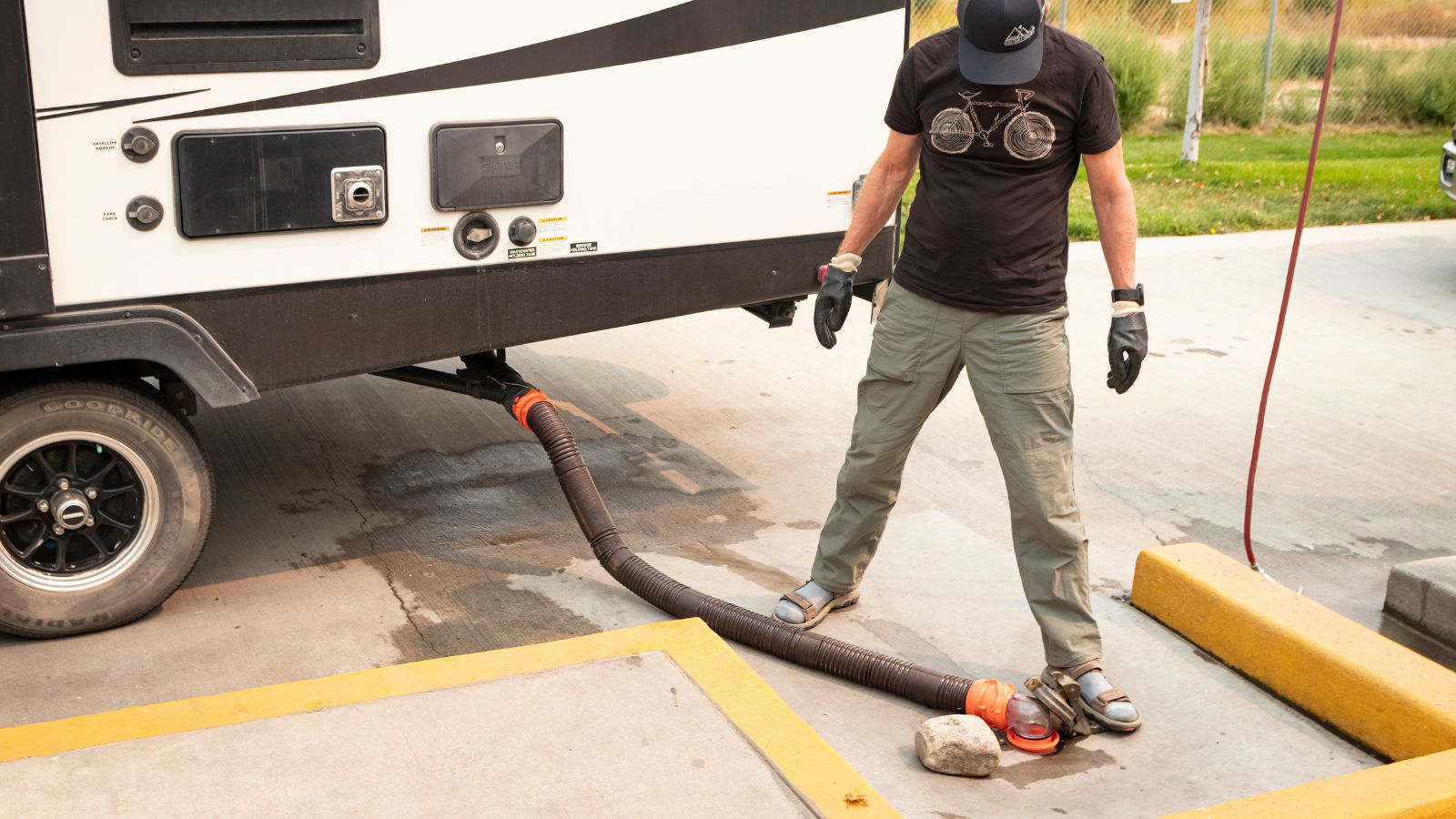
Heavy rain does not have to enter through a door or window to damage a house. When municipal or private drainage systems are overloaded or blocked, wastewater can move backward through basement drains and plumbing fixtures. The result is more than a wet floor: sewage-contaminated water can damage finishes, appliances and personal property while creating a cleanup that requires far more care than ordinary rainwater. Older neighbourhoods with combined or aging sewer systems may be especially sensitive during intense rainfall, but backups can also result from blockages, roots or damaged service lines.
A backwater valve is designed to reduce the chance of sewage flowing into a home when the sewer is overwhelmed. Owners should also understand that sewer-backup insurance is commonly optional rather than automatically included in a basic policy. That distinction is easy to miss until a claim occurs. A family that has renovated a basement into bedrooms, an office or a recreation room may have far more value below grade than when the original policy was purchased, making both prevention and coverage review increasingly important.
Poor Grading Quietly Directs Water Toward the Foundation

Landscaping can look attractive while still working against the house. If soil settles and creates low spots beside the foundation, rain and snowmelt can collect where it is least wanted. Federal flood-prevention guidance recommends grading that promotes drainage away from the building because water concentrated at the foundation can enter through doors, basement windows, cracks or floor openings. Window wells filled with leaves or soil can make the problem worse by creating small reservoirs beside below-grade glass. Erosion around the property can also signal that runoff is moving too aggressively.
This risk often develops slowly, which is why it is easy to underestimate. A walkway that has sunk a few centimetres, a garden bed that was built too high or a downspout that empties beside the wall can change how water moves during a storm. Watching the property during heavy rain can be more revealing than inspecting it on a sunny day. Persistent puddles, soggy areas and water stains near basement windows are clues that drainage needs attention before the next major downpour.
Clogged Eavestroughs Can Push Stormwater Into Walls and Basements
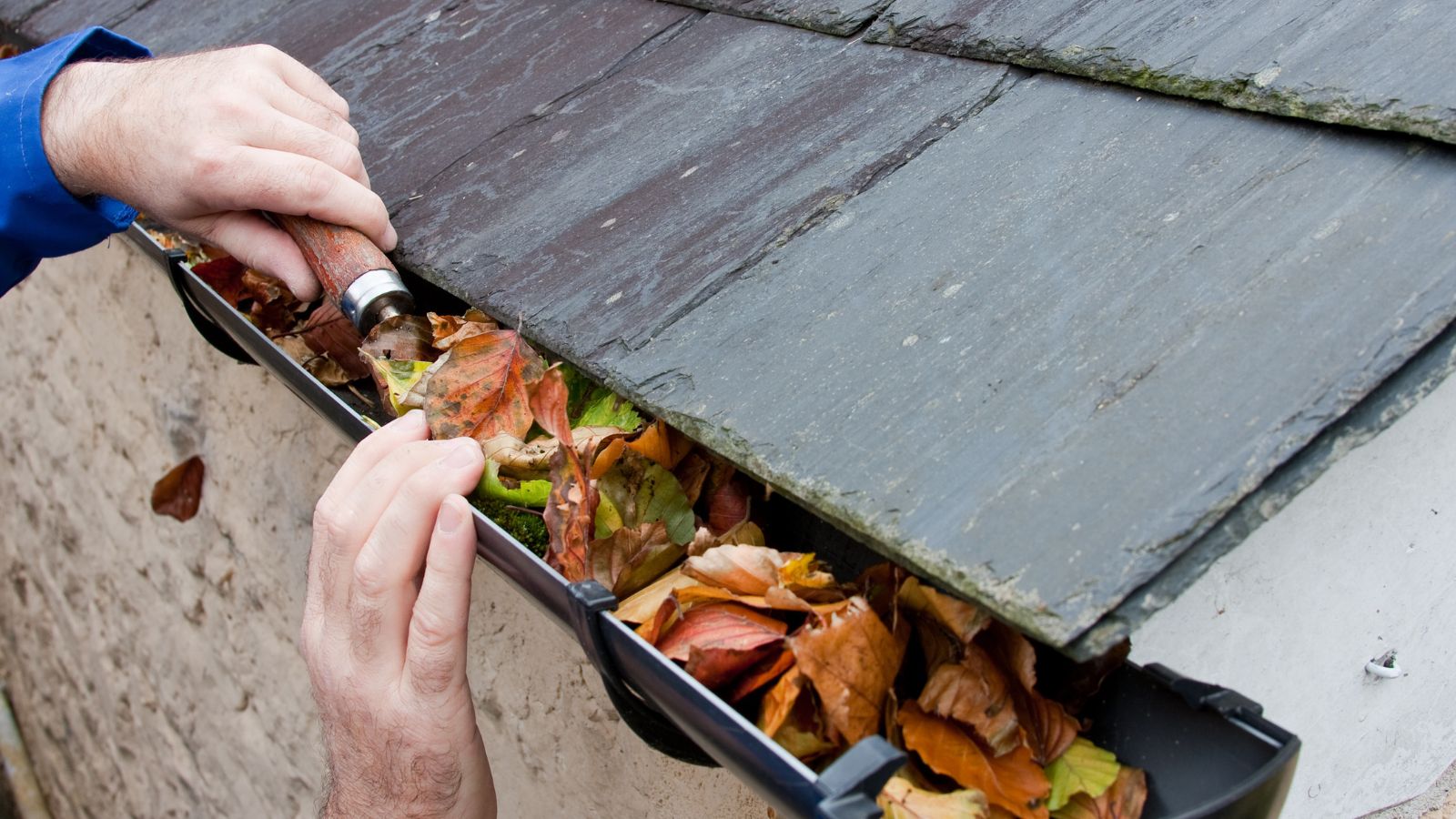
Eavestroughs and downspouts are simple parts of a home, but they manage a surprisingly important job: moving roof water away from the structure. Leaves, needles, shingle grit and storm debris can block that path. When gutters overflow, water can run down siding, soak areas near the foundation or collect where it may enter a basement. Federal guidance says much of the flood damage associated with clogged eavestroughs and gutters is preventable and recommends checking them at least twice a year, with extra attention after severe storms, heavy rain or high winds.
Downspout placement matters just as much as cleanliness. A clear downspout that releases water beside the foundation can still concentrate runoff in the wrong place. Extensions should move discharge safely away while respecting local drainage rules and neighbouring properties. Owners should also look for sagging sections, separated joints, leaks and ice blockages. These are inexpensive-looking defects that can become costly when an intense storm sends a large volume of roof runoff through a drainage system that is partially blocked or poorly aimed.
A Sump Pump Without Backup Power Has a Major Weak Point
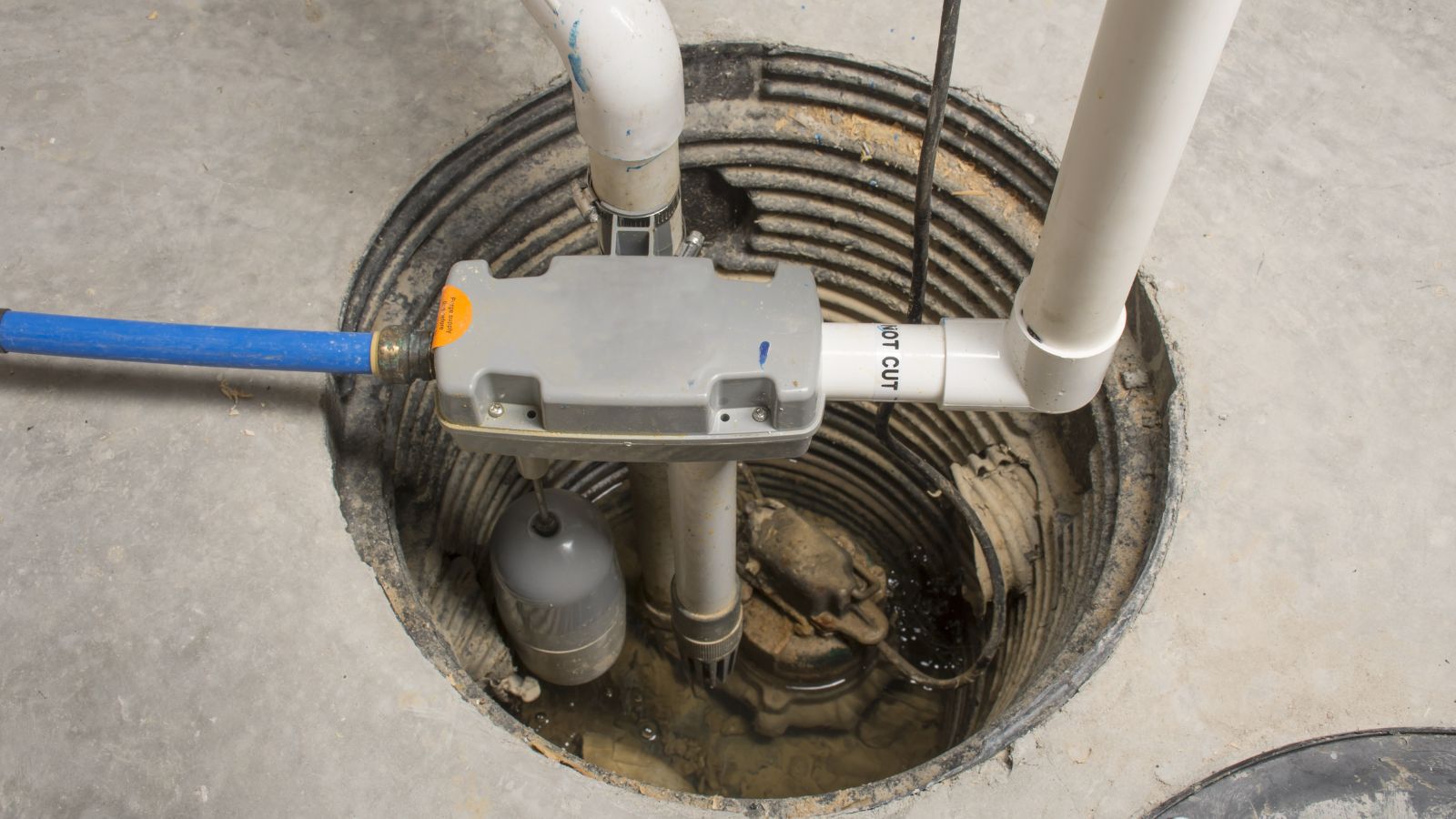
A sump pump can be one of the most effective basement-flood protections in a Canadian home, especially where groundwater, rapid rainfall or snowmelt reaches foundation drainage. The weakness is obvious only after the electricity fails. Severe storms can cause both heavy water inflow and power outages at the same time, leaving a standard electric pump unable to operate just when it is most needed. Federal resilience guidance specifically recommends considering alarms and emergency battery backup for sump systems, while current flood-preparedness advice encourages owners to maintain working pumps.
Testing matters because pumps can fail mechanically even when power remains on. Owners should know where the discharge line ends, make sure it is not frozen or blocked, and check whether the pump activates properly. A high-water alarm adds another layer of warning, particularly when a basement is rarely visited. Homes with finished lower levels have more to lose from delayed discovery. Backup power is not a guarantee against flooding, but relying on a single electric pump with no alarm or secondary plan creates an avoidable single point of failure.
High Winds Can Turn Minor Roof Wear Into Interior Water Damage

Wind damage is not limited to dramatic scenes of entire roofs lifting away. A more common problem begins with a loose, curled or poorly sealed shingle. Strong gusts can remove roof coverings, expose underlayment and create an opening for rain to reach the roof deck, insulation and ceilings. Environment and Climate Change Canada warns that high winds can cause property damage and that stronger wind alerts can involve roof damage, broken trees and structural impacts. Insurance guidance also distinguishes sudden storm damage from deterioration caused by wear and poor maintenance.
That distinction gives routine roof inspections more financial importance. Owners can look from the ground for missing tabs, lifted edges, damaged flashing and debris after wind events, then use a qualified roofer when closer inspection is needed. Chimneys, vents and exterior attachments deserve attention too. A small opening created during the first part of a storm can allow wind-driven rain inside for hours. The visible repair may be a few shingles; the hidden cost can include soaked insulation, stained ceilings and moisture trapped in the roof assembly.
Hail Can Damage a Roof Even When the House Still Looks Fine
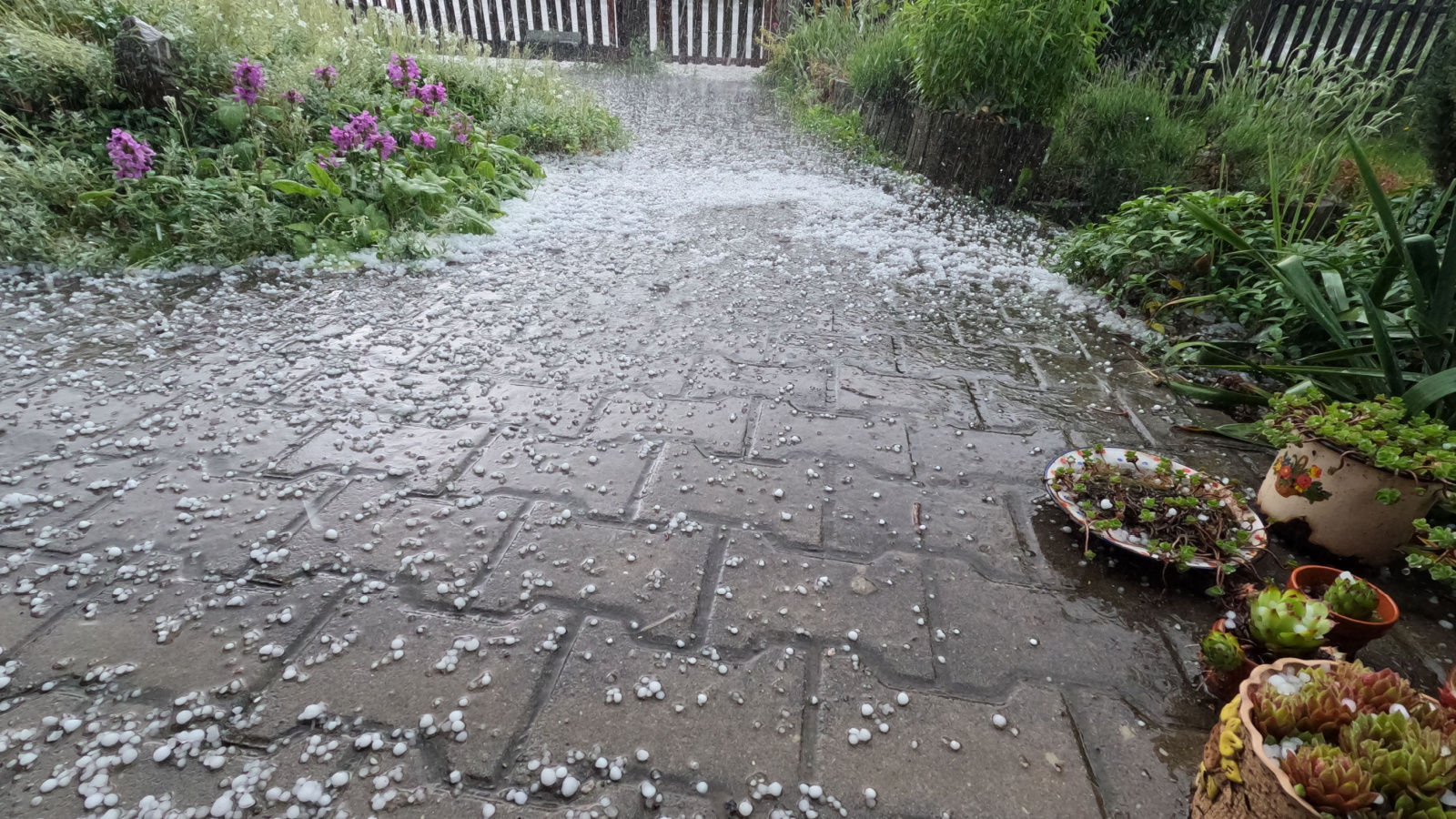
Hail damage is easy to underestimate because the most important impacts may be above eye level. Large hail can crack siding, break windows and bruise or fracture roofing materials, while repeated impacts can shorten the useful life of shingles without producing an immediate leak. Federal preparedness guidance identifies hail as a serious property hazard across several provinces, with parts of Alberta particularly exposed. The August 2024 Calgary hailstorm showed the potential scale: Insurance Bureau of Canada reported nearly $2.8 billion in insured damage and said almost one in five Calgary homes was affected.
After a severe hail event, owners should avoid assuming that intact windows mean the roof escaped damage. A professional inspection may be appropriate when hail was large, wind-driven or accompanied by visible neighbourhood damage. When reroofing is already necessary, impact-resistant materials can be worth discussing in hail-prone regions. Policy details matter as well: hail is commonly covered, but deductibles and pre-existing deterioration can affect a claim. Photographs and prompt inspection can also create a useful record if damage becomes more obvious later.
Wildfire Embers Can Reach Homes Far From the Flame Front

The image of a wildfire often centres on a wall of flame, but homes can ignite from embers carried ahead of the main fire. Natural Resources Canada notes that embers from nearby wildland fires can have drastic impacts, and the Jasper wildfire demonstrated how burning material can travel well ahead of the fire front. That makes the immediate area around a house important. Combustible debris in gutters, dry vegetation beside walls, wood piles near structures and vulnerable vents can all provide places where embers land and continue burning.
FireSmart principles focus on reducing opportunities for ignition rather than trying to make a property completely fireproof. Owners in wildfire-prone areas can clear dead vegetation and needles, keep combustible materials away from the structure, maintain roofs and gutters, and consider fire-resistant choices when replacing exterior components. The benefit is cumulative: several small improvements around the home can remove multiple ignition pathways. Wildfire risk is no longer only a concern for isolated cabins; communities where development meets wildland vegetation can face substantial exposure when extreme fire conditions develop.
Wildfire Smoke Can Enter a House That Appears Tightly Closed

A home does not need to be threatened by flames to be affected by wildfire. Smoke can travel long distances, and its fine particles can enter through open windows, leaks and mechanical ventilation. Health Canada advises keeping indoor air as clean as possible during smoke events and recommends using the highest-quality HVAC filter a system can safely handle or a certified portable air cleaner capable of filtering fine particles. HEPA-equipped cleaners are commonly used for this purpose because wildfire smoke contains PM2.5, fine particulate matter capable of penetrating deep into the respiratory system.
The overlooked risk is assuming that closing the windows solves the problem. Filters need to fit, airflow needs to be maintained, and a portable unit must be appropriately sized for the room. Health Canada also advises against ozone-generating air cleaners. During simultaneous heat and smoke, households face an additional challenge because tightly closing a hot home can raise indoor temperatures. A practical plan may therefore include a designated cleaner-air room, replacement filters kept on hand and a cooling option that does not depend on opening windows during the worst smoke conditions.
Indoor Overheating Is Becoming a Home-Safety Issue

Canadian houses have traditionally been designed with winter performance in mind, but extreme heat has made summer indoor temperatures a more serious safety concern. Health Canada says people can become dangerously hot indoors and notes that most heat deaths in Canada are believed to occur inside. Older adults and people with certain medical conditions are especially vulnerable because prolonged heat can strain the cardiovascular system, contribute to dehydration and increase the risk of heat exhaustion or heat stroke. Homes that remain hot overnight can prevent occupants from getting meaningful relief during multi-day events.
Owners can assess how quickly different rooms heat up, particularly upper floors and spaces receiving strong afternoon sun. Exterior shading, effective window coverings, heat pumps or air conditioning, ventilation strategies and access to a cooler room can reduce exposure depending on the building. Planning matters most before a heat warning begins. Waiting until indoor temperatures have already climbed can leave fewer practical options, particularly during a power outage or wildfire-smoke event when opening windows may not provide safe relief.
Ice Dams Can Turn Heat Loss Into a Roof Leak
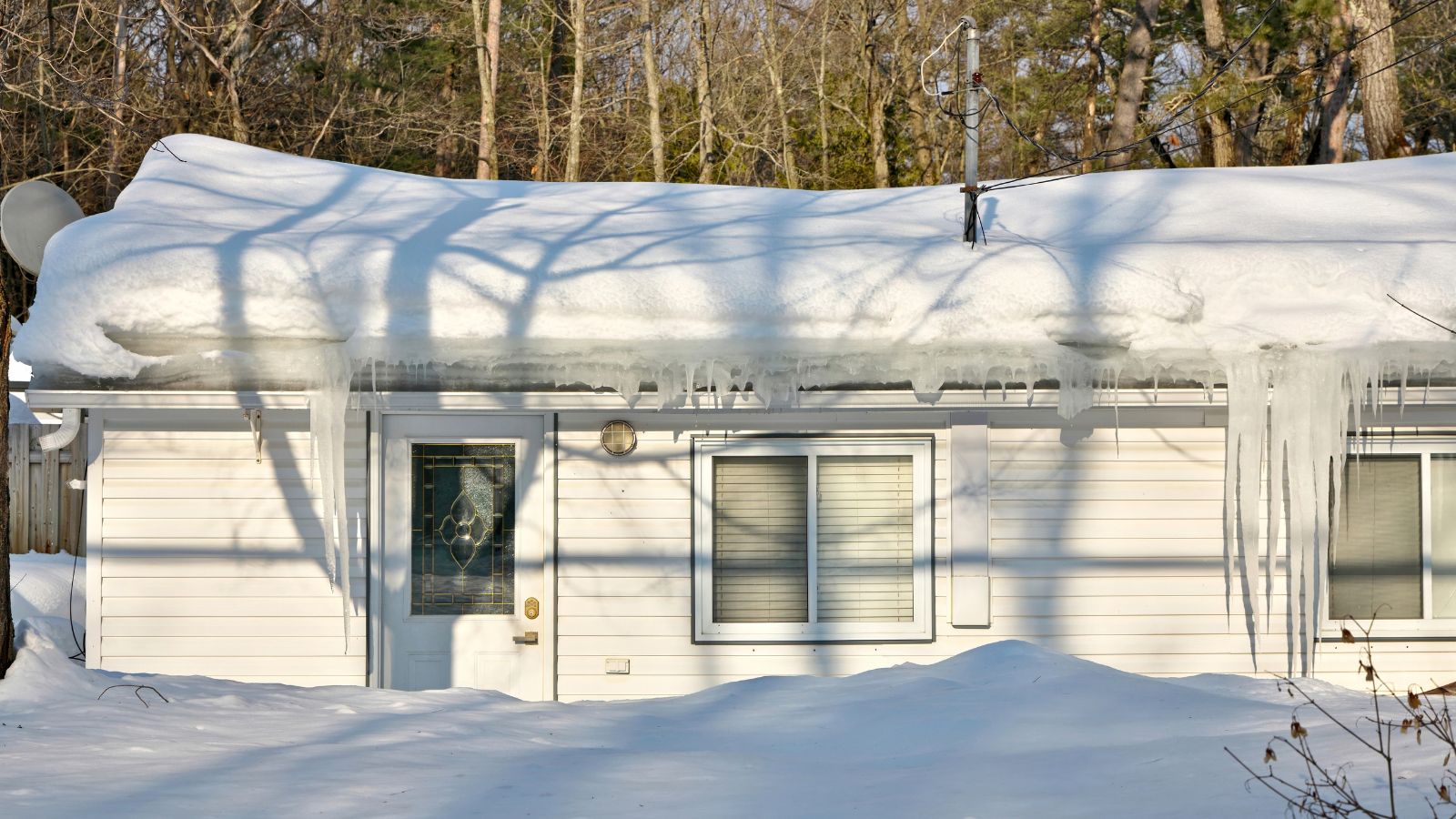
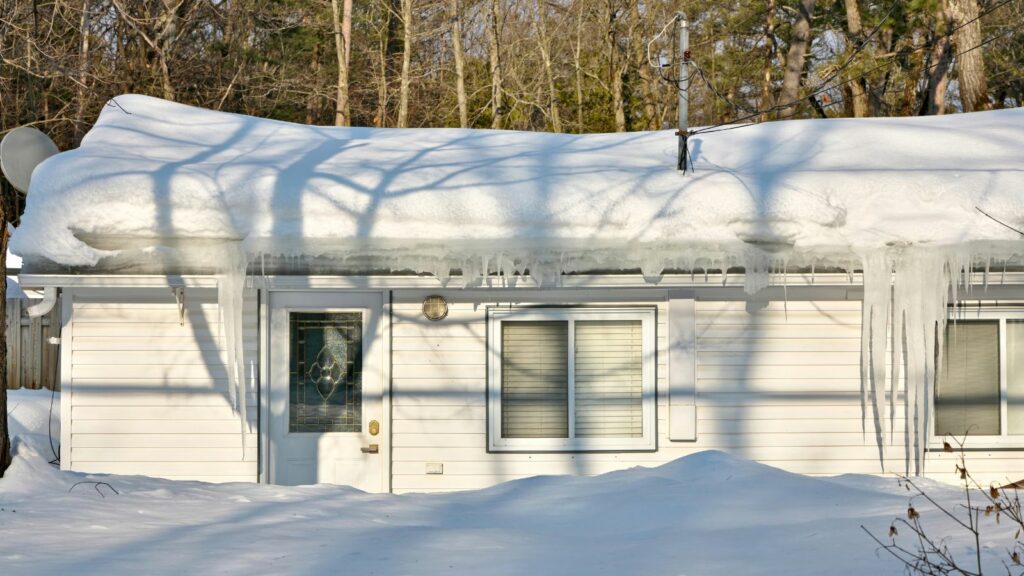
Ice dams are a winter problem that begins with an unevenly heated roof. Heat escaping into the attic can warm parts of the roof enough to melt snow; the meltwater then runs toward colder eaves and refreezes. As ice builds, water can back up under roofing materials and find its way into ceilings, walls or insulation. Natural Resources Canada identifies roof and attic conditions as important to controlling ice-dam problems and warns that attacking ice with sharp tools can damage roofing. The cycle can repeat every winter if the underlying heat-flow problem is never corrected.
Large icicles may look like an ordinary Canadian winter feature, but repeated ice buildup deserves attention. Owners can check attic insulation, air sealing and ventilation while keeping roof drainage paths functional. Safe snow removal can sometimes reduce the immediate problem, although working on an icy roof creates serious fall hazards and may be better left to professionals. Insurance can cover some sudden ice-dam water damage, but repeated deterioration may be treated differently from an unexpected insured event, increasing the value of prevention.
Frozen Pipes Can Leak Where Nobody Can See the Damage
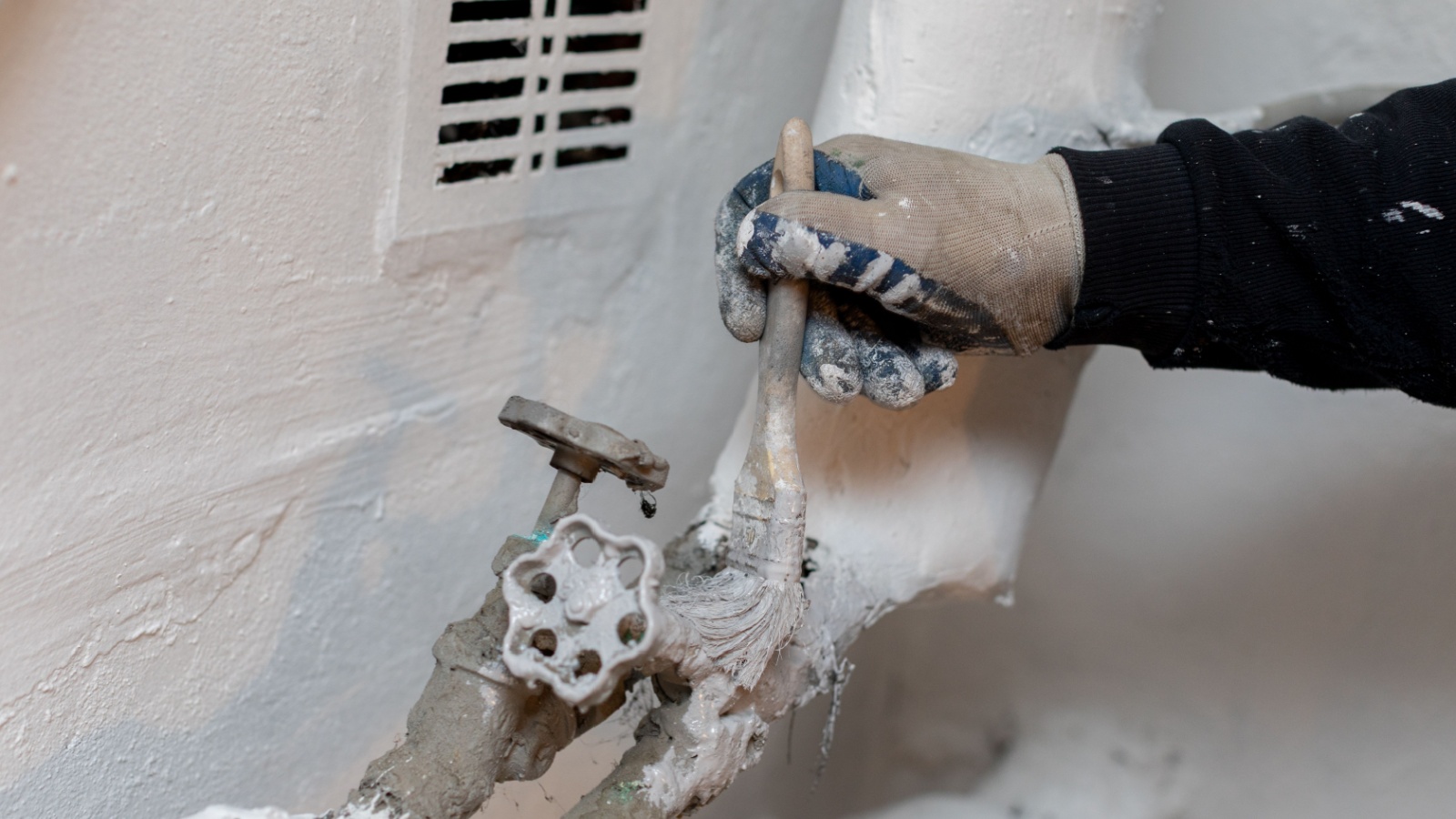
Extreme cold creates a familiar Canadian hazard with an expensive twist: a frozen pipe may not leak until it thaws. Water expands when it freezes, potentially splitting piping or fittings behind walls, under floors or in poorly heated spaces. Federal winter-storm guidance specifically advises households to check pipes after severe cold because resulting leaks can be difficult to detect. Extended power outages can increase the danger further by allowing interior temperatures to drop for hours or days, especially in poorly insulated areas of a home.
Owners should pay particular attention to plumbing near exterior walls, crawl spaces, garages and other cold zones. Insulation, air sealing and maintaining sufficient heat are basic protections, while cottages and other seasonally occupied properties need a clear winterization plan. Insurance conditions can matter when a residence is unattended during the heating season, because policies may require precautions such as draining plumbing or arranging checks. After a cold snap, unexplained dampness, water-pressure changes, staining or the sound of running water deserves immediate investigation rather than waiting for visible damage to spread.
Snow and Ice Loads Can Stress Roofs, Decks and Additions

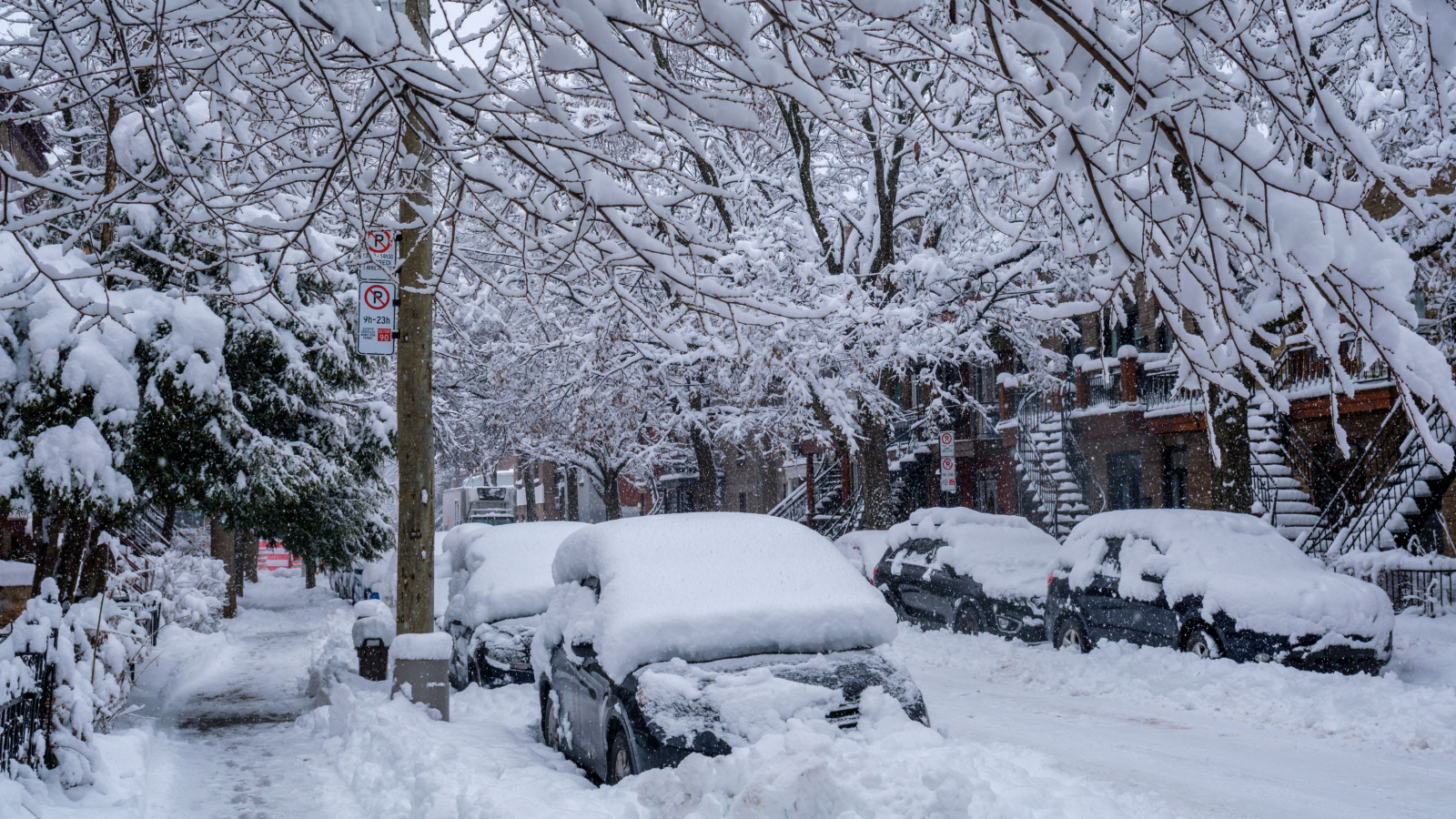
Snow is not simply something to shovel from a driveway. Accumulated snow and ice create structural loads on roofs, with the amount of stress depending on density, drifting, roof shape and changing temperatures. National Research Council research notes that snow can represent one of the largest design loads affecting roof systems, which is why Canadian building requirements account for regional snow conditions. Problems can become more complicated when heavy snowfall is followed by rain, thawing and refreezing, creating dense layers that weigh considerably more than light fresh powder.
Modern homes are generally designed around applicable snow-load requirements, but age, alterations and existing damage can change how a particular structure performs. Decks, sheds, patio roofs and older additions may also differ from the main house. Owners should watch for unusual sagging, cracking, movement or doors that suddenly begin binding after exceptional accumulation. Climbing onto an icy roof to shovel is dangerous and can damage roofing, so suspected structural problems should be assessed professionally. Keeping drainage paths open also helps control water when heavy snow eventually begins to melt.
Trees Become Structural Hazards When Wind and Ice Exploit Weaknesses
Mature trees provide shade and character, but storms can turn damaged limbs into extremely heavy falling objects. Environment and Climate Change Canada’s weather-impact guidance includes broken branches, snapped trees, roof damage and falling debris among the possible consequences of strong wind. Freezing rain creates another threat by adding weight to branches until they split. A tree that has survived decades of ordinary seasons may still fail when wind loading, saturated ground, decay or heavy ice accumulation occur together.
Warning signs can often be seen before bad weather arrives. Dead limbs hanging over a roof, cracks around major branch unions, fungal growth, significant leaning, exposed roots or previous storm damage deserve attention. Owners do not need to determine structural tree health themselves; qualified arborists can assess large trees located close to buildings, driveways and utility lines. Appropriate pruning of dead or weakened branches may lower the exposure, although unnecessary or poorly performed cutting can damage healthy trees. The objective is not to eliminate every mature tree but to identify failure points where a falling limb could cause serious property damage or injury.
Lightning and Power Surges Can Damage More Than a Television
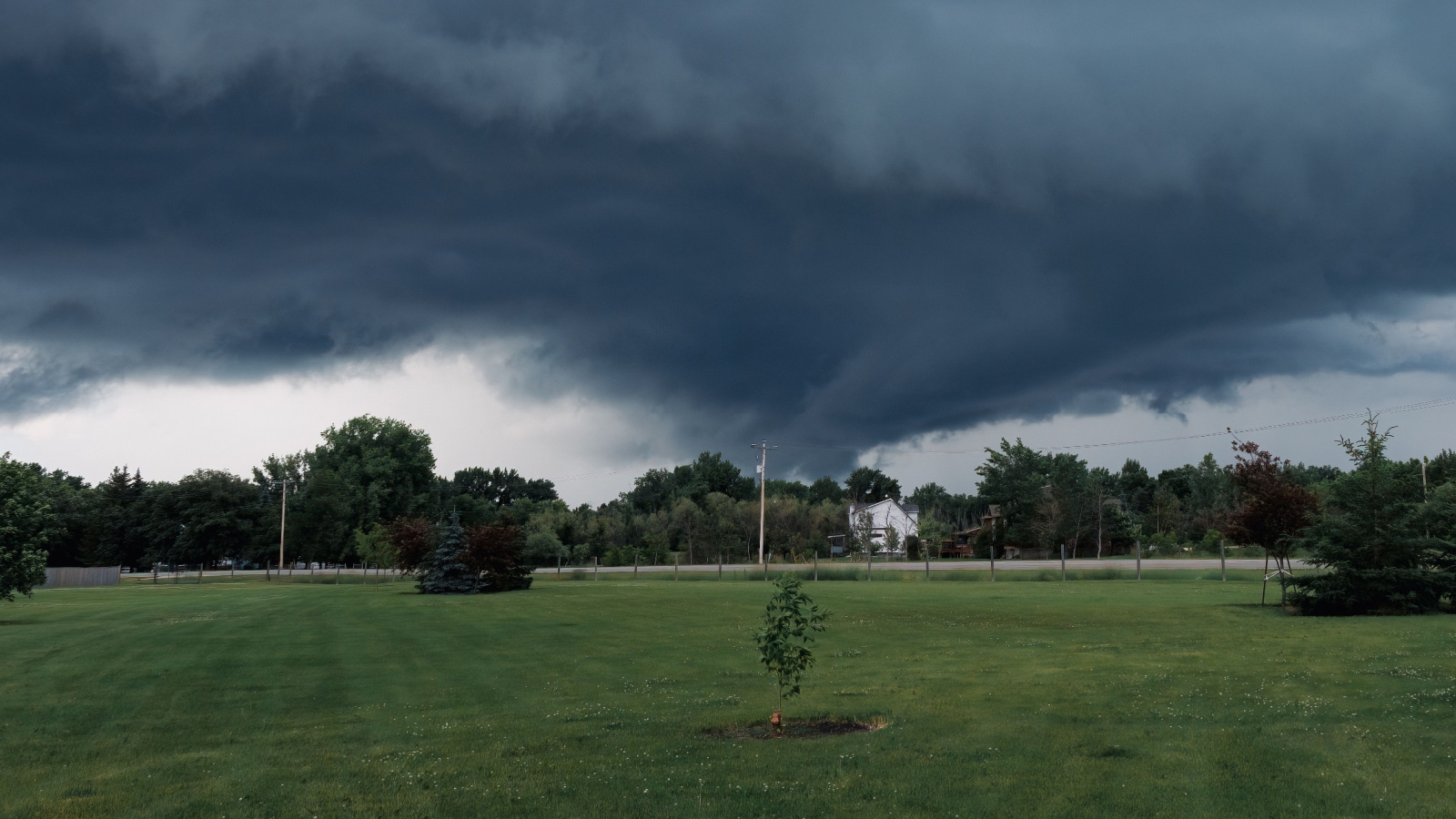
Thunderstorms create several home hazards at once, and the electrical risk is easy to overlook until equipment fails. Environment and Climate Change Canada recommends surge protection for electronics and advises disconnecting appliances before a storm when it can be done safely. Lightning can send powerful electrical currents through wiring, utility systems and conductive materials. Modern homes also contain far more sensitive equipment than previous generations did, including computers, routers, smart appliances, heat-pump controls, security devices and electric-vehicle charging equipment.
Plug-in surge protectors can provide a layer of protection for individual devices, while owners with significant electronics may choose to discuss whole-home surge protection with a licensed electrician. No consumer device makes a building immune to a direct lightning strike, and electrical work should never be improvised while a storm is underway. Owners should also avoid assuming that a tripped breaker is the only possible sign of trouble. After a nearby strike, unexplained failures, burning smells or damaged outlets warrant professional attention. Separate data backups can also reduce the less-visible consequences of damaged computers and storage devices.
Moisture After a Storm Can Become a Mould Problem Within Days
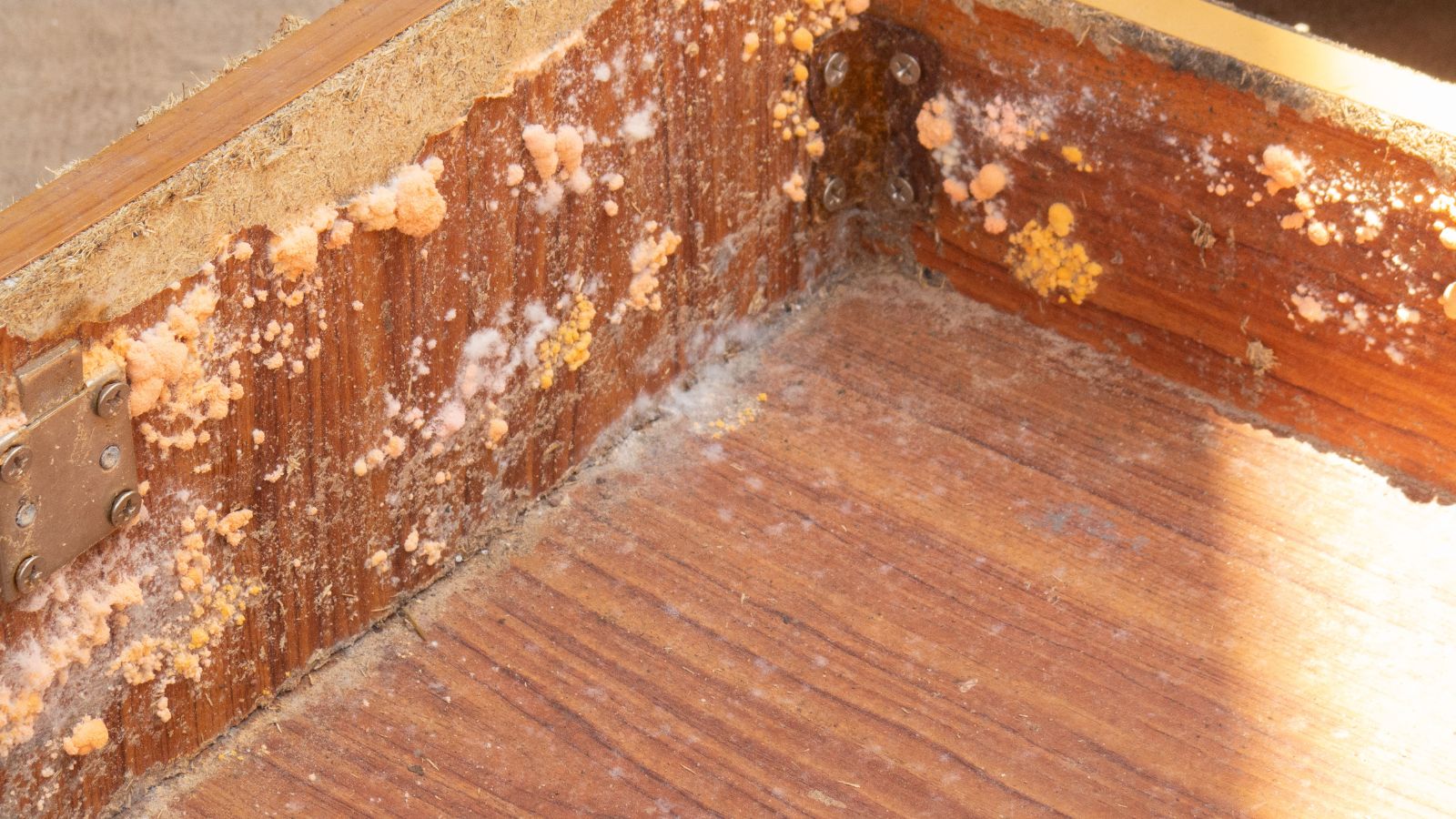
The visible water line is only the beginning of post-storm damage. Health Canada warns that standing water and wet building materials allow bacteria and mould to grow, and says houses and furnishings are less likely to develop mould if they are dried within 48 hours. Drywall, insulation, carpets, furniture and concealed wall cavities can retain moisture after surface water disappears. That hidden dampness matters because Health Canada considers indoor mould growth a health hazard and reports associations between damp or mouldy homes and respiratory symptoms, including worsening asthma.
Drying therefore needs to be treated as part of the response rather than as a cosmetic job for later. The source of moisture must also be repaired, whether it came through a damaged roof, foundation, plumbing system or flood opening. Some wet porous materials may need removal rather than simply being cleaned or painted. Musty odours, stains and persistent humidity after cleanup are warning signs that moisture remains. Large areas of contamination or sewage-affected materials may require professional remediation. Acting quickly can limit both structural deterioration and prolonged exposure for people living inside the home.
Coastal Storm Surge Can Expose a Major Insurance Gap

For Canadians living near vulnerable shorelines, storm surge creates a risk that ordinary rain-flood planning does not completely address. Natural Resources Canada identifies sea-level change, tides, storm surge and other processes as factors contributing to coastal flooding. Low-lying communities can experience flooding and erosion when powerful storms push water inland, while long-term sea-level rise can increase exposure in some areas. A property that remains safely above normal tides may therefore still face damaging water levels during a major coastal storm.
The insurance issue can be as surprising as the physical damage. Insurance Bureau of Canada says home and business policies generally do not cover coastal flooding or storm surge, and such protection is typically not available through ordinary optional flood endorsements. Owners in coastal communities should understand local flood mapping, elevation, evacuation routes and policy exclusions before an emergency develops. Raising vulnerable equipment or valuable possessions can reduce some losses, while shoreline protection must follow local rules and environmental requirements. Ultimately, however, some location-based coastal risk cannot be eliminated through household maintenance alone.
16 Costco Canada Habits That Could Be Costing Shoppers More Than They Save

The Executive Membership can feel like an obvious upgrade because the 2% annual reward sounds straightforward. For households that spend heavily at Costco Canada, the extra fee may be easy to justify. But the habit becomes costly when shoppers upgrade first and calculate later. A Gold Star Membership costs less, while Executive costs more and only pays off if eligible annual spending is high enough to offset the difference.
16 Costco Canada Habits That Could Be Costing Shoppers More Than They Save
