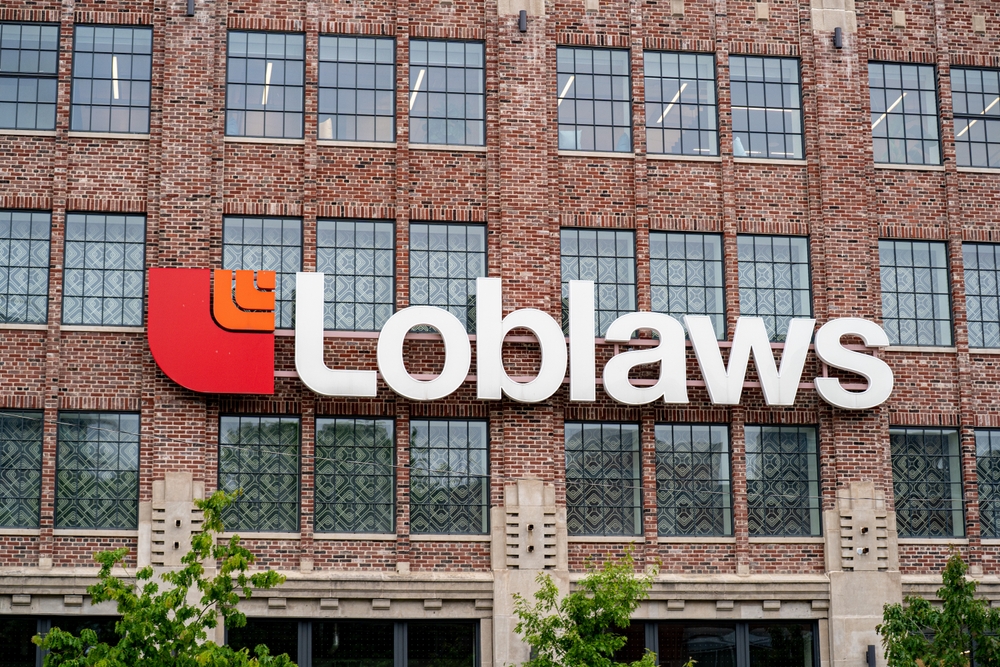
The optics are difficult to ignore: one day after Ontario Premier Doug Ford publicly rejected calls for new rules against personalized grocery pricing, his calendar shows he hosted Loblaw Companies CEO Per Bank at his Etobicoke home. The April 17 meeting, revealed months later through freedom-of-information records obtained by Global News, was not publicly announced at the time and came as opposition parties were pressing Queen’s Park to intervene more aggressively in grocery pricing and competition.
The records do not establish that surveillance pricing, grocery prices or property controls were discussed. Both Ford’s office and Loblaw say meetings between governments and major employers are routine. Still, the timing has revived a politically sensitive question in Ontario: when families are struggling with food costs, how closely should government work with the companies that dominate the grocery business — and how transparent should those conversations be?
The Meeting Came One Day After Ford’s Rejection
On April 16, Ford was asked whether Ontario would follow Manitoba and ban “surveillance pricing,” a practice in which personal data can be used to vary the price offered to an individual consumer. Ford rejected the idea, arguing that competition rather than government price intervention should determine what shoppers pay. He said he believed in a capitalist, free-market system and added that he would act aggressively if there were evidence of collusion. His comments came as the cost of food remained a major affordability issue and as both the NDP and Liberals were pushing measures aimed at personalized pricing.
The next day, Ford’s calendar shows a 45-minute meeting with Per Bank at the premier’s Etobicoke home, with one staff member present. Global News reported that the meeting took place during the lunch hour and was not publicized by the premier’s office or highlighted on Ford’s social-media accounts. The calendar entry does not say what was discussed. That distinction matters: the records establish proximity in timing, but they do not establish a link between Ford’s policy position and the private meeting.
What Ford Actually Rejected
The proposal at the centre of the dispute was not a government-set price for milk, bread or meat. Ontario opposition parties were targeting personalized algorithmic pricing — systems capable of changing an individual shopper’s price based on data about that person. Ontario Liberal Bill 104, the Fair Grocery Prices Act, defined the practice broadly enough to cover browsing and purchasing history, spending patterns, device information, income, location, credit history, financial-assistance payment schedules and even medical or health information.
The bill would classify it as an unfair practice to use that data to change the price offered to an individual consumer, including through online platforms or electronic shelf labels. That is different from ordinary dynamic pricing in which every shopper sees the same temporary price change. Ford’s criticism therefore put him at odds not simply with price controls, but with a proposed consumer-protection rule governing how personal information could affect prices. His position was that competition remained the better safeguard. Supporters of the restrictions argued that the issue was about preventing individualized discrimination before it becomes normal at the checkout.
Opposition Parties Were Pushing Similar Guardrails
The pressure at Queen’s Park came from more than one opposition party. Liberal interim leader John Fraser introduced Bill 104 on April 15, one day before Ford’s comments. The bill passed first reading and was ordered for second reading. The NDP, led by Marit Stiles, separately advanced a motion calling on Ontario to ban surveillance pricing practices that misuse personal data to inflate prices. The NDP also pressed the province to address property controls that can limit where competing food retailers are able to operate.
That combination is important because it shows the debate was about both digital pricing and traditional competition. A shopper may never encounter a personalized price, but can still face limited choice if a neighbourhood has few viable grocery competitors. Stiles has argued that government should intervene before algorithmic pricing becomes widespread, while Fraser framed the issue as a need for guardrails in a changing retail environment. Ford and his government did not support the opposition policy push, maintaining that open competition is the strongest route to lower prices. The political dispute is therefore as much about the role of government as it is about technology.
Manitoba Had Already Moved First
Ontario’s debate did not emerge in isolation. In March, Manitoba introduced Bill 49, legislation that would amend its Business Practices Act to make it an unfair business practice for suppliers to use a consumer’s personal data to charge that person a higher price. The Manitoba government described the proposal as a first-of-its-kind measure in Canada and said it would apply to both in-store and online retail transactions. The stated goal was to prevent personalized or algorithmically determined information from being used to make some consumers pay more.
That move gave Ontario’s opposition parties a ready-made comparison. Instead of waiting for evidence that the practice had become common in Canadian grocery stores, Manitoba chose a preventive approach. Ford chose the opposite policy instinct, arguing that the market should be allowed to function unless there is collusion or another clear abuse. Those two approaches reflect a broader regulatory divide: one side sees personalized pricing as a foreseeable consumer-protection risk worth prohibiting early; the other is wary of writing new rules around a practice that has not been shown to be widespread in Ontario grocery stores.
Why Loblaw’s Role Makes the Timing Sensitive
Loblaw is not a marginal player in this debate. Its banners include Loblaws, No Frills, Real Canadian Superstore, Fortinos and T&T, while the wider company also operates Shoppers Drug Mart. In its second-quarter 2026 results, Loblaw reported $15.27 billion in total revenue, $751 million in net earnings available to common shareholders and a 3.3% increase in food-retail sales. The company said higher customer traffic, larger baskets and e-commerce growth contributed to the quarter, while discount banners continued to outperform.
Global News also reported that Bank was registered to lobby the Ontario government on subjects including retail-sector policy and data and privacy. Loblaw said it does not use surveillance pricing and said it regularly meets elected officials across the political spectrum because of its scale as an employer and retailer. Separately, the federal Privacy Commissioner ruled in March that Loblaw had not demonstrated that certain retained data from closed PC Optimum accounts was effectively anonymized; that case concerned data retention, not personalized grocery pricing. The distinction is essential, but it underscores why data practices surrounding a major loyalty program remain a sensitive public issue.
Grocery Competition Is Already Under Federal Scrutiny
Ford’s emphasis on competition has support in basic economic logic, but Canada’s grocery market has already attracted sustained scrutiny from the federal Competition Bureau. Its retail grocery market study concluded that more competition could bring lower prices, greater choice and more innovation. One of the barriers identified by the Bureau was the use of property controls — lease restrictions, exclusivity clauses or restrictive covenants that can make it harder for a rival grocer to open nearby. The Bureau has continued examining these practices and is monitoring Loblaw’s public commitment to change its approach to property controls.
That context makes the Ontario debate more complicated than a simple choice between regulation and free markets. Some regulation can be aimed at creating the conditions for more competition rather than setting prices directly. The NDP’s push to remove property controls fits that model. Loblaw, for its part, told Global News that it is pushing the sector to remove such controls. The core policy question is therefore not whether competition is desirable — all sides largely agree that it is — but whether governments should actively remove structural barriers and restrict data-driven pricing practices to make that competition more meaningful for consumers.
The Affordability Backdrop Has Not Gone Away
The political sensitivity is heightened by what households are still paying. Statistics Canada reported that prices for food purchased from stores were 3.1% higher in July 2026 than a year earlier, slightly above the 3.0% increase in the overall Consumer Price Index. Grocery inflation has cooled from the double-digit rates seen in 2022 and 2023, but the price level remains much higher than it was before that surge. Statistics Canada’s 2025 annual review found that Canadians were paying 20.3% more for groceries than in 2021.
The numbers become more tangible in an ordinary basket. In June 2026, the national average price listed by Statistics Canada was $5.50 for two litres of milk, $4.88 for a dozen eggs, $5.94 for 454 grams of butter and $16.61 per kilogram for ground beef. Ford has pointed to fuel and transportation costs as one reason grocery bills remain high. Statistics Canada has also documented sharp year-over-year increases in producer prices for gasoline and diesel in 2026. But food prices reflect multiple forces across farming, processing, packaging, transportation, wholesale and retail — making any single-cause explanation incomplete.
What the Records Show — and What They Don’t
The strongest factual takeaway is narrow but significant. Ford publicly rejected a surveillance-pricing ban on April 16. On April 17, he met Loblaw CEO Per Bank privately at his home. The meeting lasted 45 minutes, involved one staff member and was not promoted publicly at the time. Bank had registered lobbying interests that included retail policy and data and privacy. Those facts explain why the timing is politically combustible, particularly when opposition parties were simultaneously pressing the government for tighter rules on grocery pricing and competition.
What the available records do not show is just as important. There is no public evidence that Bank asked Ford to reject Bill 104 or the NDP motion, no public evidence that Ford changed his position because of the meeting, and no calendar detail establishing that surveillance pricing was discussed. Loblaw says it does not use the practice. Ford’s office says the premier regularly meets major businesses and stakeholders. The unresolved issue is therefore one of transparency and public confidence: when a major policy dispute touches a company with enormous economic influence, undisclosed meetings can invite suspicion even when the evidence does not establish wrongdoing.
