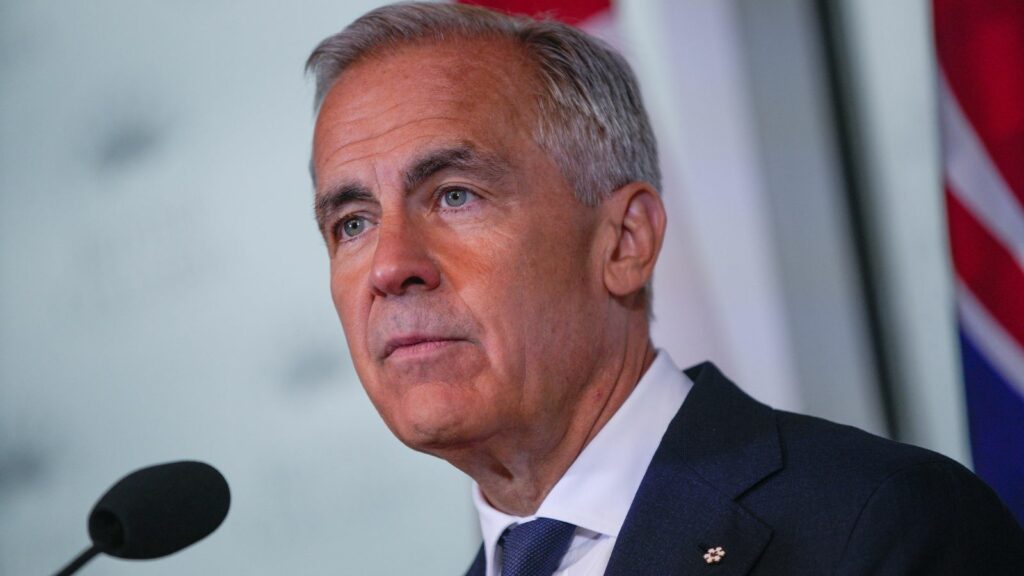
Canada’s rulebook for approving major energy infrastructure is getting noticeably thinner. The Carney government has changed the federal Project List under the Impact Assessment Act, removing several categories of pipelines, electricity infrastructure, oil sands developments and fossil-fuel power plants from the federal impact-assessment system.
The September 9 changes do not mean major energy projects suddenly escape environmental scrutiny. Instead, Ottawa is shifting more responsibility toward specialized regulators and provincial processes, particularly the Canada Energy Regulator. The government says the approach will eliminate duplication and give investors clearer timelines. Environmental organizations and some Indigenous participants see a different risk: fewer independent federal reviews could mean less scrutiny of cumulative environmental effects, climate impacts and Indigenous rights. The dispute now centres on whether Canada can genuinely approve infrastructure faster without weakening the quality of the decisions.
Ottawa Is Changing Who Reviews Major Energy Projects
The most immediate change affects energy infrastructure already regulated by the Canada Energy Regulator. International and interprovincial pipelines, international and designated interprovincial electricity transmission lines, and certain offshore renewable-energy projects are being removed from the federal Project List. Oil and gas infrastructure in national parks or protected areas that falls under the Canada Energy Regulator Act, along with some facilities functionally connected to federally regulated infrastructure, is also affected. Until now, qualifying projects could face an integrated process involving both the Impact Assessment Agency of Canada and the CER. Ottawa’s new model gives the sector regulator the central role instead.
That distinction matters because the government is describing the reform as consolidation rather than deregulation. A company proposing a major interprovincial pipeline will still have to submit extensive engineering, environmental and socio-economic evidence. Public hearings, Indigenous consultation and federal decision-making requirements can still apply. What disappears is the additional Impact Assessment Act pathway for these project classes. For proponents accustomed to dealing with overlapping institutions, the practical promise is a clearer front door: one federal energy regulator carrying a project through assessment and, if approved, continuing to oversee it through construction, operation and eventual abandonment.
A Supreme Court Ruling Helped Set the Stage
The regulatory change cannot be separated from the constitutional fight that surrounded the Impact Assessment Act. In October 2023, the Supreme Court of Canada concluded that much of the federal designated-project assessment scheme went beyond Parliament’s constitutional authority. The majority did not reject federal environmental assessment itself. Instead, it found that the legislation had been drafted too broadly and was not sufficiently anchored to effects that fall within federal jurisdiction. The ruling forced Ottawa to rethink which projects should automatically enter a federal assessment and how federal decisions should be framed.
Parliament responded in June 2024 by narrowing the Act. Federal decisions were more explicitly tied to adverse effects within areas of federal constitutional responsibility, while the amended framework put greater emphasis on co-operation with provincial processes. The Carney government is now carrying that logic into the Project List itself. Ottawa argues that in-situ oil sands projects and fossil-fuel power facilities often fall primarily within provincial regulatory systems, while federally regulated pipelines and transmission lines already have a specialized federal regulator. The September amendments therefore represent both an economic-policy shift and another stage in the legal restructuring triggered by the Supreme Court decision.
The Canada Energy Regulator Becomes the Main Federal Gatekeeper
Giving the Canada Energy Regulator sole responsibility for more infrastructure is significant because its mandate extends well beyond pipeline engineering. Under the Canada Energy Regulator Act, assessments can consider environmental effects, cumulative effects, greenhouse-gas emissions and climate change, human health, economic consequences, traditional land use and potential effects on Indigenous rights. The regulator says environmental and socio-economic assessments have been part of its work, and that of its predecessor, for decades. Ottawa says the CER has completed more than 100 pipeline reviews using the modern statutory factors since the current legislation took effect in 2019.
Timelines are another reason the government is leaning on the CER. Large pipeline applications handled through its conventional hearing process can carry a legislated Commission review limit of up to 450 days, followed by a Governor-in-Council decision period where required. CER data published before the new amendments showed that its large-pipeline reviews since the current Act came into force averaged about 416 days. By comparison, the former integrated route for the largest designated projects included separate planning and impact-statement phases before the formal assessment stage. Ottawa is betting that removing that institutional handoff will make the path easier for proponents to understand and finance.
Oil Sands and Fossil-Fuel Power Lose Their Automatic IAA Route
The change goes further than simply transferring pipeline files between federal bodies. Ottawa is also removing in-situ oil sands extraction facilities and fossil-fuel-fired power generating facilities from the Project List. The former rule covered certain in-situ projects with bitumen production capacity of at least 2,000 cubic metres per day in provinces lacking specified legislation limiting oil sands greenhouse-gas emissions. Federal officials say no in-situ oil sands proposal meeting the Project List conditions has historically entered the Impact Assessment Act process, and the government does not currently anticipate one being proposed during its 10-year regulatory analysis period.
Fossil-fuel power projects provide a different example. According to the federal regulatory analysis, those facilities accounted for roughly 20 per cent of initial project descriptions received under the Impact Assessment Act, yet the projects that entered the process were consistently screened out before requiring a comprehensive federal impact assessment. Provincial oversight does not disappear. In Alberta, for example, the Alberta Energy Regulator reviews in-situ oil sands development under legislation including the Oil Sands Conservation Act and Environmental Protection and Enhancement Act, which can involve environmental, land, water and public-interest considerations. The reform therefore shifts where the assessment occurs rather than giving developers an unrestricted path to construction.
Ottawa Expects Fewer Projects to Enter the Federal IAA System
The government’s own numbers show that the reform is targeted rather than a wholesale dismantling of the Impact Assessment Act. Without the amendments, federal officials estimated that roughly 10 designated projects a year would enter the IAA process, although many would never proceed to a full impact assessment. With the new Project List, Ottawa expects that figure to decline to about seven or eight annually. The government also anticipates that at least one qualifying pipeline, one electricity transmission project and one offshore wind project regulated by the CER could otherwise have crossed the old designation threshold during the next decade.
The paperwork savings are real but smaller than the political rhetoric around regulatory reform might suggest. Ottawa’s regulatory analysis forecasts administrative savings because affected companies will no longer have to prepare certain duplicate Impact Assessment Act documents. Yet it explicitly says CER-regulated businesses will continue to face similar substantive project-review costs because they still must prepare material for the energy regulator. That is a crucial distinction for investors. The biggest potential gain is not eliminating environmental studies or consultation; it is reducing duplicated filings, administrative handoffs and uncertainty about which federal institution is steering the project.
Indigenous Consultation Remains a Major Test of the New System
Ottawa insists the amendments do not erase the Crown’s constitutional duty to consult and, where appropriate, accommodate Indigenous Peoples. The CER acts as an agent of the Crown and can use hearings, written submissions, Indigenous Knowledge sessions and supplemental consultation when assessing projects. Participant funding can also support involvement in certain regulatory proceedings. Modern treaty-based environmental assessment systems remain legally distinct, and the federal regulatory analysis states that the amendments neither override nor diminish constitutionally protected treaty provisions. Canada currently has 30 modern treaties and self-government agreements, although many operate in northern areas where separate assessment systems already play a major role.
Still, the government’s own consultation record shows why this issue remains unsettled politically. Indigenous participants raised concerns that removing independent Impact Assessment Act panels could reduce transparency, weaken participation and make it harder to examine cumulative environmental, cultural and economic effects. Some questioned whether specialized regulators could deliver the same broad, rights-based assessment expected from a separate impact-assessment body. Others warned against compressed timelines that leave communities struggling to review enormous technical records. The credibility of the streamlined regime may therefore depend less on what Ottawa promises in legislation and more on whether affected communities receive enough time, funding, information and influence when actual projects arrive.
Industry Sees Certainty While Environmental Groups See Lost Oversight
The consultations exposed an unusually clear divide. Industry participants strongly supported making the CER the sole federal assessor for pipelines and related infrastructure, arguing that a lifecycle regulator with technical expertise should not have to duplicate work with another federal assessment institution. Supporters believe fewer regulatory handoffs could lower development risk and make Canada more competitive for capital. Heather Exner-Pirot of the Macdonald-Laurier Institute told CBC that regulatory costs create substantial upfront burdens before a project generates revenue and argued that the reform should help attract investment.
Environmental organizations see the same change very differently. Environmental Defence described the amendments as a weakening of Canada’s environmental safeguards and argued that a specialized energy regulator does not provide the same independent environmental scrutiny as the Impact Assessment Agency. The government’s own “What We Heard” report documented similar concerns from participants who warned about cumulative effects, species at risk, climate impacts and Indigenous rights. Ottawa counters that the CER is legally required to consider many of those factors. The real policy disagreement is therefore not whether environmental assessment continues, but whether assessment performed inside a lifecycle energy regulator can provide the independence and breadth critics expect from a separate federal review body.
The West Coast Pipeline Shows Why the Timing Matters
The reforms arrive while Ottawa and Alberta are advancing one of Canada’s most consequential pipeline proposals in years. The proposed West Coast Oil Pipeline would run roughly 1,250 kilometres from the Edmonton-region hub near Bruderheim to southern British Columbia and is being designed around capacity of approximately one million barrels of crude oil per day. The federal government referred the proposal to the Major Projects Office on July 2, and consultations have been underway over whether it should be listed as a project of national interest under the Building Canada Act. Ottawa has said it intends to provide notice by October 1 if it plans to list the project.
That proposal demonstrates how several pieces of Carney’s regulatory strategy now fit together. The Major Projects Office is intended to function as a single federal window, the Building Canada Act creates an accelerated route for selected projects of national interest, and the September Project List amendments reduce duplicated assessment for other federally regulated energy infrastructure. None of those steps guarantees that the West Coast pipeline—or any other project—will actually be built. Financing, engineering, Indigenous consultation, environmental conditions, provincial relationships and market demand still matter. What has changed is Ottawa’s starting assumption: fewer overlapping processes are now being treated as an economic advantage rather than an additional layer of precaution.
