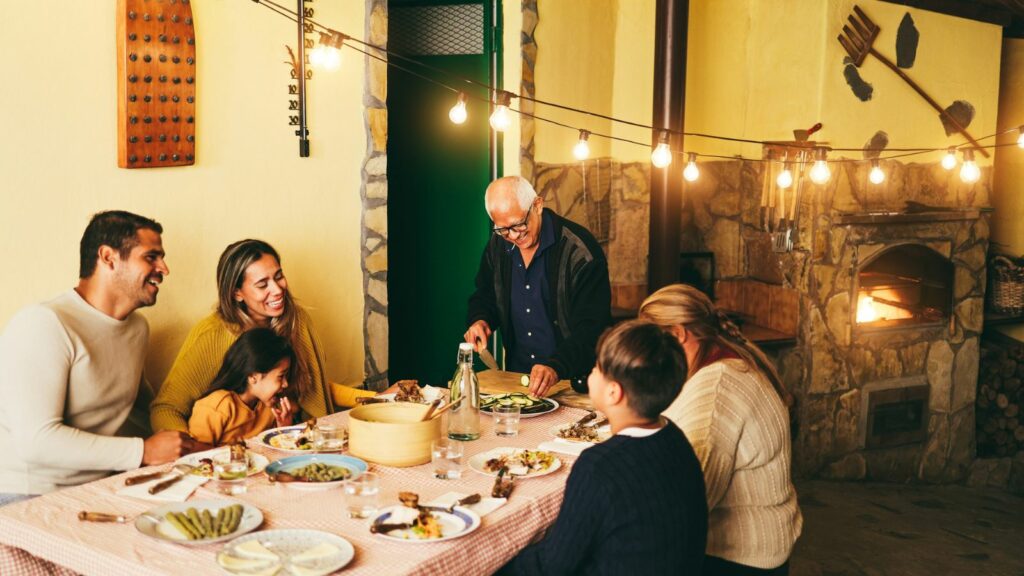
Thanksgiving dinner in Canada can still look reassuringly familiar: turkey in the oven, potatoes on the stove and relatives trying to determine exactly when everything will be ready. Yet the Canadian family surrounding that meal has changed considerably over the past two decades. Households are smaller, the population is more culturally diverse, technology has transformed how gatherings are organized, and changing food prices and dietary expectations increasingly affect what reaches the table.
Some changes are demographic, while others reflect new technology, environmental habits or shifting attitudes toward food and family life. None has erased the traditional Canadian Thanksgiving. Instead, traditions are being adapted around modern realities. These 21 changes show how Thanksgiving gatherings today can look surprisingly different from those of roughly 20 years ago.
Guest Lists Are Being Built Around Smaller Households
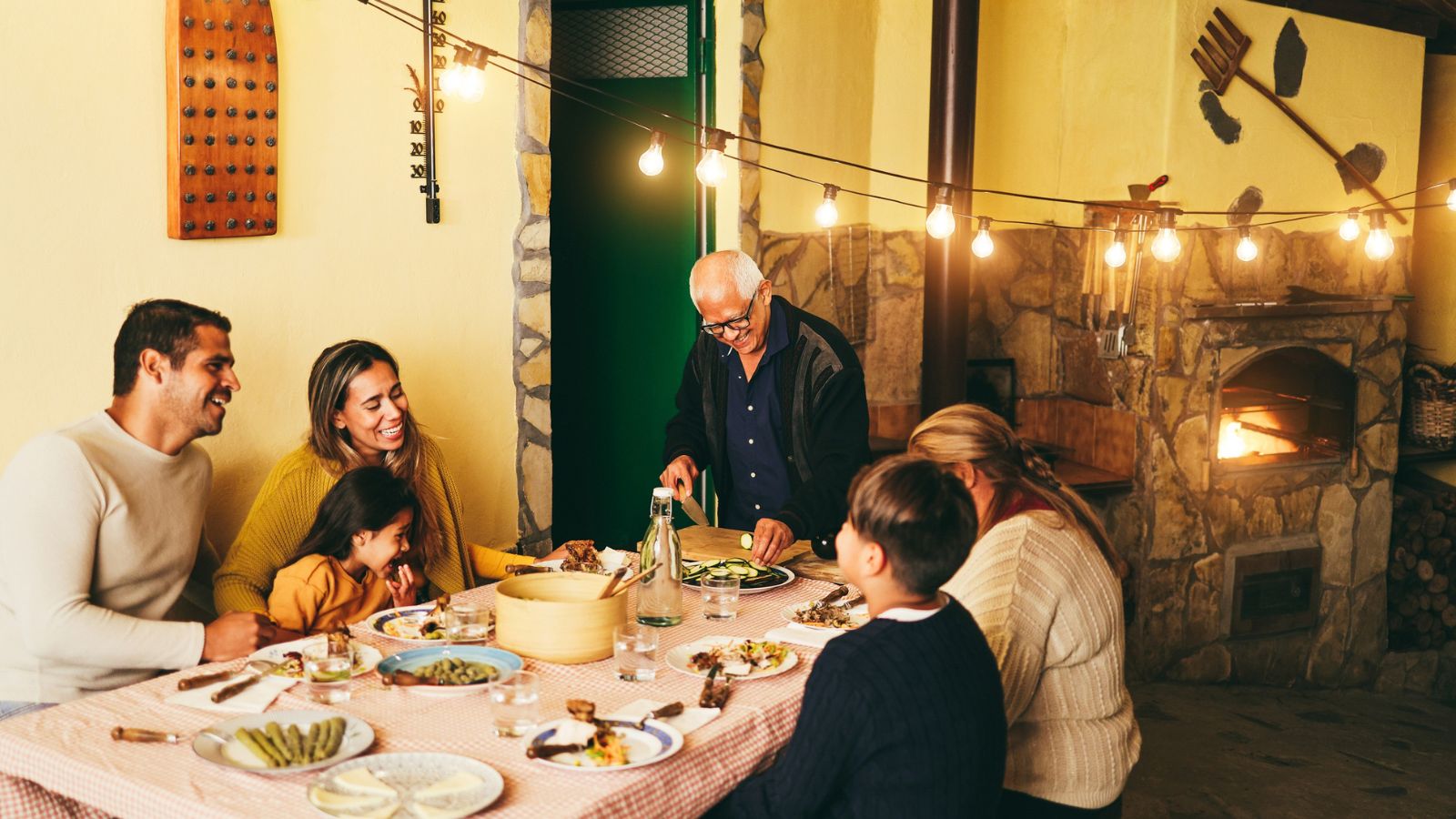
The sprawling household that once supplied much of a Thanksgiving crowd under one roof is less typical than it used to be. Statistics Canada reported an average household size of 2.6 people in 2001. By the 2021 Survey of Household Spending, the national average stood at about 2.46. That difference may appear modest, but it sits within a much longer shift toward smaller Canadian households, including more people living alone and more couples without children at home.
For Thanksgiving hosts, that demographic change can alter everything from turkey size to seating plans. A couple may invite siblings from several households rather than simply placing one large immediate family around the table. Smaller household units can also mean more negotiating over where Thanksgiving will happen, particularly when adult children, separated relatives and grandparents live independently. The classic image of everyone simply gathering at the family home has increasingly given way to a dinner assembled from several smaller households.
Multigenerational Homes Are Changing the Meaning of a Big Dinner

Smaller households are only one side of the story. At the same time, multigenerational living has become more common in Canada, giving some Thanksgiving gatherings a distinctly different shape. Statistics Canada counted 364,505 multigenerational households in 2001. By 2021, the total had reached 441,750, an increase of more than 21%. About 2.4 million Canadians were living in households containing three or more generations in 2021.
That can turn Thanksgiving from a reunion into something closer to an expanded version of everyday dinner. Grandparents may already share a kitchen with adult children and grandchildren, particularly in communities where multigenerational housing is common. It can also redistribute the workload. Instead of one host shopping, cooking and cleaning, several generations may contribute within the same household. The resulting gathering can feel both traditional and modern: grandparents may guard the family stuffing recipe while younger relatives organize grocery delivery, playlists or dessert orders from their phones.
The Menu Reflects a Much More Multicultural Canada
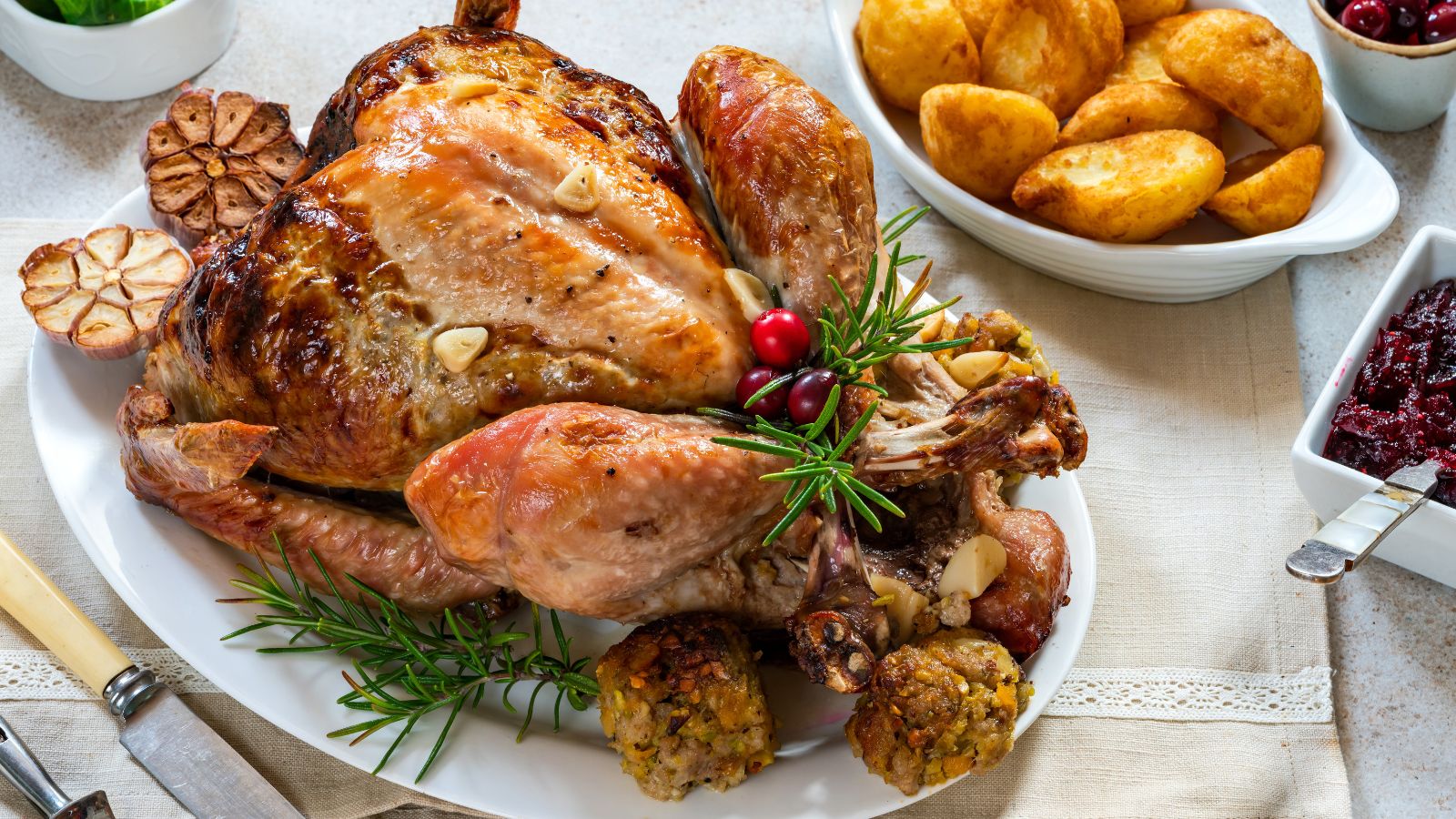
A Canadian Thanksgiving table was never completely standardized, but the country’s changing population has made the possibilities considerably broader. In 2001, immigrants represented 18.4% of Canada’s population. The 2021 Census put that share at 23%, the highest recorded since Confederation. Immigration patterns have changed as well, with an increasing share of newcomers arriving from Asia, the Middle East and Africa rather than the predominantly European sources that characterized earlier generations.
That demographic transformation naturally creates more opportunities for Thanksgiving traditions to mix. A turkey might sit beside biryani, lumpia, jollof rice, dumplings, jerk-seasoned vegetables or another dish with family significance. Some households celebrate Thanksgiving enthusiastically after immigrating to Canada; others treat the weekend mainly as an opportunity for a large family meal. Canada’s Food Guide explicitly recognizes culture and food traditions as part of healthy eating. Thanksgiving increasingly demonstrates that principle in a practical way: Canadian traditions are often added to family food traditions rather than replacing them.
Plant-Based Dishes Have Moved Closer to the Centre of the Table
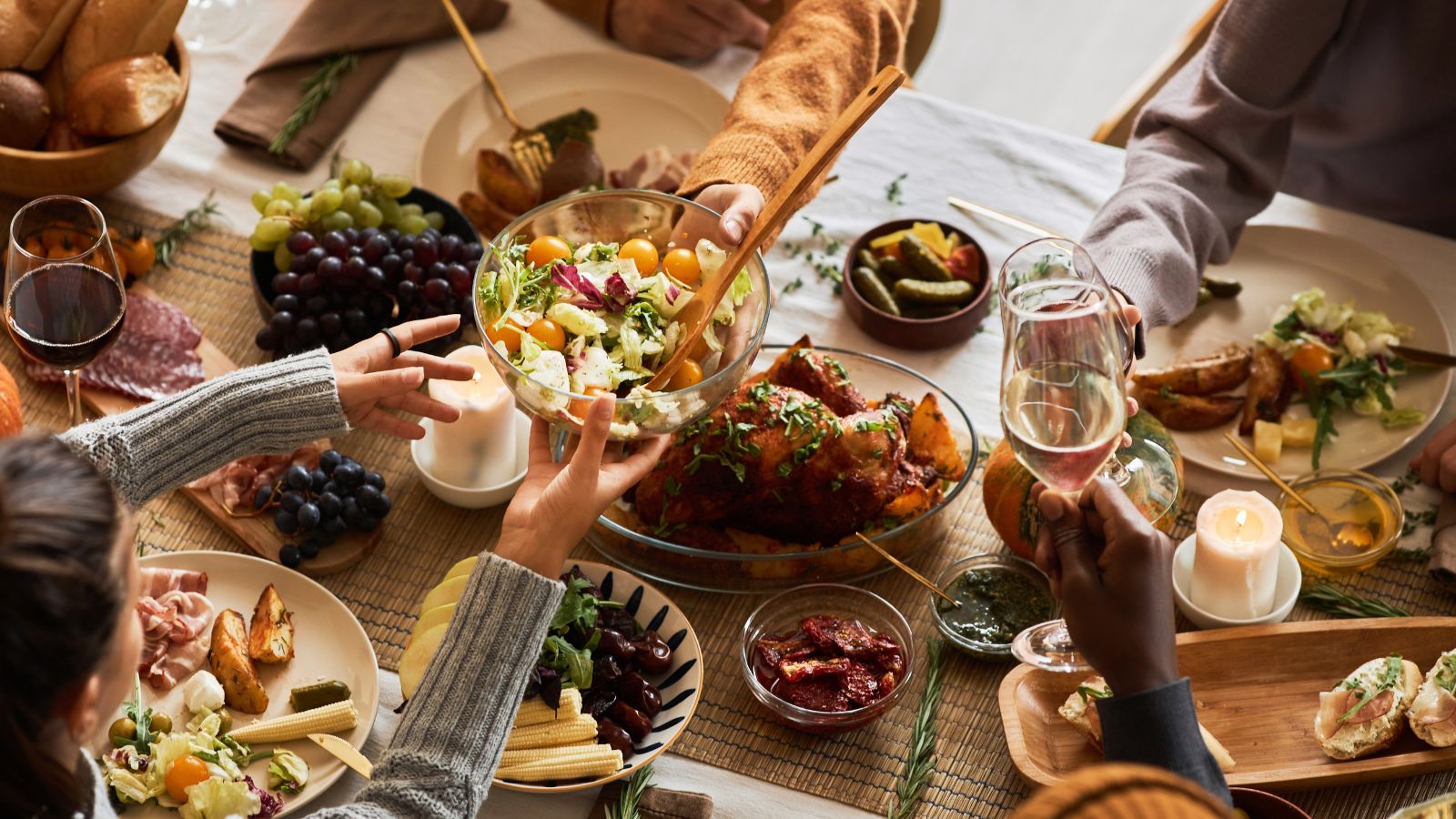
Vegetables have always appeared at Thanksgiving, but plant-based food no longer has to mean a lonely side dish beside the turkey. Canada’s Food Guide changed substantially in 2019, dropping the old food-group presentation and recommending that Canadians choose plant-based protein foods more often. Beans, lentils, tofu, nuts and seeds now sit within the same broad protein category as poultry, meat, eggs and fish in federal dietary guidance.
That shift has helped make a lentil loaf, stuffed squash, mushroom Wellington or substantial bean dish feel less unusual at a holiday gathering. Some households may still serve a large turkey while adding a vegetarian main for one guest; others build several substantial vegetable dishes that everyone shares. The Thanksgiving meal has consequently become more modular. Instead of every guest being expected to eat essentially the same plate, a modern table can accommodate several approaches at once. The turkey may remain an important tradition without being the only dish treated as the main event.
Hosts Ask About Allergies Before Finalizing the Menu

Twenty years ago, a relative’s allergy might have been handled quietly at the table. Today, ingredient checking is much more likely to happen before the meal begins. Health Canada estimates that roughly 7% of Canadians self-report a food allergy, while the Canadian Food Inspection Agency says more than three million Canadians are affected. The regulatory environment has also changed substantially: enhanced Canadian allergen-labelling requirements came into force in 2012.
That has made terms such as “contains,” “may contain” and “gluten-free” much more familiar to grocery shoppers. Thanksgiving hosts increasingly need to know whether the stuffing contains nuts, whether gravy was thickened with wheat, or whether the dessert can safely be served to someone with an egg or dairy allergy. Cross-contamination may matter as much as the recipe itself for people with serious allergies. The result is a subtle but significant change in holiday etiquette: asking guests about dietary restrictions beforehand has increasingly become ordinary hospitality rather than an unusual accommodation.
Grocery Shopping Can Begin Without Entering a Store
The pre-Thanksgiving grocery run once almost inevitably meant navigating a crowded supermarket with a handwritten list. Online shopping has created another option. Statistics Canada found that 82% of Canadians shopped online in 2020, compared with 77% in 2018. More significantly for holiday meals, 13% said they had ordered groceries online for the first time during the COVID-19 pandemic, while 21% reported shopping for groceries online more frequently.
Not every household kept every pandemic-era habit, but grocery ordering and pickup became familiar to millions of consumers. That can fundamentally change Thanksgiving preparation. Heavy potatoes, canned pumpkin, butter and several bags of groceries can arrive at the door or be loaded into a vehicle at curbside. Shoppers can also inspect a digital cart before checking out, making forgotten ingredients easier to spot. There is still plenty of last-minute rushing for cranberry sauce, but technology has made the giant Thanksgiving supermarket trip less unavoidable than it was two decades ago.
Meal Kits and Prepared Ingredients Are Doing More of the Work
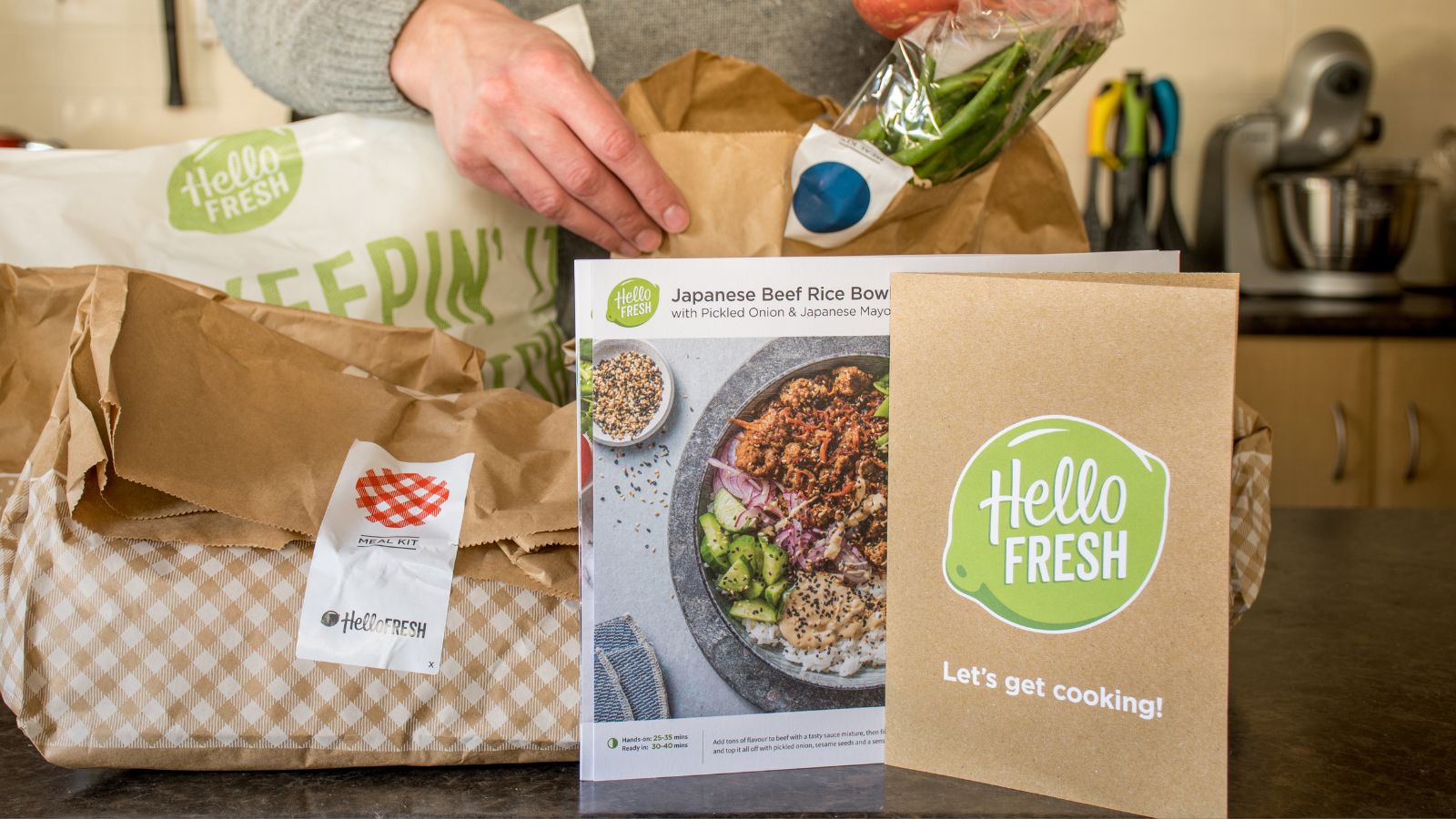
Cooking everything from scratch once carried a certain holiday prestige. Modern hosts are often more willing to decide that some dishes simply are not worth several additional hours in the kitchen. Statistics Canada’s 2020 Internet Use Survey found that 7% of Canadians received meal-kit boxes through online physical-goods subscriptions, an option that barely existed as a mainstream consumer category two decades earlier.
Thanksgiving adaptations can be even simpler: peeled vegetables, prepared gravy, bakery pies, pre-made stuffing, chopped salad kits or refrigerated side dishes can remove several jobs from the cooking schedule. Using those products does not necessarily mean abandoning family recipes. A host may spend hours preparing a grandmother’s stuffing while purchasing dessert, rolls and appetizers. That selective approach can make a large gathering possible for people balancing work, children and travel. The modern Thanksgiving kitchen often operates less like a test of whether everything was homemade and more like an exercise in deciding which traditions deserve the available time.
Families Are More Comfortable Outsourcing Part of Dinner
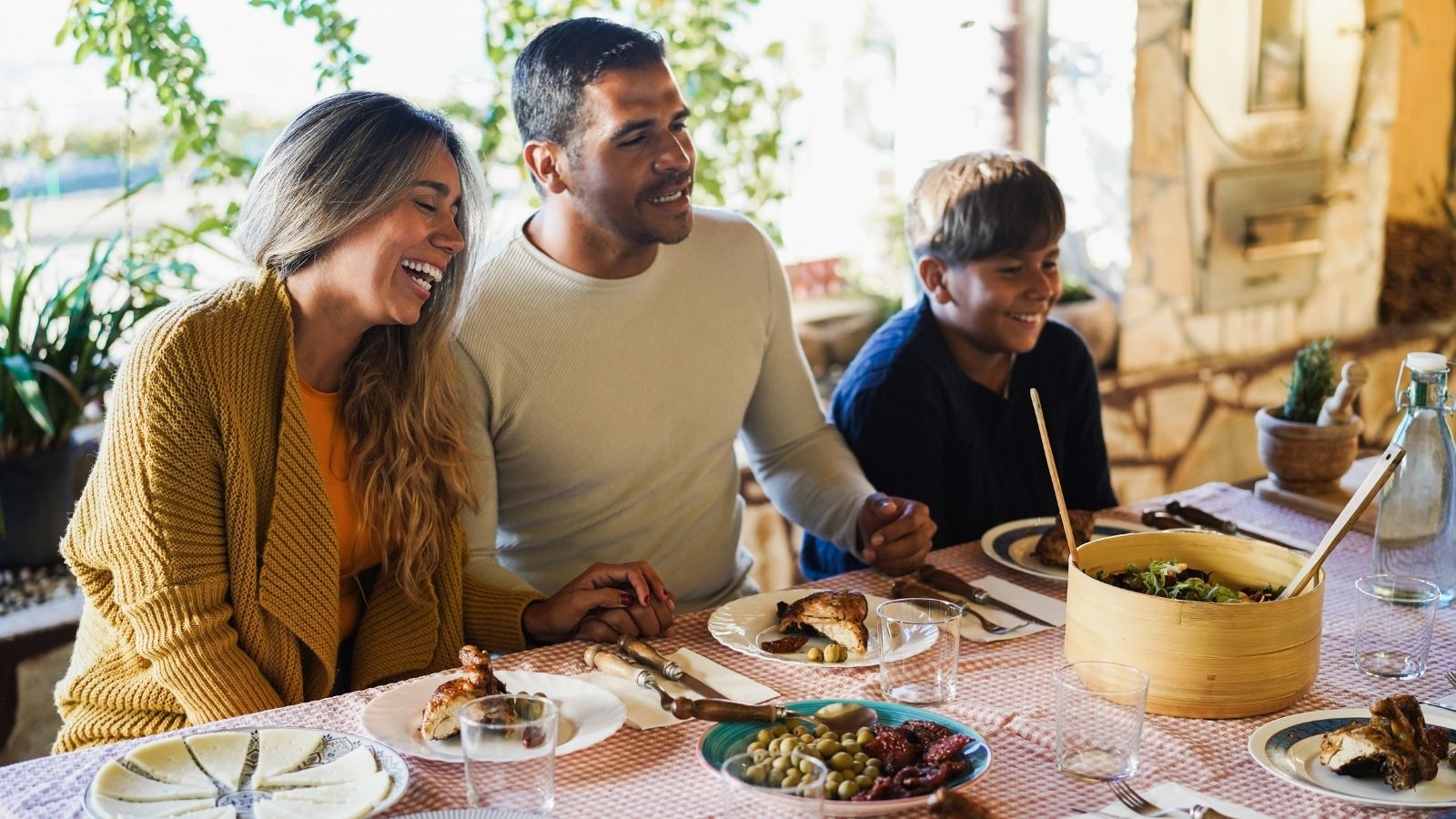
Restaurant food has become a much larger part of household food spending than the strictly home-cooked Thanksgiving stereotype might suggest. Statistics Canada reported average household spending of $3,351 on restaurant food in 2023 after a strong post-pandemic rebound. Online purchasing has also normalized ordering food and beverages from restaurants through websites and apps, creating an infrastructure that barely existed in its present form in the mid-2000s.
For Thanksgiving, that can mean ordering a complete catered dinner, buying a professionally roasted turkey or assigning dessert to a local bakery. Even households that cook most of the meal may outsource the dish that causes the most stress. A small family with no interest in handling a 7-kilogram bird can purchase prepared turkey portions rather than spend an entire afternoon roasting. The distinction between “home-cooked” and “takeout” has therefore become less rigid. For many hosts, the objective is a relaxed meal with family, not proving that every component originated in the same kitchen.
Group Chats Have Replaced the Holiday Phone Chain

Organizing Thanksgiving once involved a considerable amount of individual calling: one relative contacted another, someone forgot to pass along the time, and eventually three people arrived with nearly identical desserts. Messaging technology has radically changed that logistical ritual. Statistics Canada data from the 2022 Canadian Internet Use Survey showed widespread use of instant messaging, especially among younger Canadians, while social networking was also deeply embedded in everyday communication.
A family group chat can now settle the major questions in minutes. Who is bringing potatoes? Does anyone need a ride? Is dinner at 4:30 or “4:30,” meaning food will actually appear at six? Photos of dishes, grocery lists and dietary requests can all be posted in the same thread. Large extended families may even create a temporary Thanksgiving chat and abandon it immediately afterward. The technology seems mundane because it is now so common, but it represents a major difference from 20 years ago: organizing the family gathering has become a shared digital process rather than a sequence of separate conversations.
Faraway Relatives Can Appear on the Table by Video

Missing Thanksgiving no longer necessarily means disappearing from the celebration altogether. Statistics Canada reported that 64% of Canadians used the internet for online voice or video calls in 2020, up sharply from 47% in 2018. Later internet-use data continued to show online calling as a routine activity, particularly among younger internet users. The pandemic accelerated familiarity with technologies that were already expanding.
That creates a Thanksgiving possibility that would have seemed awkward or technically difficult in 2006. A university student studying overseas can appear on a tablet while dessert is served. Grandparents unable to travel can watch grandchildren carve the turkey. Families spread between Vancouver, Toronto, Halifax and another country can schedule a video call before everyone eats. A screen is obviously not the same as an occupied chair, and many families would still prefer an in-person visit. Yet distance is less absolute than it once was, allowing relatives who cannot travel to participate in at least one piece of the holiday.
The Thanksgiving Photo Album Is Now Almost Instant

Family photographs used to be taken, developed and eventually placed in an album—or left in an envelope for several years. Today, Thanksgiving pictures can reach relatives before the dishes have been cleared. Statistics Canada has documented the widespread use of social networking among Canadian internet users, alongside even higher rates of instant messaging among younger users. Those platforms have transformed family photography from a largely private archive into something that can be circulated almost immediately.
That changes behaviour around the dinner itself. Someone may photograph the table before anybody starts eating. A particularly impressive pie can receive its own close-up. Family portraits can be sent directly to relatives who were unable to attend rather than waiting until Christmas. Not every household wants Thanksgiving posted publicly, and concerns about children’s privacy have made some families selective about sharing. Even so, the instinct to document the meal digitally—and to distribute those images immediately—is a clear departure from the Thanksgiving gatherings captured primarily on film cameras two decades ago.
Football and Holiday Television Are Increasingly Streamed

Television remains part of Thanksgiving weekend for many households, whether that means football, a movie or background entertainment while people cook. The delivery system, however, has changed dramatically. The CRTC reported that 33% of Canadian households were streaming-only in 2025, up from 29% in 2024. Among Canadian adults, online audiovisual subscriptions were also more common than subscriptions to traditional television distribution services.
That means the family no longer necessarily gathers around whatever a cable channel happens to be broadcasting. Games and programs may be streamed on a smart TV, tablet or phone, paused during dinner or moved between rooms. Younger relatives might watch entirely different entertainment from grandparents sitting several metres away. Traditional television remains significant, particularly among older Canadians, so the transformation is incomplete. Still, compared with 20 years ago, Thanksgiving entertainment is far more likely to be on-demand, app-based and personalized—and much less dependent on a single household cable package and a fixed broadcast schedule.
Hybrid Work Has Changed the Holiday Travel Calculation

The workplace surrounding Thanksgiving has changed almost as much as the kitchen. Remote work was relatively uncommon for most Canadian employees two decades ago. After the pandemic, it became a lasting part of the labour market. In November 2024, Statistics Canada reported that 12.5% of employed Canadians usually worked exclusively from home and another 11.5% had hybrid arrangements. Some industries recorded considerably higher work-from-home rates.
For families with that flexibility, Thanksgiving travel can be organized differently. An employee might work remotely from a parent’s house on Friday before the holiday weekend rather than driving late Friday evening. Someone visiting another province may be able to stay an extra day without using as much vacation time. This is far from universal—millions of Canadians work in jobs that must be performed in person—but it creates options that were unavailable to many office workers 20 years ago. The long weekend can effectively begin earlier or end later for households able to take work with them.
Grocery Prices Have Made the Feast More Strategic

A full Thanksgiving spread has always required budgeting, but the price difference from two decades ago is substantial. Statistics Canada’s annual food index shows food purchased from stores at 105.6 on a 2002-equals-100 basis in 2005. By January 2026, the food component of the Consumer Price Index had climbed to roughly double its early-2000s level, while grocery inflation had accelerated again during 2025. Meat prices in particular rose sharply that year.
That financial reality can influence holiday choices in ways that have little to do with tradition. Hosts may watch flyers for turkey discounts, ask guests to bring side dishes or reduce the number of appetizers. A family that once bought far more food than required may plan portions carefully. Some households substitute less expensive vegetables or proteins without changing the basic character of the meal. Thanksgiving is still an occasion when people often spend more than they would on an ordinary dinner, but the modern feast is increasingly planned with a calculator somewhere in the background.
Leftovers Are Being Treated as Part of the Plan
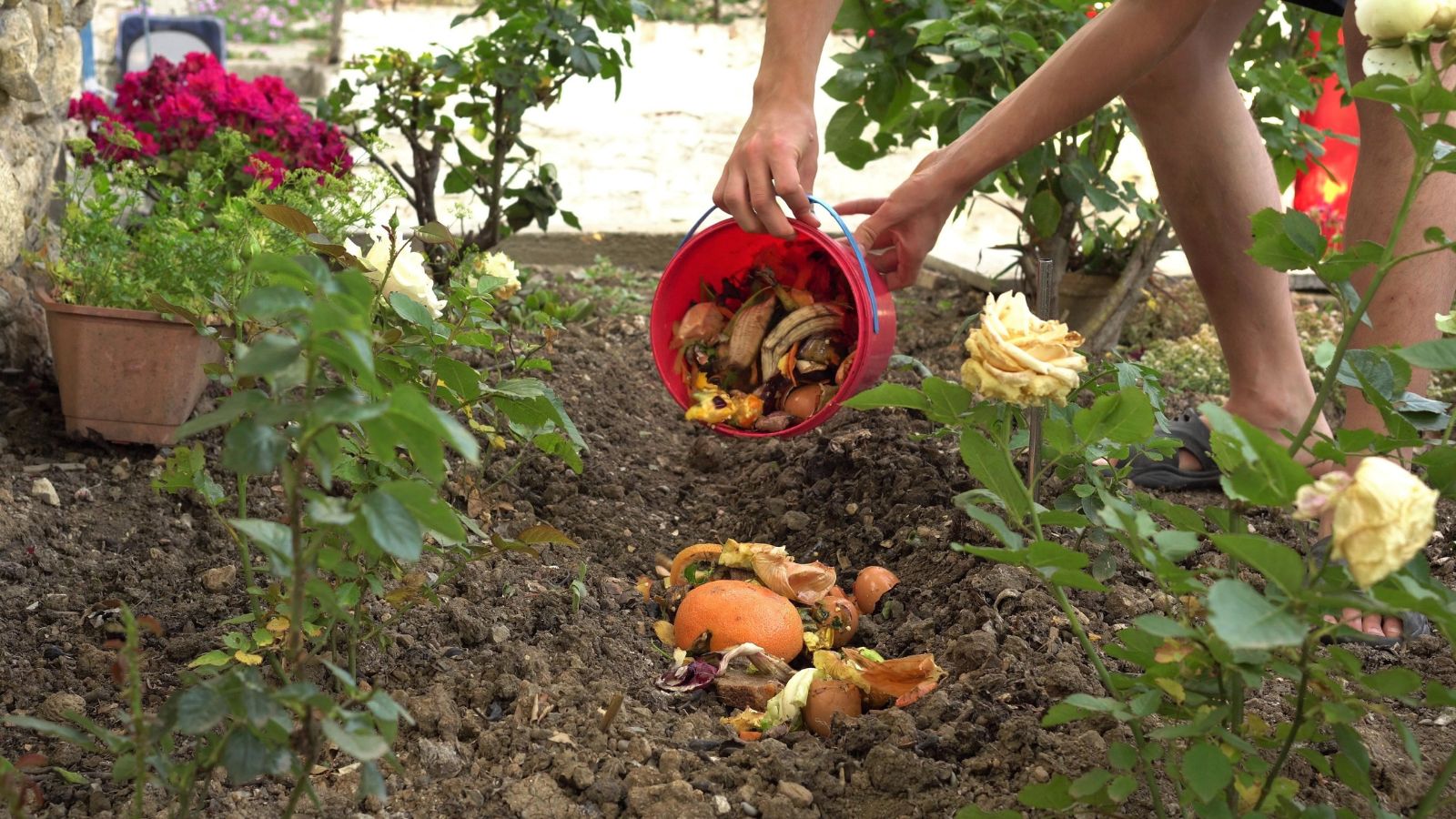
Thanksgiving leftovers have always existed, but concern about food waste has encouraged a more deliberate approach. Environment and Climate Change Canada notes that organic and kitchen material makes up roughly 30% of waste disposed by Canadian households. Its research also identifies over-purchasing, poor meal planning and reluctance to use leftovers as important contributors to avoidable household food waste.
As a result, leftover turkey is increasingly treated as an ingredient rather than an inevitable refrigerator burden. Hosts may have containers ready before dinner, send food home with guests or plan turkey soup, sandwiches and casseroles for the next several days. Freezing portions can keep excess food from reaching the garbage. The change is partly economic—the price of groceries makes throwing away good food especially painful—and partly environmental. Older generations certainly knew how to stretch a roast, so using leftovers is hardly new. What has changed is the explicit language of food-waste reduction and the growing effort to plan leftovers before the feast is even served.
The Green Bin Has Become Part of Thanksgiving Cleanup

One of the clearest environmental changes can be seen after dinner. Composting was far less widespread around the mid-2000s. Statistics Canada reported that 27% of Canadian households composted in some form in 2006. By 2023, 85% said they composted kitchen waste, yard waste or compostable bioplastics. Municipal curbside organics programs have been a major part of that expansion.
For Thanksgiving cleanup, that can mean turkey trimmings, vegetable peels, coffee grounds and other allowable scraps heading into an organics container rather than the garbage. Rules differ by municipality, so exactly what belongs in the green bin varies across Canada. Nevertheless, separating food waste is now an ordinary household routine in many communities. Someone scraping plates after a large family dinner is considerably more likely to face multiple bins than 20 years ago. The Thanksgiving meal may still generate an impressive pile of dishes, but a growing share of its organic waste has somewhere other than the landfill to go.
Disposable Plastics Are Less Automatic at Large Gatherings

Large family dinners once made disposable plates, plastic cutlery and shopping bags an easy shortcut. The policy environment around those products has changed substantially. Canada’s Single-use Plastics Prohibition Regulations restrict the manufacture, import and sale of several categories of single-use plastic products, including certain checkout bags, cutlery and food-service ware. The regulations were introduced in the 2020s and remain in force.
The impact reaches ordinary holiday habits even when nobody is thinking about federal environmental policy. Reusable serving utensils are increasingly the default. Guests taking leftovers home may arrive with containers or be handed reusable ones rather than disposable foam packaging. Retail changes have also made reusable shopping bags routine for grocery trips. None of this means Canadian Thanksgiving dinners have become waste-free; foil, packaging and other disposable products remain common. But compared with a gathering 20 years ago, a modern table is surrounded by a consumer environment in which some once-routine single-use plastics are disappearing or being replaced.
Alcohol Is Less Automatic Than It Once Was

Wine and beer remain common at Canadian holiday dinners, but national sales data show a meaningful long-term change. Statistics Canada’s measure of standard alcoholic drinks sold per person of legal drinking age works out to roughly 9.5 drinks per week in 2004/2005. By 2024/2025, it had fallen to 8.0. Alcohol sales volume declined for a fourth consecutive year in 2024/2025, continuing a broader shift in consumption.
That does not measure Thanksgiving drinking specifically, but it helps explain why an alcohol-free option can feel far less exceptional at a contemporary family dinner. Sparkling water, mocktails and non-alcoholic beer can share cooler space with wine without requiring an explanation. Some guests are driving, some do not drink for health or personal reasons, and others simply prefer an alcohol-free evening. Twenty years ago, beer or wine might have been treated as the automatic adult beverage at many gatherings. Today’s host has more reason to plan the drink menu with the same variety used for the food.
More Families Are Hosting in Condos and Smaller Urban Spaces

A Thanksgiving gathering does not always take place in a suburban dining room with room for an extension table. Condominium living has become considerably more prominent. In 2006, Statistics Canada counted about 913,000 Canadian households owning condominiums, up 36.5% in only five years. By 2021, more than 2.2 million occupied Canadian dwellings were condominiums, representing 15% of the occupied housing stock. Condos were especially prominent in Toronto, Vancouver and other large cities.
That changes how some families host. A condo resident may serve dinner buffet-style because there is no room for 12 chairs around one table. The turkey might share a compact oven with every side dish, forcing military-style cooking schedules. Building party rooms can become overflow dining spaces, while another relative with a larger home may inherit hosting duties. Thanksgiving traditions therefore increasingly have to fit the physical realities of urban housing, where creativity can matter more than the size of the dining room.
Common-Law Couples Are a Much More Familiar Part of Family Life
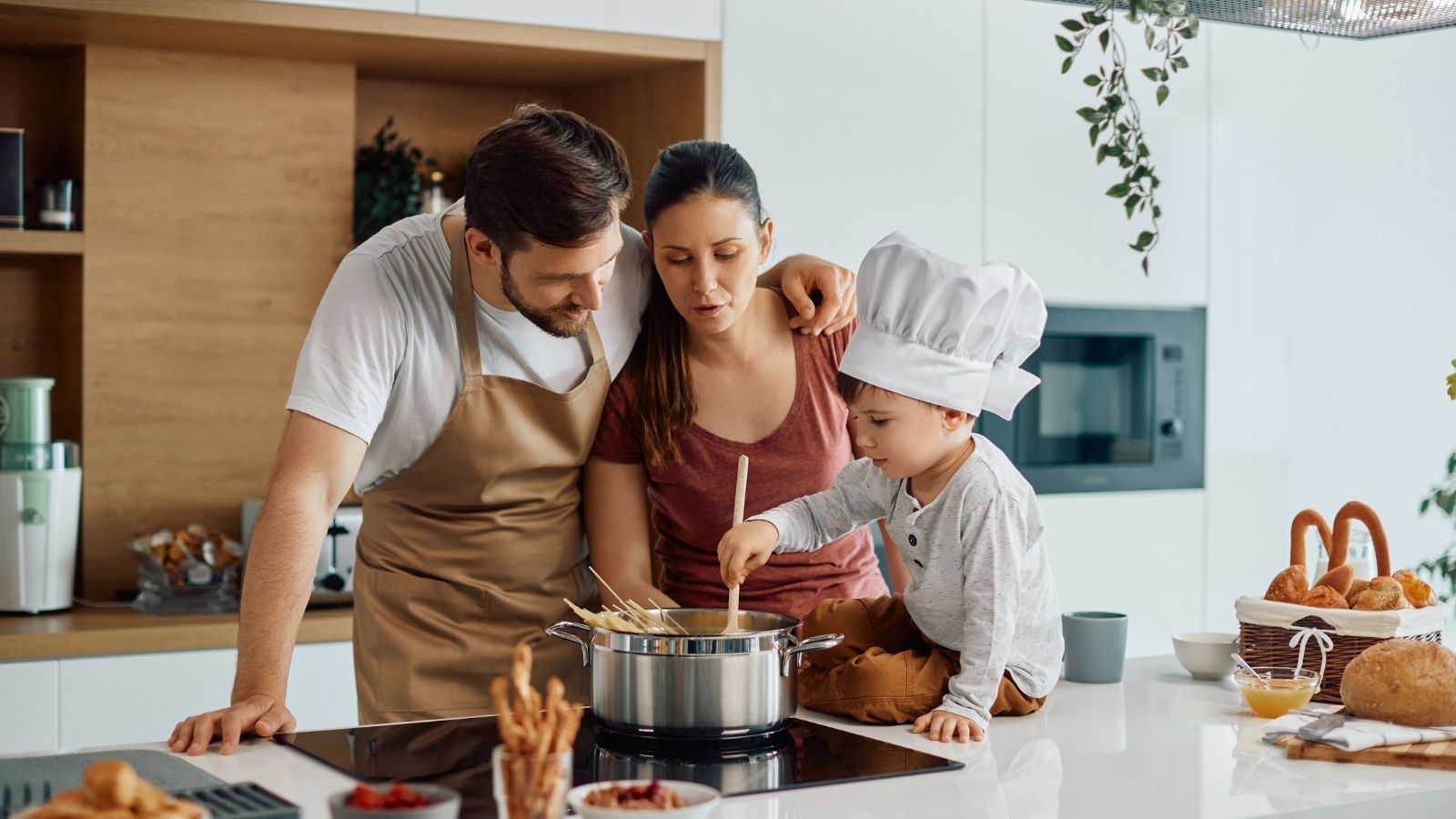
The legal marriage certificate is less central to the structure of Canadian couple families than it once was. Statistics Canada reported that 16% of Canadian couples lived common-law in 2001. By 2021, the share had reached 22.7%, with the proportion substantially higher in Quebec and in parts of northern Canada. Common-law relationships are consequently much more visible across generations of family life.
At Thanksgiving, that demographic shift changes something subtle but important: who is automatically understood to be part of the family. Long-term partners who may never marry can host the dinner together, bring children to grandparents’ homes or divide the holiday between two extended families exactly as married couples do. Older assumptions about when a boyfriend or girlfriend officially became part of Thanksgiving plans fit less neatly with contemporary Canadian households. Family traditions have adjusted to a society in which commitment, parenting and shared homes increasingly exist outside marriage, making the guest list less dependent on formal marital status.
Blended Families Often Have More Than One Thanksgiving Schedule
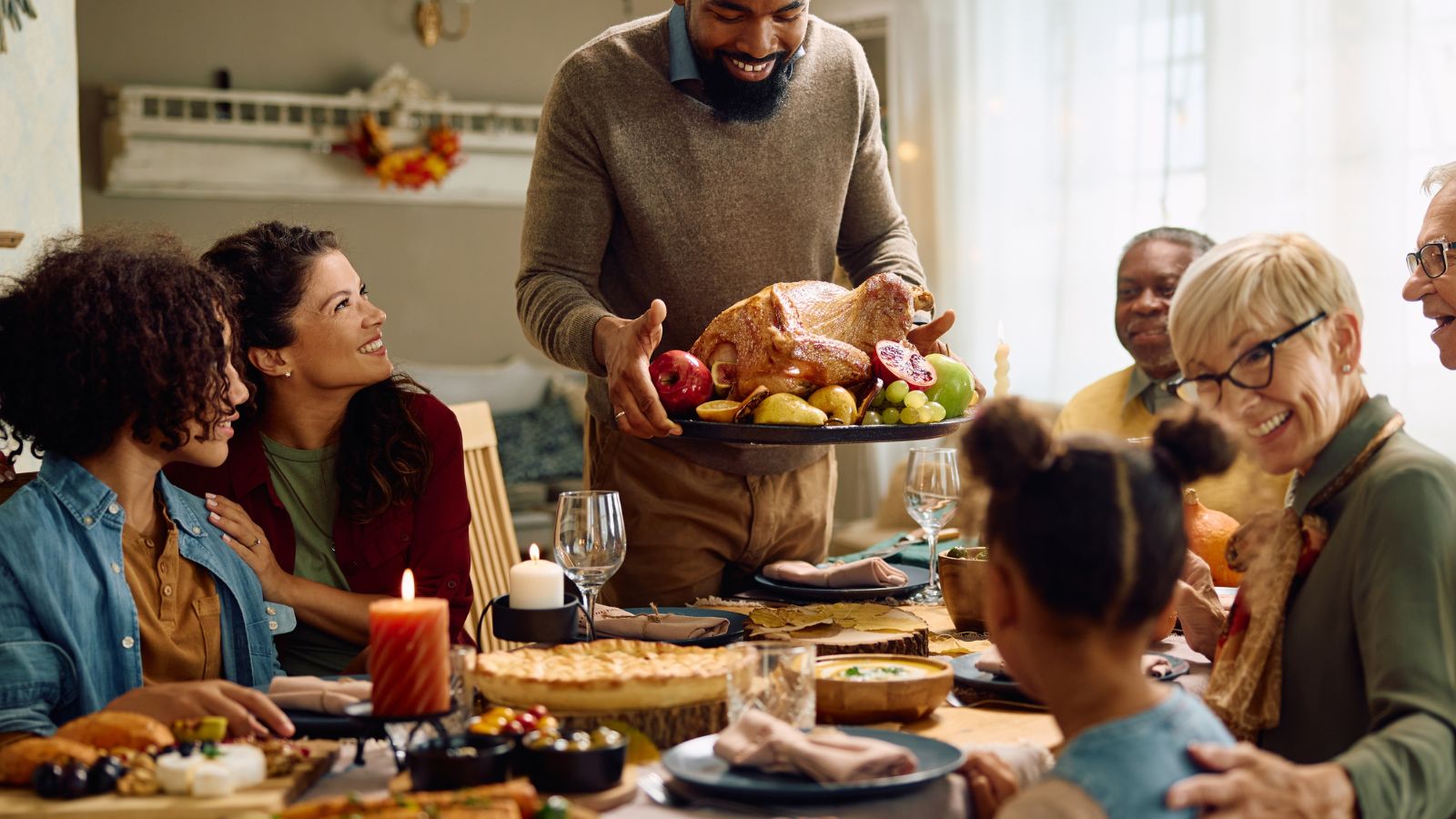
For many families, deciding what to cook is easier than deciding where everyone will be. Statistics Canada reports that 11.7% of two-parent families in 2021 were stepfamilies. Earlier family data also documented substantial numbers of blended households containing children from previous relationships. Divorce, remarriage, common-law partnerships and shared parenting can create holiday calendars involving several legitimate family homes.
That can produce a Thanksgiving very different from the single gathering remembered from childhood. Children may eat lunch with one parent and dessert with another. A dinner may happen on Sunday instead of Monday because another side of the family has the official holiday. Step-siblings, former spouses and new partners can all affect the schedule without diminishing the significance of the celebration. Some families solve the problem by alternating years; others hold two smaller dinners. The calendar may look complicated from the outside, but for many Canadian families, flexibility has become part of the tradition itself.
16 Costco Canada Habits That Could Be Costing Shoppers More Than They Save

The Executive Membership can feel like an obvious upgrade because the 2% annual reward sounds straightforward. For households that spend heavily at Costco Canada, the extra fee may be easy to justify. But the habit becomes costly when shoppers upgrade first and calculate later. A Gold Star Membership costs less, while Executive costs more and only pays off if eligible annual spending is high enough to offset the difference.
16 Costco Canada Habits That Could Be Costing Shoppers More Than They Save
